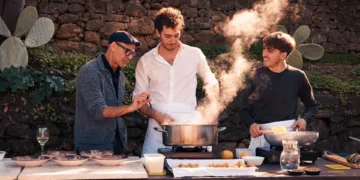






















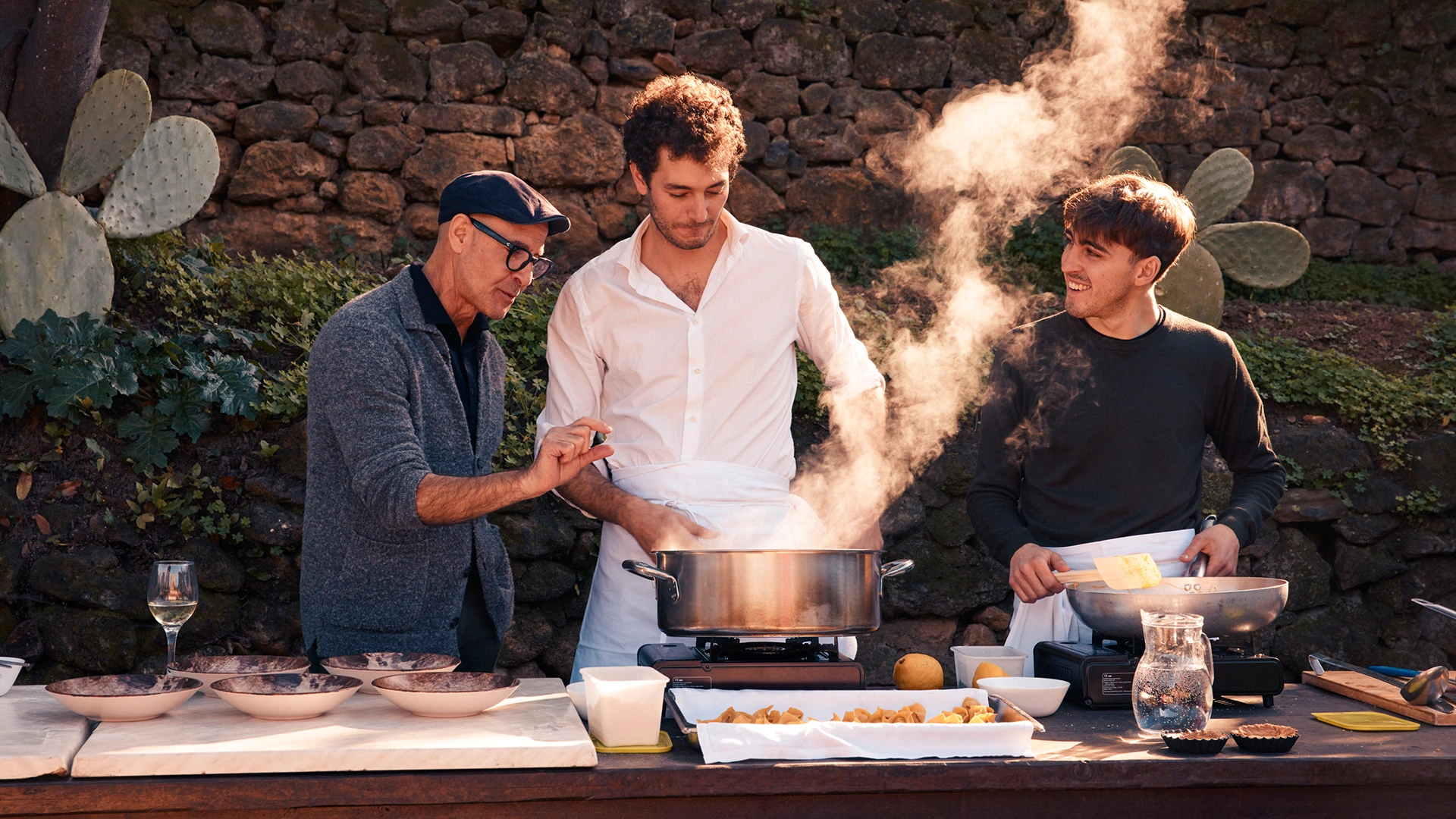

Stanley Tucci returns to his ancestral home for a second season that widens the celebrity travelogue’s cultural reach. The production moves beyond the familiar views of Rome and Florence and studies the regional identities of Naples, Sicily, Le Marche, Sardinia, and Veneto. Food becomes the main instrument for reading histories shaped by geography, migration, labor, and local memory.
Tucci enters kitchens and vineyards to speak with people protecting culinary practices that carry social meaning along with flavor. The visual approach stays polished, with cinematic images giving equal weight to the urban grit of Naples and the open countryside.
The season gains power from the host’s bilingual fluency, which allows direct conversation with local figures and gives the series unusual access. By turning toward the rice fields of Veneto and Sardinia’s secluded mountain villages, the program gives space to communities often pushed aside in mainstream images of Italy. It becomes a travelogue shaped by local rhythms and provincial flavors.
Decoding the Mediterranean Palimpsest
The series challenges common assumptions about the Italian diet by studying the textures of the south and the northern plains with unusual patience. In Sicily, the menu works like a historical record of migration and conquest.
Greek, Arab, and Tunisian influences appear through the island’s ingredients, placing food inside a long story of movement across the Mediterranean. Mount Etna dominates the agricultural imagination and helps explain the vivid intensity of local blood oranges. That volcanic pressure gives the food a sense of beauty touched by anxiety.
In Naples, the show breaks down the Americanized image of eggplant parmigiana at Mimì alla Ferrovia. The dish appears as a refined arrangement of thin slices, far removed from the heavy breaded stack many viewers may expect. The program highlights the ingenuity of Gragnano pasta cooked with mossy ocean rocks and the bread lemons of Procida.
In Veneto, the story moves away from pasta dominance and toward the specialized cultivation of rice and radicchio. The visit to Le Beccherie turns tiramisu into a lesson in regional pride. The reverence for buffalo mozzarella in Paestum gives terroir a clear, sensual force.
The recovery of forgotten grape varieties for white wine shows a culture reclaiming agricultural memory through practice. These segments present Italian culinary identity as local invention, shaped by history, climate, and community.
The Politics of the Plate
This season investigates social history and present-day struggles that sit beyond the dining table. At a tomato farm in Ercolado, the program examines labor rights through a conversation with the owner, who discusses organizing strikes to improve pay and working conditions. The scene grounds bright food imagery in economic reality and asks viewers to see representation in material terms: who grows the food, who benefits from it, and who is allowed to speak about its value.
In Padua, the series visits a high-security prison bakery where a professional pasticceria program creates a path toward rehabilitation. The low recidivism rate among the inmate bakers links culinary training to measurable social change. The show’s streaming-era format becomes useful here, carrying a policy story into a relaxed viewing space and letting human detail do the harder work.
The Sardinia episode gives a needed update to the celebrated Blue Zone longevity narrative. The show engages with new research that questions earlier dietary myths, revealing welcome intellectual honesty in a genre that often prefers postcard certainty.
The choice to focus on quieter locations like Treviso also signals a turn toward sustainable travel. Tucci acknowledges the strain of rapid tourism in cities such as Venice and gives attention to the surrounding agricultural regions.
The link between the high-end anisetta of Le Marche and the traditional garden culture of the Adriatic deepens the season’s interest in land use and lifestyle. These stories connect the plate to labor, punishment, rehabilitation, tourism, and local survival. The series treats food culture as a social system, giving its pleasures a sharper ethical charge.
The Art of the Authentic Amateur
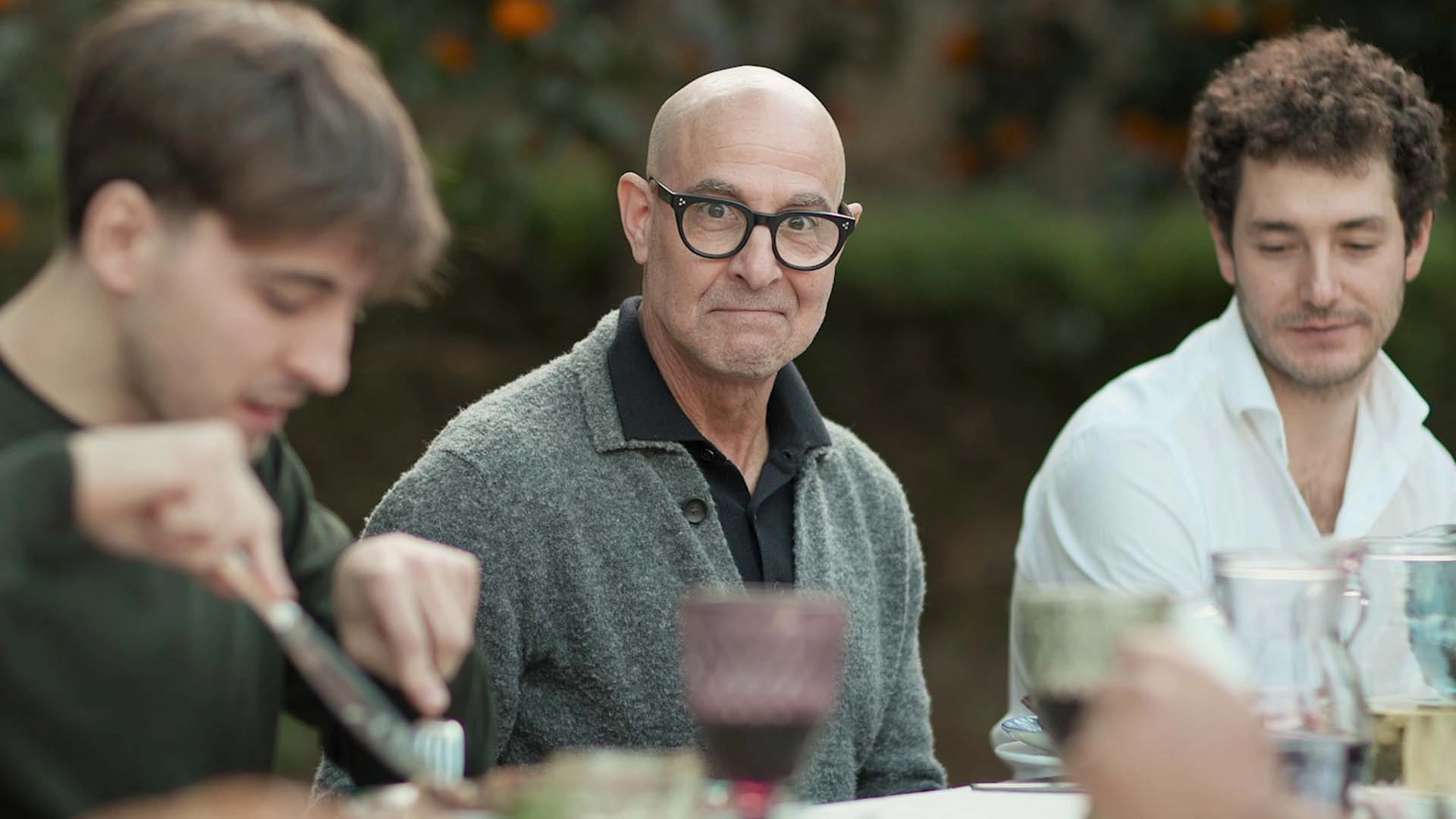
The technical execution and Tucci’s performance create the intimacy that defines the viewing experience. His fluency in Italian removes the barrier of interpreters and allows spontaneous exchanges with chefs and farmers. That direct contact matters in a television field filled with shows that claim authenticity while arranging reality into spotless lifestyle content.
He eats with unpretentious joy, appearing on camera with a messy face or a generous forkful of pasta. Those physical details make the production feel grounded, human, and lightly comic in its refusal to treat good taste as a form of self-serious restraint.
Felicity Blunt’s appearance adds a personal dimension that balances Tucci’s sophisticated persona. Matt Ball’s cinematography uses natural light to build a style that feels elegant and accessible. The opening shot in the Naples catacombs sets a tone comfortable with the macabre and the beautiful, an apt pairing for a season that keeps finding history inside appetite.
Tucci uses specific verbal cues to signal genuine approval of a dish, and his enthusiasm feels earned on camera. The season shows how a travel series can keep high production values while staying connected to lived experience. It resists the polished artifice that marks much contemporary streaming production, using craft to bring viewers closer to people, regions, and practices that deserve careful attention.
Season 2 of Tucci In Italy recently premiered on May 11, 2026, on the National Geographic channel, with all episodes becoming available for streaming the following day on Disney+ and Hulu. In this second season, Academy Award nominee Stanley Tucci explores five new regions: Naples and Campania, Sicily, Le Marche, Sardinia, and Veneto. The series delves into the profound connection between Italy’s historical landscapes and its diverse culinary traditions, providing a deeply personal look at the people and cultures that define the country.
Where to Watch Tucci In Italy Season 2 Online










Full Credits
Title: Tucci In Italy (Season 2)
Distributor: National Geographic, Disney+, Hulu
Release date: May 11, 2026
Rating: TV-PG
Running time: 44 minutes
Director: Ian Denyer, Chris Parkin
Writers: Stanley Tucci, Lottie Birmingham
Producers and Executive Producers: Stanley Tucci, Lottie Birmingham, Amanda Lyon, Ben Jessop, Yari Lorenzo, Francesco Ficarra, Sheena Whitemore
Cast: Stanley Tucci, Felicity Blunt, Emiko Davies, Fabrizio Cattani, Manuel Gobbo
Director of Photography (Cinematographer): Matt Ball
Editors: Yulia Martynova, Hannah Briere-Edney, Jonnie Case, Gareth Blower, Sarjit Bains, Luke Price, Trace Taylor
Composer: Alexander Parsons
The Review
Tucci In Italy Season 2
This season succeeds because it treats the culinary landscape as a living archive of historical struggle and regional pride. The host avoids detached elitism by engaging directly with social issues like labor rights and prison reform. The production values and the bilingual approach create a sense of genuine immersion. It offers a thoughtful look at a culture that remains varied and resilient.
PROS
- Focuses on less explored provinces rather than traditional tourist centers.
- Connects agricultural production to labor rights and social rehabilitation.
- Bilingual dialogue facilitates authentic interaction with local citizens.
- Exceptional visual storytelling highlights the character of each region.
CONS
- The episodic format limits the depth of complex historical discussions.
- The narrative occasionally leans on the host's established screen presence.