



























By its twenty-ninth mainline film, Detective Conan has become a ritual of cinematic momentum, a franchise machine that still finds pleasure in throwing its tiny detective into ever larger disasters. Detective Conan: Fallen Angel of the Highway arrives during the series’ 30th anniversary period with a fittingly grand premise: Yokohama, a motorcycle convention, a sleek new police bike called Angel, and a black superbike named Lucifer haunting the highways like a mechanical ghost.
The image is instantly appealing. Conan Edogawa, still the brilliant teenage sleuth trapped in a child’s body, finds himself pulled into a mystery where biker folklore, police trauma, underground racing, and autonomous technology collide. Chihaya Hagiwara, an elite motorcycle officer with grief in her past and steel in her posture, takes the film’s strongest dramatic position. Ran, Sonoko, Masumi, and the Detective Boys circle the case with varying degrees of purpose.
Director Takahiro Hasui gives the film a polished visual charge. Yokohama’s cityscapes gleam with depth, while the highway chases cut through the frame with metallic urgency. The film wants to be both a detective story and a roaring action spectacle, and its best moments come from that friction.
Riding Alongside New Faces and Old Favorites
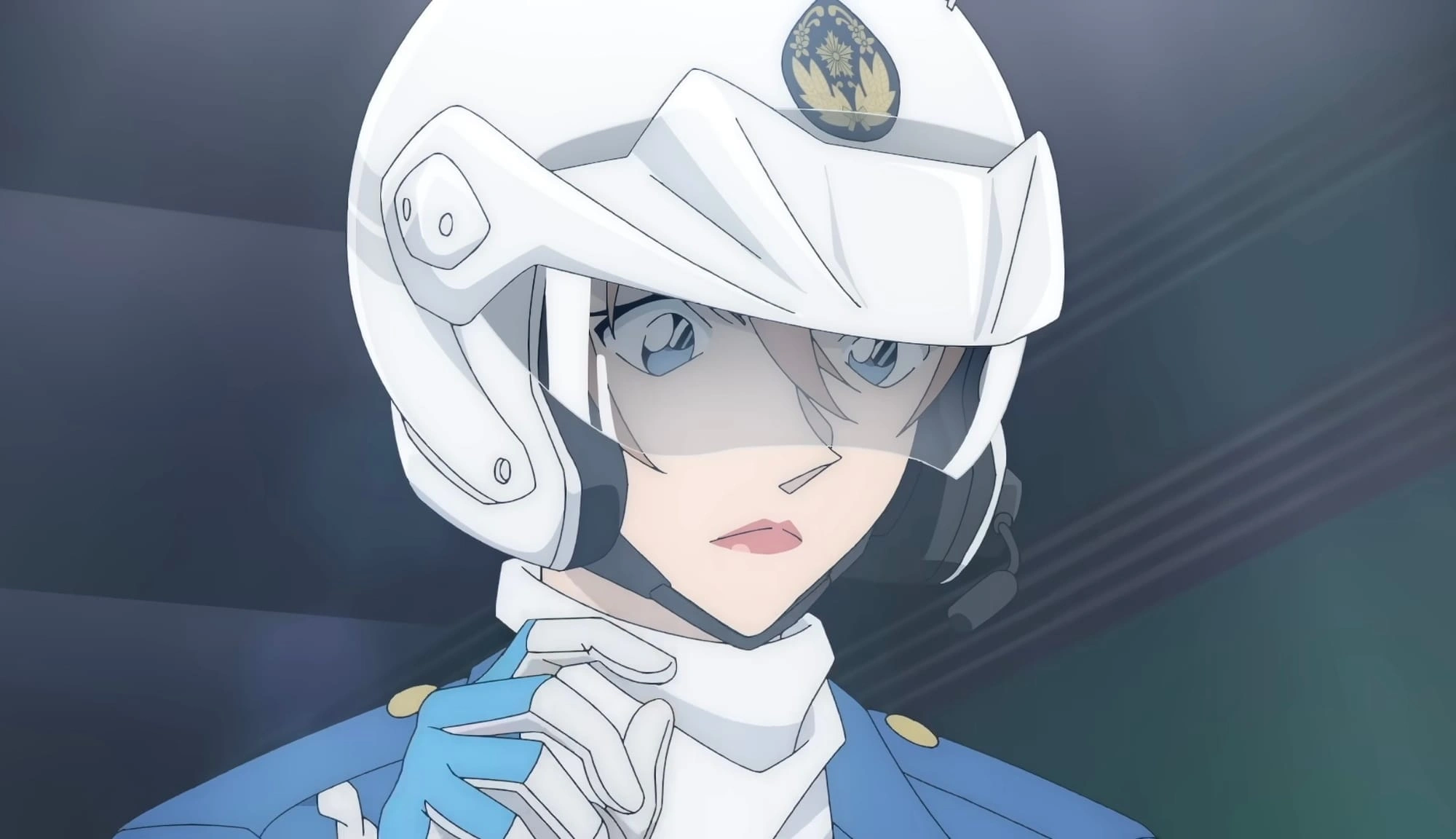
Chihaya carries the film with the kind of presence that makes the franchise feel temporarily renewed. Her skill on a motorcycle is treated as character language: sharp turns, controlled speed, the refusal to surrender ground. Her grief over Kenji’s death gives the story its emotional pressure, while her rivalry with Asagi offers a cleaner and sharper dramatic line than much of the surrounding conspiracy. Her exchanges with Jugo bring warmth and playful tension, giving the film flashes of human texture beneath the engine noise.
Conan functions as both detective and narrative ignition switch. His gadgets, observations, and schoolboy cover keep the plot moving, and his partnership with Chihaya gives the investigation a brisk rhythm. Yet the film also exposes a familiar problem: Conan can become less a character than a delivery system for answers. The mystery often waits for him to explain it rather than letting the audience feel the pleasure of discovery.
The supporting cast receives uneven treatment. Masumi fares best, contributing to the investigation and action without feeling decorative. Sonoko operates as a social connector, while Kogoro’s presence fades after early involvement. Ran suffers most, reduced to peril in the final stretch rather than allowed meaningful agency. The Detective Boys mostly serve continuity, with Ai again pushed toward information duty.
The antagonists come in layers. Kazuaki Omae supplies the technological greed, using automated bike development and underground racing for darker ambitions. Kiriko Ryuzato and John Powder bring revenge-driven complications. Asagi works as a red herring tied closely to Chihaya’s emotional arc. The structure has plenty of parts, yet several feel bolted on rather than fully integrated.
Unraveling the Highway Conspiracy
The central mystery has a clean pulp charge: Lucifer, a headless black rider, tears through the highways, leaving fear and confusion behind. The reveal of Angel, the advanced automated motorcycle system, gives the film a contemporary anxiety to play with. What happens when speed, surveillance, and machine control start replacing human judgment? The question has bite, especially in a franchise built around logic, deduction, and the tiny details people miss.
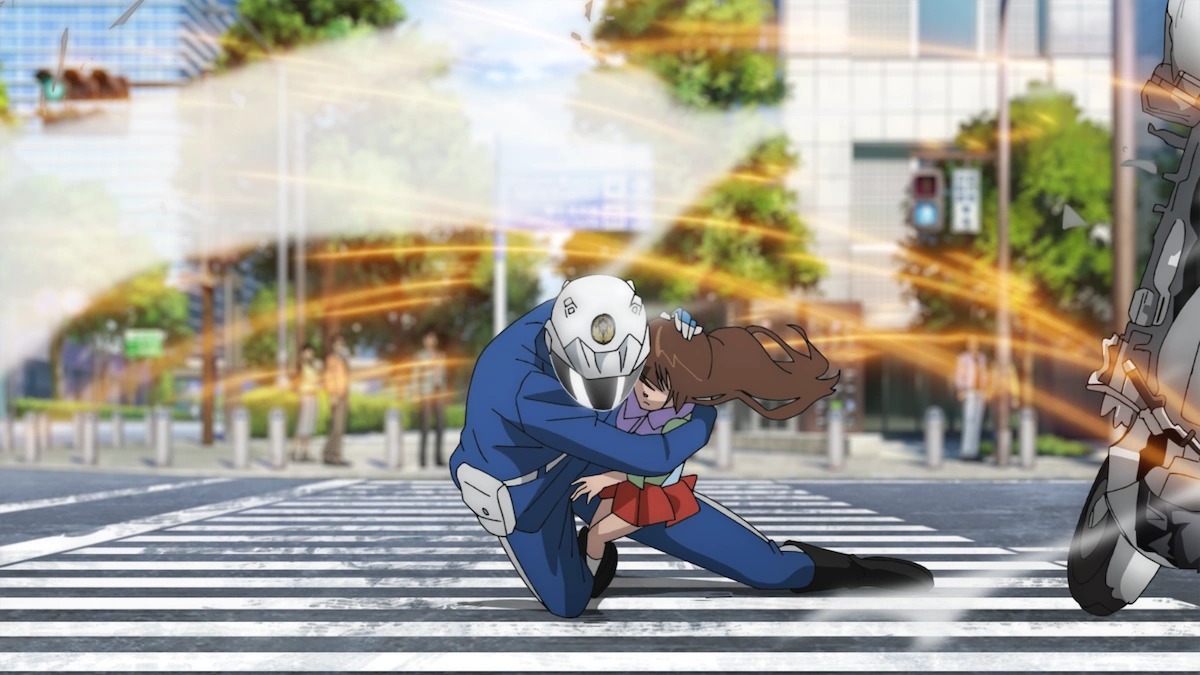
The issue is that the film shows its hand too early. Once automated vehicle technology enters the story, the ghostly rider loses much of its menace. The suspect pool is narrow, the red herrings are easy to read, and the conspiracy snaps into place before the film seems ready to admit it. For a series so dependent on the architecture of mystery, that predictability drains tension from scenes that should tighten like a wire.
The pacing remains aggressive. The opening phantom biker sequence, freeway pursuits, and recurring bursts of vehicular chaos give the film a strong kinetic pulse. Yet the detective work leans too heavily on retroactive explanation. Clues arrive, then meaning is poured over them in dense dialogue. That style can keep the plot clear, yet it flattens the thrill of deduction.
The film’s emotional material works better in isolation. Chihaya’s pain over Kenji, her relationship to Asagi, and the notion of a rider chasing one last impossible race all carry real dramatic weight. Placed beside the data-collection scheme, military ambitions, revenge thread, kidnappings, and bomb-rigged bikes, those feelings compete for oxygen. The result is a movie that has a powerful emotional engine, then keeps attaching extra machinery until the ride starts to wobble.
Kinetic Animation and Cinematic Craft
Visually, Fallen Angel of the Highway often moves with confidence missing from its plotting. Hasui frames Yokohama with a handsome sense of scale, using deep-focus compositions and clean urban surfaces to make the city feel expansive. Calm streets and glassy skylines sit beside violent bursts of speed, creating a useful tension between civic order and mechanical chaos.
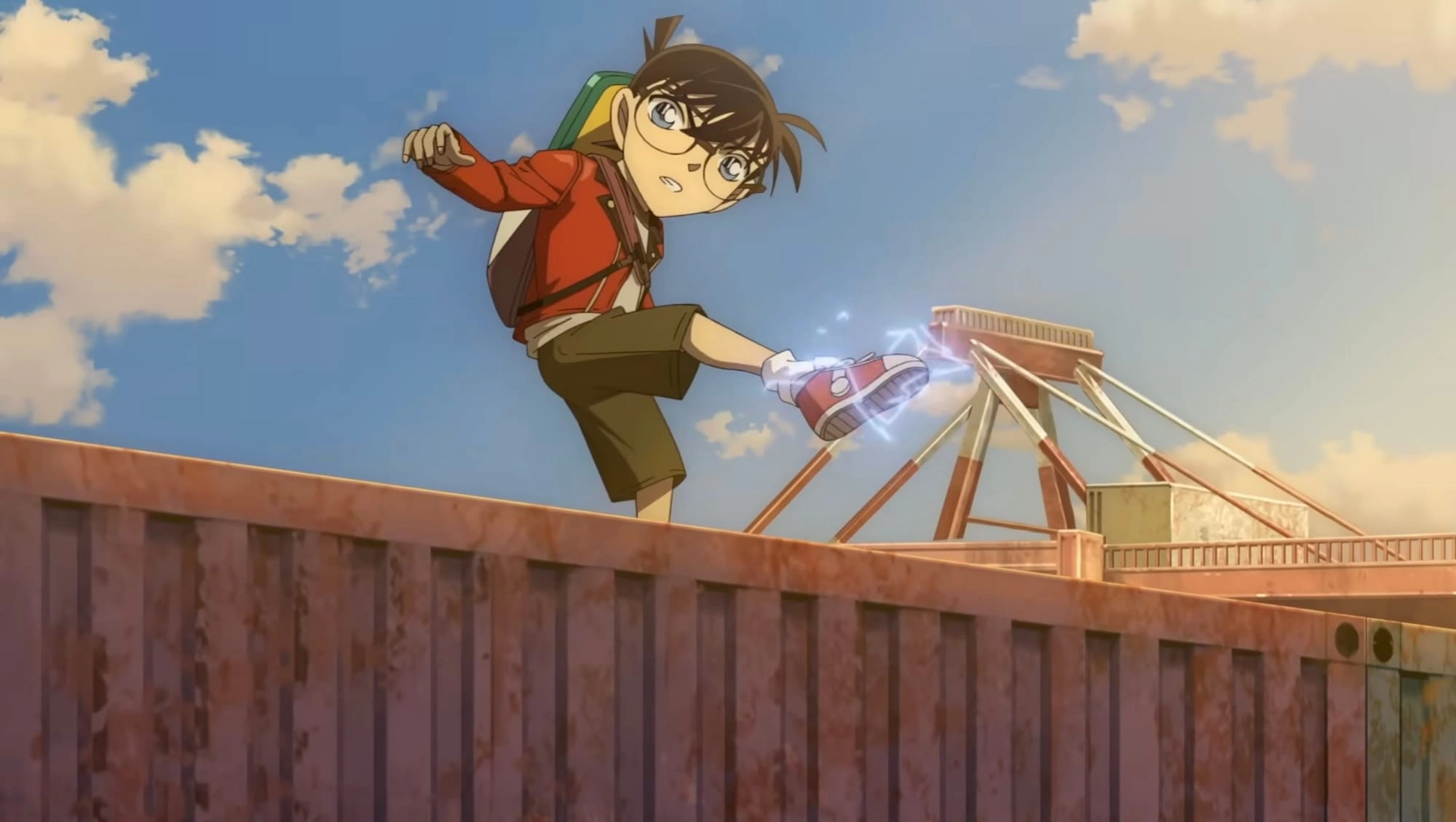
The action choreography is the film’s most dependable pleasure. Motorcycle duels slice across the screen with crisp momentum. Freeway sequences bring a scything rhythm to the animation, while helicopter beats, explosions, and multi-vehicle danger push the film toward full blockbuster excess. The finale strains credibility, yet the staging has enough force to keep the spectacle alive.
The animation pays close attention to machinery. Bikes, police vehicles, control systems, and highway spaces are rendered with enough texture to give the technology a physical presence. Character animation remains expressive within the familiar Conan style, with Chihaya’s poise and Asagi’s haunted restraint standing out.
The editing accelerates sharply during action, then slows for Chihaya’s personal beats. That contrast gives the film its strongest cinematic shape. As a mystery, it lacks the elegance of the franchise’s best puzzles. As an animated action thriller with cultural anxieties about automation, surveillance, and human skill under pressure, it has enough charge to justify the ride.
Detective Conan: Fallen Angel of the Highway is a Japanese animated mystery-action film that debuted in Japan on April 10, 2026, and is scheduled for theatrical rollout in the United Kingdom via Trinity CineAsia on June 12, 2026. The 29th cinematic installment of the long-running anime franchise tracks pint-sized sleuth Conan Edogawa and elite motorcycle cop Chihaya Hagiwara as they look into a dangerous cyber-conspiracy involving autonomous vehicles, automated big data hacking, and a phantom rogue superbike tearing up the Yokohama freeways. Fans of the franchise can find local theatrical showtimes across Japan and Europe, while domestic home-video distribution and streaming windows on regional anime platforms are slated to arrive later next year.
Full Credits
Title: Detective Conan: Fallen Angel of the Highway
Distributor: Toho, Trinity CineAsia
Release date: April 10, 2026 (Japan), June 12, 2026 (United Kingdom)
Rating: G / PG
Running time: 109 minutes
Director: Takahiro Hasui
Writers: Gosho Aoyama, Takahiro Ōkura
Producers and Executive Producers: Shogakukan, Yomiuri Telecasting Corporation, Nippon Television Network, Shogakukan-Shueisha Productions, Toho, TMS Entertainment
Cast: Minami Takayama, Wakana Yamazaki, Rikiya Koyama, Miyuki Sawashiro, Megumi Hayashibara, Akio Ōtsuka, Ryusei Yokohama, Mei Hata
Editors: Junichi Ito
Composer: Yugo Kanno
The Review
Detective Conan: Fallen Angel of the Highway
Detective Conan: Fallen Angel of the Highway delivers an adrenaline-charged spectacle that thrives on high-speed chases and visual flair, yet its narrative predictability and uneven character focus dilute the mystery’s tension. Chihaya Hagiwara’s presence elevates the film, while Conan’s investigative genius remains compelling. The fusion of technology, grief, and action renders a film that entertains with intensity, though its story architecture occasionally falters under the weight of its ambitions.
PROS
- Thrilling motorcycle and chase sequences
- Strong central character in Chihaya Hagiwara
- Visually striking animation and cityscapes
- Effective integration of tech-driven plot elements
- Emotional depth from Chihaya’s personal backstory
CONS
- Predictable mystery and limited red herrings
- Older franchise characters underutilized
- Overcrowded plot threads dilute tension
- Reliance on retroactive exposition
- Final act favors spectacle over deduction