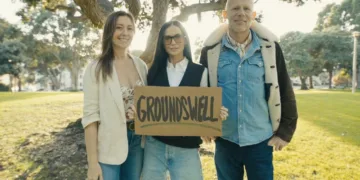



















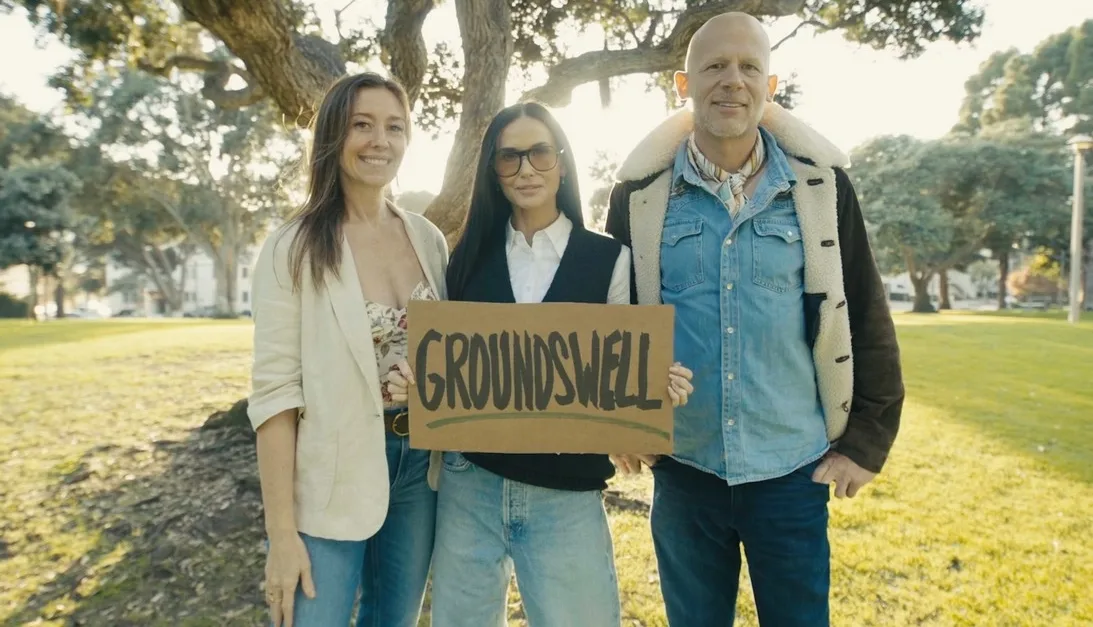

Groundswell, the third chapter in Joshua Tickell and Rebecca Harrell Tickell’s regenerative agriculture trilogy after Kiss the Ground and Common Ground, comes armed with a deceptively simple proposition: the ground beneath us may be one of the most consequential political, ecological, and moral spaces of the century.
That sounds grand, maybe even a little compost-bin prophetic, yet the film treats soil as a living archive of human choices. Climate change, biodiversity loss, and soil degradation are presented as linked fractures in the same damaged system.
The documentary travels across five continents, meeting farmers, scientists, Indigenous leaders, ranchers, and ecological innovators who are trying to repair damaged land through regenerative practices. Woody Harrelson sets the tone early by promising that this will not be another grim environmental documentary. He is mostly right. Groundswell is built around recovery rather than despair, around evidence rather than apocalypse.
That optimism gives the film its pulse. It also gives it trouble. Hope is powerful material, but in cinema, as in farming, too much smoothing can flatten the terrain.
Regeneration as Argument and Metaphor
The film’s central idea is that soil health connects to climate stability, food quality, biodiversity, water retention, and public health. The earth here is not passive dirt. It is memory, infrastructure, bloodstream, graveyard, pantry, carbon vault. The Tickells use regenerative agriculture as both practical solution and philosophical corrective, asking viewers to reconsider a culture that has treated land as an expendable surface rather than a living system.
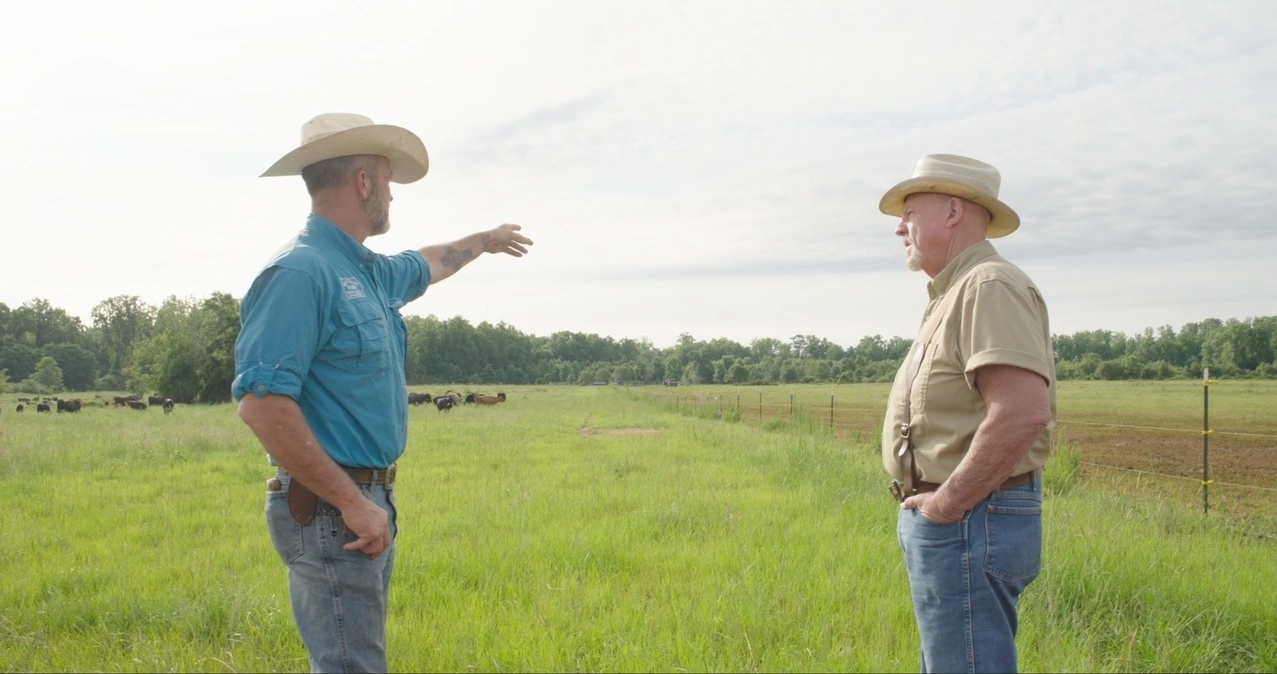
The most persuasive scenes are grounded in visible transformation. Dead soil grows fertile again. Water returns to damaged landscapes. Wildlife reappears. Farmers describe improved yields through diverse planting and soil restoration. Indigenous leaders speak from knowledge systems that long predate the modern climate vocabulary. These moments give Groundswell its strongest charge because they move beyond slogans. We see restoration taking shape in bodies, fields, and ecosystems.
There is a powerful historical echo here. Industrial agriculture, like so many twentieth-century systems, promised abundance through control: chemicals, monoculture, scale, speed. It fed millions, yes, and it also normalized extraction as common sense. Groundswell quietly argues that the age of extraction has left us with a spiritual hangover. The film wants a return to reciprocity, a word it never needs to over-explain because the images do the work.
Still, the argument can become too tidy. Large-scale agricultural change is not a switch waiting for a morally awakened hand. Corporate consolidation, subsidies, land access, labor economics, farmer debt, food pricing, political capture, and population pressure all sit inside this problem like rocks under topsoil. The film gestures toward difficulty, then often moves away before the mess can stain its clean optimism. That creates a strange condition I’ll call solution-gloss: the aesthetic of repair presented with less friction than repair demands.
A Polished Eco-Travelogue with Famous Voices
As cinema, Groundswell is handsome, sometimes striking. Wide landscapes give the film a planetary scale, while textured close-ups of soil, roots, crops, and hands at work make ecological processes feel tactile. The camera clearly loves dirt. That may sound like faint praise, but making soil visually alive is no small task. The film understands that environmental cinema cannot live on statistics alone. It needs texture, light, rhythm, faces.
The structure, though, is restless. The documentary moves across regions, experts, and ideas with admirable ambition, but its speed becomes a limitation. A farmer or scientist will introduce a fascinating practice, then the film hurries onward before a deeper human story can form. The result has breadth, scope, and sincerity, yet it sometimes lacks the intimacy that would let these communities remain in the viewer’s mind.
Demi Moore and Woody Harrelson provide narration with warmth and recognizable authority. Their voices help make the film accessible for viewers who might recoil from another lecture on carbon sequestration. The recording-studio framing, however, can feel oddly staged, as if authenticity has been dressed for camera and asked to stand near a microphone. There is nothing ruinous about the celebrity presence, but the film works best when fame steps aside. The farmers, scientists, and community leaders carry the real dramatic weight.
The tonal register is also slightly unstable. Groundswell wants to be sincere, urgent, inspirational, scientific, and conversational. Much of the time, that mix works. At other points, the film slides toward the feel of an elegant advocacy presentation, the sort that might end with polite applause and reusable tote bags. That is not a fatal flaw. It is a cinematic limitation.
Hope, Simplification, and the Cultural Usefulness of Repair
The cultural value of Groundswell lies in its refusal to let climate storytelling become a ritual of paralysis. For years, environmental documentaries have asked audiences to stare at collapse until guilt hardens into numbness. This film tries something different. It asks what happens after fear loses its motivational force.
That question matters. Climate discourse often swings between denial and doom, two positions that appear opposed but can produce the same result: inaction. Groundswell plants itself in the space between them, arguing that repair is already taking place and deserves attention. Its accessible science, global frame, and visual clarity make it especially useful for viewers new to regenerative agriculture. It explains the connection between food, land, water, climate, and responsibility without turning the subject sterile.
Yet the same accessibility narrows the film’s intellectual reach. It repeats its core message, compresses complex material, and rarely invites serious disagreement into the frame. A sharper documentary would have placed its hopeful case beside tougher conflicts around policy, corporate power, cost, scale, and regional farming realities. The absence of those tensions leaves parts of the film feeling one-note, sincere in intent and selective in pressure.
Still, sincerity should not be dismissed as a minor virtue. Groundswell believes repair is possible, and belief can have cultural force when paired with practical evidence. The film is persuasive as an introduction, energizing as a call for ecological responsibility, and visually engaging as a study of land returning to life. As a rigorous investigation, it feels incomplete. As an argument for looking down at the ground and seeing a future there, it has real strength.
Groundswell is an insightful environmental documentary feature that celebrated its world premiere at the 79th Cannes Film Festival on May 13, 2026, where it notably won the prestigious Golden Globes Prize for Documentary. Serving as the stirring final chapter in a groundbreaking trilogy that includes Kiss the Ground and Common Ground, the film embarks on a cinematic journey across five continents to highlight the global implementation of regenerative agriculture. Driven by powerful narration from celebrity activists, the narrative explores concrete solutions to reverse soil loss, counter species extinction, and sequester enough carbon in the earth to directly stabilize the changing climate. Audiences worldwide can watch the documentary streaming on major premium digital platforms, including Apple TV and Amazon Prime Video.
Full Credits
Title: Groundswell
Distributor: Big Picture Ranch, Apple TV, Amazon Prime Video
Release date: May 13, 2026 (Cannes Film Festival premiere)
Rating: PG
Running time: 94 minutes
Director: Joshua Tickell, Rebecca Harrell Tickell
Writers: Johnny O’Hara
Producers and Executive Producers: Joshua Tickell, Rebecca Harrell Tickell, Laurie Benenson, Eric Dillon, Ryland Engelhart, Woody Harrelson, Demi Moore
Cast: Woody Harrelson, Demi Moore, Jaden Smith, Adrian Grenier, Jason Momoa, Ian Somerhalder, Prince William, Athena Tickell, Jedi Tickell
The Review
Groundswell
Groundswell is a sincere, visually polished environmental documentary with a clear and useful message: repair is possible, and soil may be one of humanity’s most overlooked survival tools. Its optimism gives the film energy, while its global scope makes regenerative agriculture feel urgent and practical. The drawback is its tendency to simplify complex systems, leaving harder questions about scale, politics, and corporate power underexplored. Still, as an accessible call for ecological responsibility, it lands with conviction.
PROS
- Hopeful approach to climate storytelling
- Strong global scope across five continents
- Clear explanation of regenerative agriculture
- Beautiful landscape and soil-focused cinematography
- Strongest scenes center farmers, scientists, and Indigenous leaders
- Makes environmental repair feel tangible and possible
CONS
- Complex economic and political barriers feel underdeveloped
- Some sections move too quickly
- Celebrity narration can feel staged
- Repeats its main argument at times
- Favors inspiration over deeper investigation