


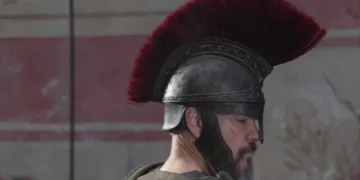

















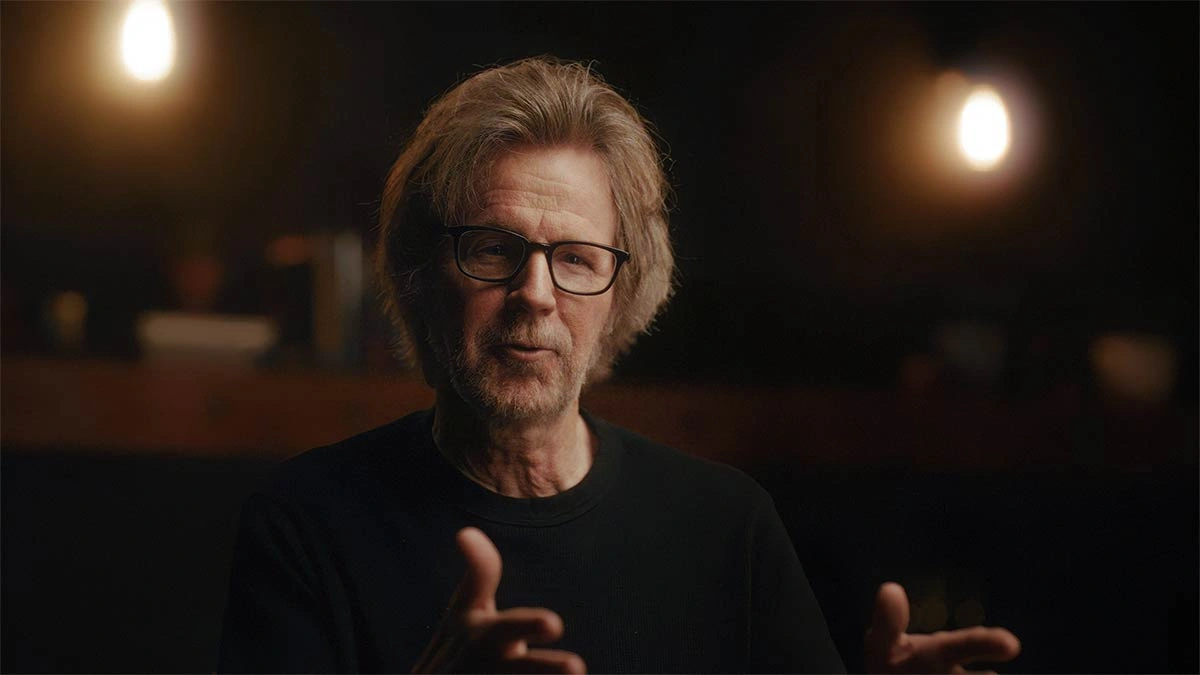

Playing POTUS studies a peculiar American ritual: the conversion of presidents into punchlines, then punchlines into public memory. Josh Greenbaum’s 92-minute documentary, based on Peter Funt’s nonfiction book, tracks comic portrayals of U.S. presidents and presidential hopefuls from Vaughn Meader’s John F. Kennedy routine to the age of Trump sketches, viral clips, and political outrage cycles.
The film is funny, fast, and stacked with people who know how to turn a mannerism into a national shorthand. Dana Carvey, Will Ferrell, Darrell Hammond, Kate McKinnon, Alec Baldwin, Chevy Chase, Keegan-Michael Key, and others treat impersonation as a craft, a burden, and occasionally a civic hazard. That last part gives the documentary its philosophical itch. What happens when a comic version of a leader becomes easier to remember than the leader himself?
Greenbaum’s answer is lively, incomplete, and very American. Maybe too American. The film keeps circling Saturday Night Live, which gives it its best material and its most obvious blind spot.
From Meader to Michaels
The documentary moves in a clean chronological line, beginning with Vaughn Meader’s Kennedy impersonation and the surreal fame of The First Family. That early stretch is fascinating because it catches television comedy at the moment it learned that a president could be imitated at mass scale. Power had a face. Now it had a voice you could parody at parties.
Greenbaum then touches on the Smothers Brothers, Rich Little, and Richard Nixon’s brittle relationship with mockery. Nixon, with his theatrical resentment and gothic sweatiness, practically seems designed for the age of televised suspicion.
From there, the film hurries toward Studio 8H, where Saturday Night Live becomes the main stage for presidential caricature: Chevy Chase’s Gerald Ford, Phil Hartman’s Reagan, Dana Carvey’s George H.W. Bush, Darrell Hammond’s Clinton, Will Ferrell’s George W. Bush, the uneven Obama years, the Trump escalation, and the revolving door of Bidens.
The three-act format keeps things digestible, though it sometimes feels assembled with a whiteboard marker still squeaking in the background. The faux-Morgan Freeman narration is a cute device that perhaps needed one fewer committee meeting. Still, the structure works when the film treats political comedy as a living archive. It falters when that archive shrinks into an SNL scrapbook, with animation, stand-up, cinema, internet satire, and global traditions left waiting outside security.
The Alchemy of the Tic
The film is strongest when comedians explain how the mask is built. Carvey’s George H.W. Bush begins almost as a failed experiment, then finds its pulse in the hands, the cadence, the strange mixture of John Wayne and Mr. Rogers. That is the documentary’s richest idea: impersonation is less about resemblance than recognition. The face can be wrong. The soul-tic has to land.
Chevy Chase’s Gerald Ford is the primal example of this phenomenon. Ford, an athletic man, becomes remembered through stumble-comedy, a presidency filtered through pratfall mythology. Darrell Hammond locates Bill Clinton through appetite and charm, the smile of a man who makes every listener feel chosen.
Ferrell’s George W. Bush turns verbal drift and boyish simplicity into a political cartoon with oddly soft edges. Alec Baldwin’s Trump, by contrast, arrives as satire with a security detail, haunted by backlash, threats, and the exhaustion of performing a man who performs himself daily.
Some of the most revealing moments come from uncertainty. Will Forte jokes about following Ferrell as Bush, treating himself like a sequel nobody ordered. James Austin Johnson recalls the panic of finding Biden quickly. McKinnon’s Hillary Clinton is more delicate, a performance shaped by admiration, anxiety, and the knowledge that parody can bruise its subject.
Keegan-Michael Key’s Luther, Obama’s anger translator, gives the film one of its sharpest philosophical turns. It reframes impersonation as pressure-release politics. Obama’s public composure, filtered through race, code-switching, and impossible expectations, needed a comic shadow to say what the real figure could not. Call it the satirical subconscious. Clunky term, useful idea.
Hyper-Reality, Democracy, and the Missing Internet
Playing POTUS keeps returning to the same unsettling question: do these impressions merely reflect public perception, or do they manufacture it? The answer, inconveniently, is yes. Ford becomes clumsy. Bush Sr. becomes verbal static. Gore becomes stiffness. Palin becomes a media image trapped inside its own quotation marks. Trump becomes a feedback loop so loud that parody sometimes feels redundant, like putting a fake mustache on a man already wearing three.
This is where the documentary’s “comic hyper-reality” becomes its most productive concept. A sketch can harden into civic folklore. Voters may forget policy details, yet remember a gesture, a catchphrase, a vocal wobble. Democracy, in this reading, is partly governed by meme sediment. Grim? A little. Funny? Also yes. That contradiction is the film’s natural habitat.
Greenbaum struggles when he shifts from comedy workshop to democratic warning siren. The move from silly voices to 9/11, election consequences, death threats, and free-speech anxieties is valid, but the tonal stitching shows. The film wants to laugh at power and diagnose the conditions that make laughter dangerous. Both aims matter. They do not always share the same rhythm.
Its omissions hurt. South Park, The Simpsons, The President Show, viral Trump impersonators, Sarah Cooper-style lip-sync satire, and non-American political comedy receive little or no serious attention. For a documentary about images escaping their creators, that absence feels strange. The internet is now the republic’s second nervous system, and Playing POTUS treats it like a side hallway.
Still, the film remains brisk, funny, and smarter than its tidiest passages suggest. Its frame is narrow, but inside that frame sits a valuable study of how democracies turn leaders into characters, then argue over who wrote the joke.
Playing POTUS is an American feature documentary film that celebrated its world premiere at the Tribeca Festival on June 6, 2026. Directed by Josh Greenbaum, the production pulls back the curtain on the storied history of presidential impersonations on American television, relying heavily on archival insights from late-night staples like Saturday Night Live. The narrative explores how prominent comedians do not merely parody commanders-in-chief, but actively shape public perception and influence modern political culture. Audiences looking to watch the project can track its screening schedule across the festival circuit, including designated venues like the Village East by Angelika, as wider streaming and theatrical distribution platforms are finalized.
Full Credits
Title: Playing POTUS
Distributor: EverWonder Studio, Delirio Films, Candid Camera Inc., Green Bomb Productions (Festival premiere hosted at the Tribeca Festival, with worldwide distribution rights managed by CAA)
Release date: June 6, 2026
Running time: 92 minutes
Director: Josh Greenbaum
Writers: Josh Greenbaum (Based on the book Playing POTUS by Peter Funt)
Producers and Executive Producers: Rafael Marmor, Christopher Leggett, Josh Greenbaum, Peter Funt, Mark Itkin, Ian Orefice, Jon Adler, Amanda Spain, Jonna McLaughlin
Cast: Dana Carvey, Will Ferrell, Maya Rudolph, Keegan-Michael Key, Alec Baldwin, Kate McKinnon, Chevy Chase, Darrell Hammond, James Austin Johnson
Director of Photography (Cinematographer): Ronan Killeen, John Rutland, Jay Visit, David Jacobson
Editors: Monique Zavistovski
Composer: Nathan Halpern
The Review
Playing POTUS
Playing POTUS is a sharp, funny, and uneven documentary that finds its best material in the craft of political impersonation. Its SNL focus gives the film energy, access, and memorable interviews, yet also narrows a subject that clearly deserves a wider lens. Josh Greenbaum captures how satire can freeze politicians into public memory, sometimes unfairly, sometimes hilariously. The film stumbles when it reaches for heavier democratic warnings, but its comic insight still lands.
PROS
- Strong interviews with major comedy figures
- Fascinating look at how impersonations are built
- Funny archival clips and brisk pacing
- Smart ideas about satire shaping public memory
- Strong sections on Bush Sr., Clinton, Obama, and Trump
CONS
- Too dependent on Saturday Night Live
- Limited attention to internet satire and animation
- Tonal shifts can feel awkward
- Some major impersonators and shows are barely covered
- Political analysis could go deeper