























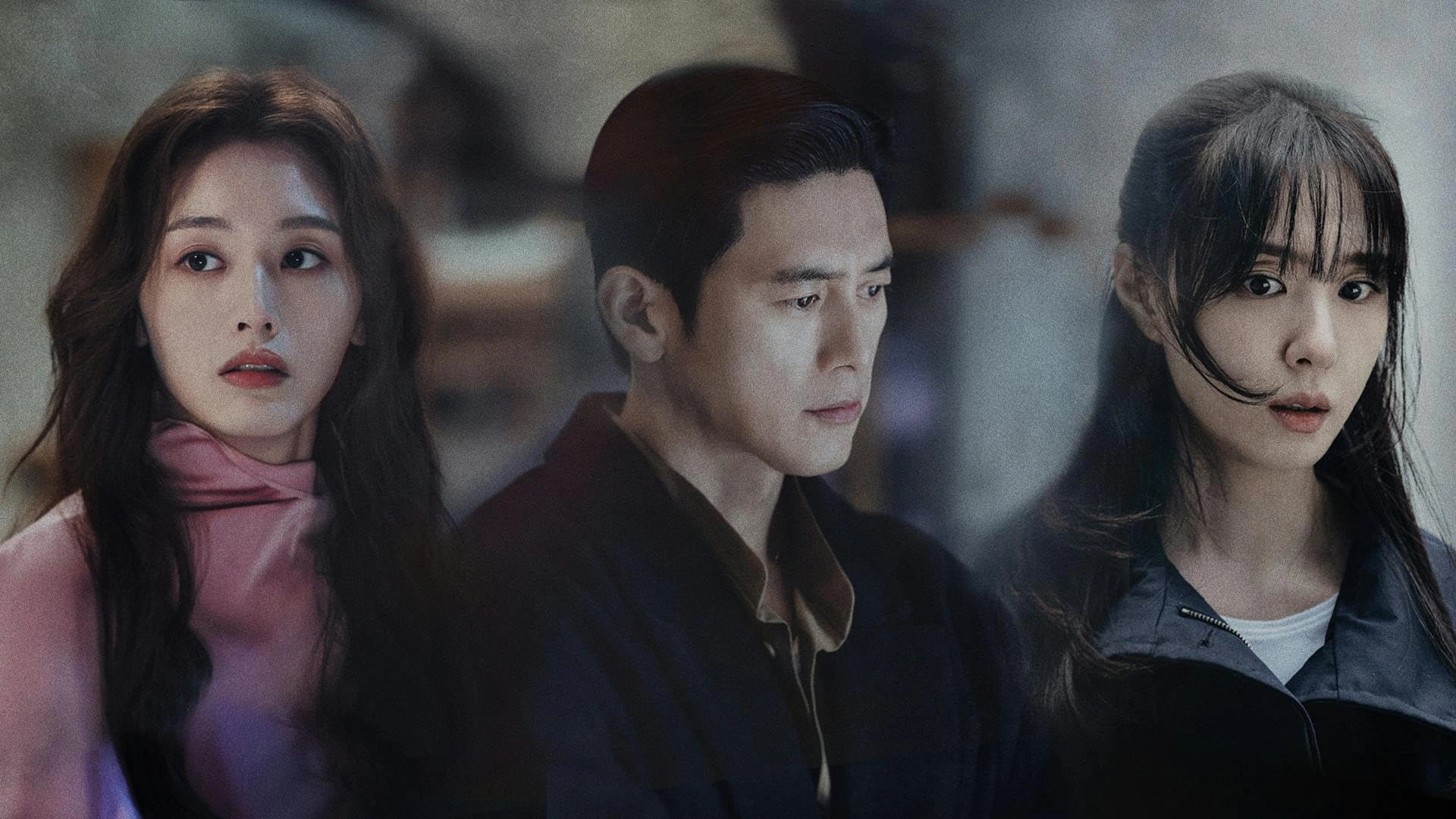

Reverse is an eight-episode Korean psychological thriller with a premise that seems familiar for roughly five minutes, then starts rearranging the furniture while the viewer is still standing in the doorway. Ham Myo-jin survives a brutal car crash after fleeing a villa explosion that leaves Choi Hee-su and her powerful father dead. She wakes from a coma with partial amnesia, unable to remember her own past, her connection to the dead, or the true nature of her relationship with architect Ryu Jun-ho.
That setup could have led to a standard amnesia mystery, complete with soft-focus panic and suspiciously convenient revelations. Reverse has colder intentions. Its title signals the show’s main storytelling method: every assumption is built to be turned inside out.
Protection curdles into control. Victimhood begins to look less clean. Memory returns as evidence, accusation, and performance. The series adapts an audio project into visual drama, and that origin seems to shape its obsession with perception. What is seen cannot always be trusted. What is remembered may be worse.
A Puzzle That Rewards Patience, While Testing It
The story mechanics of Reverse are deliberately unstable. The series builds its mystery through fractured timelines, recurring flashbacks, sensory triggers, and scenes that hover between recollection and present action. Myo-jin’s investigation starts with details small enough to be dismissed, which is exactly what makes them effective: a new phone with no contacts except Jun-ho, missing personal items, conflicting stories about Hee-su, and rumors suggesting Jun-ho may be linked to Chairman Choi’s death.
From there, the narrative widens into a web involving an art studio, private investigator Sang-ho, gangster Jong-su, the dying Ki-cheol, and several criminal groups whose connections only become readable after the show has made the audience work for them. Sometimes a little too hard. There are moments in the middle stretch, especially around episodes 4 and 5, where confusion feels less like suspense and more like someone dropped the script pages, picked them up, and decided the chaos had artistic potential.
Still, the amnesia device has purpose. Myo-jin’s memory loss is the engine of the story, shaping every power dynamic around her. She needs Jun-ho, yet her instincts warn her against him. He offers care, stability, and domestic safety, while quietly restricting her access to truth. The house becomes a soft prison. His kindness has locks on it.
The final episodes give the structure much of its force. Once motives sharpen and the hidden chronology begins to settle, Reverse reveals how carefully many of its earlier fragments were planted. The payoff does not erase the mid-series clutter, but it does prove that the show’s disorder has design behind it.
No Clean Heroes in a House of Mirrors
Myo-jin is the kind of protagonist a thriller loves and fears: damaged, intelligent, unreadable, and perhaps far less innocent than the story first permits us to believe. At first, she seems fragile in a traditional post-trauma register, a woman waking into terror with no map of her own life. As her memories return, that softness begins to crack. Revenge, deception, and rage over her parents’ deaths reshape the character into something sharper.
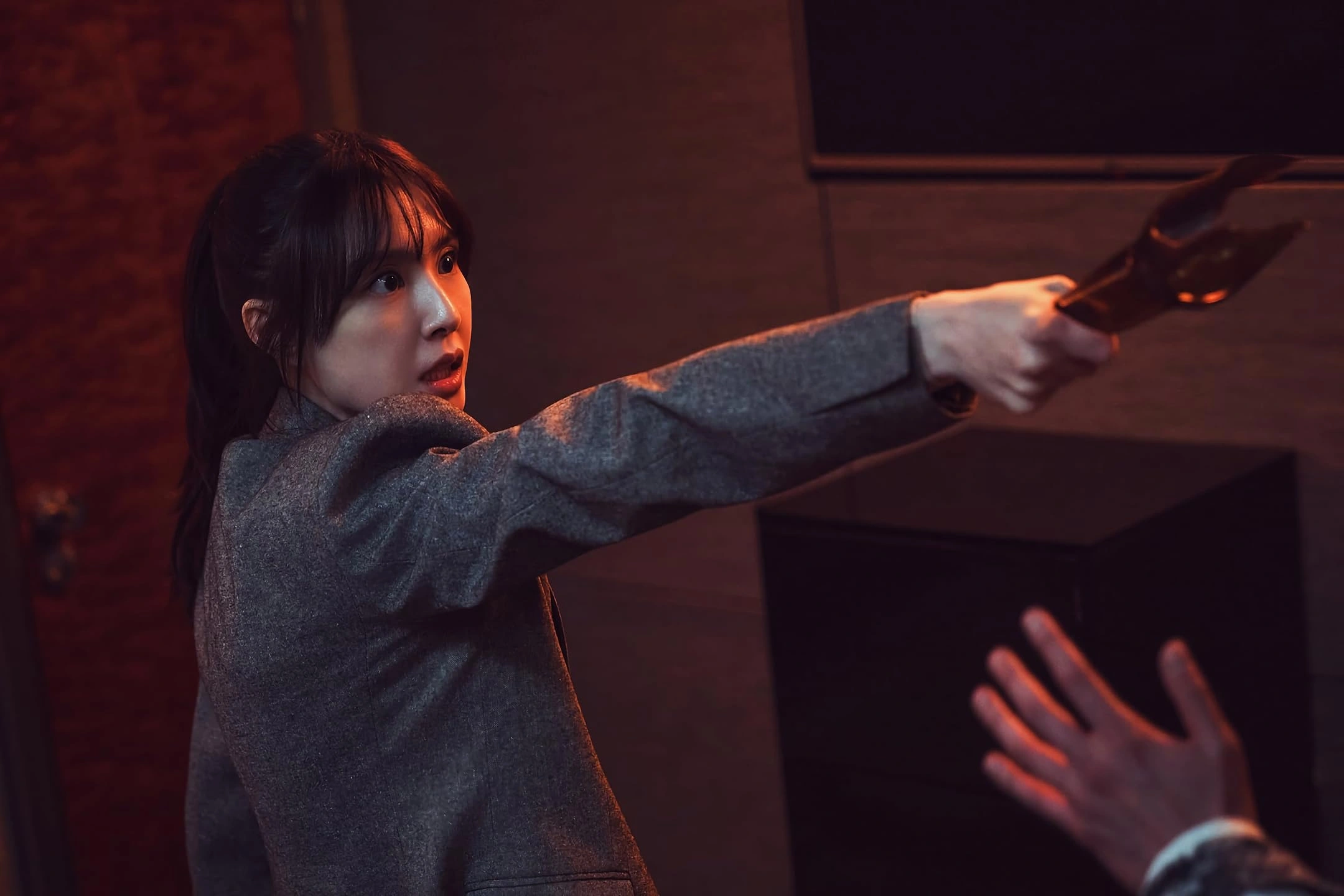
Seo Ji-hye’s performance understands the value of restraint. She does not telegraph every shift in Myo-jin’s mind. Instead, she works through stillness, distant stares, and small facial adjustments that make the character feel like a sealed room with the light on under the door. The viewer keeps watching for movement inside.
Go Soo’s Jun-ho is a polished study in false reassurance. He is refined, successful, controlled, and attentive in ways that should comfort Myo-jin. Instead, his calm becomes one of the show’s most effective threats. He lies about Hee-su, monitors Myo-jin’s recovery, questions her doctor, and treats information like private property. Go Soo plays him without obvious villain flourishes, which makes him far more unsettling. Jun-ho does not need to raise his voice to dominate a room. He just needs to decide what someone else is allowed to know.
Hee-su gives the drama its tragic charge. Her bond with Myo-jin carries affection, resentment, privilege, betrayal, and the kind of emotional debt no one pays cleanly. Ki-cheol, tied to Myo-jin’s original trauma, brings a weary moral gravity to the revenge plot. Sang-ho, meanwhile, functions as a rare practical presence in a story packed with opportunists. In Reverse, basic usefulness starts to look heroic. That says plenty about the neighborhood.
Psychological Noir with a Combustible Soul
The visual identity of Reverse leans into psychological noir, using spaces and recurring images to underline its themes of entrapment and corrupted truth. The villa explosion is the primal image, the wound from which the whole drama bleeds. Fire keeps returning as memory, guilt, violence, and warning. It is less a motif than a nervous system.
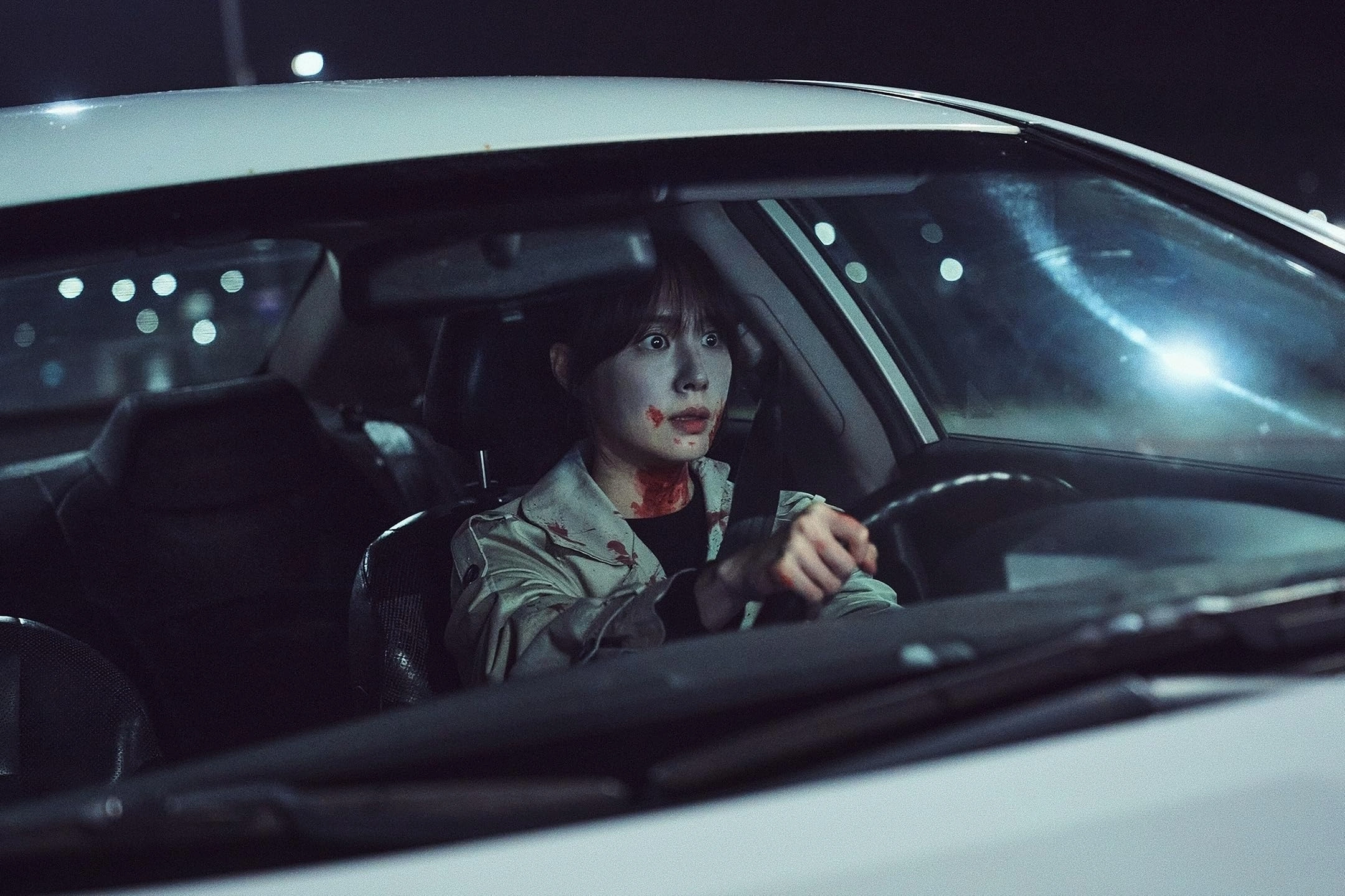
The show’s cold hospital rooms, dim interiors, and carefully controlled domestic spaces give the drama a chilly, suspicious texture. Jun-ho and Myo-jin’s home is especially important. It is presented as a place of recovery, then slowly reframed as a psychological enclosure. The architecture matters here. Jun-ho designs spaces for a living, and the series turns that fact into character logic. He knows how to arrange walls, sightlines, entrances, and exits. His emotional life follows the same blueprint.
Thematically, Reverse is strongest when it connects personal revenge to class privilege and social power. Chairman Choi’s world, Hee-su’s wealth, Jun-ho’s architectural ambition, and the surrounding criminal networks all suggest a society where guilt can be managed, buried, or converted into opportunity. Suffering becomes leverage. Truth becomes a negotiable asset.
The show is not always graceful. Some side criminals feel overused, and a few false leads look suspiciously like padding wearing sunglasses. Yet the series has a bleak confidence that carries it through its messier passages. Its final movement is tense, cruel, and emotionally charged, turning the mystery into a study of how trauma can distort the self long after the original violence has ended.
Reverse is a South Korean mystery revenge thriller television series that premiered its eight-episode season on April 17, 2026, running through May 8, 2026, on the domestic streaming network Wavve. The narrative follows a traumatized woman who survives a devastating villa explosion with complete amnesia, setting off a calculated pursuit of vengeance as she uncovers a dark conspiracy involving her elite fiancé and a powerful corporate conglomerate. International viewers can catch the entire suspense series on regional digital platforms like Viu and Kocowa, while domestic audiences can stream it directly via the Wavve subscription service.
Where to Watch Reverse Online

Full Credits
Title: Reverse
Distributor: Wavve, Viu, Kocowa
Release date: April 17, 2026
Rating: 15+ / TV-MA
Running time: 60 minutes per episode
Director: Lim Gun-joong
Writers: Lim Gun-joong
Producers and Executive Producers: Outrun Brothers Pictures, Another Pictures, NGM Studios, Studios IN
Cast: Seo Ji-hye, Go Soo, Kim Jae-kyung, Im Won-hee, Yoon Je-moon, Shim Hyung-tak, Choi Moo-sung, Ku Sung-hwan, Kim Min, Kang Young-seok, Lee Jung-hyun
The Review
Reverse
Reverse is a tense, demanding psychological thriller that turns amnesia into a weaponized story engine. Its middle stretch can feel crowded and needlessly opaque, yet the final episodes give its fractured design a sharp emotional payoff. With strong performances from Seo Ji-hye and Go Soo, the series works best as a noir-tinged study of memory, revenge, and moral decay.
PROS
- Strong central mystery
- Excellent lead performances
- Smart use of memory and fractured timelines
- Dark, polished visual style
- Rewarding final episodes
CONS
- Mid-series pacing gets messy
- Some side criminals feel excessive
- Timeline shifts can be confusing
- A few false leads feel overworked