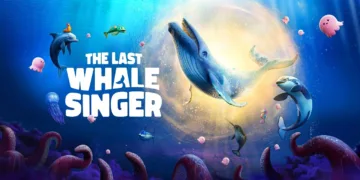


















The Last Whale Singer carries the clean emotional shape of a children’s fable: a young hero loses his family, rejects the gift he was born to inherit, then finds himself pulled back into responsibility when the world around him begins to collapse.
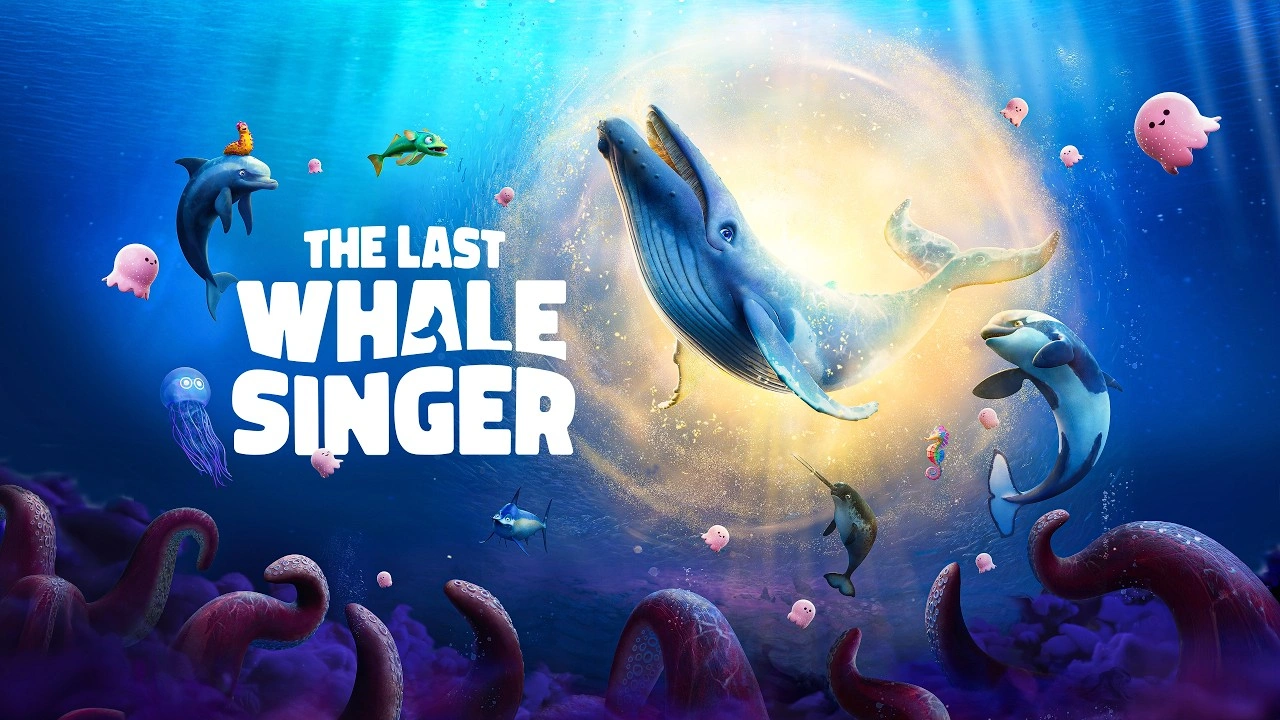
Vincent, a teenage humpback whale voiced by Vincent Tong, comes from a rare line of whales whose songs can heal the ocean. His father, Humphrey, holds that power with calm authority, restoring life to dying coral through voice alone. Vincent wants to follow him, until tragedy turns that desire into pain.
Writer-director Reza Memari builds the film as a gentle undersea fantasy, filled with magical creatures, mythic destinations, and ecological danger. The threat is Leviathan, a monstrous force poisoning the sea after escaping its prison.
Vincent’s answer is a quest to the Star Pool, a mystical resting place for dead sea creatures, where he hopes to reunite with his parents and save the ocean. The idea is heartfelt, simple, and easy to grasp. The execution often swims through familiar waters, yet the film’s sincerity gives it a soft emotional pull.
A Familiar Quest With a Clear Emotional Engine
Vincent’s journey follows a recognizable path, especially for anyone raised on animated films about orphaned heirs and reluctant saviors. As a child, he is eager and playful, still trying to discover his own song. After the loss of Humphrey and Lani, he grows into a guarded, wounded figure who wants distance from the role everyone expects him to fill. That shift gives the story its main emotional rhythm. Vincent’s problem is not a lack of power. It is his fear that using his voice means reopening the wound he has spent years avoiding.
His closest companion is Walter, a remora caretaker voiced by Bruce Dinsmore, whose anxious chatter gives the film much of its comic texture. Walter functions almost like an overprotective support character in an adventure game, always nearby, always warning Vincent about danger, and always pulled into trouble anyway. Their dynamic helps the film soften its darker material, especially since Vincent’s grief and the poisoning of the ocean could have made the story heavier than its young audience might expect.
The quest gathers a busy collection of allies and odd encounters. Darya, a deaf orca voiced by Jennifer Wheeler-Hughes, starts with a sharper edge before becoming a meaningful companion. Ora, the seahorse oracle, pushes Vincent toward the mythic side of his mission. Figures like Monodonna the narwhal, King Karl the walrus, jellyfish collectives, and various comic sea creatures give the film the feel of a level-based adventure, where each new zone offers a fresh obstacle, guide, or gag.
That structure keeps the pacing active, yet it can make the film feel crowded. Some characters have enough personality to register. Others feel like charming designs waiting for a fuller scene. The story is strongest when it stays close to Vincent’s inner conflict: a young creature learning that healing the world starts with accepting the sound of his own voice.
Color, Magic, and an Ocean Under Strain
The ocean gives The Last Whale Singer a natural playground for scale and spectacle. The film uses coral reefs, glowing depths, icy prisons, garbage patches, and the Star Pool to create a world that feels broad enough for adventure. The Star Pool is one of the movie’s lovelier ideas, turning the afterlife into a luminous underwater space where magic feels right at home. Leviathan’s purple ink clouds add a welcome dose of menace, giving the danger a visual form children can understand without being overwhelmed.
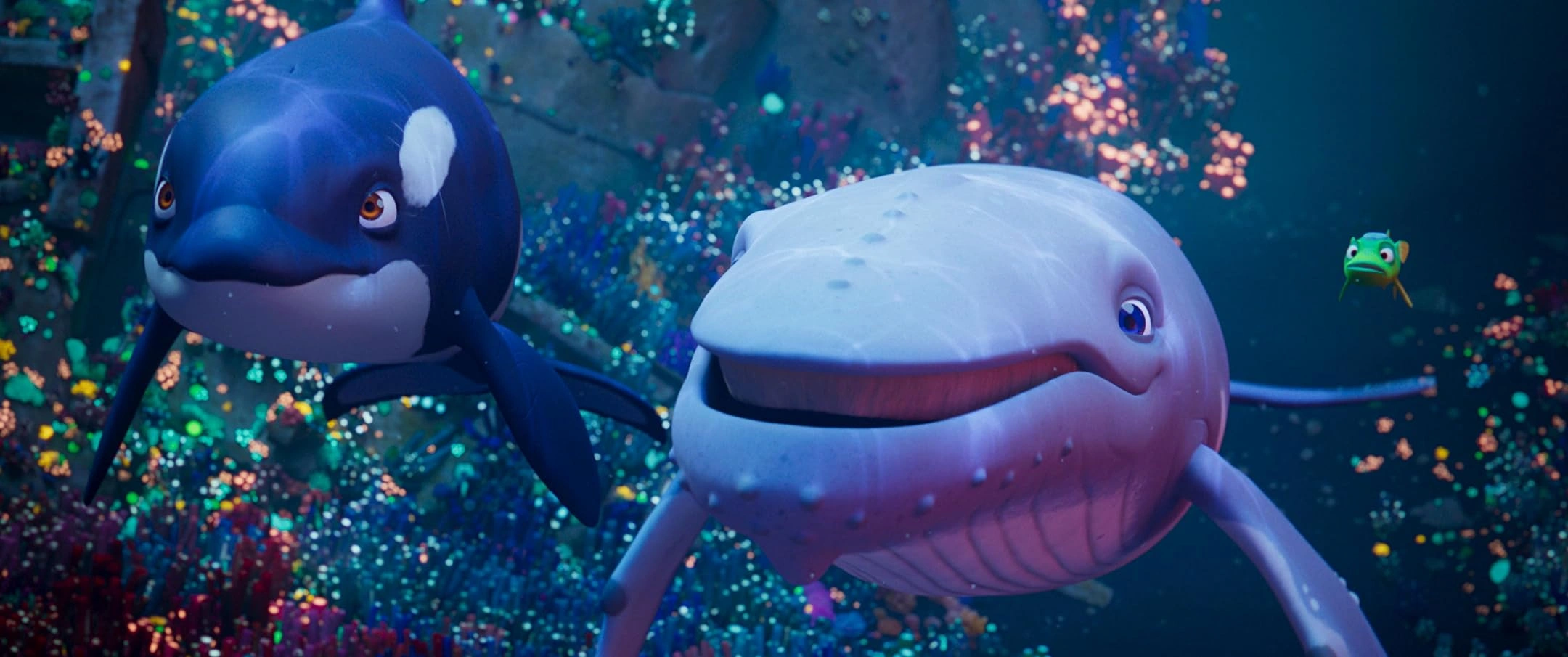
The animation has real charm in select moments. Character designs are expressive, the brighter fantasy spaces have an inviting quality, and several compositions catch the eye. The technical side is less consistent. The water does not always carry the weight, drag, or fluidity that would make the creatures feel fully suspended in the sea. Motion-heavy scenes can look flatter than the still images promise. For a film working outside the biggest animation studios, the care is visible, yet the limits are visible too.
The environmental material gives the film a sharper texture. Dying reefs, pollution, shipping dangers, and human-made damage shape the world without dragging the story into lecture mode. Humans barely appear, yet their impact is everywhere. That choice works well because it lets the sea creatures remain the emotional focus while the damage around them speaks for itself. Leviathan becomes a monster, a disaster, and a symbol of poisoned nature turning hostile after too much harm.
The world-building can be strange in ways that help the film stand apart from its familiar story beats. Whale singers, fish-heaven imagery, sea monarchs, oracles, magical songs, and comic marine behavior all sit in the same imaginative current. The mythology sometimes gets busier than the plot can comfortably carry, yet the oddness gives the movie a personality of its own.
Built for Young Viewers, Carried by Sincerity
The tone is warm, bright, and clearly pitched toward elementary school-aged viewers. The humor favors nervous banter, exaggerated creature behavior, and quick undersea detours. Walter’s constant worry gives the film an accessible comic rhythm, while Darya’s tougher presence gives Vincent someone to push against.
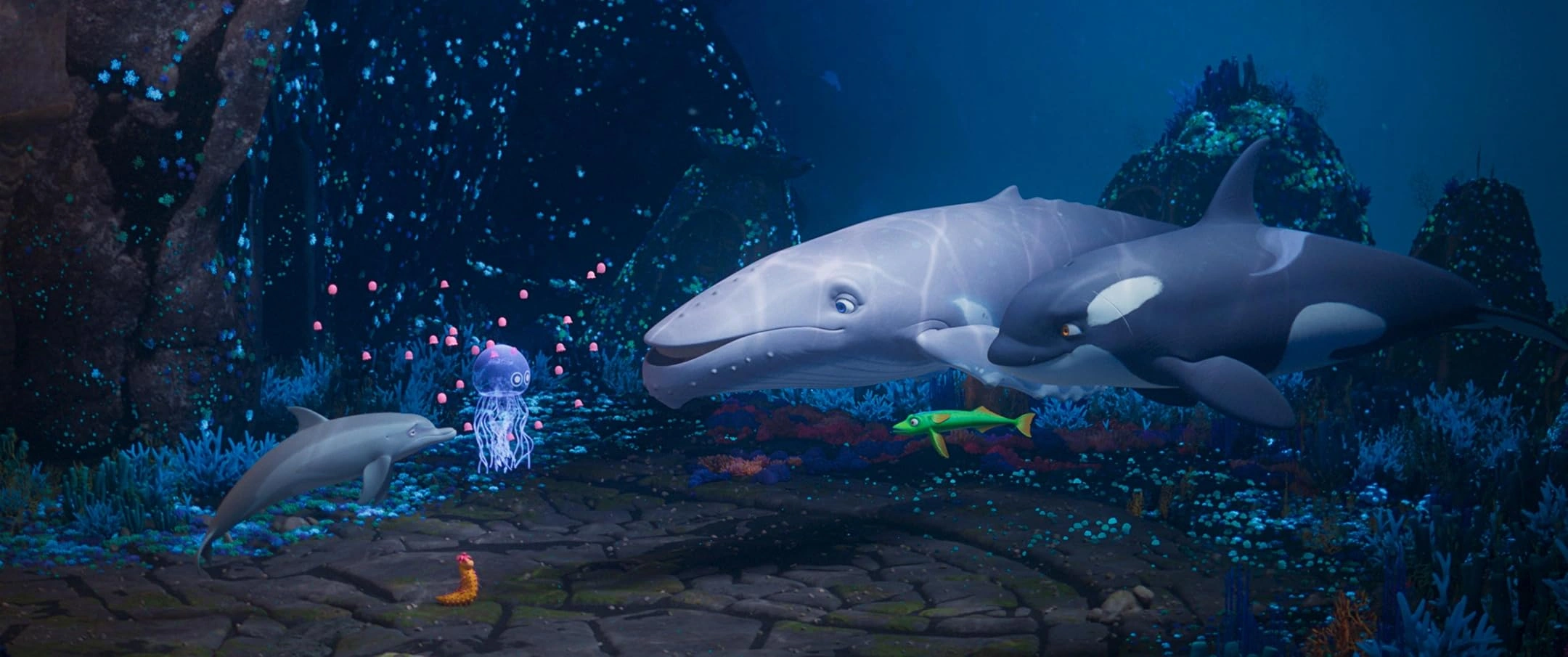
The voice cast helps keep the energy moving through patches where the writing becomes predictable. Tong gives Vincent a believable mix of sadness, frustration, and fragile courage. Dinsmore brings Walter the right level of panic without making him irritating. Wheeler-Hughes gives Darya enough warmth to keep her from becoming a stock tough-girl sidekick.
For adults, The Last Whale Singer may feel too familiar in its dramatic architecture. Its chosen-one arc, parental loss, comic companion, mystical destination, and monster threat all belong to a well-traveled animated tradition. Yet the film has a good heart, and that matters for a modest family adventure.
It wants children to think about grief, courage, care for the natural world, and the value of helping others. Those ideas arrive in broad strokes, but broad strokes can work when the intended viewers are still learning how to name big feelings.
The film succeeds best when it trusts its central image: one wounded young whale, alone in a damaged ocean, discovering that his song can still heal something.
The Last Whale Singer is an imaginative 3D computer-animated family adventure film that made its initial festival rounds late last year before opening wide in United States cinemas on June 5, 2026. Directed by Reza Memari, the story dives deep into the ocean to follow Vincent, a teenage humpback whale and the orphaned son of the legendary last Whale Singer, whose mystical voice once maintained the safety of the seas. When an ancient, ink-spewing monster called the Leviathan breaks free from a melting iceberg, Vincent must conquer intense self-doubt, escape the dangers of the open ocean, and find his own unique voice to restore balance to his underwater home. Distributed domestically by Viva Pictures, families can catch this heartwarming coming-of-age journey playing on the big screen at major commercial theaters nationwide.
Where to Watch The Last Whale Singer (2026) Online




Full Credits
Title: The Last Whale Singer
Distributor: Viva Pictures, Viva Kids, Global Screen
Release date: September 28, 2025 (Schlingel International Film Festival), June 5, 2026 (United States theatrical release)
Rating: PG
Running time: 91 minutes
Director: Reza Memari, Steven Majaury, Pavel Hrubos
Writers: Reza Memari
Producers and Executive Producers: Maite Woköck, Luke Daniels, Kyle Bornais
Cast: Vincent Tong, Bruce Dinsmore, Jenna Wheeler-Hughes, Chimwemwe Miller, Jessica Kardos, Priyanka, Jen Viens, Matthew Kabwe
- Composer: Daníel Bjarnason
The Review
The Last Whale Singer
The Last Whale Singer is a sincere, kid-friendly animated adventure with a touching message about grief, courage, and finding one’s voice. Its story is familiar, and the animation can feel uneven, especially in the underwater movement, yet its ecological themes, warm voice work, and gentle emotional core give it enough charm for younger viewers.
PROS
- Heartfelt central message
- Appealing environmental themes
- Warm voice performances
- Some lovely fantasy visuals
- Accessible for young children
CONS
- Familiar story structure
- Uneven animation quality
- Overcrowded supporting cast
- Plot can feel busy
- Limited appeal for older viewers