























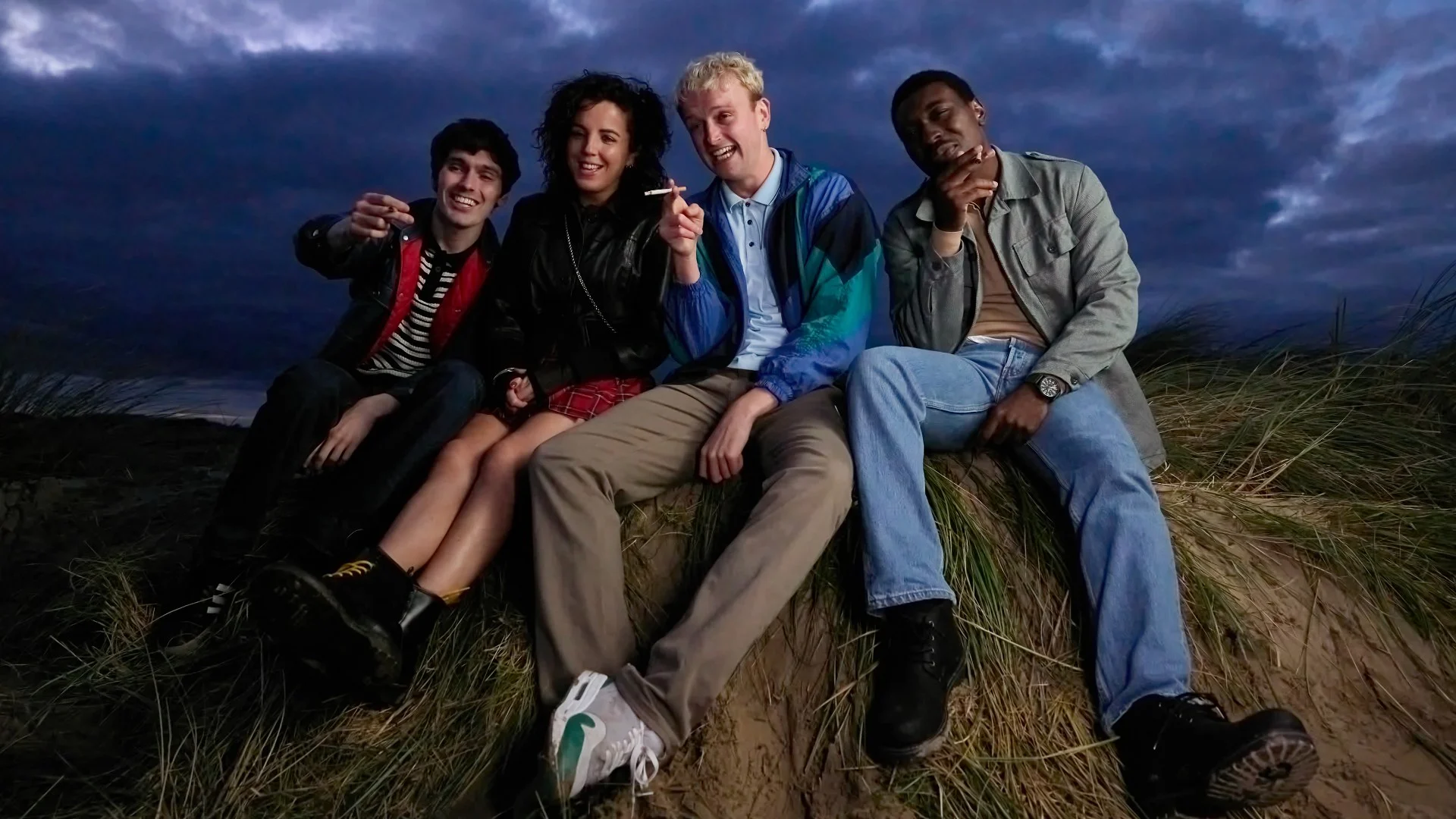

Nostalgia is often treated as a harmless cultural product, a comfortable return to a past stripped of its complications. Skintown understands something more uncomfortable: nostalgia can exist beside fear, and the memories people cherish can be built inside environments they desperately wanted to leave behind. Kieron J. Walsh’s Northern Irish coming-of-age drama uses the final years of The Troubles and the explosion of 1990s rave culture to examine a generation attempting to create personal freedom inside a society shaped by inherited divisions.
Set in Enniskillen in 1994, the film follows Vinny (Jack Rowan), a young man who has spent his entire life surrounded by conflict and dreams of escaping his hometown. His escape fund sits hidden in a biscuit tin, a small physical reminder of a future he has imagined but cannot reach. The political situation surrounding him is enormous, yet Vinny’s frustration is deeply personal. He is not trying to solve history. He is trying to survive it.
This distinction gives Skintown its strongest idea. The film is less interested in explaining The Troubles than examining what it meant for ordinary young people to grow up under their shadow. The violence appears through military patrols, bomb damage, sirens, and the constant awareness that danger exists nearby. Walsh avoids turning the period into a museum exhibit. The streets feel lived in, filled with people who have adapted to circumstances that should never have become normal.
A Generation Between Old Wars and New Possibilities
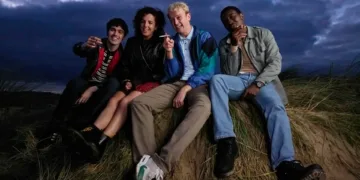
The film’s most interesting tension comes from its portrayal of young people inheriting conflicts that existed before they were born. Vinny’s relationship with Northern Ireland is complicated because his rejection of the place exists beside a deep connection to the people around him. His mother Karen (Roisin Gallagher), his friend Jonty (Chris Walley), and the eccentric characters surrounding Tony Pepperoni’s pizzeria represent the ordinary life he wants to abandon.
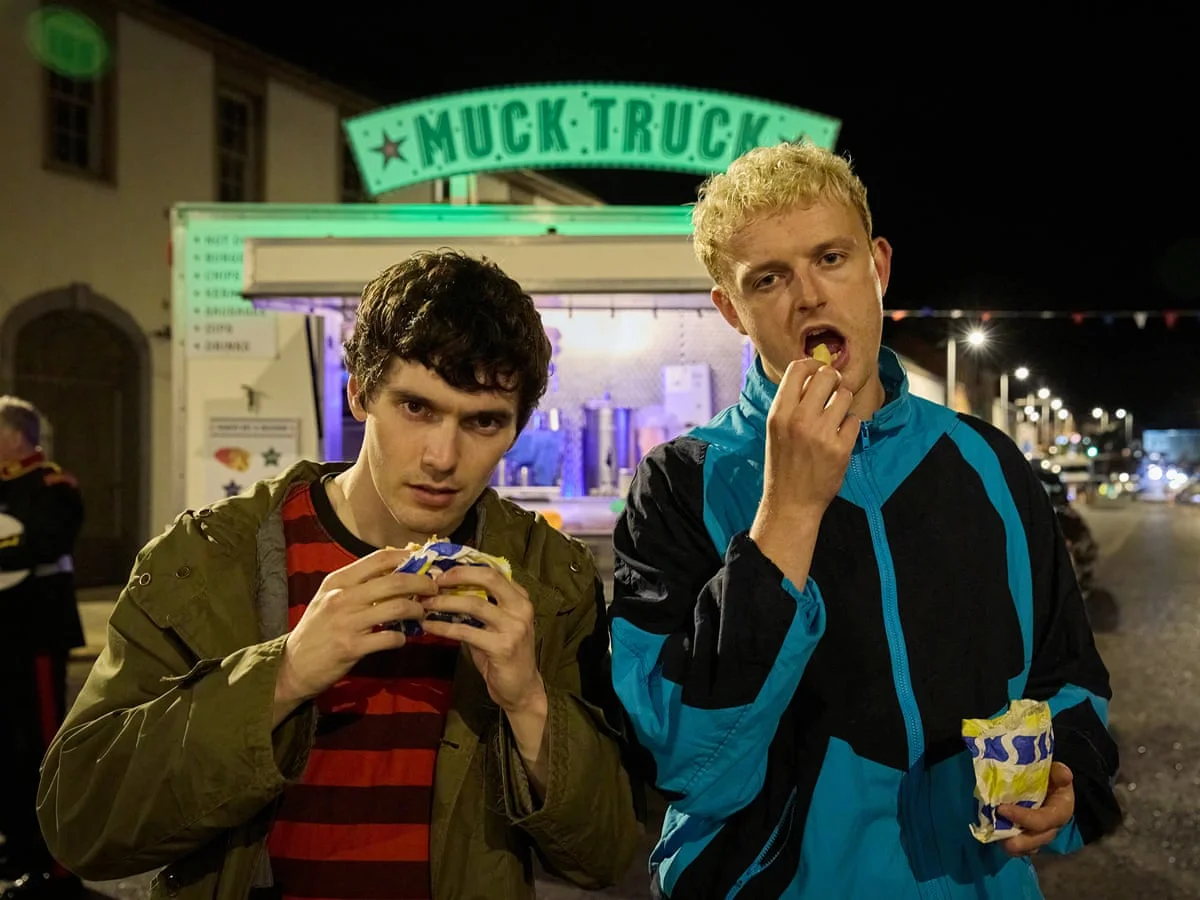
Jonty becomes the emotional counterweight to Vinny’s frustration. His enthusiasm for music, nightlife, and friendship creates a version of youth untouched by the political categories surrounding them. Chris Walley brings a restless charm to the character, making Jonty feel like someone determined to enjoy life because there is no guarantee tomorrow will offer the same chance.
The arrival of an opportunity to sell stolen ecstasy tablets changes the nature of their escape fantasy. The deal promises quick money and a route out, yet it also places them deeper inside the structures of violence they hope to avoid. The film understands the irony of this choice: freedom becomes available through an act that ties them closer to the forces controlling their environment.
Rave Culture as Temporary Liberation
The rave sequences provide Skintown with its most revealing cultural observation. The nightclub becomes a rare space where the divisions outside appear briefly suspended. The announcement of the IRA ceasefire coincides with a night of dancing where Catholics, Protestants, and British soldiers share the same atmosphere of release.
This moment captures a historical contradiction. The possibility of peace does not erase decades of conflict, but it creates a feeling that another way of living might exist. Walsh is careful not to suggest that music or ecstasy created political transformation. Instead, the film examines how youth culture offered a temporary language of connection during a period defined by separation.
The details of this world give the film much of its personality. The pub’s affection for BBC newsreader Laura Stuart, the obsession with 1990s music, the absurdity of Tony Pepperoni’s pizza business, and Jonty’s joking use of religious language while distributing pills all create a portrait of a community using humour to manage impossible circumstances.
A Warm Film With a Careful Politics
The danger for a film about a divided society is reducing complexity into easily acceptable messages. Skintown chooses reconciliation over confrontation, and that decision creates both its appeal and its limitations. The film recognises suffering across communities, yet its desire to avoid alienating any audience sometimes prevents it from examining the political forces behind that suffering with greater intensity.
Its characters are more sharply drawn than its historical argument. Vinny’s friendship with Wilson (Hope Ikpoku Jnr), a Black British soldier from Manchester, complicates assumptions about identity and belonging. Both characters joined their respective paths seeking something beyond their origins, only to discover that escape rarely means leaving history behind.
The screenplay occasionally relies too heavily on Vinny’s narration, explaining feelings that the performances and images already communicate. The film is strongest when it trusts its details and allows ordinary moments to reveal the weight of the era.
Skintown ultimately presents a generation trying to imagine itself beyond the divisions handed down to it. It does not dismantle the myths surrounding the past, nor does it offer a definitive account of Northern Ireland’s history. Its value lies elsewhere: in recognising that behind political conflicts were young people searching for music, friendship, love, and a reason to believe tomorrow might look different.
Skintown held its world premiere at the Edinburgh International Film Festival on August 16, 2026, where it won the prestigious Sean Connery Prize for Feature Filmmaking. Adapted from Ciarán McMenamin’s novel and set in 1994 as Northern Ireland takes its initial steps toward peace, the comedy-drama follows two best friends embarking on a reckless, high-stakes trip to jump-start their futures.
Full Credits
Title: Skintown
Distributor: Edinburgh International Film Festival / Keeper Pictures
Release date: August 16, 2026 (Edinburgh International Film Festival)
Running time: 1 hour 39 minutes
Director: Kieron J. Walsh
Writers: Ciarán McMenamin (novel)
Producers and Executive Producers: Brendan J. Byrne, Yvonne Donohoe
Cast: Jack Rowan, Chris Walley, Jamie-Lee O’Donnell, Hope Ikpoku Jnr
Director of Photography (Cinematographer): Ruairí O’Brien
Editors: John O’Connor
Composer: Kormac
The Review
Skintown
Skintown finds a thoughtful space between nostalgia and historical memory, using the energy of 1990s rave culture to examine how young people inherit conflicts they never created. Its reluctance to confront the political realities with sharper edges occasionally softens its impact, yet the film’s affection for ordinary lives caught between violence and hope remains sincere. The performances understand the emotional cost of wanting to escape a place that shaped you
PROS
- Lived-in Northern Irish setting
- Strong young cast
- Sharp cultural observations
- Effective period details
CONS
- Overly familiar coming-of-age structure
- Voice-over heavy storytelling
- Safer political perspective