




























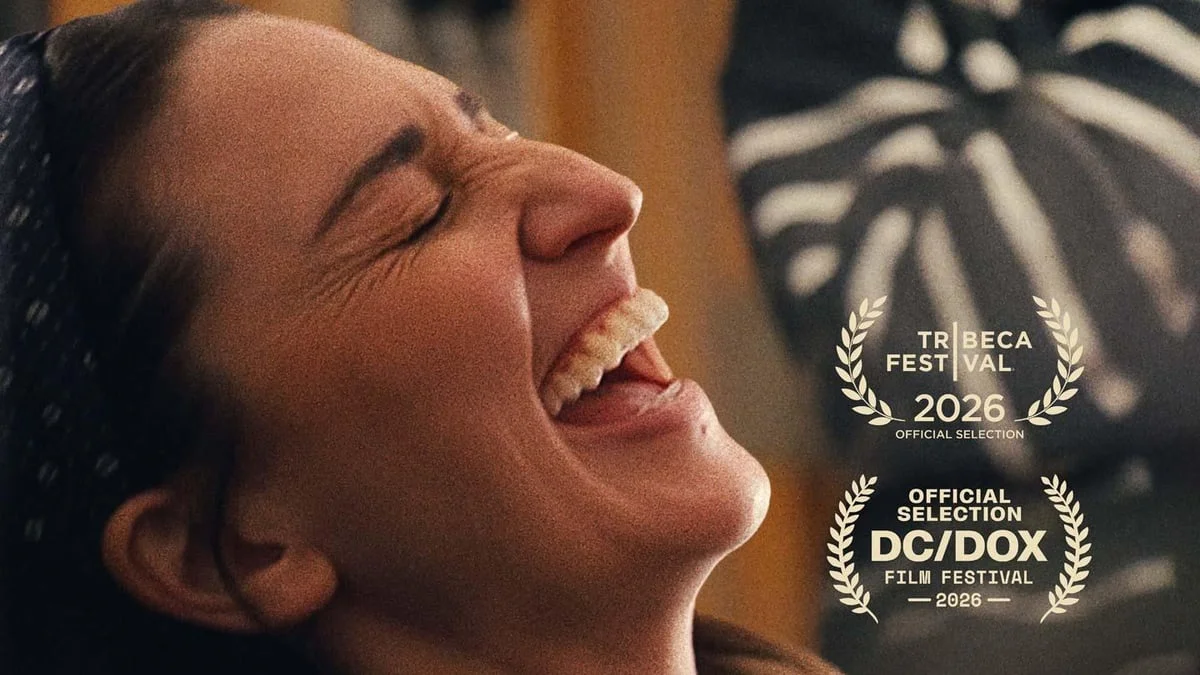

Dreamland Recording Studios gives Sara Bareilles exactly the kind of room grief prefers: enclosed, reverberant, and difficult to leave. The converted church in Hurley, New York, becomes the visual container for Josh Alexander’s Sara Bareilles: Good Grief, filmed across six days as Bareilles records her first studio album since 2019’s Amidst the Chaos. The architecture matters. Musicians sit close together beneath high ceilings, surrounded by microphones and cables, while Jenna Rosher’s camera keeps compressing the space through medium shots and tight close-ups.
Bareilles has assembled longtime collaborators Butterfly Boucher, Misty Boyce, Solomon Dorsey, Charley Drayton, and Rob Moose, with Jonathan Low and Alex McKeon engineering the sessions. Rather than recording each part separately, the musicians play together. A mistake belongs to the room. So does every hesitation.
That method gives the documentary its best formal idea. Bareilles arrives with songs already written, yet control has to be partially surrendered when several people are breathing through the same take. Her opening video diary complicates this immediately. She describes the album through grief, transition, and release, then casually calls herself a “massive control freak.” Alexander spends much of the film testing the tension inside that admission, sometimes intentionally, sometimes less convincingly.
The Studio as Confessional
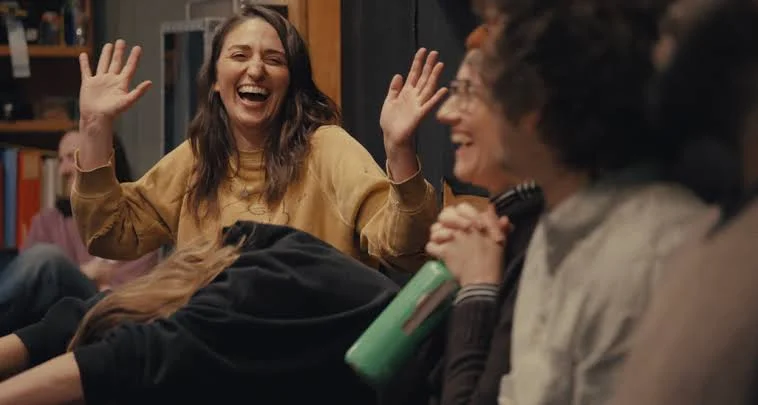
The rehearsal floor gradually turns into something resembling group therapy with expensive microphones. “Ladies in a Line,” drawn from Bareilles’ experiences in fertility clinics, triggers one of the film’s most exposed conversations. Butterfly Boucher discusses unsuccessful IVF treatments.
Bareilles responds with her own frustration and sorrow around trying to conceive. Later, Boucher cries while hearing the song played back. Rosher stays close to faces rather than retreating to a polite distance, making the camera feel present without becoming aggressively intrusive.
Misty Boyce’s material is rougher. She speaks about the strain of working and touring while raising her son, then recounts an alcohol-fueled argument during which she punched her partner twice. The disturbing part is less the confession than the film’s handling of it. Bareilles offers sympathy, the group briefly recognizes that the violence was wrong, and Alexander moves onward. A documentary so interested in examining emotional wounds seems strangely unwilling to remain with one that introduces genuine moral discomfort.
The conversations about sexism carry a similar friction. Boyce describes professional music as a male-dominated space where fathers can maintain singular career focus with fewer consequences. Bareilles agrees that the industry remains corrupted by those inequalities. Yet the room Alexander photographs contains a male-majority band and male engineers. He never presses that contradiction. Perhaps he does not want to. Good Grief protects its circle.
That protection can feel warm when the musicians laugh between takes or huddle around a playback. It becomes more questionable when nobody substantially challenges Bareilles. Charley Drayton quietly entering a booth to wave burning sage around her after an emotional spell is an odd, revealing image: ritual, care, employment, friendship, hierarchy. All occupy the same frame.
When the Songs Take Over
The documentary becomes considerably stronger when conversation gives way to performance. “Just a Kid” carries the sharpest emotional weight because Bareilles connects it to Chad Joseph, her college roommate, best friend, and former tour manager, who died from lung cancer in 2020. She remembers touring with Maroon 5 in 2006 without proper management, becoming overwhelmed, calling Joseph in tears, and watching him leave a stable job to help her. “He saved me,” she says.
Here, Alexander barely needs interpretation. The memory supplies it. Bareilles also discusses Gavin Creel, her friend and Waitress colleague who died in 2024. Her grief becomes less abstract in these passages because the dead regain names, histories, favors, and gestures. Loss stops being a theme and becomes an absence with coordinates.
The recording itself provides equally useful specificity. “Home,” “Love Story,” “Hands Off My Body,” “Ladies in a Line,” and “Just a Kid” reveal how Bareilles communicates arrangements to musicians, listens to playbacks, adjusts passages, and occasionally discovers something accidental. A bit of floor-stomping becomes percussion. Voices crack. Tears interrupt concentration. The body keeps intruding upon the polished record everyone is trying to make.
Bareilles’ resistance to Auto-Tune and artificial intelligence fits this material better than her “punk rock” framing suggests. She wants the voice left human enough to retain strain and error. Watching her struggle through emotionally loaded vocals gives that philosophy physical evidence. The breath before a line matters because the line might fail.
A Camera Inside a Protected Circle
Rosher’s close framing creates an unusual contradiction. The camera seems physically near everyone yet psychologically barred from certain rooms. Alexander rarely ventures far outside Dreamland. Bareilles walks her dog Louie. Her husband Joe Tippett appears briefly, filming her during a session and quietly supporting her. Archival clips supply pieces of career history. The documentary always returns to the studio, where Bareilles controls the songs, the schedule, and inevitably some portion of the atmosphere.
That confinement works beautifully during musical passages. Watching the band hear a demo, discuss an arrangement, play together, and listen back gives the space a changing emotional temperature. Yet the same containment makes the repeated conversations about fertility, motherhood, grief, and identity begin to circle themselves.
Conflict is the missing frequency. Musicians disagree when building records. Arrangements fail. Ideas get discarded. Tempers shorten. Good Grief offers almost none of that mess. Everyone remains remarkably affirming, which leaves the documentary suspended somewhere between intimate portrait and carefully supervised promotional film.
Still, the camera catches moments that supervision cannot fully sterilize: Boucher breaking during “Ladies in a Line,” Bareilles recalling the friend who abandoned stability to rescue her tour, a vocal take threatening to collapse under its own emotional history. Those images carry shadows the film itself occasionally seems reluctant to examine.
Sara Bareilles: Good Grief premiered at the Tribeca Film Festival on June 4, 2026, before expanding to national screenings on September 2, 2026. The intimate documentary captures the singer-songwriter and her close collaborators inside an Upstate New York studio as they record an intensely personal album born of profound loss and transformation.
Where to Watch Sara Bareilles: Good Grief (2026) Online
Full Credits
Title: Sara Bareilles: Good Grief
Distributor: Tribeca Enterprises, Brave Documentary
Release date: June 4, 2026 (Tribeca Film Festival), September 2, 2026 (National Screenings)
Director: Josh Alexander
Writers: Not publicly specified
Producers and Executive Producers: P!nk, Glennon Doyle, Abby Wambach
Cast: Sara Bareilles, Solomon Dorsey, Emily King, Joe Tippett
- Composer: Sara Bareilles
The Review
Sara Bareilles: Good Grief
Josh Alexander keeps the camera close enough to catch Sara Bareilles fighting through “Just a Kid” and “Ladies in a Line,” yet that intimacy comes with a peculiar sterility. Dreamland becomes a confessional chamber where grief, infertility, friendship, and motherhood circulate freely, while disagreement rarely enters the room. The live recording sessions give the film warmth, and Bareilles’ memories of Chad Joseph and Gavin Creel cut through its careful self-presentation. The documentary offers genuine vulnerability inside an environment whose doors never quite seem unlocked.
PROS
- Intimate close-up cinematography
- Powerful live vocal performances
- Moving Chad Joseph memories
- Strong communal recording sequences
- Honest discussions of grief
CONS
- Heavily controlled atmosphere
- Repetitive therapy-style conversations
- Little creative disagreement
- Limited recording-process detail