
























• Latest
  • Trending
Daniel Kaluuya

Daniel Kaluuya Joins Cannes Critics’ Week Jury Led by Rodrigo Sorogoyen

1 year ago
Brian Review

Brian Review: Friendship and Panic Drive a Winning Debut

The Fox Review

The Fox Review: Jai Courtney Gets Weird in a Sour Australian Black Comedy

Gambonanza Review

Gambonanza Review: Chess Gets a Roguelite Shuffle

Act One Review

Act One Review: A Psychosexual Thriller That Blurs Mentorship and Manipulation

Lucy Schulman Review

Lucy Schulman Review: A Warm Dramedy About Love, Loneliness, and Growing Up Late

Flag Day Review

Flag Day Review: Tradition and Contradiction March Side by Side

Easy Girl Review

Easy Girl Review: A Tender, Frustrating Drama Led by a Fearless Performance

Solarpunk Review

Solarpunk Review: Peaceful Crafting Above the Clouds

Badland Rising Review

Badland Rising Review: Strong Stunts Carry a Familiar Survival Story

Time of Death Review

Time of Death Review: Michael Kelly Anchors a Grim Prison Mystery

X-Men ’97 Season 2 Review

X-Men ’97 Season 2 Review: Apocalypse Rises in a Darker, Sharper Mutant Epic

The Alien Autopsy Scandal Review

The Alien Autopsy Scandal Review: A Witty Look at One of the 1990s’ Oddest Scandals

  • Home
  • Privacy Policy
  • Terms and Conditions
  • Gazettely Review Guidelines
Monday, June 15, 2026
GAZETTELY
  • Home
  • Movie and TV News
    Matt Damon Bourne

    Matt Damon Wants Another Bourne Film — and He’ll Take Your Story Ideas

    George Miller Mad Max

    George Miller Is Selling Mad Max — But Only After One Last Film and a TV Series

    Cape Fear Juliette Lewis

    ‘Cape Fear’ Creator Had Juliette Lewis in Mind Since Day One — and She Delivered

    Seth Rogen James Franco

    Seth Rogen Rules Out James Franco Reunion: “I Have No Plans” and “Haven’t Spoken in a Long Time”

    Tyra Banks

    Tyra Banks Sues Netflix for Defamation, Claims ANTM Docuseries Edited Out Her Acknowledgment of Sexual Assault

    Netflix and Paramount Warner

    DOJ Clears Paramount’s $111 Billion Warner Bros. Deal With No Strings Attached

    Ronnie Schell

    Ronnie Schell, Last Surviving Star of ‘Gomer Pyle: U.S.M.C.,’ Dies at 94

    The Batman Part II

    Matt Reeves Calls Action on ‘The Batman: Part II’ in London

    Remove term: Maternal Instinct Maternal Instinct

    Netflix’s ‘Maternal Instinct’ Documents the Texas Fetal Abduction Case That Put Taylor Parker on Death Row

  • Movie and TV Reviews
    Brian Review

    Brian Review: Friendship and Panic Drive a Winning Debut

    The Fox Review

    The Fox Review: Jai Courtney Gets Weird in a Sour Australian Black Comedy

    Act One Review

    Act One Review: A Psychosexual Thriller That Blurs Mentorship and Manipulation

    Lucy Schulman Review

    Lucy Schulman Review: A Warm Dramedy About Love, Loneliness, and Growing Up Late

    Flag Day Review

    Flag Day Review: Tradition and Contradiction March Side by Side

    Easy Girl Review

    Easy Girl Review: A Tender, Frustrating Drama Led by a Fearless Performance

    Badland Rising Review

    Badland Rising Review: Strong Stunts Carry a Familiar Survival Story

    Time of Death Review

    Time of Death Review: Michael Kelly Anchors a Grim Prison Mystery

    X-Men ’97 Season 2 Review

    X-Men ’97 Season 2 Review: Apocalypse Rises in a Darker, Sharper Mutant Epic

  • Game Reviews
    Gambonanza Review

    Gambonanza Review: Chess Gets a Roguelite Shuffle

    Solarpunk Review

    Solarpunk Review: Peaceful Crafting Above the Clouds

    House Flipper Remastered Collection Review

    House Flipper Remastered Collection Review: The Definitive Cozy Renovation Sim

    Tavern Talk Stories: Dreamwalker Review

    Tavern Talk Stories: Dreamwalker Review: Gentle Magic, Warm Characters, and Slow-Burn Choice

    Unrailed 2: Back on Track Review

    Unrailed 2: Back on Track Review: Railway Panic Has Never Been This Fun

    The 7th Guest Remake Review

    The 7th Guest Remake Review: Gothic Mystery Meets Escape Room Design

    Crushed In Time Review

    Crushed In Time Review: Sherlock Holmes Gets Pulled Into a Brilliantly Broken Adventure

    NBA THE RUN Review

    NBA THE RUN Review: Streetball Energy With Room to Grow

    World Heroes Perfect Review

    World Heroes Perfect Review: History’s Strangest Warriors Return to Battle

  • The Bests
No Result
View All Result
  • Home
  • Movie and TV News
    Matt Damon Bourne

    Matt Damon Wants Another Bourne Film — and He’ll Take Your Story Ideas

    George Miller Mad Max

    George Miller Is Selling Mad Max — But Only After One Last Film and a TV Series

    Cape Fear Juliette Lewis

    ‘Cape Fear’ Creator Had Juliette Lewis in Mind Since Day One — and She Delivered

    Seth Rogen James Franco

    Seth Rogen Rules Out James Franco Reunion: “I Have No Plans” and “Haven’t Spoken in a Long Time”

    Tyra Banks

    Tyra Banks Sues Netflix for Defamation, Claims ANTM Docuseries Edited Out Her Acknowledgment of Sexual Assault

    Netflix and Paramount Warner

    DOJ Clears Paramount’s $111 Billion Warner Bros. Deal With No Strings Attached

    Ronnie Schell

    Ronnie Schell, Last Surviving Star of ‘Gomer Pyle: U.S.M.C.,’ Dies at 94

    The Batman Part II

    Matt Reeves Calls Action on ‘The Batman: Part II’ in London

    Remove term: Maternal Instinct Maternal Instinct

    Netflix’s ‘Maternal Instinct’ Documents the Texas Fetal Abduction Case That Put Taylor Parker on Death Row

  • Movie and TV Reviews
    Brian Review

    Brian Review: Friendship and Panic Drive a Winning Debut

    The Fox Review

    The Fox Review: Jai Courtney Gets Weird in a Sour Australian Black Comedy

    Act One Review

    Act One Review: A Psychosexual Thriller That Blurs Mentorship and Manipulation

    Lucy Schulman Review

    Lucy Schulman Review: A Warm Dramedy About Love, Loneliness, and Growing Up Late

    Flag Day Review

    Flag Day Review: Tradition and Contradiction March Side by Side

    Easy Girl Review

    Easy Girl Review: A Tender, Frustrating Drama Led by a Fearless Performance

    Badland Rising Review

    Badland Rising Review: Strong Stunts Carry a Familiar Survival Story

    Time of Death Review

    Time of Death Review: Michael Kelly Anchors a Grim Prison Mystery

    X-Men ’97 Season 2 Review

    X-Men ’97 Season 2 Review: Apocalypse Rises in a Darker, Sharper Mutant Epic

  • Game Reviews
    Gambonanza Review

    Gambonanza Review: Chess Gets a Roguelite Shuffle

    Solarpunk Review

    Solarpunk Review: Peaceful Crafting Above the Clouds

    House Flipper Remastered Collection Review

    House Flipper Remastered Collection Review: The Definitive Cozy Renovation Sim

    Tavern Talk Stories: Dreamwalker Review

    Tavern Talk Stories: Dreamwalker Review: Gentle Magic, Warm Characters, and Slow-Burn Choice

    Unrailed 2: Back on Track Review

    Unrailed 2: Back on Track Review: Railway Panic Has Never Been This Fun

    The 7th Guest Remake Review

    The 7th Guest Remake Review: Gothic Mystery Meets Escape Room Design

    Crushed In Time Review

    Crushed In Time Review: Sherlock Holmes Gets Pulled Into a Brilliantly Broken Adventure

    NBA THE RUN Review

    NBA THE RUN Review: Streetball Energy With Room to Grow

    World Heroes Perfect Review

    World Heroes Perfect Review: History’s Strangest Warriors Return to Battle

  • The Bests
No Result
View All Result
GAZETTELY
No Result
View All Result
Daniel Kaluuya

All That's Left of You Review: Historical Echoes in an Intimate Drama

Ancestral Beasts Casts Darla Contois and Morgan Holmstrom for Cannes Debut

Home Entertainment Movies

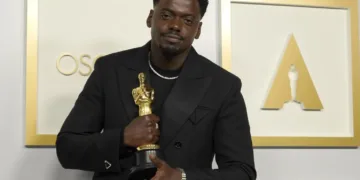
Daniel Kaluuya Joins Cannes Critics’ Week Jury Led by Rodrigo Sorogoyen

Oscar-winning actor Daniel Kaluuya joins Sorogoyen and international figures on the 2025 Cannes Critics’ Week jury, which will focus on debut and sophomore films.

Naser Nahandian by Naser Nahandian
1 year ago
in Entertainment, Entertainment News, Movies
Reading Time: 2 mins read
A A
0
Share on FacebookShare on TwitterShare on PinterestShare on WhatsAppShare on TelegramSummarize with ChatGPTSummarize with Perplexity

Oscar-winning actor Daniel Kaluuya has joined the jury for the 2025 Cannes Critics’ Week, a prominent sidebar of the prestigious film festival dedicated to first and second feature films. The jury will be headed by Spanish director Rodrigo Sorogoyen, known for his critically acclaimed works like The Beasts, which earned multiple Goya Awards in 2022.

The five-person jury, which will convene during the festival’s Critics’ Week running from May 14–22, will also include Moroccan journalist Jihane Bougrine, French-Canadian cinematographer Josée Deshaies, and Indonesian producer Yulia Evina Bhara. Together, the jury will select winners for several prestigious awards, including the AMI Paris Grand Prize for best feature, the French Touch Prize of the Jury, the Louis Roederer Foundation Rising Star Award, and the Leitz Cine Discovery Prize for best short film.

Sorogoyen, who had originally been set to lead the 2024 jury before stepping down due to personal circumstances, shared his belief that the Critics’ Week serves as an important platform for emerging filmmakers. “Critics’ Week has always been about supporting and elevating fresh voices,” said Sorogoyen, emphasizing the section’s role in launching new talents in the film industry.

Daniel Kaluuya, who garnered critical praise and an Academy Award for his portrayal in Judas and the Black Messiah, joins the jury with his significant experience in both mainstream and independent cinema. His selection for the panel underscores Cannes Critics’ Week’s focus on spotlighting diverse storytelling approaches.

Deshaies, Bougrine, and Bhara each bring unique perspectives to the table, with Deshaies being recognized for her cinematography work in Passages and The Beast. Bougrine’s journalism expertise adds an insightful international angle, and Bhara has been a key producer for acclaimed films such as Tiger Stripes.

The official selection of films for the Critics’ Week section will be unveiled on April 14, with the jury set to evaluate the promising titles that will be presented.

Also Read

  • Best Christmas Movies
    30 Best Christmas Movies to Watch This Holiday Season
  • 30 Best Drama Movies
    30 Best Drama Movies to Watch Before You Die
  • Best 2025 Movies
    Gazettely's 30 Best Movies of 2025
  • Son-in-Law Review
    Son-in-Law Review: Gerardo Naranjo’s Satire of the…
  • Rodrigo Sorogoyen’s cinema often studies the violence that gathers when bodies, memories, and egos are forced into close range. In The Beloved, that pressure hardens under the sun-blasted dryness of Fuerteventura. Esteban Martínez, a celebrated Oscar-winning Spanish filmmaker, returns to his birthplace after a long, profitable stay inside the American studio system. He arrives speaking the language of renewal. He offers an apparent peace gesture to Emilia, his estranged daughter, an actress still searching for the role that might give her public shape. The gift is a principal part in Desert, his historical epic about the 1930s Sahrawi uprising against Spanish colonial oppression. The scorched volcanic island becomes a moral furnace. Sorogoyen turns the film set into a psychological enclosure where artistic power presses against the jagged remains of family damage. Before the cameras begin their ritual work, the production already resembles a clinical chamber for old ghosts, lit by the pitiless stare of a director who mistakes control for truth. The Architecture of Fractured Memory The opening movement establishes its sickness through a static twenty-minute restaurant sequence in Madrid. Sorogoyen lets estrangement speak through posture, hesitation, appetite, and silence. Emilia reaches for red wine and beer, building a small chemical shelter around herself. Esteban sips sparkling water with theatrical restraint, projecting the serenity of a man who has rehearsed sobriety as a public image. Their past has the shape of a wound that refuses a single witness. Emilia remembers a childhood trauma, a screening of Kill Bill Volume 2 marked by her father’s violent drunken abuse. Esteban receives the memory with calm denial and recasts his own cruelty as a harmless invention. Javier Bardem gives him a predatory magnetism, a quiet menace that covers the history of his volatility like fresh paint over damp rot. His aging auteur treats repentance as material to be staged, blocked, revised, and owned. Victoria Luengo meets that force with extraordinary defensive vulnerability. Her face flickers from tentative hope to self-loathing, then to anger that seems to arrive years late, carrying the sediment of neglect. The casting choice feels darkly solipsistic. Esteban appears to have built the entire desert production as an elaborate trap, using professional patronage to draw from his daughter the submission and forgiveness she has never granted him freely. The Autocracy of the Frame Inside the Desert production, the movie set becomes a sealed kingdom, a feudal organism where artistic creation grants permission for absolute rule. Sorogoyen reveals the brittleness of that authority during a pivotal country lunch sequence. Beneath a punishing morning sun, the actors sink into repeated errors and fail to deliver their lines with the demanded conviction. Esteban’s irritation hardens into icy sadism, and his rage fixes on their inability to eat a plate of fish stew with adequate appetite. The scene turns a creative exercise into psychological punishment, exposing the terror beneath his control. The supporting figures mark the limits of this poisoned space. Marina, the exhausted producer, tries to contain his outbursts, becoming a living bridge from an era of unchecked administrative power to one of modern accountability. The female cinematographer chooses exile from his rule and resigns once his behavior becomes impossible to bear. Her departure signals a major change in contemporary industry standards, where the old impunity of the tyrannical director now meets collective resistance. The film finds its sharpest moral wound here. Esteban directs an expensive work of anti-colonial art, lectures viewers on imperial dominance, and colonizes the psyches of his crew and family with the same spiritual violence he claims to condemn. Shifting Stocks and Fractured Truths Rodrigo Sorogoyen’s cinema often studies the violence that gathers when bodies, memories, and egos are forced into close range. In The Beloved, that pressure hardens under the sun-blasted dryness of Fuerteventura. Esteban Martínez, a celebrated Oscar-winning Spanish filmmaker, returns to his birthplace after a long, profitable stay inside the American studio system. He arrives speaking the language of renewal. He offers an apparent peace gesture to Emilia, his estranged daughter, an actress still searching for the role that might give her public shape. The gift is a principal part in Desert, his historical epic about the 1930s Sahrawi uprising against Spanish colonial oppression. The scorched volcanic island becomes a moral furnace. Sorogoyen turns the film set into a psychological enclosure where artistic power presses against the jagged remains of family damage. Before the cameras begin their ritual work, the production already resembles a clinical chamber for old ghosts, lit by the pitiless stare of a director who mistakes control for truth. The Architecture of Fractured Memory The opening movement establishes its sickness through a static twenty-minute restaurant sequence in Madrid. Sorogoyen lets estrangement speak through posture, hesitation, appetite, and silence. Emilia reaches for red wine and beer, building a small chemical shelter around herself. Esteban sips sparkling water with theatrical restraint, projecting the serenity of a man who has rehearsed sobriety as a public image. Their past has the shape of a wound that refuses a single witness. Emilia remembers a childhood trauma, a screening of Kill Bill Volume 2 marked by her father’s violent drunken abuse. Esteban receives the memory with calm denial and recasts his own cruelty as a harmless invention. Javier Bardem gives him a predatory magnetism, a quiet menace that covers the history of his volatility like fresh paint over damp rot. His aging auteur treats repentance as material to be staged, blocked, revised, and owned. Victoria Luengo meets that force with extraordinary defensive vulnerability. Her face flickers from tentative hope to self-loathing, then to anger that seems to arrive years late, carrying the sediment of neglect. The casting choice feels darkly solipsistic. Esteban appears to have built the entire desert production as an elaborate trap, using professional patronage to draw from his daughter the submission and forgiveness she has never granted him freely. The Autocracy of the Frame Inside the Desert production, the movie set becomes a sealed kingdom, a feudal organism where artistic creation grants permission for absolute rule. Sorogoyen reveals the brittleness of that authority during a pivotal country lunch sequence. Beneath a punishing morning sun, the actors sink into repeated errors and fail to deliver their lines with the demanded conviction. Esteban’s irritation hardens into icy sadism, and his rage fixes on their inability to eat a plate of fish stew with adequate appetite. The scene turns a creative exercise into psychological punishment, exposing the terror beneath his control. The supporting figures mark the limits of this poisoned space. Marina, the exhausted producer, tries to contain his outbursts, becoming a living bridge from an era of unchecked administrative power to one of modern accountability. The female cinematographer chooses exile from his rule and resigns once his behavior becomes impossible to bear. Her departure signals a major change in contemporary industry standards, where the old impunity of the tyrannical director now meets collective resistance. The film finds its sharpest moral wound here. Esteban directs an expensive work of anti-colonial art, lectures viewers on imperial dominance, and colonizes the psyches of his crew and family with the same spiritual violence he claims to condemn. Shifting Stocks and Fractured Truths Cinematographer Álex de Pablo gives this psychic dissonance an unstable visual language. The film moves through an erratic mutation of media, with scenes captured on 65mm, 35mm, 16mm, and 8mm celluloid stocks, along with cold digital footage and grainy video-assist textures. Abrupt shifts from monochrome landscapes to sudden color passages disturb any stable narrative ground. At times, one wonders if this aesthetic volatility reaches past its own necessity. Still, it reflects the atmosphere of a set ruled by impulse, making the viewer inhabit Emilia’s disorientation. Sorogoyen roots this formal experimentation in a fictional archive by inserting clips from Esteban’s 1990s debut film, Siroco, starring Emilia’s mother, Charo Vera. The texture carries the chill of ancestral abandonment, the old image returning like a debt never paid. The narrative invokes Liv Ullmann’s observation that proximity to a camera requires the removal of one’s mask. Under the technical pressure of the final scenes, that idea takes full shape. Tight framing breaks down Esteban’s ego and releases a buried reservoir of regret. The sound design extends the fragmentation through a dissonant score and fractured soundscapes, echoing the irreconcilable versions of domestic truth carried by the characters.
    The Beloved Review: Celluloid Fragmentation and the…
  • best sci fi movies
    30 Best Sci Fi Movies Ever: Gazettely's Ultimate…
Tags: CannesDaniel KaluuyaRodrigo Sorogoyen
Previous Post

All That’s Left of You Review: Historical Echoes in an Intimate Drama

Next Post

Ancestral Beasts Casts Darla Contois and Morgan Holmstrom for Cannes Debut

Try AI Movie Recommender

Gazettely AI Movie Recommender

This Week's Top Reads

  • Is This Seat Taken? Review

    Is This Seat Taken? Review: A Satisfying Mental Workout

    1002 shares
    Share 0 Tweet 0
  • Trust Review: Squandered Potential and an Incoherent Plot

    6 shares
    Share 0 Tweet 0
  • Alice and Steve Review: Six Episodes of Escalating Madness

    2 shares
    Share 0 Tweet 0
  • Tip Toe Review: Channel 4’s Five-Part Drama Turns Everyday Politeness Into Dread

    3 shares
    Share 0 Tweet 0
  • Among Us Review: How the Game Plays on Paramount+

    0 shares
    Share 0 Tweet 0
  • Teach You A Lesson Review: School Corruption Meets Vigilante Justice

    1 shares
    Share 0 Tweet 0
  • Every Year After Review: Prime Video’s Summer Romance Finds Its Spark Away From the Main Couple

    1 shares
    Share 0 Tweet 0

Must Read Articles

X-Men ’97 Season 2 Review
TV Shows

X-Men ’97 Season 2 Review: Apocalypse Rises in a Darker, Sharper Mutant Epic

23 hours ago
Sweet Magnolias Season 5 Review
TV Shows

Sweet Magnolias Season 5 Review: Serenity Finds Comfort in Change

2 days ago
The Furious Review 1
Movies

The Furious Review: Kenji Tanigaki Builds a Brutal Action Machine

3 days ago
The Death of Robin Hood Review
Movies

The Death of Robin Hood Review: He Was No Hero, and Sarnoski Means It

3 days ago
Best Medicine Review
TV Shows

Best Medicine Review: Fox’s Coastal Dramedy Makes Kindness Its Best Medicine

5 days ago
Loading poll ...
Coming Soon
Which of Alfred Hitchcock's 1960s thrillers is your all-time favorite?

Gazettely is your go-to destination for all things gaming, movies, and TV. With fresh reviews, trending articles, and editor picks, we help you stay informed and entertained.

© 2021-2026 All Rights Reserved for Gazettely

What’s Inside

  • Movie & TV Reviews
  • Game Reviews
  • Featured Articles
  • Latest News
  • Editorial Picks

Quick Links

  • Home
  • About US
  • Contact Us
  • Advertise with Us
  • Review Guidelines

Follow Us

Facebook X-twitter Youtube Instagram
No Result
View All Result
  • Home
  • Movies
  • Entertainment News
  • Movie and TV Reviews
  • TV Shows
  • Game News
  • Game Reviews
  • Contact Us

© 2024 All Rights Reserved for Gazettely