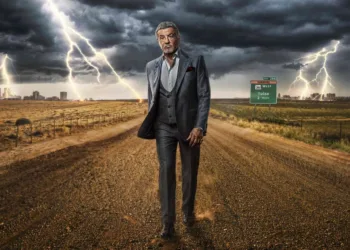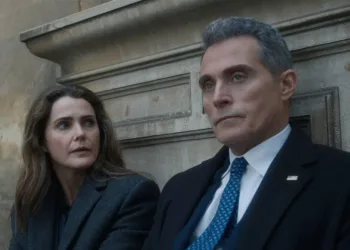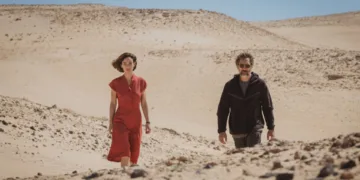


















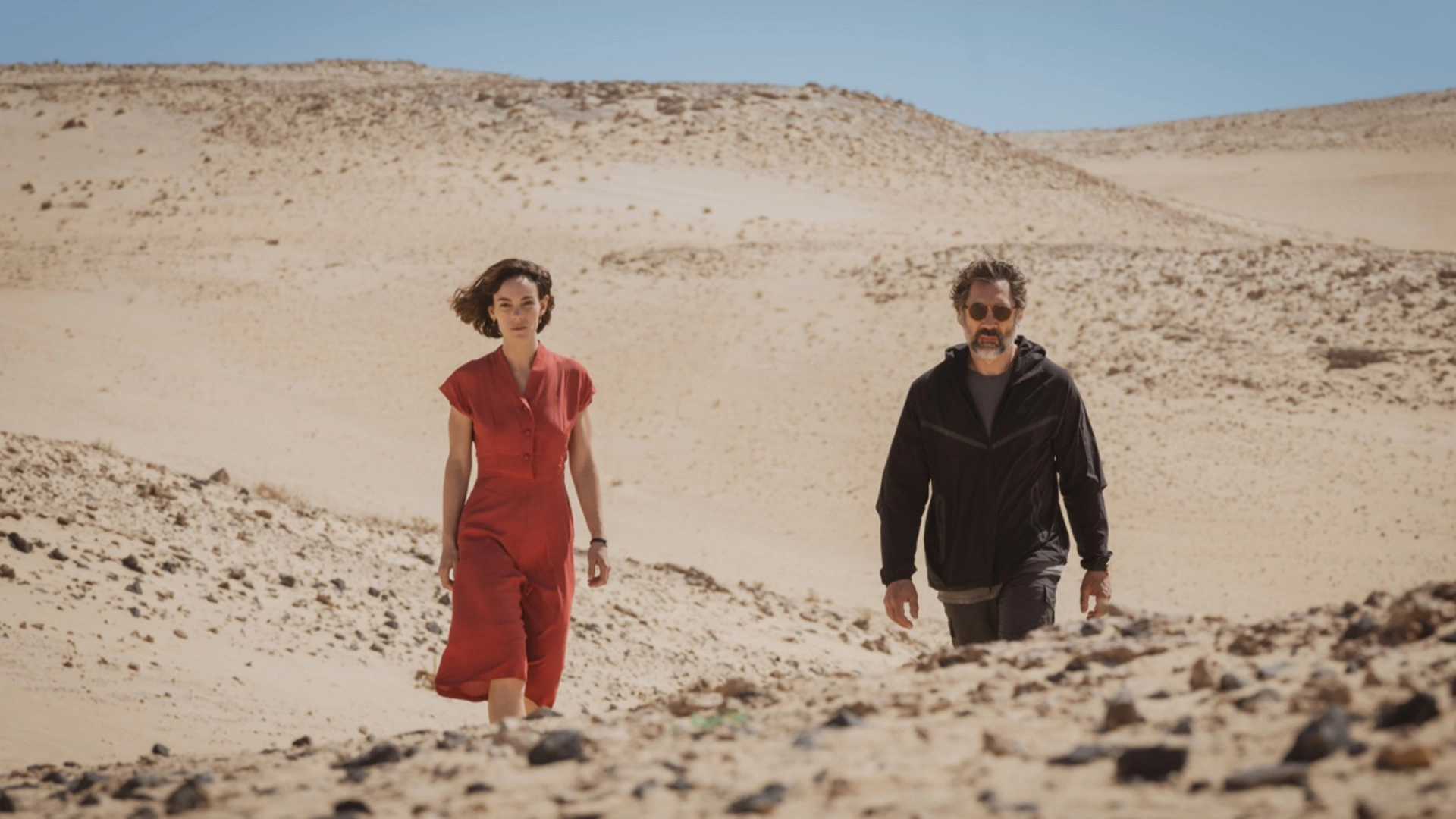

Rodrigo Sorogoyen’s cinema often studies the violence that gathers when bodies, memories, and egos are forced into close range. In The Beloved, that pressure hardens under the sun-blasted dryness of Fuerteventura. Esteban Martínez, a celebrated Oscar-winning Spanish filmmaker, returns to his birthplace after a long, profitable stay inside the American studio system. He arrives speaking the language of renewal.
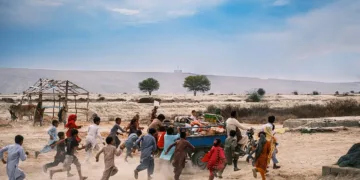
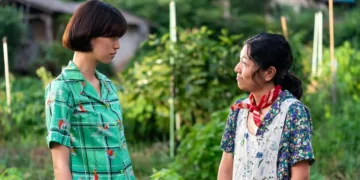
He offers an apparent peace gesture to Emilia, his estranged daughter, an actress still searching for the role that might give her public shape. The gift is a principal part in Desert, his historical epic about the 1930s Sahrawi uprising against Spanish colonial oppression.
The scorched volcanic island becomes a moral furnace. Sorogoyen turns the film set into a psychological enclosure where artistic power presses against the jagged remains of family damage. Before the cameras begin their ritual work, the production already resembles a clinical chamber for old ghosts, lit by the pitiless stare of a director who mistakes control for truth.
The Architecture of Fractured Memory
The opening movement establishes its sickness through a static twenty-minute restaurant sequence in Madrid. Sorogoyen lets estrangement speak through posture, hesitation, appetite, and silence. Emilia reaches for red wine and beer, building a small chemical shelter around herself.
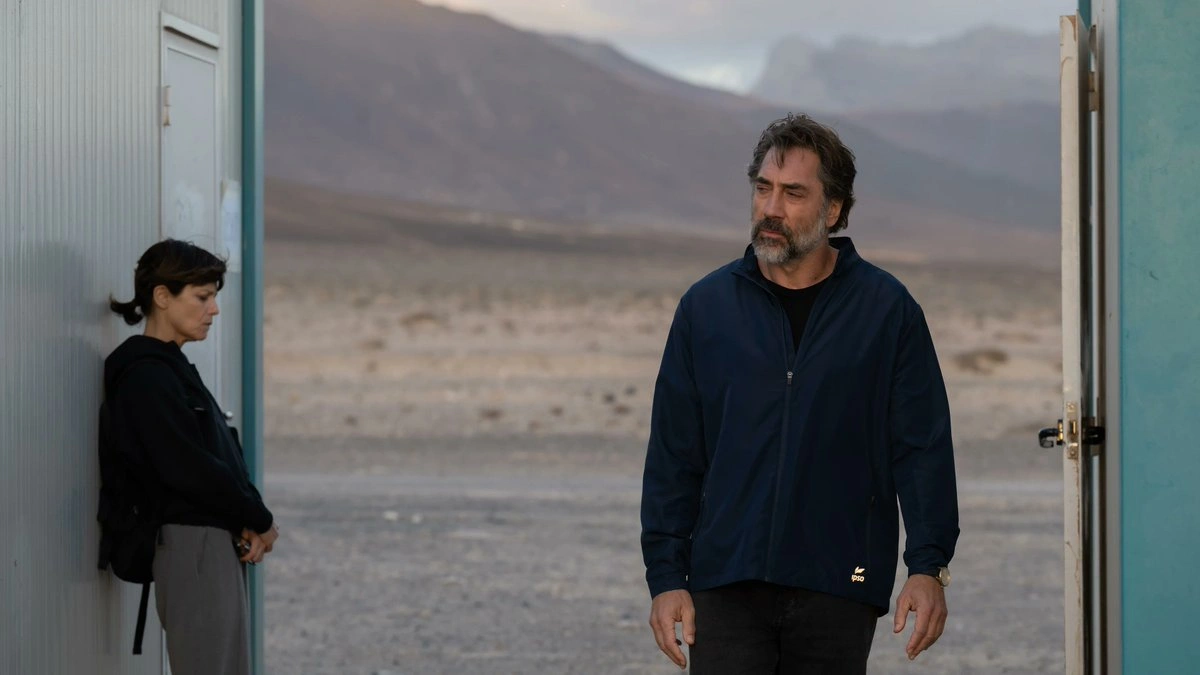
Esteban sips sparkling water with theatrical restraint, projecting the serenity of a man who has rehearsed sobriety as a public image. Their past has the shape of a wound that refuses a single witness. Emilia remembers a childhood trauma, a screening of Kill Bill Volume 2 marked by her father’s violent drunken abuse. Esteban receives the memory with calm denial and recasts his own cruelty as a harmless invention.
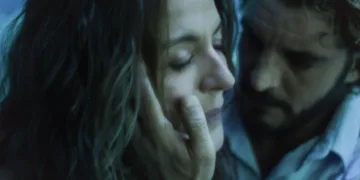
Javier Bardem gives him a predatory magnetism, a quiet menace that covers the history of his volatility like fresh paint over damp rot. His aging auteur treats repentance as material to be staged, blocked, revised, and owned. Victoria Luengo meets that force with extraordinary defensive vulnerability.
Her face flickers from tentative hope to self-loathing, then to anger that seems to arrive years late, carrying the sediment of neglect. The casting choice feels darkly solipsistic. Esteban appears to have built the entire desert production as an elaborate trap, using professional patronage to draw from his daughter the submission and forgiveness she has never granted him freely.
The Autocracy of the Frame
Inside the Desert production, the movie set becomes a sealed kingdom, a feudal organism where artistic creation grants permission for absolute rule. Sorogoyen reveals the brittleness of that authority during a pivotal country lunch sequence. Beneath a punishing morning sun, the actors sink into repeated errors and fail to deliver their lines with the demanded conviction.
Esteban’s irritation hardens into icy sadism, and his rage fixes on their inability to eat a plate of fish stew with adequate appetite. The scene turns a creative exercise into psychological punishment, exposing the terror beneath his control. The supporting figures mark the limits of this poisoned space. Marina, the exhausted producer, tries to contain his outbursts, becoming a living bridge from an era of unchecked administrative power to one of modern accountability.
The female cinematographer chooses exile from his rule and resigns once his behavior becomes impossible to bear. Her departure signals a major change in contemporary industry standards, where the old impunity of the tyrannical director now meets collective resistance.
The film finds its sharpest moral wound here. Esteban directs an expensive work of anti-colonial art, lectures viewers on imperial dominance, and colonizes the psyches of his crew and family with the same spiritual violence he claims to condemn.
Shifting Stocks and Fractured Truths
Cinematographer Álex de Pablo gives this psychic dissonance an unstable visual language. The film moves through an erratic mutation of media, with scenes captured on 65mm, 35mm, 16mm, and 8mm celluloid stocks, along with cold digital footage and grainy video-assist textures. Abrupt shifts from monochrome landscapes to sudden color passages disturb any stable narrative ground.
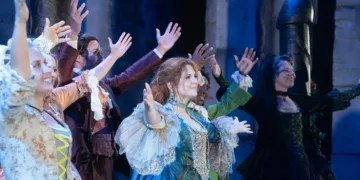
At times, one wonders if this aesthetic volatility reaches past its own necessity. Still, it reflects the atmosphere of a set ruled by impulse, making the viewer inhabit Emilia’s disorientation. Sorogoyen roots this formal experimentation in a fictional archive by inserting clips from Esteban’s 1990s debut film, Siroco, starring Emilia’s mother, Charo Vera.
The texture carries the chill of ancestral abandonment, the old image returning like a debt never paid. The narrative invokes Liv Ullmann’s observation that proximity to a camera requires the removal of one’s mask. Under the technical pressure of the final scenes, that idea takes full shape.
Tight framing breaks down Esteban’s ego and releases a buried reservoir of regret. The sound design extends the fragmentation through a dissonant score and fractured soundscapes, echoing the irreconcilable versions of domestic truth carried by the characters.
This drama made its world premiere on May 16, 2026, competing for the prestigious Palme d’Or at the 79th Cannes Film Festival. On the same day, the picture opened in French cinemas under the distribution of Le Pacte. Spanish audiences can watch the theatrical release starting August 26, 2026, via A Contracorriente Films, before the title joins the streaming platform Movistar Plus+ for home viewing.
Full Credits
Title: The Beloved (El ser querido)
Distributor: A Contracorriente Films, Le Pacte, Goodfellas
Release date: May 16, 2026
Running time: 135 minutes
Director: Rodrigo Sorogoyen
Writers: Isabel Peña, Rodrigo Sorogoyen
Producers and Executive Producers: Nacho Lavilla, Eduardo Villanueva, Guillermo Farré
Cast: Javier Bardem, Victoria Luengo, Raúl Arévalo, Marina Foïs, Miguel Garcés, Raúl Prieto, Mourad Ouanim, Melina Matthews, Pepa Gracia, Núria Prims, Malena Villa
Director of Photography (Cinematographer): Alejandro de Pablo
Editors: Alberto del Campo
Composer: Olivier Arson
The Review
The Beloved
A clinical dissecting of power and psychological inheritance, The Beloved exposes the cruel mechanics of artistic autocracy. Rodrigo Sorogoyen strips away the romanticism of the creative process, exposing the manipulative undercurrents that drive an abusive father-daughter relationship. Backed by magnificent, volatile performances and a shifting visual language, the feature offers an uncompromising gaze into domestic scars and the transactional nature of forgiveness.
PROS
- Masterful, terrifyingly internalized performances by Javier Bardem and Victoria Luengo.
- A striking and confrontational use of varied film stocks that mirrors domestic paranoia.
- A sharp thematic interrogation of authority and industry accountability.
CONS
- The shifting technical styles can feel disorienting during the first act.
- The stark desert setting produces a deliberately bleak, unyielding visual texture.