





















Directors Arie and Chuko Esiri, working from a screenplay by Chuko Esiri, rework Virginia Woolf’s high-modernist benchmark Mrs. Dalloway into Clarissa. The film moves its dramatic stage from the post-First World War streets of London to Lagos, Nigeria, a city rendered through accelerated urban pressure, industrial sprawl, and social performance.
Its frame follows an elite society woman preparing an upscale evening dinner party at her residence, a project that appears to demand near-military precision in furniture placement (the true dictatorship of chairs). During early morning preparations, memory interrupts the ritual.
Youth returns in a rush, and a domestic schedule becomes an interior inquest. The film places its dramatic force inside Clarissa’s immediate psychological reality, following her through the metropolis while treating household routine as a chamber for existential accounting. Status gives her comfort, and that comfort behaves like a trap.
The Geography of Regret and Chronological Displacement
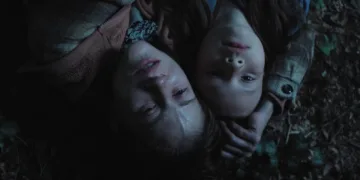
The film’s structure depends on a split timeline, exposing a fracture between eras. In 1994 Abraka, a lush southern Nigerian sanctuary, young Clarissa, played with exquisite defiance by India Amarteifio, debates democracy and postcolonial literature. That pastoral intellectual world presses against present-day Lagos, an industrial sprawl where scaffolding literally dwarfs her domestic space.
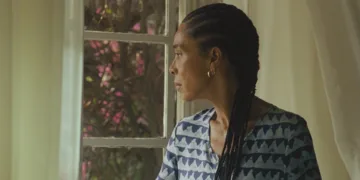
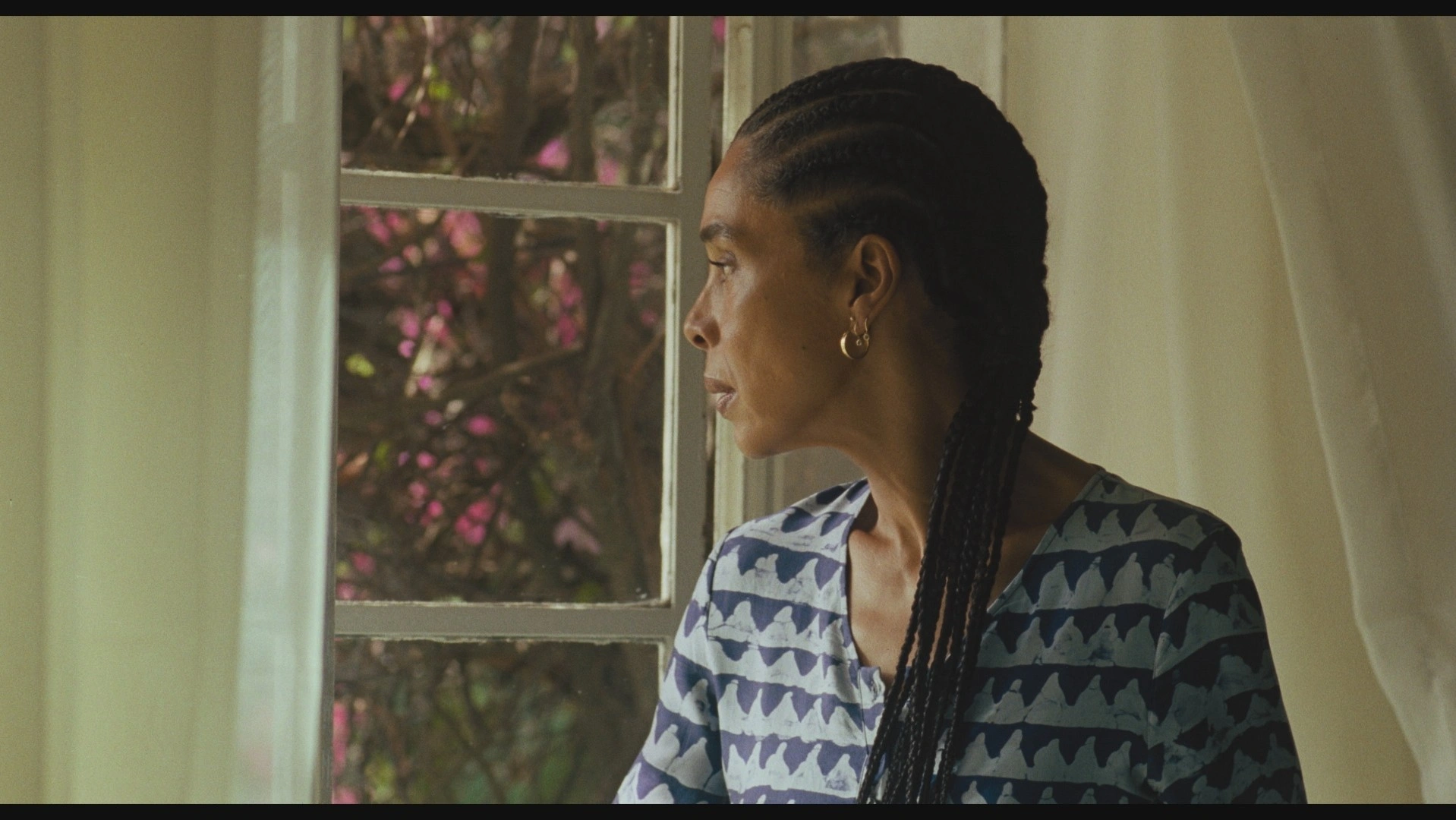
The older Clarissa first reads as chilly snobbery. The performance later reveals a harsher self-defense. Sophie Okonedo gives her an elegant composure with frost in the bloodstream. Surface restraint becomes psychological armor against regret and alienation from a hyper-modernized world. The result is auto-historicism, a private audit of faded radicalism, conducted with the severity of a tribunal and the good taste of a dinner host. Awful combination. Effective too.
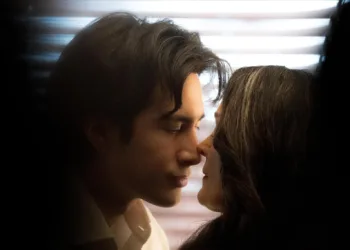
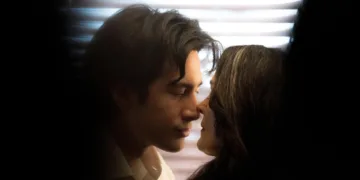
Her history arrives in fragments. The past holds a passionate, covert romance with Peter, an idealistic poet played in youth by Toheeb Jimoh and in adulthood by David Oyelowo. Oyelowo catches the posture of a failed writer whose worldly panache masks quiet disaster. Clarissa also remembers Sally, played by Ayo Edebiri as a countercultural figure whose youthful iconoclasm hardens into the domestic exhaustion of her older self, played by Nikki Amuka-Bird.
Clarissa chose a stable, uninspiring marriage to Richard, Jude Akuwudike’s dull bureaucrat tied to corporate oil interests, a career alignment that curdles her youthful anti-colonial ideals with almost comic efficiency. Her imperial, widowed mother Maryam, played by Joke Silva, stands as a monument to the traditional status quo Clarissa accepted. Aging appears here as an accumulation of heavy bargains. Deferred desire leaves a permanent ache.
Postcolonial Fractures and the Collateral Costs of Sovereignty
The narrative works on a dual track, using Septimus, played by Fortune Nwafor, as the film’s postcolonial wound. He is an off-duty military officer with psychiatric damage after service against Boko Haram insurgent forces in northern Nigeria, and civilian life grants him little mercy.
His world is a cramped apartment, public transport, ubiquitous danfo buses, daily attrition. His wife Aisha, played by Modesinuola Ogundiwin, works diligently as a seamstress for the wealthy elite. Her labor becomes a quiet structural bridge between economic spheres that otherwise scarcely acknowledge each other. Class status decides who gets seen.
Through Septimus, the Esiri brothers drain the postcolonial nation-state of its ceremonial romance. His trauma exposes institutional corruption inside a military apparatus that sells its own ammunition for private profit while abandoning front-line soldiers. The adaptation shifts Woolf’s Eurocentric colonial frame into Nigerian social architecture.
The tolling of Big Ben gives way to Islamic prayers, and the characters move across Christian and Muslim divides. The film studies a domestic class hierarchy shaped by wealth, faith, service, and abandonment. The veteran’s psychological fracture reflects the fractures of a nation straining under unfulfilled democratic promises.
Elite comfort carries a public cost. Private grief becomes civic indictment. That civic indictment gives the adaptation its cultural force: a canonical European interior drama becomes a Nigerian reckoning with class, militarization, faith, and abandoned democratic language.
The Cinematographic Grammar of Liquid Memory
Cinema has its own grammar for interior monologue, and Clarissa reaches a rare formal elegance through that grammar. Cinematographer Jonathan Bloom uses 35mm film photography to create a tactile world. The camera lingers on natural light patterns, shifting curtains, and the exact placement of household objects. Domesticity gains weight; it begins to feel almost suffocating. Editor Blair McClendon uses fluid dissolves and deliberate mirror reflections, formal gestures that imitate the slippery mechanics of memory.
The directors build a visual translation of Woolf’s literary stream of consciousness. Textual syntax becomes aquatic symbolism, with recurring images of flowing streams and water sequences linking separate lives. The acoustic design makes a major cultural substitution.
The traditional colonial marker of Big Ben’s tolling clock disappears. Islamic morning prayers broadcast over public speakers fill the soundscape, placing time inside the religious realities of contemporary Lagos. Kelsey Lu’s atmospheric, spectral musical score threads the fragments together. The film moves with a ghostly, melancholic rhythm that lingers after the frame goes dark.
The feature film Clarissa made its world debut on May 16, 2026, screening at the Cannes Film Festival as part of the Directors’ Fortnight selection. Audiences can look forward to watching the film during its upcoming theatrical run, as the distribution company Neon holds the global rights and handles the release.
Full Credits
Title: Clarissa
Distributor: Neon
Release date: May 16, 2026
Running time: 125 minutes
Director: Arie Esiri, Chuko Esiri
Writers: Chuko Esiri, Virginia Woolf
Producers and Executive Producers: Arie Esiri, Chuko Esiri, Theresa Park, Nicholas Weinstock, Thomas Bassett, Nina Gold, Hannah Tom
Cast: Sophie Okonedo, David Oyelowo, India Amarteifio, Ayo Edebiri, Toheeb Jimoh, Fortune Nwafor, Nikki Amuka-Bird, Joke Silva, Jude Akuwudike, Danny Sapani, Modesinuola Ogundiwin, Kehinde Cardoso
Director of Photography (Cinematographer): Jonathan Bloom
Editors: Blair McClendon
Composer: Kelsey Lu
The Review
Clarissa
Clarissa succeeds as a profound piece of chrono-political cinema (a term tracking national decay through personal timelines). The Esiri brothers reject easy adaptation choices, choosing instead to map Woolf’s elite melancholia onto the stark economic stratifications of modern Lagos. Sophie Okonedo’s remarkably disciplined performance holds the structural weight of the film together, even during occasional pacing lulls. It stands as a brilliant interrogation of what happens when early ideals collapse into the comfort of high society.
PROS
- Sophie Okonedo’s exceptionally restrained, multi-layered lead performance.
- Stunning 35mm visual textures from cinematographer Jonathan Bloom that capture natural light beautifully.
- An astute postcolonial rewriting that replaces British imperial markers with domestic class critiques.
CONS
- Occasional narrative stagnation during prolonged stretches of modern-day preparation.
- The intellectual dialogue among the younger circle occasionally lacks sufficient space to develop fully.