
















A hush falls over the human mind when it confronts the night sky, a silent promise of truths withheld. The Age of Disclosure steps into that quiet with a measured intensity, tracing a half‑century of U.S. government shadows cast over Unidentified Anomalous Phenomena. From the grainy flash of the 2004 “Tic Tac” encounter—naval aviators caught between disbelief and awe—to the hushed chambers of congressional hearings, director Dan Farah stitches a tapestry of hidden archives and urgent testimony.
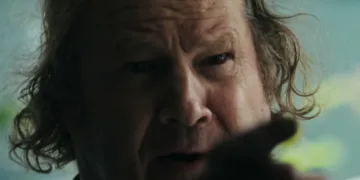
At the film’s heart stands Luis Elizondo, a former Pentagon official whose resolve fractures official silence. His voice, at turns fervent and wearied, guides viewers through corridors where information was once locked away. He embodies the film’s tension: the solitary seeker amid an empire of secrets.
Farah posits that confirmation of extraterrestrial craft would not simply rewrite history but upend our place within it—an upheaval of beliefs older than any nation. And so the documentary proceeds in near‑solemn cadence: no reenacted flights, no sweeping orchestration—only direct interviews and archival fragments. This restrained palette, while austere, invites us into the void between knowing and not knowing, where the promise of revelation trembles against the weight of our own existential unease.
Temporal Echoes and the Rhythm of Secrecy
Farah unfolds his tale like a slow‑burning chronometer. We begin amid the sterile hush of congressional hearing rooms—bright lights, solemn faces—only to be yanked back to November 14, 2004, where naval pilots chased a silent, oval specter over the Pacific. That jarring temporal shift, carried on flickering news clips, reminds us that memory itself can be a restless witness.
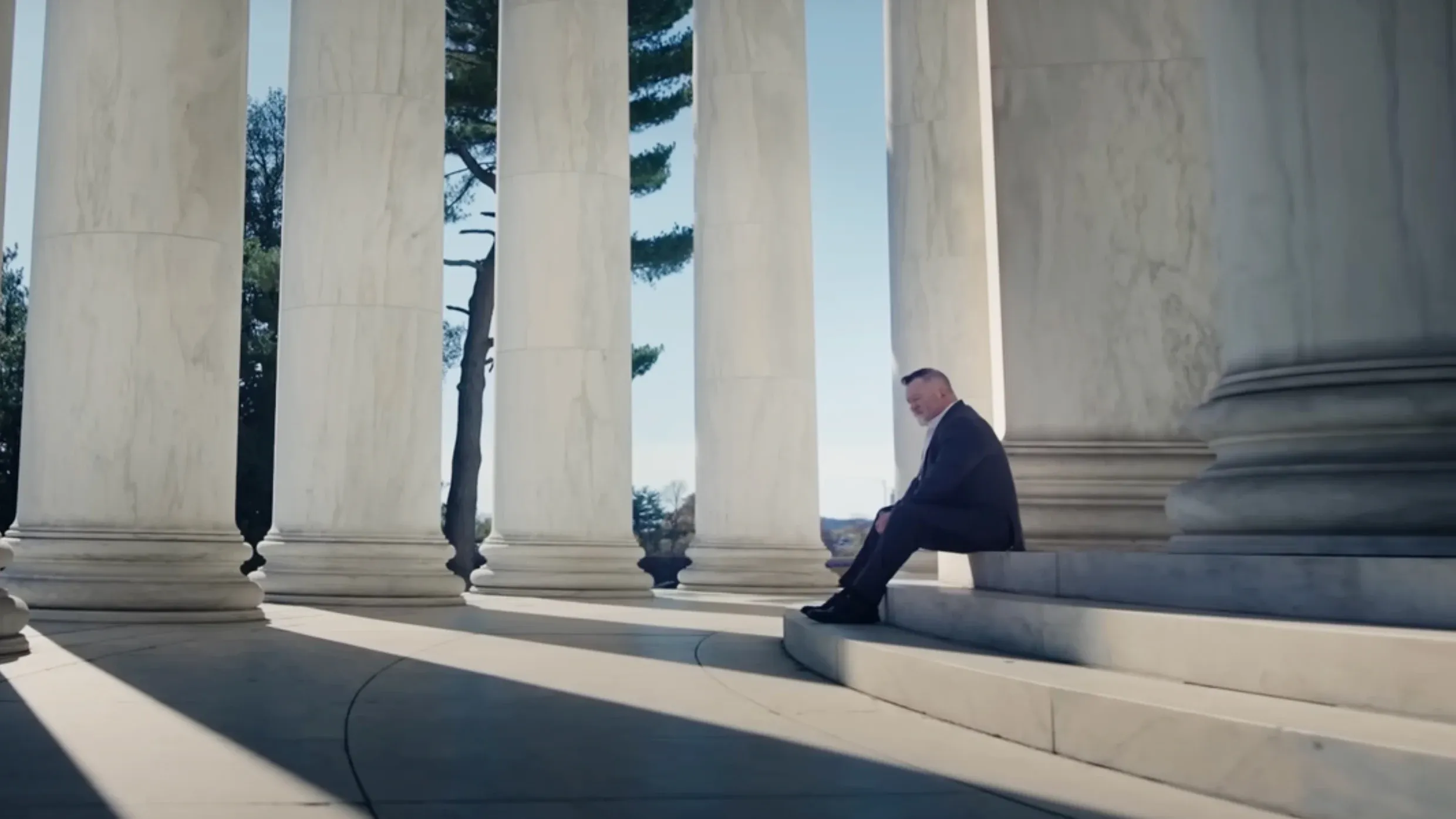
The film’s three acts are laid out with textbook clarity. Act I draws a line from public spectacle to private awe, as witnesses recount the Tic Tac incident. Act II drags us through the labyrinth of AATIP and the shadowy “Legacy Program,” each interview an incantation of buried knowledge. By Act III, voices merge into a crescendo: demands for disclosure echo through marble corridors, promising a reckoning as portentous as any Nietzschean “abyss.”
Yet the pace often oscillates between pulse‑quickening testimony and the humdrum drone of political commentary. When former pilots lean forward, their eyes alight with remembered terror, the film crackles with urgency. But those moments are punctuated by lengthy, static shots of bearded senators behind podiums—talking heads against dim wood paneling—that pull us into a lull, as if we’re watching a slideshow narrated by the void.
Transitions sometimes feel abrupt, as though the editing spinner were chasing its own tail. One moment, archival footage of a radar blip; the next, Elizondo’s solemn pledge in a marble‑lined hallway. Voice‑over is sparing, almost hesitant, leaving us to stitch together fragments. At times, this fragmentation heightens the sense of cosmic disquiet. At others, it stalls, inviting us to wonder whether the story is bursting free or simply circling an empty room.
Silent Frames and the Weight of Observation
In his inaugural venture behind the lens, Dan Farah opts for solemn restraint, allowing each static tableau to breathe with latent unease. He forgoes grand reenactments or digital spectacle—instead, the camera lingers on truth‑seekers in unadorned rooms, as if their very countenances bear the gravity of withheld cosmos. This minimal dramatization feels like a conscious refusal to distract, yet it courts a paradox: by stripping away artifice, Farah exposes the raw edges of belief and doubt.
Archival news clips flicker across the screen—grainy footage of congressional hearings, snapshots of late‑night hosts casually probing the abyss. Intercut with declassified UAP videos—the “Tic Tac” darting over tranquil seas in monochrome urgency—these fragments form a mosaic of institutional memory. There is no sweeping score to guide our emotions, only the ambient hum of fluorescent lights and the echo of polished voices.
Cinematographer’s choices further underscore the film’s somber tenor. Senate hearing rooms appear sterile, their marble and wood paneling lending courtroom gravitas. Military hangars loom like silent cathedrals, while book‑lined offices feel conspiratorial: each backdrop a testament to power and secrecy. Static shots dominate; rarely does the lens pursue rapid movement. When it does—for instance, tracking Elizondo as he paces a hallway—the sudden dynamism jolts us, underscoring the restless search for answers.
Editing moves in pulses: rapid cutaways from a pilot’s sharp recall to a senator’s measured disclaimer, then back again. On‑screen text overlays—dates, program names—appear without flourish, guiding us through bureaucratic terrain. These transitions can heighten tension, but moments of repetition emerge, like echoes reverberating down an empty corridor. In those pauses, the film’s urgent questions hover, unspoken and unresolved.
Echoes of Authority
Voices emerge like distant thunder across an empty sky, each bearing its own weight of certainty and fear. At the center stands Luis Elizondo, whose fervor crackles through every frame. He speaks with equal parts zeal and vulnerability, guiding us down halls of power while his eyes betray the cost of truth kept in shadows.
The four naval aviators who first spotted the “Tic Tac” craft deliver their accounts with measured precision. Their recollections of impossible maneuvers—abrupt stops, unfathomable accelerations—linger like half‑remembered dreams. In contrast, Hal Puthoff and other former AATIP scientists lend the discussion a veneer of calculated reason, framing anomalies in the language of physics and speculation.
Then come the statesmen: Gen. Jim Clapper’s clipped authority, Marco Rubio’s polished caution, Kirsten Gillibrand’s poised inquiry. Their presence confirms this is no fringe spectacle but a matter whispered through the corridors of real power. Yet their restraint can feel chilly next to Elizondo’s fire, reminding us how charisma and gravitas do not always align.
Each speaker’s résumé bolsters credibility, yet the absence of a single dissenting voice leaves the film’s circle unbroken—a hall of mirrors where belief amplifies belief. In moments when career risks flicker in a witness’s expression, or when two accounts diverge on a flight path, the film’s carefully constructed certainty wavers, and we glimpse the human toll of bearing forbidden knowledge.
Shadows of Disclosure
In the sealed vaults of AATIP and the so‑called Legacy Program, secrecy mutates into its own form of authority, a power that thrives on silence. Those who break rank—Luis Elizondo foremost—stand as Sisyphus pushing the stone of truth uphill, daring the institution to watch it tumble. This clash frames knowledge as contested territory, where belief strains against the weight of official denial.
We watch scholars cite anomalous flight data with precise care, then observe politicians shifting in their seats, reluctant to name an unnameable threat. The absence of dissenting voices magnifies the tension: faith and doubt hover in a taut space, waiting for disclosure to tip the scale.
On the wider chessboard of geopolitics, UAPs become pieces that no single power can claim. The suggestion that adversaries might reverse‑engineer alien tech casts a shadow over national security, even as bipartisan hearings lend overdue legitimacy to fringe ideas.
And above it all looms the promise of a paradigm quake—confirmation of non‑human craft threatening to reorder science, theology, and our fragile sense of self.
Echoes of the Unseen
Declassified clips arrive grainy, as if dredged from a submerged archive, their static crackling like distant thunder. These are set against generic stock shots—handshakes with presidents, a bleary James Corden cameo—each image a hollow echo of ceremony. The raw UAP footage shimmers with uncanny promise, yet the interspersed montages feel weightless, drifting without substance.
On‑screen graphics—radar sweeps, topographic maps, animated vectors charting impossible trajectories—appear with measured restraint. They speak in a utilitarian dialect, offering occasional clarity but sometimes slipping into sterile abstraction, as though the film hesitates to trust pure image alone.
A hushed hum underpins pilot testimonies. Cockpit radio chatter, clipped and urgent, mingles with distant mechanical roars. In moments when a witness recalls a sudden stop‑start maneuver, the sound design tightens, drawing us into the cockpit’s confined space. Yet at times the ambient track recedes, leaving silence that feels almost accusatory.
Blair Mowat’s score moves in shadowed intervals. Sparse piano notes hover like questions unanswered; low drones swell when a new revelation is teased. During policy discussions, the music retreats, allowing the gravity of spoken words to stand bare. Then, at each flicker of UFO footage, a subtle crescendo reminds us that even the most subdued sound can fracture our sense of reality.
Fractures of Belief and Resonance
Moments of visceral tension—when a pilot’s voice cracks recalling that silent chase—snap the film to life, and Luis Elizondo’s urgency pulses like a living heartbeat in otherwise still frames. Yet these high points coexist with stretches of unvarying, static interviews that drift, as if tethered to an invisible slide show. The contrast can lull the viewer into a trance of repetition, even as curiosity flickers at each new revelation.
In measuring credibility, The Age of Disclosure walks a tightrope between affirmation and doubt. Skeptics may find their reserve tested by firsthand accounts rendered in vivid detail; believers will feel their convictions burn brighter. But when anonymous corridors yield hints of conspiracy without hard proof, the argument sways on tenuous beams—enough to intrigue, not always enough to compel.
Beneath its quiet insistence lies an implicit summons: demand transparency from unseen powers, pry open locked doors, question what authority chooses to conceal. Should public opinion swell in response, policy too may shift, propelling UAP discourse from fringe chatter into legislative debate.
Set against sensationalist predecessors, Farah’s film carries the patina of institutional legitimacy: Senate chambers instead of shadowy basements, generals instead of galloping narrators. It may thrive in streaming algorithms, sparking weekend water‑cooler wonder. Yet whether its echo endures beyond the next viral cycle remains an unanswered question—one as vast and unsettled as the skies themselves.
Full Credits
Director: Dan Farah
Writer: Dan Farah
Producers: Dan Farah
Executive Producers: Andrew Farah, Colin Frederick, Shara Senderoff
Cast: Luis “Lue” Elizondo, Jay Stratton, Marco Rubio, Mike Rounds, Kirsten Gillibrand, James Clapper, Eric Davis, Harold E. Puthoff, Christopher Mellon, André Carson
Director of Photography: Vincent Wrenn
Editor: Spencer Averick
Composer: Blair Mowat
The Review
The Age of Disclosure
The Age of Disclosure offers stirring firsthand testimony and a philosophically charged premise that ignites existential wonder, yet its static presentation and absence of critical counterpoint tether it to an echo chamber. It provokes curiosity but often drifts in repetitive formalism, leaving core questions suspended in twilight. As a primer on UAP discourse, it resonates, but its cinematic momentum and argumentative rigor fall short of true revelation.
PROS
- Compelling firsthand accounts from military pilots
- Charismatic central figure in Luis Elizondo
- Rich declassified footage that feels authentic
- Raises deep, existential questions about our place in the universe
- Legitimate, institution‑backed tone distinguishes it from sensationalist docs
CONS
- Prolonged static interviews can feel monotonous
- Lack of skeptical or opposing perspectives
- Repetitive visual framing reduces dramatic impact
- Minimal reenactments leave some moments under‑realized