




























In the annals of television history, some shows become legendary hits while others fade into obscurity. A third category exists for projects so spectacularly doomed they become legends for never existing at all. Such is the case with P.I. Moms, a proposed 2010 Lifetime series that serves as the subject for Netflix’s documentary short.
The premise was a product of its time: a group of Bay Area mothers balancing parenthood with careers as private investigators. It promised an appealing blend of domestic drama and detective grit, a perfect vehicle for the booming reality TV market.
Yet, what began as a concept about female empowerment quickly devolved into a far stranger tale of professional jealousy, staged crimes, and a criminal conspiracy that consumed the show before a single episode could air. The documentary unpacks a failure that speaks volumes about the illusions of reality television.
The Illusion of Empowerment
The genesis of P.I. Moms is a perfect artifact of its 2010 cultural moment. In the wake of The Real Housewives and Keeping Up with the Kardashians, television networks were engaged in a frantic gold rush for the next unscripted sensation. The formula often involved placing ordinary people in extraordinary situations, and what could be more compellingly unusual than mothers who traded carpool lines for stakeouts?
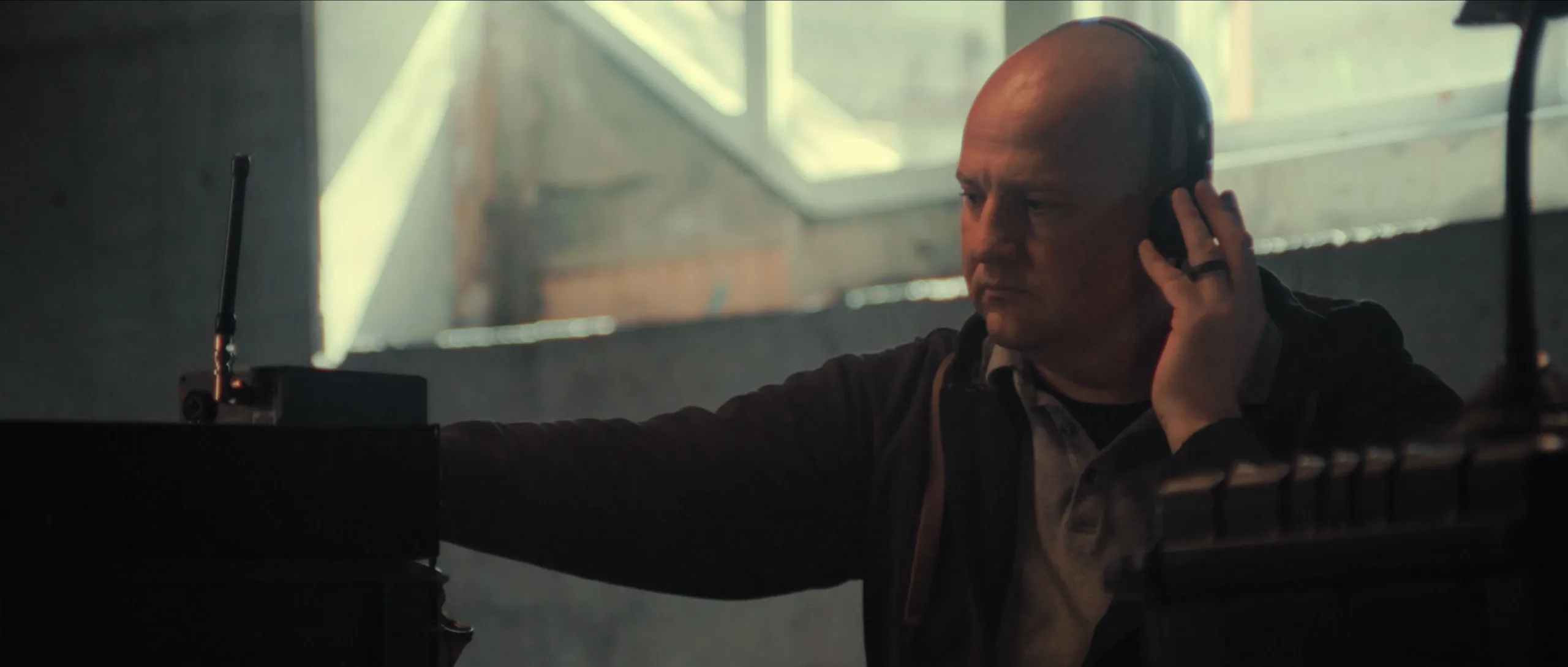
The concept was the brainchild of Chris Butler, a former police officer whose media-savvy decision to staff his investigative agency almost exclusively with women was a masterstroke of branding. It was an idea that felt both novel and deeply familiar, tapping into the archetype of the underestimated woman who possesses hidden strengths.
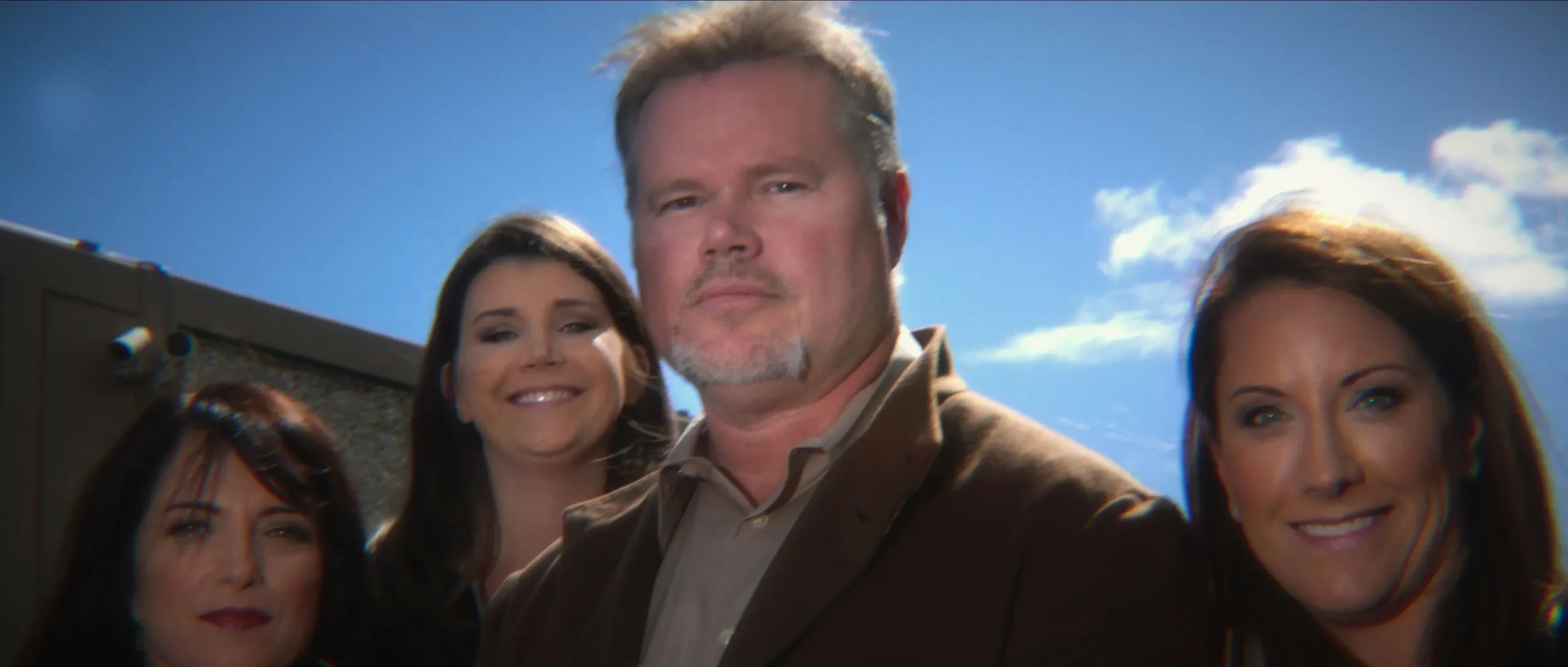
The documentary introduces us to two of these women, Denise Antoon and Ami Wiltz, and it is through their earnest ambitions that the project’s initial promise shines. They were not merely seeking a paycheck or fleeting fame; they envisioned the series as a platform for genuine social connection and inspiration.
Ami’s desire to share the painful story of her deceased son speaks to a hope that reality television could transcend its voyeuristic tendencies to become a vehicle for collective healing. Their goal, as they state it, was to defy the genre’s conventions of manufactured conflict and instead present a supportive group of capable women excelling in a male-dominated field.
This vision, passed through the lens of seasoned producer Lucas Platt, represented a tantalizing possibility: a reality show with a conscience. Yet, the entire enterprise was built on a fundamental contradiction—a story of female empowerment orchestrated and owned by a man whose own motives were far from transparent.
Cracks in a Counterfeit Reality
The idealistic veneer of P.I. Moms began to peel away almost immediately, revealing the transactional and often cynical mechanics beneath. The first and most visible stress test came from within the firm itself in the person of Carl Marino. The sole male investigator, Marino was a struggling actor who viewed the production not as a collective opportunity but as his personal star vehicle.
His confrontation with producer Lucas Platt is a telling moment, a snapshot of indignant male ego clashing with the commercial packaging of female-centric storytelling. Platt’s rejection of Marino as arrogant and fundamentally wrong for a show explicitly titled P.I. Moms was a logical production decision, but it lit a fuse of resentment that would ultimately burn the project to the ground.
This internal friction was soon compounded by a far more corrosive external deception. The documentary smartly uses the perspective of journalist Pete Crooks to unravel the show’s fabricated reality. Invited on a ride-along to generate positive press, Crooks witnessed what seemed to be a thrilling and successful bust of an adulterer.
The scene was perfect for television—a clean narrative with a satisfying payoff. The illusion was shattered by a series of emails from the mysterious “Ronald Rutherford,” Marino’s vengeful alter ego, who informed the journalist that the entire case was a fiction staged for his benefit. This revelation exposes a deeper layer of fraud.
Chris Butler, the charismatic leader, was not merely embellishing reality; he was manufacturing it wholesale. Faced with a dearth of the compelling cases he had promised the network, he resorted to hiring actors and scripting scenarios.
This act was more than a simple white lie; it was a fundamental betrayal of the trust of his employees, the production company, and the very audience he hoped to captivate. The show, intended to document reality, was itself a counterfeit.
From Bad TV to True Crime
The unraveling of P.I. Moms is a rapid descent from workplace drama into a full-blown criminal conspiracy. Carl Marino’s bitterness fueled a methodical campaign of sabotage. His actions escalated from sending anonymous emails to actively destroying a planned shoot where the women were set to expose an unlicensed private investigator.

By tipping off the target, Marino ensured the failure of the episode, an act of professional treachery born of spite. When his identity as the saboteur was inevitably discovered, Chris Butler’s refusal to fire him seemed inexplicable. The strange loyalty was not personal, but pragmatic. The two men were bound together by a secret far darker than faking cases for a television show.
The documentary pivots here, revealing that Butler was running a significant drug operation with the help of Norman Wielsch, the commander of the local police department’s narcotics unit. This was not a low-level scheme; it was a corrupt partnership that exploited a position of public trust.
Wielsch would supply Butler with drugs stolen from police evidence lockers, which Butler would then sell, using Marino as a deliveryman. The story of a failing reality show was suddenly eclipsed by a narrative of systemic corruption reaching into the heart of local law enforcement. For Marino, this revelation presented a new, more potent path to the fame he so desperately craved.
Transforming from saboteur to whistleblower, he became an informant for the police, agreeing to wear a wire and help orchestrate a sting operation. The final collapse of P.I. Moms was not due to low ratings or creative differences, but to its owner being arrested in a crime Marino himself had helped facilitate and then expose.
A Story Left Untold
In the final accounting, the fates of the key players diverge sharply along lines of gender and culpability. Chris Butler was convicted and sentenced to eight years in prison. Carl Marino, the informant, was briefly lauded as a hero by the media, parlaying his notoriety into an acting role on a crime documentary series—the ultimate validation for his ambitions.

The women, the supposed stars of the show, were left with nothing. Their journey is the documentary’s great, unexplored tragedy. This is where the film’s own investigation proves disappointingly shallow. It presents the astonishing sequence of events with procedural clarity but demonstrates little curiosity about the complex human motivations that drove the catastrophe.
The viewer is left with profound questions the documentary declines to ask. Why would Butler, on the cusp of the fame and fortune a television show could provide, risk everything to continue his criminal enterprise? The film offers no insight into his psychology. It similarly presents Marino as a one-dimensional villain motivated by a bruised ego, refusing to grapple with the moral ambiguity of his actions.
He exposed a corrupt police official and a drug ring, arguably a public good, but did so entirely for reasons of personal vengeance and gain. The film introduces its most powerful theme—the story of a female-forward project being co-opted and ultimately destroyed by the intersecting forces of male ego and criminality—only to abandon it.
In its pursuit of a more conventional and sensational true-crime plot, the documentary itself repeats the central failure of the story it tells: it pushes the women and their thwarted ambitions to the margins. Their story of hope and betrayal becomes mere collateral damage in a narrative about bad men, a depressingly common trend in modern documentary storytelling.
Trainwreck: P.I. Moms is a true-crime documentary released by Netflix on July 22, 2025.
Full Credits
Director: Phil Bowman
Producers: Ben Rumney, Lucas Platt
Executive Producers: Sheun Adelasoye, De Nicola Alexander, Marengo, Tim Wardle, Casey Feldman, Erica Roberts, William Swann
Cast: Lucas Platt, Denise Antoon, Ami Wiltz, Theresa Moore King
The Review
Trainwreck: P.I. Moms
Trainwreck: P.I. Moms recounts a truly bizarre story of a reality show imploding into a real-life crime drama. While the surface-level events are undeniably captivating, the documentary ultimately disappoints. It prioritizes the sensational plot over a much-needed examination of its complex characters and the potent, discarded theme of female ambition being sabotaged by male ego. The film presents a fascinating failure but fails to investigate its own most compelling questions, leaving the viewer with a story that feels both wild and frustratingly incomplete.
PROS
- The core true story is inherently fascinating, packed with unbelievable twists.
- It effectively captures the bizarre intersection of reality TV production and serious criminal activity.
- The fast-paced narrative successfully keeps the viewer engaged from start to finish.
CONS
- The analysis is superficial, avoiding a deep dive into the psychological and social motivations of its subjects.
- It fails to meaningfully explore its most powerful theme: the destruction of a female-empowerment narrative by male figures.
- Key characters are presented as one-dimensional, leaving their complex and contradictory actions largely unexamined.