






















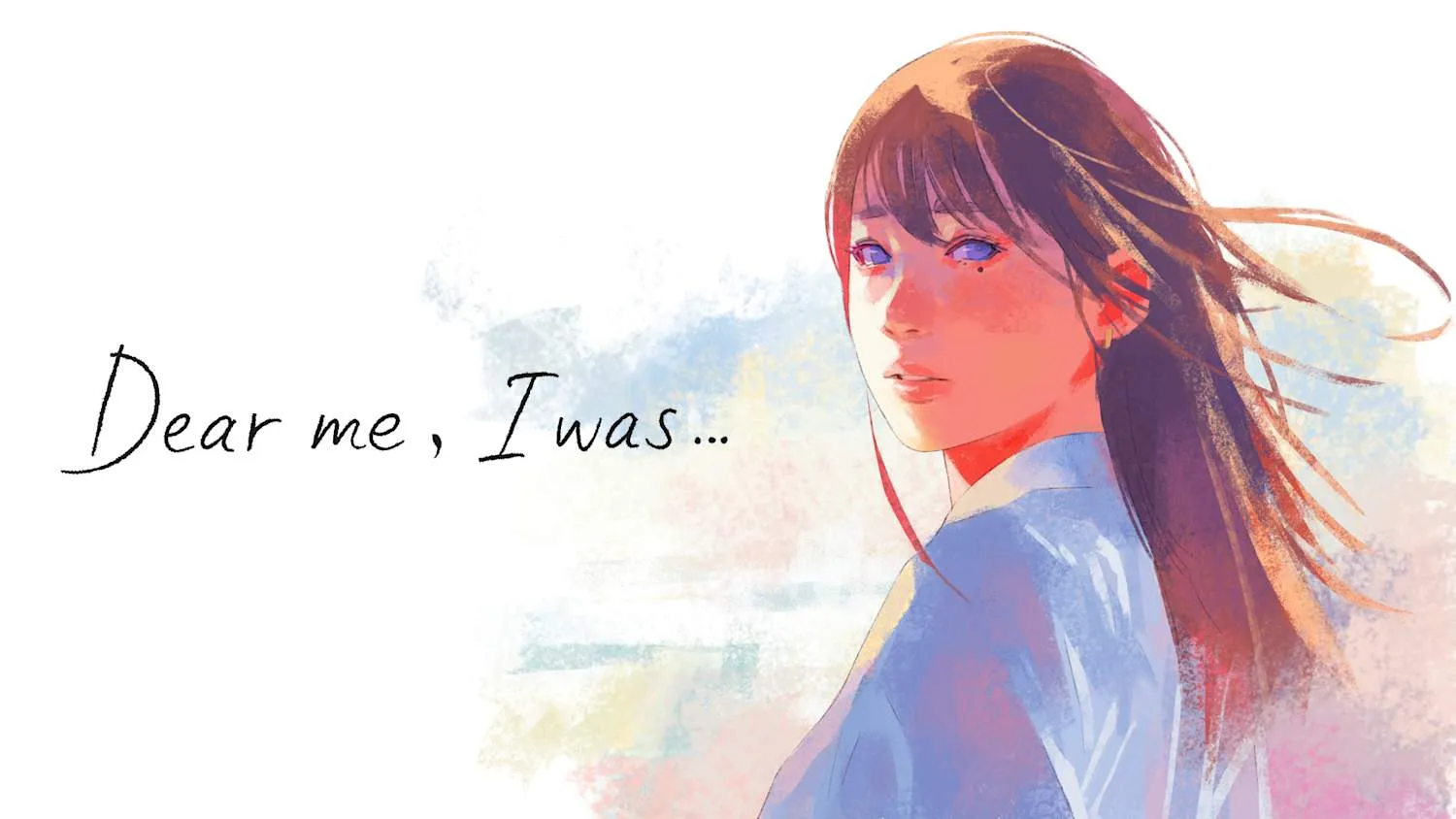

Every so often, a work comes along that quietly sidesteps our neat categories of “game” or “film.” It doesn’t shout for attention; it simply exists, offering a different kind of experience. Dear me, I was… is one of those rare pieces. It’s an interactive story that unfolds without a single word of dialogue, relying entirely on its potent visuals and music to guide you through its narrative.
In about an hour, you witness snapshots of an unnamed woman’s life, from childhood hopes to the quiet moments of her later years. This isn’t a game about winning. It’s a short, concentrated piece of art about the simple, profound act of living.
Breakfast and Heartbreak
The narrative of Dear me, I was… operates like a collection of faded photographs, each capturing a pivotal yet fleeting moment. Its structure, composed of ten chapters and an epilogue, intentionally avoids a continuous plot, instead presenting a mosaic of a life.
We see the protagonist not through a linear sequence of events, but through emotional peaks and valleys: the pure joy of childhood creation, the awkwardness of a first connection, the quiet devastation of loss, and the bittersweet peace of acceptance.
Central to this journey is her relationship with art. It serves as her primary voice, a constant companion that reflects her inner state. We see her creative spark ignite, watch it dim under the weight of life’s pressures, and feel its warmth as she rediscovers it in later years.
This wordless storytelling is a bold choice that pays off immensely. By withholding names, dialogue, and explicit exposition, the game forces us to engage on a purely emotional level. We fill in the gaps with our own understanding of love and grief.
The ambiguity becomes a canvas for our own feelings, making the experience intensely personal. This is supported by clever structural anchors, most notably the recurring breakfast scenes. This simple act grounds the story, providing a familiar ritual at the start of each new life stage.
The shift from a child’s simple meal to an adult’s coffee and pastry is a potent, understated symbol of time’s relentless march. The narrative’s pacing is masterful, often juxtaposing moments of happiness and sorrow to create a realistic, emotionally resonant rhythm that mirrors the unpredictable nature of life itself.
Painting with Feeling
The soul of this silent story is its breathtaking audio-visual design. The game is a living painting, courtesy of art director Taisuke Kanasaki, whose style will evoke a strong sense of nostalgia for fans of his work on Hotel Dusk. The choice of a watercolour aesthetic is a masterful one.
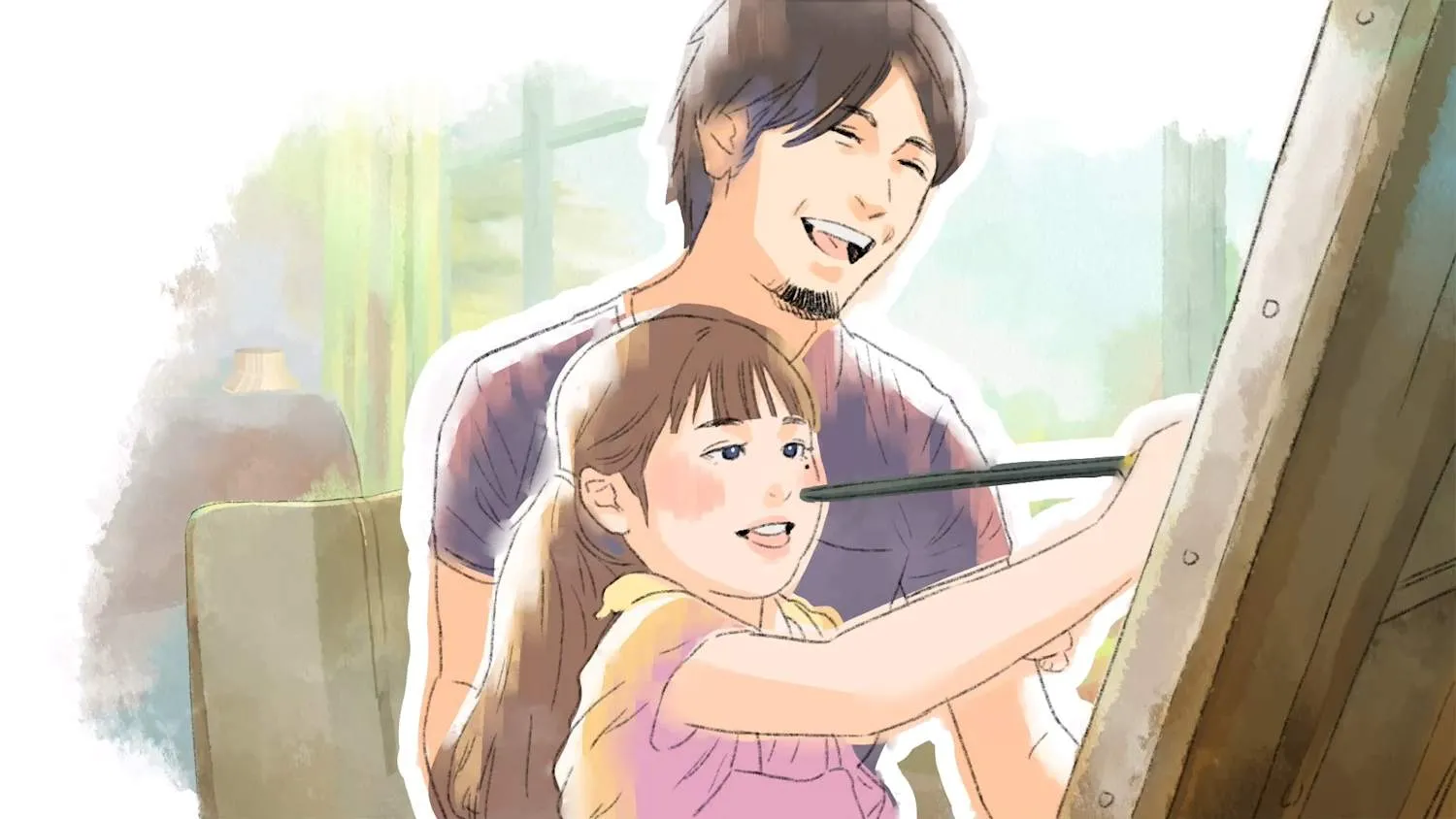
The way colors bleed and soften at the edges mirrors the nature of memory itself—imperfect, fluid, and deeply colored by emotion. It’s a stark contrast to the sharp, precise graphics of many modern games, and this softness is key to the game’s gentle, reflective tone.
This painterly world is brought to life through rotoscoping, a technique that animates over live-action footage. This grounds the characters in reality, capturing the subtle nuances of human body language—a hesitant gesture, a slump of the shoulders, a joyful leap—that convey more than words ever could.
Color is perhaps the most important element of the game’s emotional vocabulary. The screen becomes a mood ring for the protagonist, with the palette shifting dynamically to reflect her inner state. Moments of joy are saturated with warm, vibrant hues.
Sadness drains the world of its color, submerging scenes in cool, isolating blues and greys. In times of deep despair, the screen fades to a stark black and white, a powerful visual representation of a spirit dimmed. The auditory landscape is just as deliberately crafted. The score is a delicate, piano-centric composition that acts as the narrator.
A single melodic theme recurs throughout the story, its arrangement shifting from light and hopeful in major keys to somber and melancholic in minor keys, perfectly underscoring the on-screen emotion. The intentional lack of other sound effects focuses all attention on this musical guidance, making it an inseparable part of the storytelling.
The Weight of a Simple Click
Interactivity in Dear me, I was… is used not as a test of skill, but as a tool for empathy. The gameplay is minimalist, asking for little more than a simple click, touch, or swipe. You perform small, symbolic actions that mirror the protagonist’s. You tap on food items to share her morning meal; you guide her hand to sketch a scene, actively participating in her creative process.

These interactions are designed to dissolve the barrier between player and character, fostering a deep sense of connection. Much like in the acclaimed title Florence, where simple puzzles represent the dynamics of a relationship, the mechanics here are metaphors.
The game’s most brilliant interactive moment is also its most subtle. During chapters where the protagonist is struggling emotionally, the simple act of eating her breakfast requires more effort—a few extra, weary-feeling taps of the button. This small detail is a perfect example of mechanics reinforcing narrative.
The player feels a tangible representation of her depression and lack of energy. It’s a powerful way to communicate an internal state without a single word. The game avoids complex challenges, ensuring the focus remains squarely on the emotional journey. This limited agency is a thematic choice; the player cannot change the course of this life, only bear witness to it. This reinforces the feeling of being carried along by time, subject to life’s uncontrollable currents right alongside the protagonist.
An Hour of a Lifetime
In a world of sprawling, hundred-hour open-world games, Dear me, I was… makes a quiet case for the power of brevity. Its hour-long runtime is not a limitation but its greatest strength. It delivers a complete, powerful emotional arc with the focus and intensity of a short film, respecting the player’s time while leaving a lasting impact.

The experience feels concentrated, ensuring that every scene and every note of music serves a purpose. This conciseness does mean the ending arrives quickly, and it’s natural to wish for more time in its beautiful world, but this feeling of a journey ending too soon is part of the point.
Ultimately, this is less a game in the traditional sense and more an interactive poem. Its value is not found in complex systems or skill-based challenges, but in the quiet space it creates for reflection. It pushes the boundaries of what interactive entertainment can be, demonstrating that gameplay can be used to build connection and evoke deep feeling.
It prompts you to look inward at your own life, your own relationships, and the passions that define you. Dear me, I was… is an experience for those who appreciate artistry in games, for players looking for something that is not just a diversion, but a meaningful and moving piece of media that will resonate long after the screen fades to black.
The Review
Dear Me, I Was...
Dear me, I was... is less of a game and more of a poignant, interactive poem. It masterfully uses its stunning watercolour visuals and a delicate piano score to tell a deeply human story of a life filled with joy, loss, and creativity. While its minimal gameplay and short length might not satisfy everyone, it is a beautifully crafted, emotional experience that succeeds completely in its artistic ambition. It’s a must-see for anyone who values narrative and art in their interactive entertainment.
PROS
- Breathtaking watercolour art style and fluid rotoscoped animation.
- A powerful and relatable story told effectively without any dialogue.
- Masterful use of color and music to convey deep emotional states.
- A concise and focused narrative that makes a lasting impact in about an hour.
CONS
- Extremely light gameplay that may not engage players seeking a challenge.
- The short runtime, while a strength, can feel like it ends too soon.
- Its deliberate, slow pace may not appeal to all tastes.