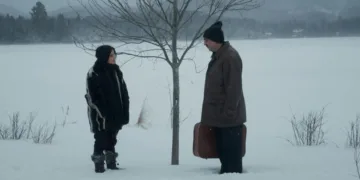

















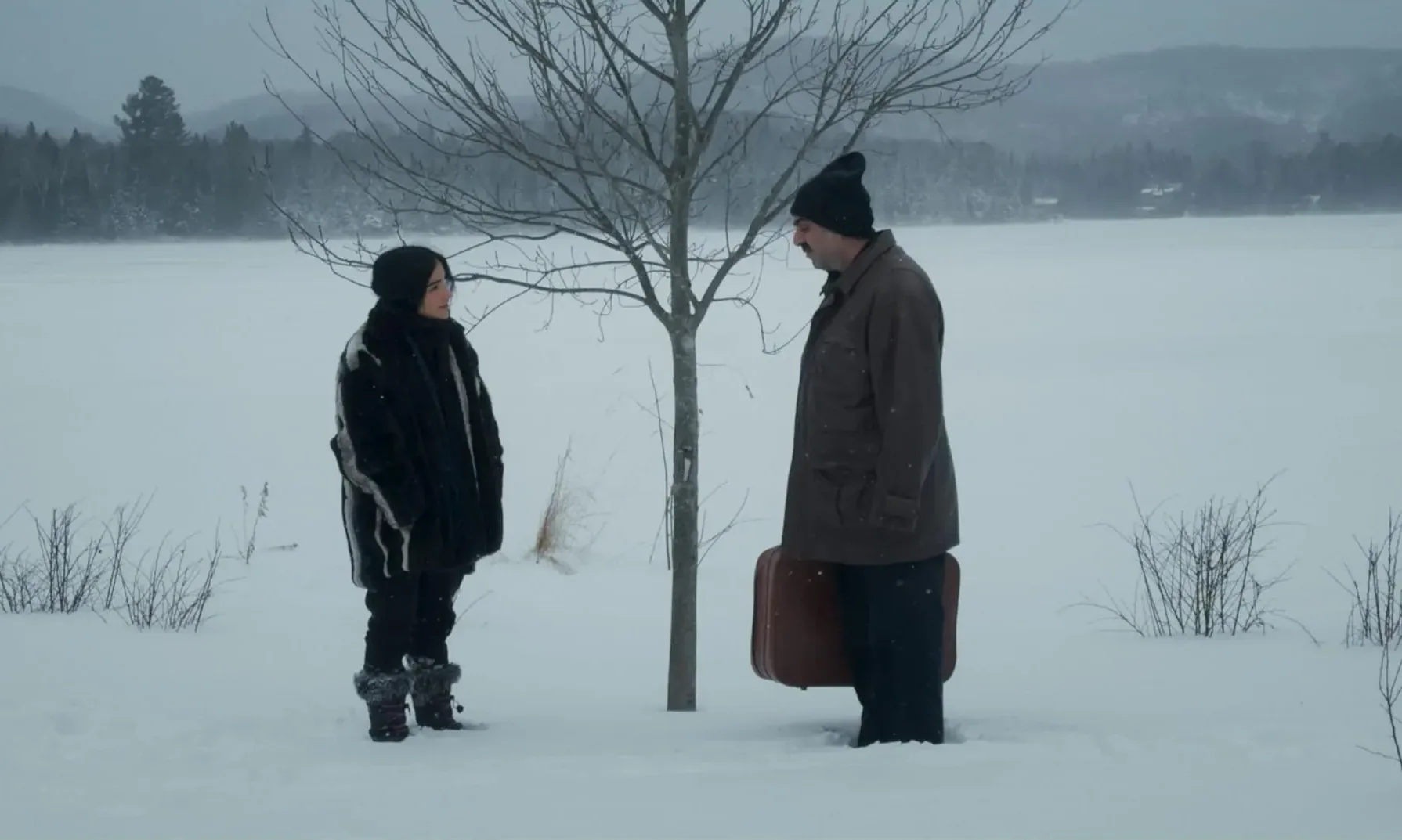
The landscape of Mortician is a snow-bound, bleakly rendered Canada, a setting whose cold detachment belies the political fire burning at the story’s center. We are introduced to Mojtaba, an Iranian expatriate whose quiet life revolves around his work performing the Islamic tradition of washing bodies for burial. He is a solemn, dutiful man, shuffling through his days to support his family back home.
This routine is fractured by a call from Jana, a dissident singer living in rural hiding. Her request is a strange one: she wants Mojtaba to prepare her body after her death. Her plan, a final act of protest, pulls Mojtaba from the quiet periphery of his life into a morally fraught and dangerous pact. The film establishes its measured, slow-burning pace early, promising a story where political stakes are felt in personal whispers.
A Duet of Duty and Defiance
The film’s narrative structure is essentially a two-hander, built around the friction between its leads. Mojtaba, played with a gentle and reserved nature by Nima Sadr, is a study in passivity. His character is constructed through quiet observation and reaction.
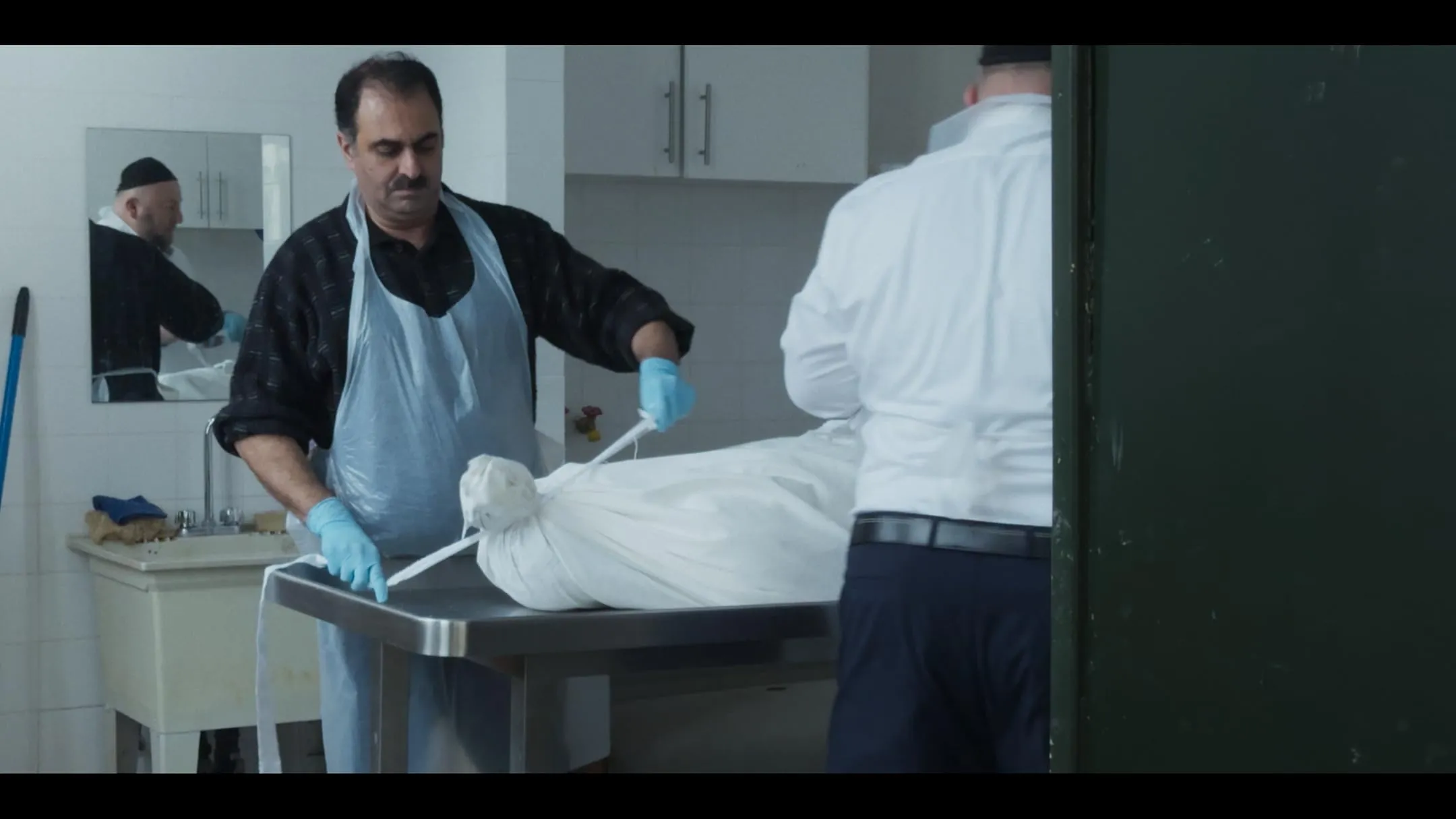
Sadr uses silence effectively, conveying a deep sense of displacement and world-weariness with little more than his posture and the sad slump of his shoulders. Mojtaba’s religious observance feels less like deep conviction and more like a pragmatic component of his job description, a ritual he performs with the same dutiful emptiness that marks the rest of his existence. He provides a calm, melancholic anchor in the story.
In stark contrast is Jana, portrayed by the singer Gola, who brings an authentic, fiery energy to the role. As an exiled artist whose protest songs have made her an enemy of the Iranian regime, Jana is mercurial and charismatic. She plans to weaponize her own death for a cause she feels her music alone cannot serve.
The script risks making her more of a symbol than a person, a choice that has narrative consequences. At times, she feels like an idea of rebellion, a narrative device meant to activate the passive Mojtaba. Gola’s performance, infused with her own musicality, fights against this, grounding Jana’s grand gestures in moments of vulnerability.
Their relationship develops into an unlikely, platonic bond, a delicate push-and-pull dynamic where her emotional directness slowly pierces his quiet solemnity. Their interactions inside her secluded home form the film’s tense, beating heart, a duet between exhausted duty and relentless defiance.
The Long Shadow of the State
Mortician masterfully constructs a portrait of the diasporic experience, where physical distance provides no real safety from a home government’s reach. The story is saturated with a deep paranoia, showing how autocracy can colonize the mind, no matter the geography. Director Abdolreza Kahani visualizes this surveillance not with overt spies but through subtle cinematic language.
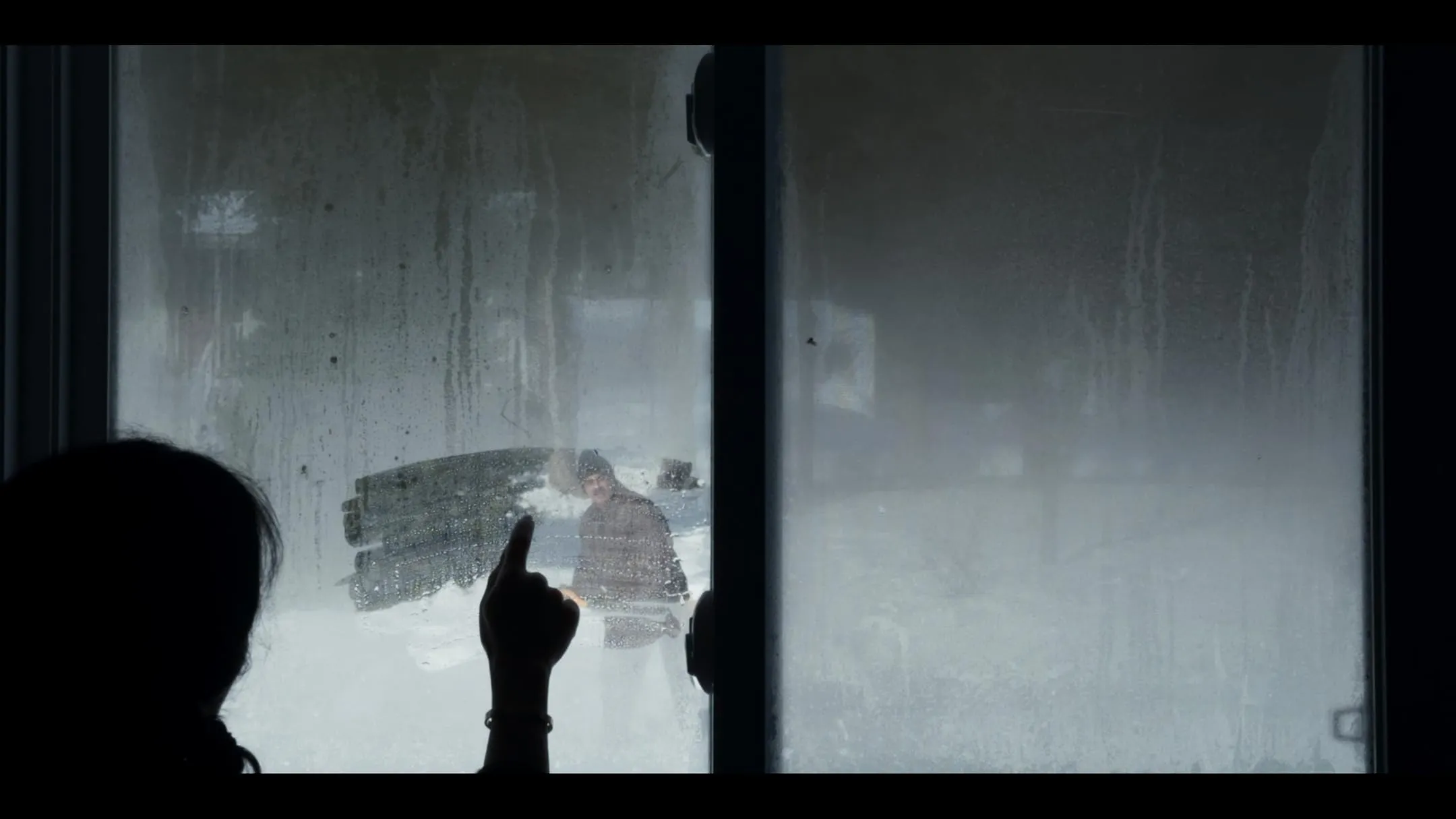
The camera often frames characters through doorways or from a distance, positioning the viewer as an unseen observer. Recurring motifs of misted-up windows, obscured reflections, and revealing close-ups on smartphone screens reinforce a constant sense of scrutiny. The atmosphere is made explicit when Jana instructs Mojtaba to “Delete all your apps,” a simple line that perfectly captures the digital reality of modern dissidents.
The film moves beyond a simple thriller structure to explore the philosophy and efficacy of protest. Jana’s conviction that “something bigger has to happen” pushes the narrative into a difficult space, forcing the audience to consider the cost of dissent. The script does not offer easy answers about the morality or strategic value of martyrdom; it presents the question raw.
A fascinating irony emerges from the central plot device: Mojtaba, a practitioner of ancient Islamic rites meant to honor life’s peaceful end, becomes an accomplice to a very modern, violent form of political speech. This collision of tradition and rebellion, the sacred and the profane, gives the film a rich thematic texture, showing how old customs can be repurposed in the desperate fight for a new future.
The Guerilla Auteur
The film’s construction is as notable as its story, placing it within a growing movement of guerilla filmmaking. This is a work of “solo cinema,” shot entirely by the director on a smartphone with a single microphone. This method is not a gimmick; it is integral to the film’s identity.
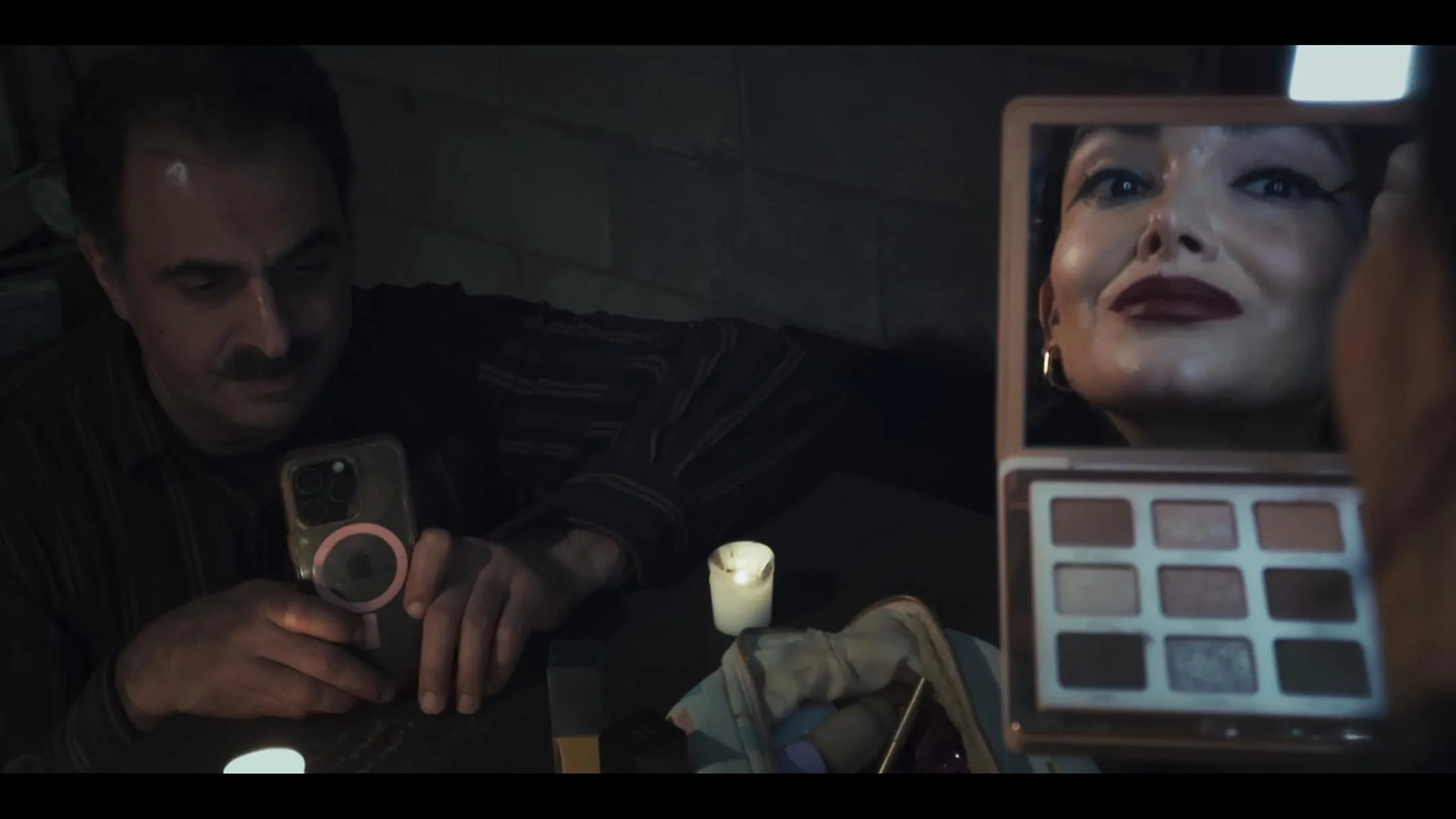
The intimacy of the phone camera places the viewer uncomfortably close to the characters, enhancing the story’s claustrophobic tension. The result is not amateurish but surprisingly elegant, with clean framing and a reduced color palette that uses the stark Canadian whites to amplify the uncluttered interiors of Jana’s home. Kahani’s preference for realism, for the authenticity of a dirty car window over a polished set, gives the world a tangible, lived-in feel.
The editing creates a unique rhythm. The overall pacing is a slow-burn, yet individual scenes are often constructed from briskly cut shots, creating a subtle unease that keeps the quiet narrative from becoming static. This editing choice mirrors the characters’ internal states: long periods of waiting punctuated by moments of sudden decision.
The naturalistic sound design, which uses Jana’s own diegetic music instead of a conventional score, further grounds the film in an unadorned reality. This commitment to realism makes the abrupt, shocking ending feel even more powerful. Instead of credits, the film offers a final act of defiance: a written manifesto from the director. This move breaks the cinematic illusion, directly addressing the audience with the filmmaker’s artistic and political intent and reframing the entire story as an act of resistance.
The Canadian film Mortician, directed by Abdolreza Kahani, had its world premiere at the Edinburgh International Film Festival on August 16, 2025. International sales are handled by Visit Films, with Niva Art producing. The film is not yet available for streaming in the U.S.
Full Credits
Director: Abdolreza Kahani
Writers: Abdolreza Kahani, Rahim Bahrami
Producers and Executive Producers: Zahra Safari, Abdolreza Kahani, Nima Sadr
Cast: Nima Sadr, Gola, Pouya Razavi, Hamidreza Hosseini, Hessam Sobhani, Kamelia Simab
Director of Photography (Cinematographer): Abdolreza Kahani
Editors: Abdolreza Kahani
Composer: Gola, Schubert Avakian
The Review
Mortician
Mortician is a methodically constructed and politically potent drama. It succeeds through its tense atmosphere and the strength of its two central performances. While its deliberate pacing and symbolic approach to character may not resonate with all viewers, the film stands as a powerful testament to the possibilities of "solo cinema." Director Abdolreza Kahani crafts a sharp, affecting, and deeply unnerving story about the long reach of oppression, proving that the most resourceful filmmaking can also be the most resonant. It’s a quiet film that leaves a loud, lasting impression.
PROS
- Effectively builds a palpable sense of tension and paranoia.
- Features a compelling dynamic between Nima Sadr's quiet solemnity and Gola's fiery energy.
- Offers a nuanced exploration of exile, surveillance, and the nature of political protest.
- A successful example of minimalist "solo cinema" that feels intentional and polished.
CONS
- The character of Jana sometimes functions more as an idea of rebellion than a fully developed person.
- The film's slow-burn, methodical pace may feel sluggish to some viewers.
- The story is tightly focused on its central duo, with minimal subplots.