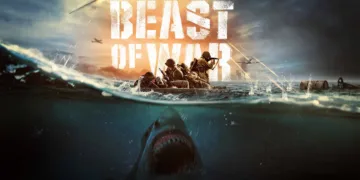






























Some films present a simple, effective pitch. Beast of War throws two distinct concepts into a blender and hits puree. It begins as a World War II story, following Australian soldiers on a grim mission across the Timor Sea. Before you can settle into the rhythms of a standard war picture, their ship is destroyed by enemy fire.
The survivors are left adrift on floating wreckage in the vast, empty ocean. Their fight for survival against the elements and dehydration is immediately complicated by a second, more primal threat: a relentless great white shark. This film quickly establishes its gritty, distinctly Australian identity, promising an intense thriller where the horrors of war meet the terror of the deep.
Characters Under Pressure
A high-concept premise needs a human anchor to keep it from drifting into absurdity. The film finds its footing in Mark Coles Smith’s performance as Leo. He provides a grounded, capable center to the chaos, giving the story its dramatic weight. Leo is not a caricature of a hero; he is resourceful and principled, his leadership emerging naturally from the necessity of the situation.

His journey is complicated by his identity as an Indigenous soldier, who faces bitter prejudice from some of the very men he is trying to save. This is not a background detail. It manifests in the sneering contempt of a character played by Sam Delich, whose hostility creates a constant source of friction. This internal conflict, a fight for respect among his supposed allies, runs parallel to the larger fight for survival. It makes the stakes feel personal.
The small raft becomes a microcosm of society, where camaraderie and bigotry exist side by side. The friendship that develops between Leo and another soldier, Will, serves as a hopeful counterpoint, suggesting a decency that can withstand the pressure. The sharp, witty dialogue further develops these dynamics, particularly a heated debate about the merits of Victoria Bitter versus Foster’s. This exchange is more than a joke; it is a desperate attempt to hold onto a piece of home, using banter as a shield against the encroaching despair.
The Art of the Animatronic
Director Kiah Roache-Turner and cinematographer Mark Wareham create a potent atmosphere of dread. The visual style is damp and disorienting, using a swirling, milky color palette and off-kilter camera angles to communicate the survivors’ precarious state. This aesthetic makes the ocean feel alien and ethereal, turning their environment into a beautiful but deadly dreamscape.
A thick, persistent fog hangs over the water, which serves two excellent purposes. It builds a suffocating sense of isolation while cleverly concealing the practical limitations of shooting on sound stages and in a water tank. The film’s centerpiece is its creature, a massive animatronic shark. This commitment to practical effects, much like in the original Jaws, gives the animal a tangible, weighty presence that CGI often lacks.
You can sense the water displacement as it moves and see the light reflect off its scarred, physical surface. The actors have a terrifying, real-world threat to react against, which elevates their performances. Yet, the film’s approach to its monster diverges significantly from its famous predecessor. Spielberg’s decision to hide his shark was a masterclass in building suspense.
Beast of War chooses a different path, revealing its monster early and often. This is a deliberate choice favoring visceral, in-your-face horror over slow-burn tension. While it delivers immediate shocks, it arguably lessens the sustained, psychological terror of the unseen. The film’s pacing is relentlessly energetic, especially in the opening ship attack, where chaotic editing plunges the viewer directly into the disaster.
A Confident Genre Mashup
Beast of War successfully merges its disparate genres into a cohesive and thrilling whole. The film carves out a specific tone, steering clear of pure camp while avoiding the solemnity of a historical drama. The result is a gory, energetic, and darkly humorous ride that feels like a modern throwback to classic Ozploitation cinema.
This style is defined by its raw energy, shocking content, and unapologetic Australian identity, all of which are present here. The narrative, while straightforward, provides a strong enough foundation to support the visceral action and character drama. The survival plot is more than a sequence of events; it’s a pressure cooker for the film’s social commentary. The story is not just about a shark.
It is about what happens to humanity when civilization is stripped away, leaving only instinct and character. It stands as a memorable and well-crafted Australian shark movie, distinguishing itself within a recent surge of local genre pictures. For viewers who appreciate action-horror, intense survival stories like The Reef, or creature features with practical bite, Beast of War is a definite recommendation.
The 2025 film Beast of War is expected to be released in Spain on August 22, 2025. It is being distributed internationally by Cornerstone Films. The film is not yet available for streaming, however, a Blu-ray release has been announced.
Full Credits
Director: Kiah Roache-Turner
Writers: Kiah Roache-Turner, Adam Lindsay
Producers and Executive Producers: Josh Pomeranz, Toby Rushton, Adam Lindsay
Cast: Mark Coles Smith, Joel Nankervis, Sam Delich, Lee Tiger Halley, Sam Parsonson, Maximillian Johnson
Composer: Michael Lira
The Review
Beast of War
A gutsy and effective genre mashup, Beast of War succeeds through its commitment to practical effects, a commanding lead performance, and a gritty, unapologetically Australian tone. It confidently blends a WWII survival story with a creature feature, creating an energetic and darkly humorous thriller. While it sacrifices some suspense by revealing its monster too eagerly, the film delivers visceral thrills and surprising character depth. It’s a standout piece of modern Ozploitation that offers a satisfyingly gory and intense experience.
PROS
- A strong, grounding lead performance from Mark Coles Smith.
- Impressive use of a practical, animatronic shark.
- Effective and atmospheric cinematography that creates a sense of dread.
- A successful blend of war drama, survival thriller, and creature feature.
- Sharp, authentic dialogue with a dose of dark humor.
CONS
- The shark is revealed too early and shown too frequently, lessening suspense.
- The narrative is relatively straightforward.
- Its fast-paced, gory style may not appeal to viewers who prefer slow-burn horror.