

















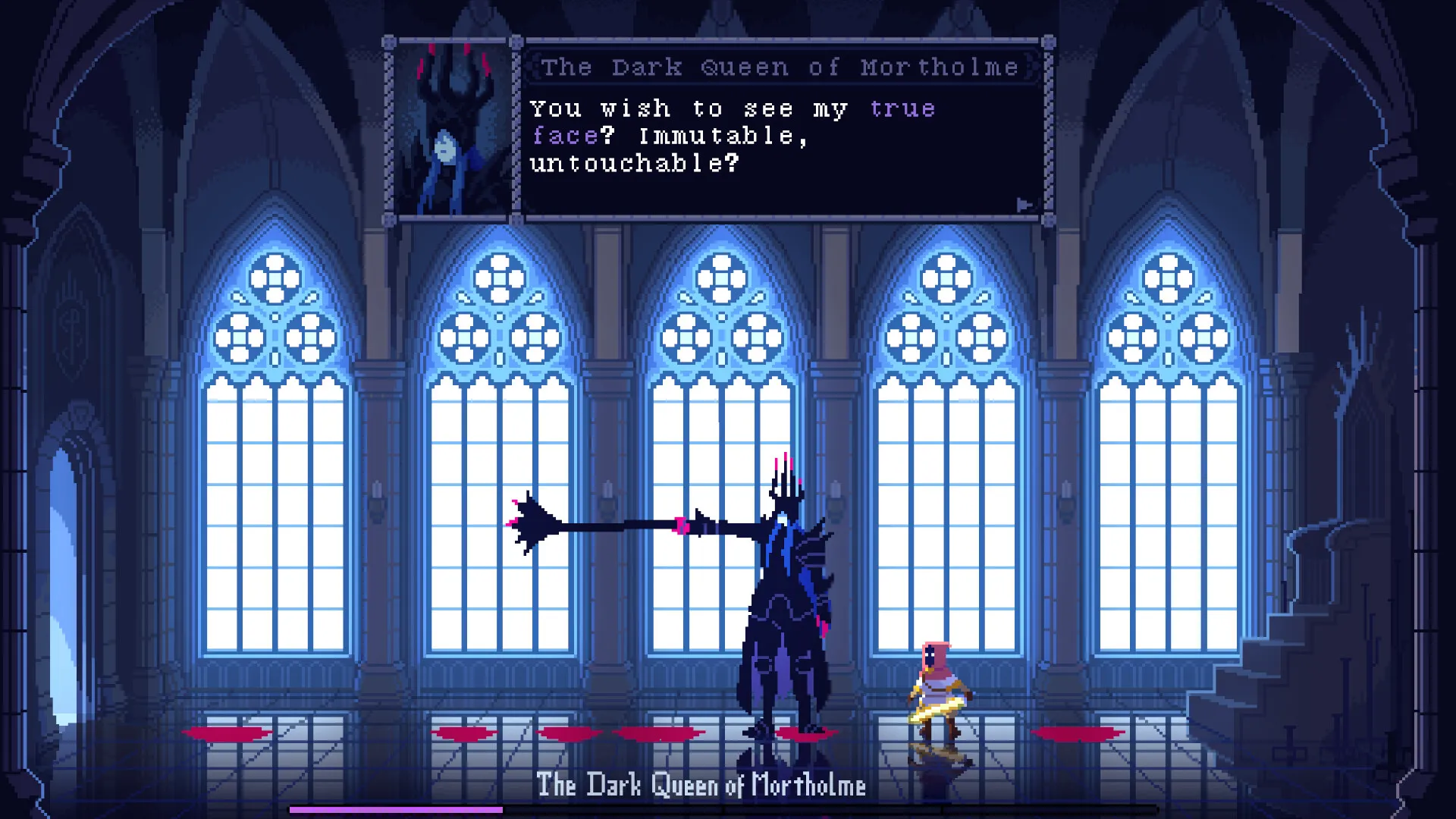

You are the Indomitable Majesty, an empress of shadow and might, seated upon your throne. Your power feels absolute in the flickering candlelight of your hall. When a red-hooded hero bursts in, sword drawn and declaring your reign finished, the interruption is almost amusing. One swing of your spiked staff ends their foolish quest.
To ensure the message is clear, you snap your fingers, and the hero’s body is consumed by purple flame, leaving only ash. You return to your throne, the silence restored. Then, the throne room doors swing open again. The same hero stands there, repeating the same declaration. They should be dead. Something is deeply wrong.
The Shifting Battleground
The game’s mechanical core is a direct and clever subversion of the progression loop central to punishing action titles. In a game like Dark Souls, the player learns the patterns of a static, predictable boss. Here, the roles are swapped.
You, the boss, are the static one. Your arsenal, though potent, is finite; you begin with a powerful set of attacks and that is all you will ever have. The hero, in contrast, is a machine of pure adaptation. The initial fights are trivial, with the hero standing still, accepting their fate. This phase establishes your baseline of power.
Soon, the hero’s AI begins to evolve. They learn to move, then to execute a dodge-roll that makes your previously guaranteed hits miss entirely. Your strategy must now incorporate timing and prediction. After a few more deaths, the hero returns with a different sword, their attacks landing with noticeably more force. The power dynamic begins its slow, inexorable shift.
The throne room floor, a pristine stone slate at the start, becomes a canvas documenting the hero’s tireless efforts. Each bloodstain is a testament to a lesson learned, a permanent mark of their progress against your temporary victories.
The four health bars that once represented your invincibility now seem fragile as the hero’s improving skill allows them to chip away at your health. The fight transforms from a power fantasy into a desperate defense against an inevitable outcome.
A Conversation Between Cycles
Between each violent encounter lies the game’s narrative heart. The fighting stops, and you speak with the hero. A set of dialogue options appears, allowing you to define the Queen’s perspective on the unending cycle. These choices are the game’s primary system of consequence.

You can steer the Queen’s character from a vessel of pure, theatrical villainy toward a figure of genuine depth and pathos. Early choices might reflect mockery and confidence. As the battles wear on you, the options may shift toward frustration, curiosity, or even a quiet resignation.
This system allows for a potent exploration of stagnation versus growth. The hero’s dialogue is filled with an unyielding optimism, celebrating the pride of improvement and the virtue of persistence. They are the engine of change.
The Queen, by contrast, is trapped. Her dialogue choices reflect a mind grappling with the horror of that realization. The conversations raise fundamental questions about purpose. What is the meaning of a ruler’s power if it cannot adapt?
What is the identity of a villain without the hero’s struggle to define them? Your selections do not just add flavor; they chart the Queen’s emotional journey from a simple obstacle into a complex character, leading the narrative toward one of several endings earned through your chosen perspective.
A Concentrated Experience
The game’s presentation is built around its focused scope. The entire story plays out within a single throne room, rendered in a detailed and atmospheric pixel art style. The artists use this limitation to their advantage, filling the scene with small animations that give it life.
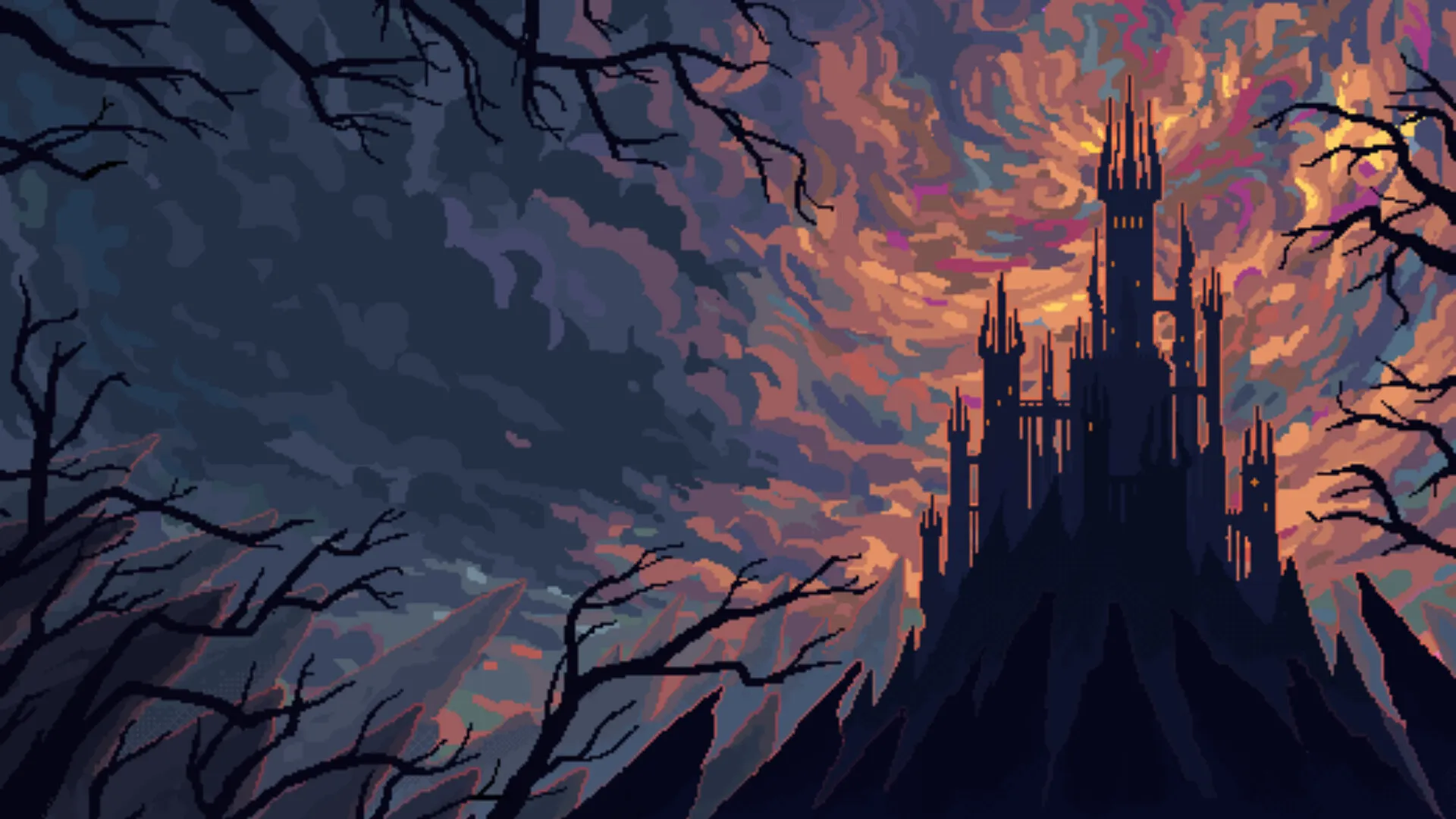
Candles flicker, character sprites breathe with subtle motion, and the Queen’s design, particularly her unnerving demon-hand headpiece, communicates her dark authority. The visual storytelling is efficient and effective.
The sound design reinforces this focused atmosphere. A dramatic score appropriate for a climactic battle elevates the tension of each fight. In the quiet moments between, the audio is more sparse. The echo of your footsteps on the stone floor highlights a profound sense of isolation, while the sharp, declarative sound of your flame spell punctuates your power.
The game’s runtime is exceptionally short, frequently under an hour. This brevity is a crucial part of its design. A longer game would risk making the repetition feel tedious instead of thematic. By keeping the experience contained, the game delivers its central idea with precision. It is a tightly executed concept that uses its limitations to create a memorable reflection on the roles we play in the stories of others.
The Review
The Dark Queen of Mortholme
The Dark Queen of Mortholme is a sharp, intelligent deconstruction of RPG conventions. It successfully uses its repeating combat loop and branching dialogue to tell a thoughtful story from the perspective of the final boss. Its concentrated design ensures its ideas are delivered with precision, making for a memorable and highly effective short experience.
PROS
- Clever premise reverses the standard boss fight dynamic.
- Narrative depth is driven by meaningful dialogue choices.
- Focused, impactful experience due to its short length.
CONS
- Extremely short playtime may not satisfy all players.
- Gameplay is confined to a single, repeating encounter.
- Limited replay value beyond seeing dialogue variations.