































Stories about second chances are a durable narrative form, particularly when laced with regret over a dream abandoned. One Hit Wonder builds its entire premise on this foundation, setting its stage in the burgeoning Original Pilipino Music (OPM) scene of the 1990s. The film introduces us to Lorina Dominguez, a woman defined by a moment of failure.
A decade prior, in 1984, her voice failed her on the grand stage of a televised singing competition. Now, she manages the quiet aisles of a record store, her considerable talent packed away like unsold vinyl. Across town is Entoy Mangarap, a musician whose creative life was inadvertently shaped by Lorina’s televised loss. He has spent ten years holding onto the memory of her voice.
When he walks into her record store, the film presents its central proposition. He needs a singer to elevate his band, and she represents an unfinished song. The narrative machinery is clear: Entoy must convince Lorina to risk public failure once more, this time with him.
The Meticulous Work of Memory
The film’s most carefully constructed character is the 1990s itself. One Hit Wonder functions as a meticulously curated time capsule, using production design and cultural artifacts to build a convincing world of cassette players and analog aspirations. This affectionate recreation is the story’s strongest asset, evident in details as specific as butterfly hair clips, vintage soda bottles, and period-appropriate currency.
The film’s lighthearted tone is occasionally punctuated by playful on-screen graphics, a visual quirk that reinforces its sweet, unserious mood. The soundtrack operates as a critical narrative engine. Songs from iconic OPM bands like Rivermaya and the Eraserheads are not merely background texture; they are part of the characters’ vocabulary and the plot’s architecture.
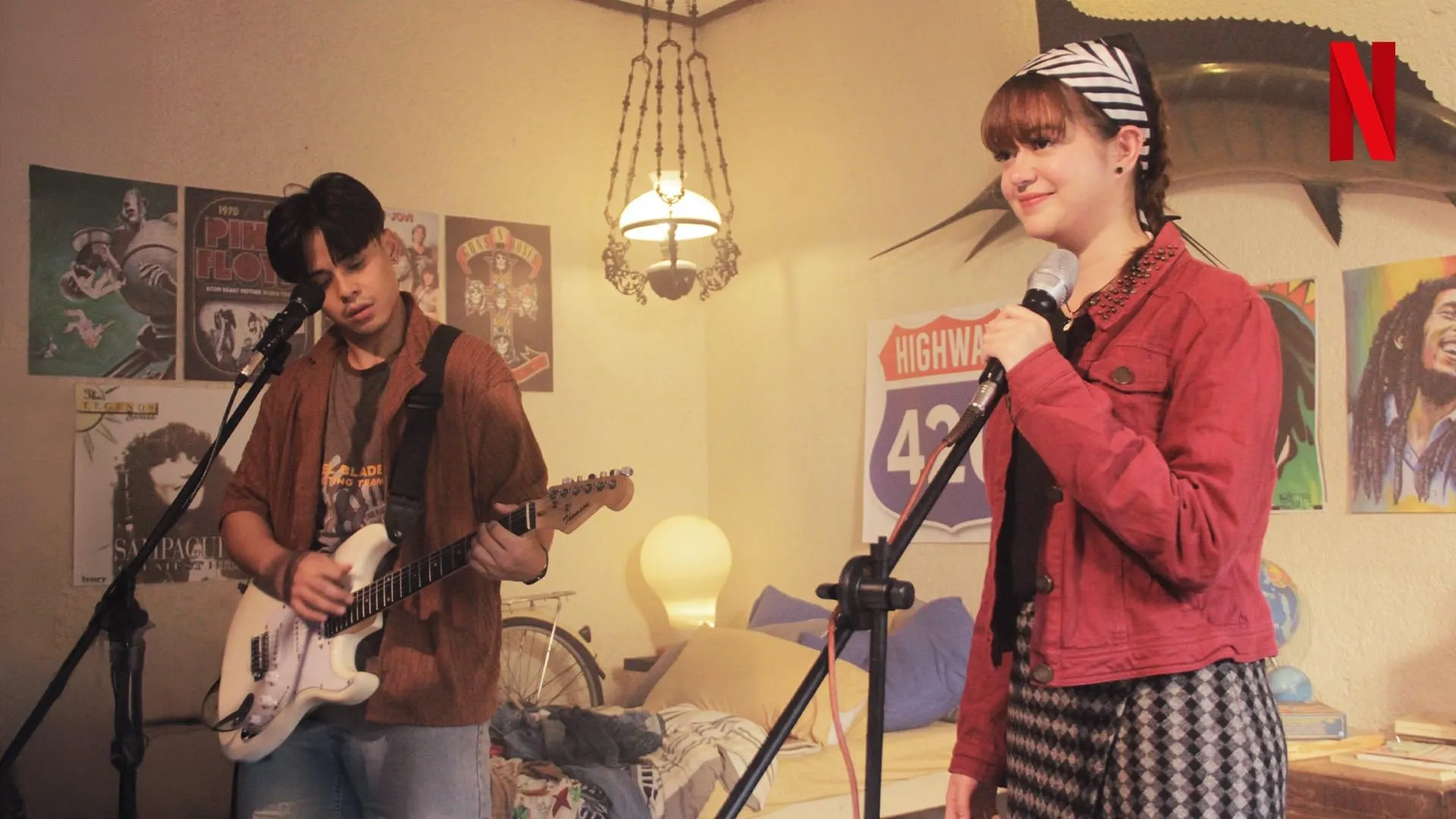
The band’s breakthrough comes from a cover of IAXE’s “Ako’y Sa ‘Yo, Ika’y Akin,” a choice that grounds their success in a real musical history. Casting Sue Ramirez and Khalil Ramos, both capable singers, was a wise decision that lends an essential authenticity to the musical sequences.
Also Read





Their performances feel genuine, especially when the film explores the practical grind of being a musician at the time. It remembers the difficult, pre-internet process of circulating demo tapes to radio stations and the hope of being discovered at a small club, details that give the story a welcome specificity and contrast sharply with today’s landscape of algorithmic fame.
A Romance Built on Shorthand
Any story of this type rests on the chemistry of its leads, and the film is fortunate to have Sue Ramirez and Khalil Ramos. They generate a believable, gentle connection that carries the picture through its weaker structural moments. Ramirez gives Lorina a convincing vulnerability, a quiet hesitation born from a long-held embarrassment.
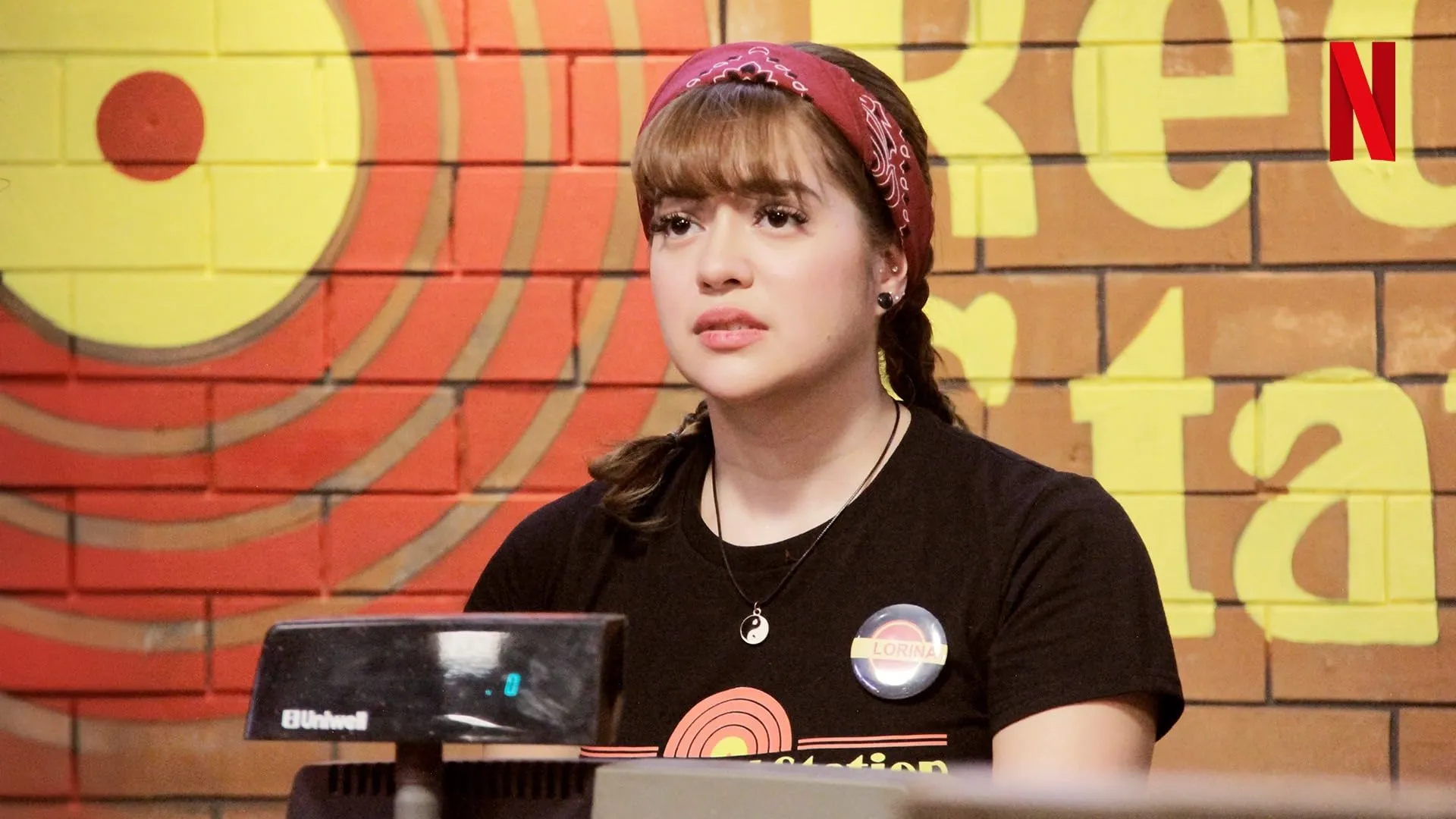
Ramos portrays Entoy with an earnestness that almost papers over his character’s initial flaws. The script, however, seems less interested in earning their romance than simply declaring it. Their connection develops through the narrative shorthand of a montage, a device that substitutes for the patient work of building a relationship through meaningful interaction and dialogue.
We are shown a collection of happy moments instead of the small, specific turning points that make a bond feel real. The character arcs suffer from similar shortcuts. Lorina’s internal battle between a safe career and a risky passion is a promising source of conflict, yet it is stated more than it is explored, making her final choices feel dramatically convenient rather than hard-won.
Entoy’s early persistence skirts the line between romantic devotion and off-putting obsession, a narrative wrinkle the film quickly smooths over without acknowledging its implications. The actors are left to create an emotional depth the screenplay itself does not fully provide.
A Familiar, Comfortable Tune
The narrative blueprint for One Hit Wonder is a familiar one. Its story of struggle, romance, and creative triumph follows a conventional path, hitting every expected beat of the musical-romance subgenre with dutiful precision: the fateful meeting, the initial reluctance, the collaborative harmony, the third-act conflict, and the climactic reunion on stage.
This adherence to formula provides a certain comfort, but it also strips the film of dramatic tension. The stakes feel remarkably low. We are told the characters’ dreams are on the line, yet the story never establishes what true failure would cost them. If the band does not succeed, they will simply return to their pleasant lives, a reality that makes their journey feel weightless.
This lack of consequence is compounded by a collection of underdeveloped subplots, like Entoy’s relationship with his father, which is gestured at through poignant letters but never achieves resolution. Such threads make the nearly two-hour runtime feel both overlong and unfocused. The film’s appeal is therefore almost entirely atmospheric, engineered for the specific ecosystem of streaming platforms where mood often supersedes story.
It succeeds as a delivery system for 90s nostalgia, a sweet and charming piece for an audience fond of the era’s music. Viewers seeking a sentimental, easy watch will find what they are looking for. Anyone hoping for a story with a more complex and memorable composition may find it a bit forgettable.
One Hit Wonder is a Filipino romance, drama, and music film that was released on Netflix on August 21, 2025. It is set in the 1990s and follows the story of two singers hoping to find success in the Filipino pop music scene. The film is approximately 1 hour and 52 minutes long and is available to stream on Netflix.
Full Credits
Director: Marla Ancheta
Writers: Marla Ancheta
Cast: Sue Ramirez, Khalil Ramos, Lilet Esteban, Gladys Reyes, Vivoree Esclito, Romnick Sarmenta, Matt Lozano, Victor Medina, Dawit Tabonares
The Review
One Hit Wonder
While One Hit Wonder succeeds as an affectionate trip back to the 90s OPM scene, its storytelling follows a familiar and predictable tune. The charm of its lead actors and a fantastic soundtrack cannot fully compensate for an underdeveloped romance and a script with very low stakes. It’s a pleasant, comfortable film whose appeal is as fleeting as its title suggests, offering a warm dose of sentimentality without leaving a lasting impression.
PROS
- Charming and charismatic lead performances from Sue Ramirez and Khalil Ramos.
- An effective and detailed recreation of 1990s Filipino culture and atmosphere.
- A strong soundtrack featuring iconic Original Pilipino Music (OPM).
- Authentic musical sequences elevated by the cast's singing abilities.
CONS
- The plot is highly predictable and follows a conventional romance formula.
- Key character arcs and subplots feel underdeveloped.
- The central romance develops too quickly through montages.
- A lack of significant conflict or high stakes reduces dramatic tension.