

























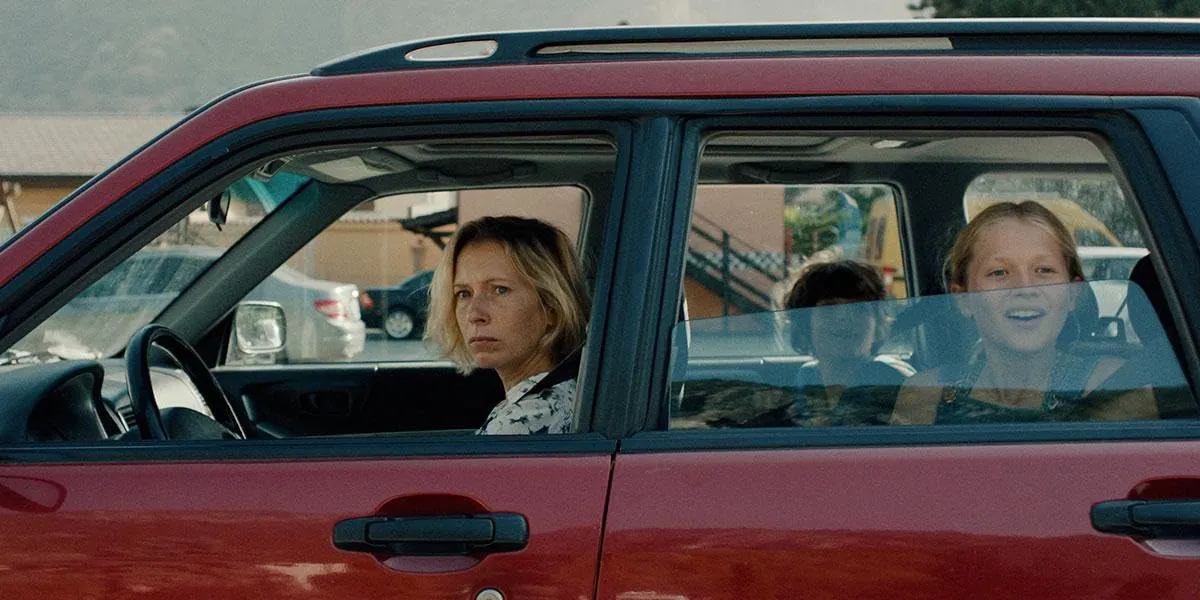

In the Swiss canton of Valais, a place of almost aggressive beauty, a single mother named Jule attempts to hold her small family together. The scenery, all sun-drenched vineyards and alpine perfection, serves as a cruel joke against her circumstances.
Jule (Ophélia Kolb) and her three children exist in a state of managed precarity, their lives dictated by the beep of the ankle monitor fastened to their mother as a constant reminder of a past she cannot outrun.
Jasmin Gordon’s The Courageous is a quiet, sober examination of a woman’s fight for a stable home. Her methods, born from a desperate love, are often the very things that threaten to pull her world apart. The film avoids sentimentality, presenting instead the stark moral arithmetic of survival.
A Portrait of the Mother as a Bad Decision
Jule is a magnificent, maddening creation, a character designed to test the limits of an audience’s empathy. She is a woman trapped by her own worst impulses, picking fights with housing officials who might help her and spinning elaborate fictions for her children.
She is, in short, a pain. This is the film’s central conceit. It forces you to look past the frustrating exterior to the raw motivation within. Her self-sabotage feels pathological, a symptom of someone who has so deeply internalized failure that she preemptively engineers it. Her refusal to accept a social worker’s definition of her son’s Asperger’s is not just maternal protectiveness; it is a desperate, irrational attempt to exert control over a single fact in a life defined by powerlessness.
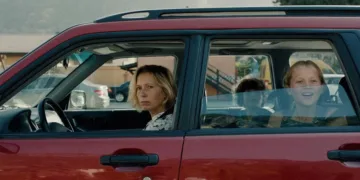
One minute, Jule is leading her kids in a dance to “Build Me Up Buttercup,” her face a mask of joy streaked with tears. The next, she is passing off a shoplifted cake as homemade, an act of love constructed from deceit.
Also Read





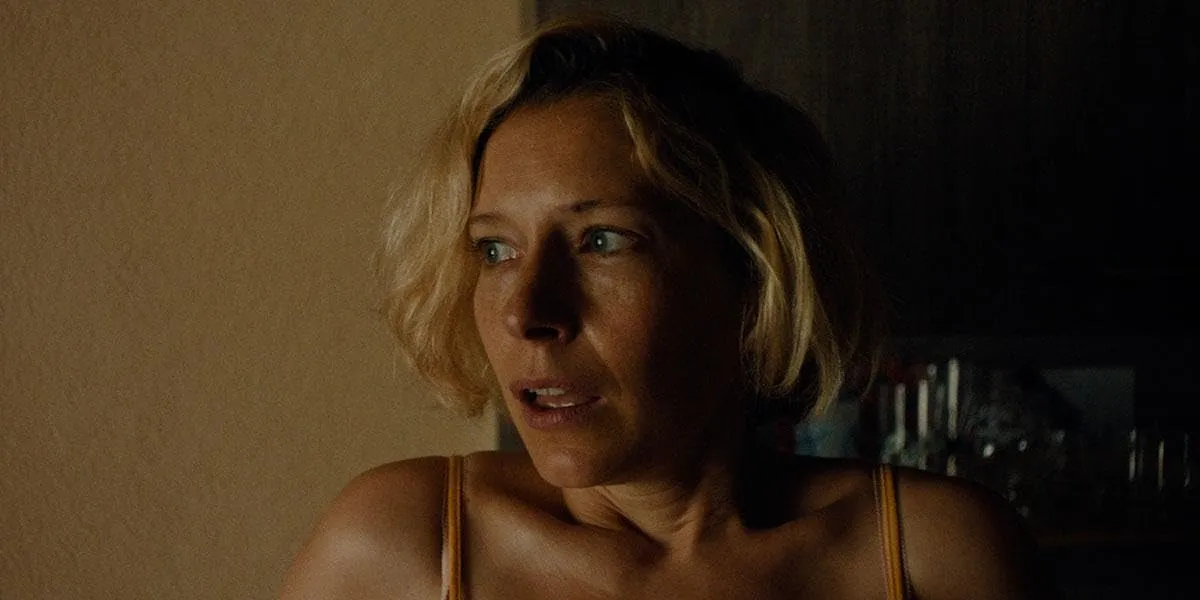
These gestures are attempts to manufacture memories of normalcy, poignant and deeply flawed. Ophélia Kolb’s performance is the film’s anchor, a masterclass in layered concealment. She wears a fragile shell of maternal warmth, but the camera catches the cracks, the moments of pure exhaustion when she thinks no one is looking.
The tension lives in her posture, in the forced brightness of her voice. Her Jule is a woman perpetually in survival mode. The film offers a challenging view of motherhood, one where fierce devotion is expressed through self-destructive actions, questioning the very definition of a good parent when survival is the only metric that matters.
An Architecture of Ambiguity
Director Jasmin Gordon practices a filmmaking of intense restraint, observing her subjects with an almost clinical detachment that makes the emotional chaos on screen feel more potent. The approach has echoes of European social realists, yet Gordon swaps Belgian grime for Swiss sunlight, making the squalor of Jule’s situation purely psychological.
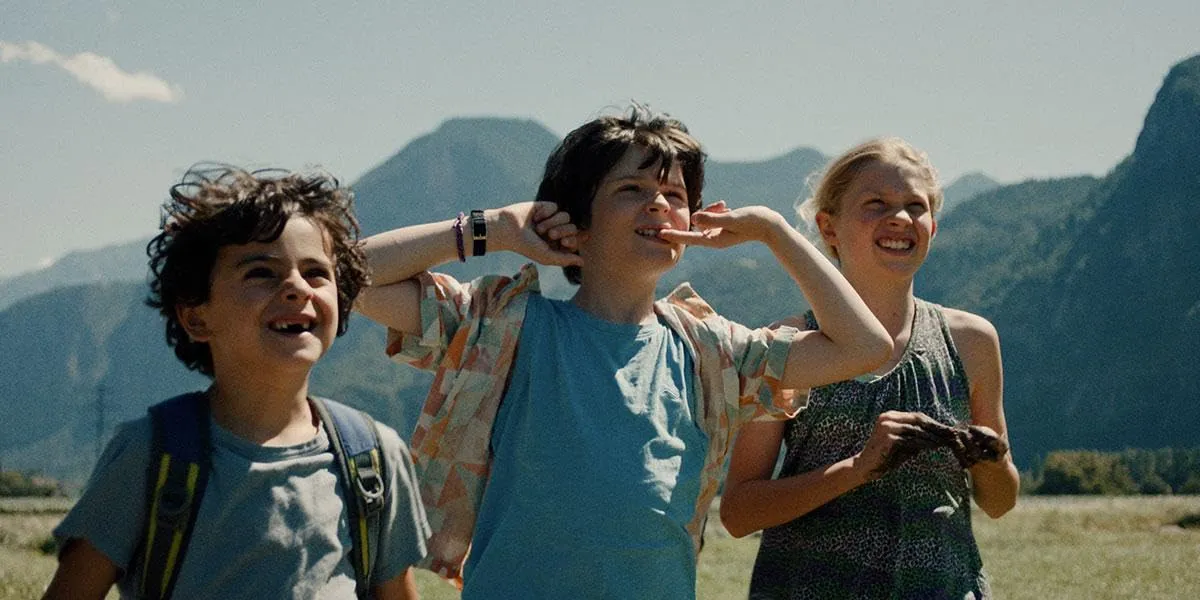
Its brief 80-minute runtime is a mercy and a strength; it is a concentrated injection of Jule’s reality without a moment of narrative fat, rejecting conventional arcs for a snapshot of life’s cyclical struggle. The Swiss setting is more than a backdrop; it is a gilded cage.
The town’s affluence and aggressive orderliness become oppressive forces, highlighting the family’s otherness at every turn. This is the tyranny of the picturesque, where poverty appears not as a circumstance but as a personal, aesthetic failing.
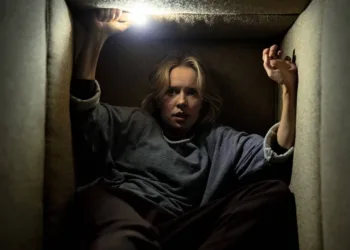
The visual style reflects Jule’s internal state. Shaky, handheld cinematography imparts a constant nervousness, while shadows seem to physically encroach upon Jule in the frame (a rather direct metaphor, but an effective one). The script’s most audacious move, however, is its refusal to explain. We never learn the specifics of Jule’s past crimes or what happened to the children’s father.
This ambiguity is a direct challenge, denying the audience the comfort of a simple backstory that might make Jule a more palatable object of pity. By withholding these details, Gordon shifts the film’s focus from “what happened to her?” to “what is she doing now?” It transforms the story into a moral problem for the viewer, demanding an engagement far more complex than simple sympathy.
Children of the Precarity
Jule’s three children are not merely accessories to her struggle. They have formed a small, self-reliant society out of necessity, with its own rules and hierarchies, learning to care for one another during their mother’s frequent and unexplained absences. The eldest daughter, Claire, functions as the family’s reluctant truth-teller.
Her growing awareness of her mother’s deceptions marks the slow erosion of her own childhood, a quiet tragedy that unfolds in glances and silences. She is a ‘parentified child’, forced to carry an emotional burden that rightfully belongs to her mother, and the young actor’s performance captures this premature gravity with heartbreaking subtlety.
This family dynamic is a compact illustration of the poverty trap, a state where one past mistake creates a perpetual social debt. The system of judgment and half-hearted aid Jule encounters only reinforces her alienation. To get help, she must perform a specific type of worthiness she finds humiliating. Her condition is treated not as economic but as a character flaw by nearly everyone she meets.
The film portrays a kind of socio-moral inertia: once a community deems you unreliable, every action is filtered through that lens, making escape a near impossibility. The movie offers no easy resolutions, leaving behind an unsettling portrait of a family’s fight. It prompts a lingering question about the title itself. Who here is courageous? The mother for her flawed fight, the children for their resilience, or the film for daring to ask us to find humanity in a person so determined to reject it.
The Courageous is a 2024 Swiss drama film that premiered at the Toronto International Film Festival on September 9, 2024. The film was released in Montreal and Québec City on April 11, 2025, and a UK and Irish cinema release was planned for summer 2025. It is distributed by Outside the Box.
Full Credits
Director: Jasmin Gordon
Writers: Julien Bouissoux, Jasmin Gordon
Producers and Executive Producers: Brigitte Hofer, Cornelia Seitler
Cast: Ophélia Kolb, Paul Besnier, Arthur Devaux, Jasmine Kalisz Saurer, Sabine Timoteo, Michel Voïta, Roger Bonjour, Claudia Grob, Alexandra Karamisaris, Nabil Rafi
Director of Photography (Cinematographer): Andi Widmer
Editors: Jan Mühlethaler
Composer: Mirjam Skal
The Review
The Courageous
The Courageous is an intelligent, unsettling film that refuses to offer simple comforts. Anchored by a phenomenal and difficult performance from Ophélia Kolb, director Jasmin Gordon crafts a potent character study that doubles as a sharp critique of how society polices poverty. Its deliberate ambiguity is a bold choice that challenges the viewer to look beyond judgment to find the flawed humanity at its center. This is a demanding, sober, and ultimately rewarding piece of cinema for those willing to engage with its difficult questions.
PROS
- Ophélia Kolb delivers a layered and powerful performance as the complex protagonist, Jule.
- Jasmin Gordon’s restrained, observational style creates a potent and authentic atmosphere.
- The film offers a sharp and nuanced exploration of poverty, unconventional motherhood, and social judgment.
- Its use of narrative ambiguity actively challenges the viewer to confront their own biases.
CONS
- The main character is intentionally frustrating and self-destructive, which may be difficult for some viewers to connect with.
- The lack of a clear plot structure and the deliberately slow pace might not appeal to everyone.
- Viewers seeking a conventional story with clear answers may find the film's open-ended nature unsatisfying.