




























Twenty-eight years have passed since Final Fantasy Tactics first demonstrated how Japanese developers could transform Western medieval fantasy through their own cultural lens of political complexity and spiritual introspection. The Ivalice Chronicles represents Square Enix’s most thoughtful attempt to bridge the generational gap between 1997’s ambitious tactical RPG and contemporary gaming sensibilities. This remaster preserves the original’s dense political narrative while introducing full voice acting and modernized interface elements that make its intricate systems accessible to newcomers.
The game follows Ramza Beoulve, a minor noble whose actions during a civil war would later be erased from official histories. This framing device, told by a scholar uncovering lost truths, reflects Japan’s own relationship with contested historical narratives. The Ivalice Chronicles includes both the enhanced version and the original PlayStation release, acknowledging that preservation and progress need not be mutually exclusive. Where many remasters choose between modernization and authenticity, Square Enix offers both paths, recognizing that different players seek different connections to the past.
The game’s reputation for combining accessible tactical combat with bewildering job system depth remains intact. What has changed is how these systems communicate their possibilities to players, transforming arcane menu structures into intuitive information flows that respect both the complexity veterans expect and the clarity newcomers deserve.
Voices Across the Divide
The addition of full voice acting transforms The Ivalice Chronicles from a text-heavy political treatise into something approaching interactive theater. This shift illuminates how different cultures approach narrative emphasis. Where Japanese voice acting often prioritizes emotional intensity and melodramatic peaks, the English localization grounds characters in recognizable regional dialects that map class distinctions onto familiar linguistic patterns. Nobles speak with theatrical flourish while common soldiers adopt working-class inflections, creating an auditory hierarchy that reinforces the story’s themes about social mobility and inherited privilege.

Ramza’s arc from idealistic knight to branded heretic gains new resonance through Joe Pitts’ performance, which captures the character’s gradual disillusionment without sacrificing his core sincerity. The narrative structure, which escalates from personal betrayal to supernatural conspiracy, mirrors the storytelling patterns found in Japanese historical dramas where individual honor conflicts with institutional corruption. Characters like Rapha, previously relegated to narrative footnotes, emerge as fully realized individuals whose pain and anger reflect broader themes about powerlessness and resistance.
Also Read





The State of the Realm timeline feature acknowledges that Western audiences often struggle with the complex political relationships that Japanese strategy games take for granted. Rather than simplifying the narrative, this tool provides cultural translation, helping players track allegiances and motivations across a story that assumes familiarity with concepts like feudal obligation and religious authority. New character-specific conversations triggered by tactical party composition choices add layers of context that were previously hidden, rewarding players who experiment with different narrative possibilities.
The contrast between Japanese and English voice tracks reveals interesting cultural assumptions about emotional expression. What reads as passionate conviction in Japanese often becomes measured reasoning in English, suggesting different comfort levels with dramatic intensity that reflect broader entertainment traditions.
The Mathematics of Power
The job system in The Ivalice Chronicles exemplifies how Japanese game design approaches character progression through systematic complexity rather than streamlined efficiency. Twenty distinct classes offer skills that can be mixed and matched across arbitrary boundaries, creating possibilities that range from practical to absurd. A Monk who dual-wields weapons while ignoring terrain elevation represents the system’s willingness to break its own rules in service of player expression.

This approach contrasts sharply with Western RPG traditions that typically gate abilities behind class restrictions or level requirements. The game’s progression mechanics reward experimentation over optimization, encouraging players to spend hours in single battles, healing enemies and allies alike to maximize experience gain. Such grinding might seem tedious to contemporary audiences, but it reflects a cultural patience with iterative improvement that has deep roots in Japanese craftsmanship traditions.
Combat itself operates on isometric battlefields where positioning and elevation create tactical depth that transcends simple damage calculations. Late-game encounters introduce abilities that can instantly eliminate entire parties, forcing players to master systems they might have ignored during easier chapters. The Arithmetician class, which casts spells based on statistical multiples rather than traditional targeting, represents the kind of baroque mechanical complexity that Japanese developers often embrace while Western designers typically avoid.
Three difficulty settings acknowledge that different players seek different relationships with challenge. The Knight difficulty preserves the original’s infamous difficulty spikes, while Squire and Tactician modes adjust both damage values and enemy AI behavior. This flexibility recognizes that tactical depth and accessibility need not be opposing forces.
Quality-of-life improvements transform previously hidden information into visible interface elements. Turn order displays, spell targeting previews, and movement reset options remove the guesswork that once characterized tactical decision-making. The ability to retry battles instantly or return to the world map eliminates the soft-lock scenarios that could trap unprepared players, acknowledging that modern audiences have less tolerance for punitive design decisions.
Cultural Artifacts and Digital Preservation
The visual presentation of The Ivalice Chronicles walks a careful line between modernization and preservation. Updated sprites maintain the original’s isometric perspective while adding resolution and detail that enhance rather than replace the source material. A canvas-like texture overlay gives battlefields the appearance of painted miniatures, evoking tabletop gaming traditions that influenced the original design.
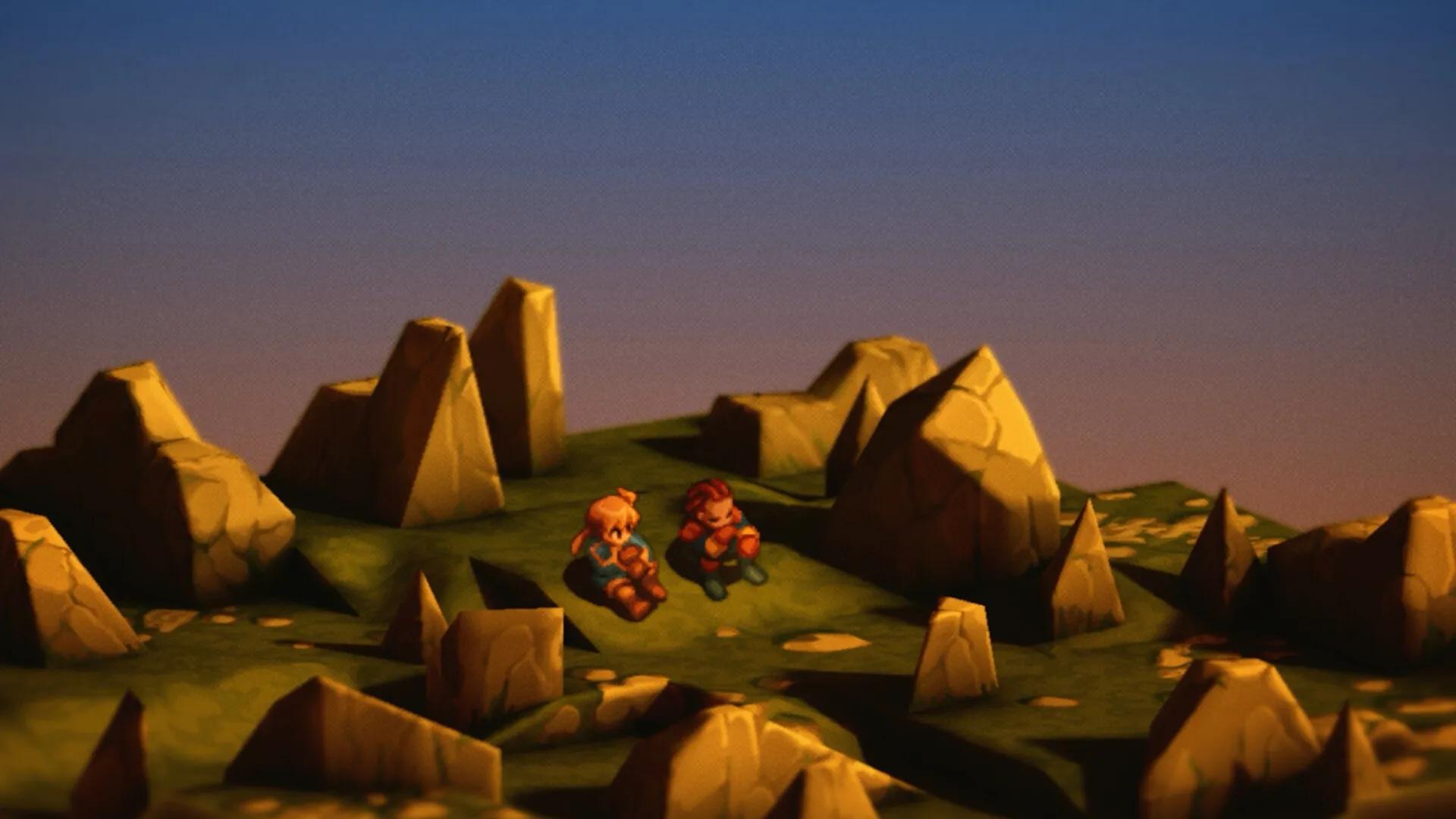
This aesthetic choice reveals interesting tensions about how cultures value visual authenticity. Where some players prefer pixel-perfect reproduction, others appreciate subtle enhancements that preserve artistic intent while improving technical execution. The inclusion of the original graphics mode as a separate launcher acknowledges these different relationships with visual nostalgia, though the inability to transfer saves between versions suggests that preservation and progress remain somewhat isolated experiences.
Technical improvements focus on information accessibility rather than mechanical changes. Enhanced tutorials transform the infamous zodiac compatibility chart from an incomprehensible ASCII table into plain-language explanations. Quest markers guide players through previously obtuse side missions, removing frustration without reducing challenge. These changes recognize that obscurity and difficulty are different qualities, and that removing the former can actually enhance the latter.
The game’s content completeness reveals the complex relationship between definitive editions and licensing realities. Missing content from the PSP War of the Lions release, including additional characters and multiplayer modes, prevents The Ivalice Chronicles from claiming comprehensive status. However, the inclusion of previously untranslated Sound Novels provides content that has never been available to Western audiences, suggesting that completeness might be measured in different ways across different cultural contexts.
Performance stability addresses technical issues that plagued previous portable versions, ensuring that tactical complexity isn’t undermined by hardware limitations. Save system improvements and menu streamlining remove barriers that once separated players from the game’s core strategic elements, making the experience more accessible without sacrificing depth.
The Ivalice Chronicles succeeds as both cultural preservation and contemporary adaptation, offering multiple paths through the same essential experience while acknowledging that different players bring different expectations to classic games. It represents a thoughtful approach to remastering that respects both the original’s cultural specificity and the global audience’s diverse needs.
The Review
Final Fantasy Tactics: The Ivalice Chronicles
The Ivalice Chronicles transforms a beloved classic into its most accessible form without compromising the tactical depth and narrative complexity that made it legendary. While missing some PSP content prevents true definitiveness, the meaningful quality-of-life improvements, excellent voice acting, and thoughtful interface redesign create the best way to experience this strategic masterpiece. Minor visual compromises pale against the substantial gains in clarity and convenience.
PROS
- Exceptional voice acting brings characters to life
- Intuitive interface improvements enhance accessibility
- Deep job system rewards experimentation
- Complex political narrative remains compelling
- Quality-of-life features eliminate frustration
- Includes original version for purists
CONS
- Missing War of the Lions content
- Late-game balance issues persist
- Visual filter may not appeal to all players
- No save transfer between versions
- Some tutorial improvements still feel incomplete