











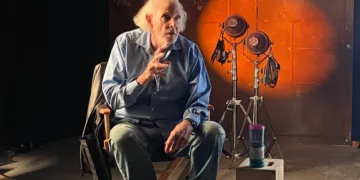
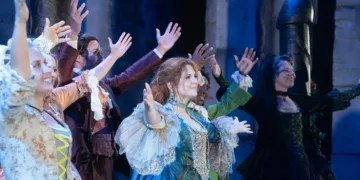










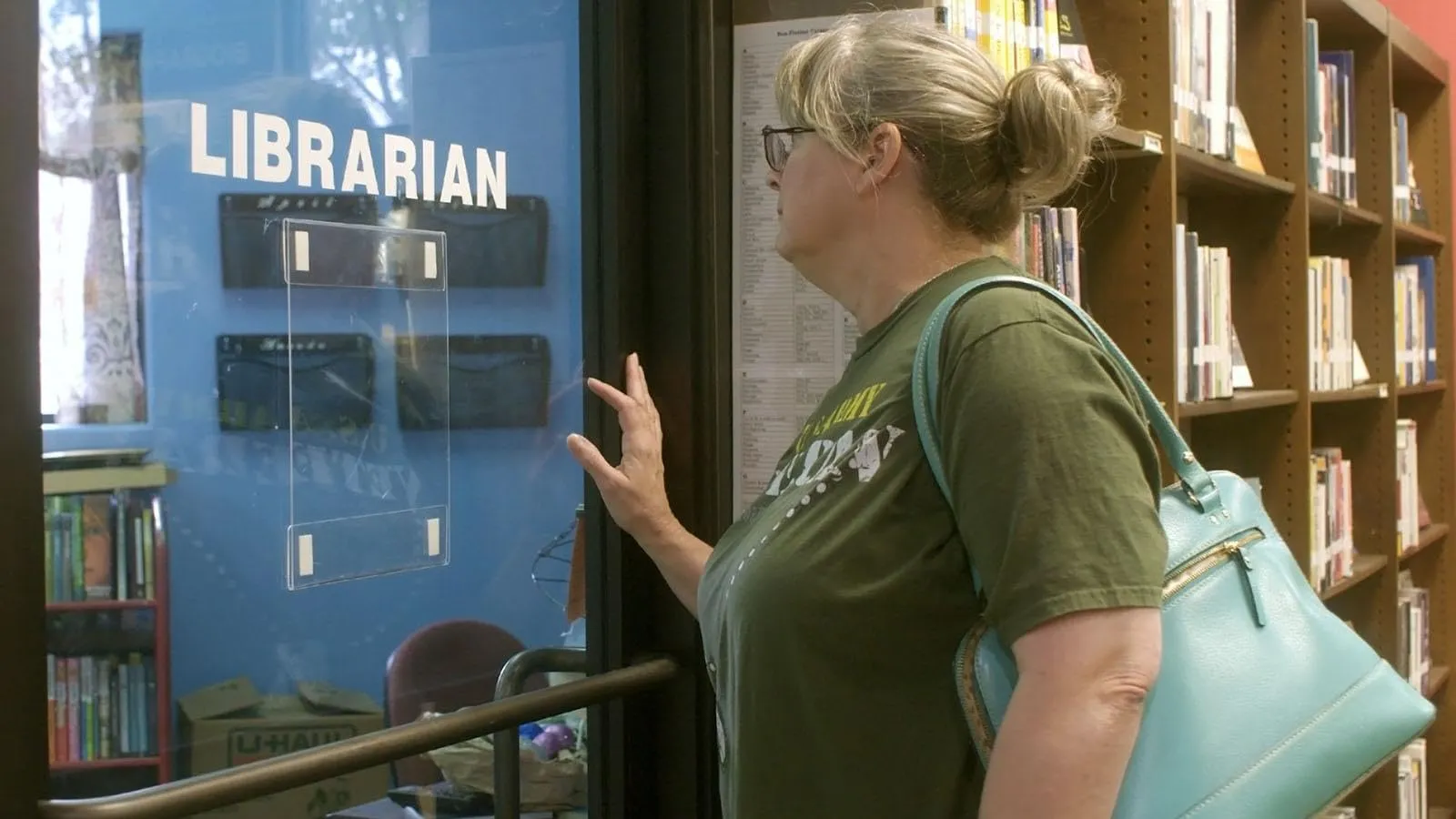

A book is a quiet vessel for a shouting mind. It is a fragile container for thoughts that might otherwise dissolve into the ether, a held breath of history, a paper-thin door to another consciousness. Kim A. Snyder’s documentary The Librarians begins with the slow, methodical act of attempting to shatter these vessels. The film is less a political dispatch and more a philosophical meditation on a peculiar human pathology: the desperate need to un-write what has been written, to un-think what has been thought.
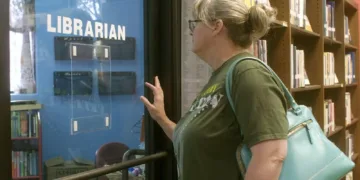
It documents a coordinated fever in the American body politic, a campaign to cleanse libraries in Texas, Florida, and beyond of narratives deemed impure. The targeted books are often those that speak of lives lived outside a narrow norm, stories of racial pain or queer identity that offer a different reflection in the cultural mirror. The film’s subjects are the librarians, custodians of these paper doors, who now find themselves in the unenviable position of guarding the exits from a burning building. They are asked to choose between their livelihood and their belief in the sanctity of a recorded idea.
The Weight of Witness
The abstract violence of censorship finds its flesh and blood in the lives of those who stand in its path. The film watches as an ideology’s blunt force lands on individual people, leaving fractures that are deep and personal. Snyder presents a gallery of quiet resistance. In Texas, we see Suzette Baker, a woman whose professional life is dismantled because she refused to participate in the act of erasure. Her stand is not loud, yet it costs her everything.
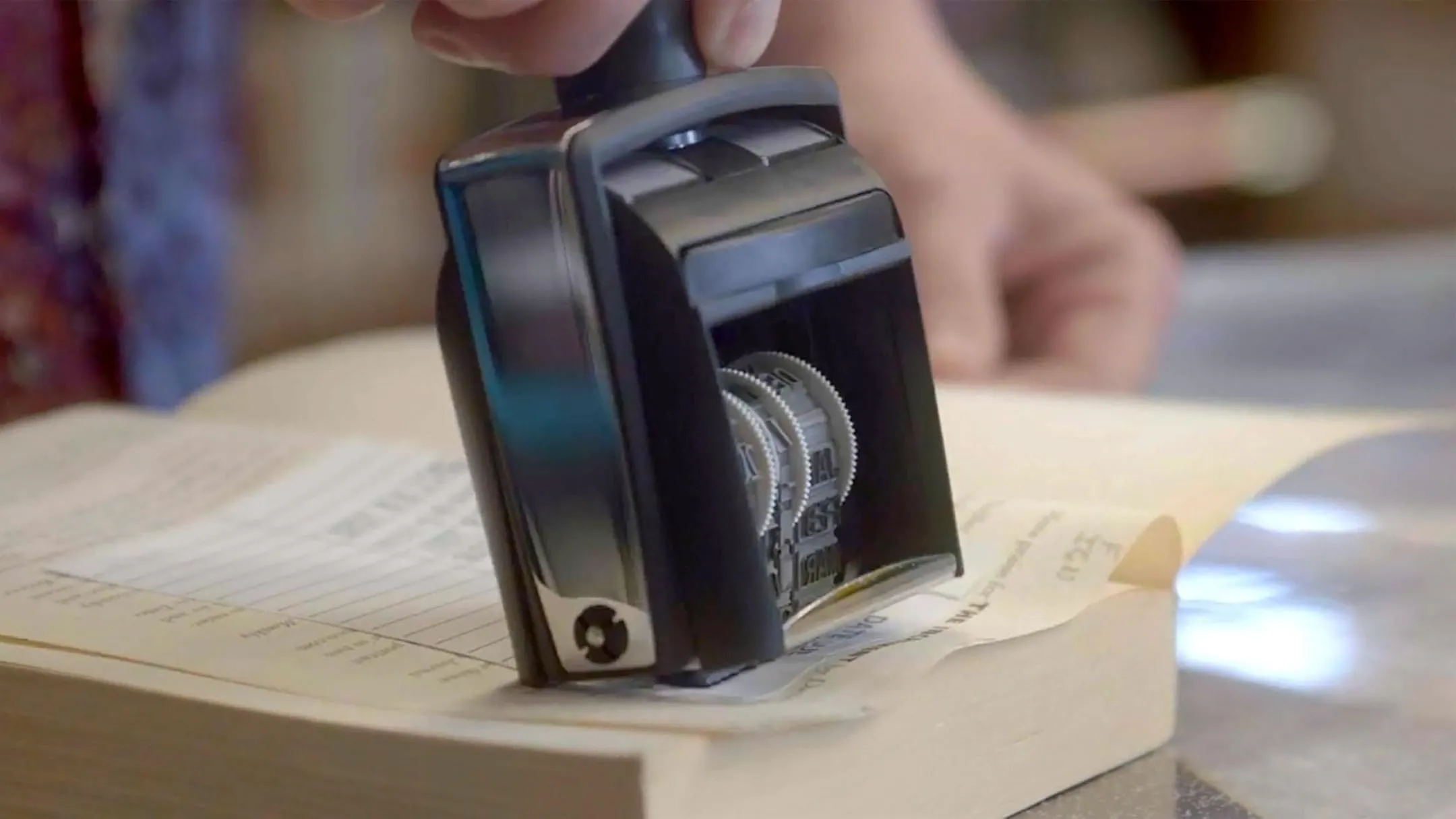
The experience of Amanda Jones in Louisiana is a descent into a modern nightmare; she is subjected to a campaign of digital slander that aims to sever her from her own community, transforming her name into a vessel for public hate. Her legal battle is a lonely odyssey, and the schism it creates with her father reveals how this cultural poison can seep into the most intimate of bonds. We witness the weaponization of language, where words like “pornographer” are used not as descriptors but as incantations meant to unmake a person’s identity.
This process of flattening a human into a caricature is perhaps the deepest violence. The film also shows us the sorrowful tableau of Monica Brown, a crusader for the removal of books, and her son Weston, a gay man who must publicly oppose his own mother to defend his right to exist in story and in life. Their schism is a microcosm of a nation’s broken conversation, a testament to the profound isolation that occurs when fear replaces curiosity. These are not merely portraits of courage; they are studies in the endurance required to simply remain oneself against a crushing force.
History’s Unquiet Ghost
The events in The Librarians are presented not as a new sickness but as the return of a chronic one. Snyder constructs a disquieting temporal loop, suggesting that the present is haunted by the unquiet ghost of the past. The rage witnessed in brightly lit school board meetings feels unnervingly familiar because the film insists that we see its antecedents.
The documentary’s most potent technique is its deliberate shattering of linear time. The crackle of a Nazi book-burning pyre from a 1930s newsreel is layered over the image of a contemporary bonfire in Tennessee, creating a moment of pure vertigo. Past and present become a single, recurring nightmare. This is not a simple comparison but an argument about inheritance. The film suggests that the bureaucratic chill of Matt Krause’s list of 850 books is a modern expression of the same impulse that fueled Joseph McCarthy’s hearings.
One burns, the other deletes, but both seek to control the present by curating the past. Allusions to fiction, like François Truffaut’s film Fahrenheit 451 or the stark allegories of The Twilight Zone, function as cultural memories, stories our society told itself to warn against this very moment. They appear here as transmissions from a saner past, desperate to be heard over the noise of the now. The film argues that this organized campaign is a form of calculated forgetting, a willed amnesia that is always the precursor to a darker chapter.
The Last Quiet Room
In a world saturated with noise, what is the ultimate function of a library? Snyder’s film posits that it is a sanctuary for nuance, perhaps the last quiet room where one can encounter a consciousness other than one’s own. It is an ark, holding not just stories but the very potential for different ways of seeing. The librarians who defend this space are acting as a “firewall against fascism,” a defense not of paper objects but of the interior space required for a free mind to operate.
They are protecting the possibility of complexity in a culture that increasingly demands the simple answer, the loud declaration, the unambiguous enemy. The library is a repository of contradictions, a place where a thousand different truths can rest side by side on a shelf. To attack it is to attack the very idea that multiple realities can coexist.
We see students and allies join the librarians, small points of light against a gathering shadow, suggesting that the human need for stories is not so easily extinguished. The film does not offer a comforting resolution. It leaves us with the profound and unsettling quiet of the stacks, a silence that feels both sacred and profoundly vulnerable. It leaves us to contemplate the difference between the silence that follows the closing of a book and the one that follows its complete disappearance.
The documentary “The Librarians” premiered at the Sundance Film Festival on January 24, 2025. It is a Peabody Award-winning film that highlights the efforts of librarians across the United States who are on the front lines against attempts at censorship and book banning, particularly in Texas, Florida, and New Jersey. While it is a documentary, it has been picked up by a major streaming platform, and you can also find it on various digital platforms like Apple TV and Google Play Movies. The movie is expected to have a theatrical release as well.
Full Credits
Director: Kim A. Snyder
Writers: Jack Youngelson
Producers and Executive Producers: Producers: Kim A. Snyder, Janique L. Robillard, Jana Edelbaum, Maria Cuomo Cole. Executive Producers: Sarah Jessica Parker, Hallee Adelman, Alison Benson, Christian Camargo, Tegan Acton, Amber Alonso, Geralyn White Dreyfous, Regina K. Scully, Marni E.J. Grossman, Carrie Lozano, Lois Vossen, Ruth Ann Harnisch, Chris Stolte, Heidi Stolte, Emma Pompetti, Kate Garwood, Adam Lewis, Melony Lewis, Rachel Cohen, Thomas Campbell Jackson, Penny B. Jackson, Deepen Shah.
Cast: Carolyn Foote, Becky Calzada, Amanda Jones, Suzette Baker, Martha Hickson
Director of Photography (Cinematographer): Amy Bench, Paulius Kontijevas, Derek Wiesehahn
Editors: Mark Becker, María Gabriela Torres, Leah Boatright, Austin Reedy
Composer: Nico Muhly
The Review
The Librarians
The Librarians is a chilling diagnosis of a recurring historical fever. It documents the anatomy of erasure with stark clarity, presenting a gallery of quiet resistance against a rising tide of willed ignorance. Snyder's film is a necessary, disquieting mirror, reflecting a conflict over the very soul of the written word. It avoids simple pronouncements, instead offering a somber meditation on what is lost when we begin setting fire to the page, leaving the viewer to contemplate the silence that follows.
PROS
- A profound focus on the human cost of ideological battles.
- Potent use of historical footage to create a sense of recurring patterns.
- Gives voice to the quiet, determined individuals at the center of the conflict.
- Raises philosophically resonant questions about censorship and knowledge.
CONS
- Its firm perspective may not engage viewers who are not already sympathetic to its position.
- The focus on specific front-line battles leaves little room to explore the wider legal or political intricacies of the issue.