




























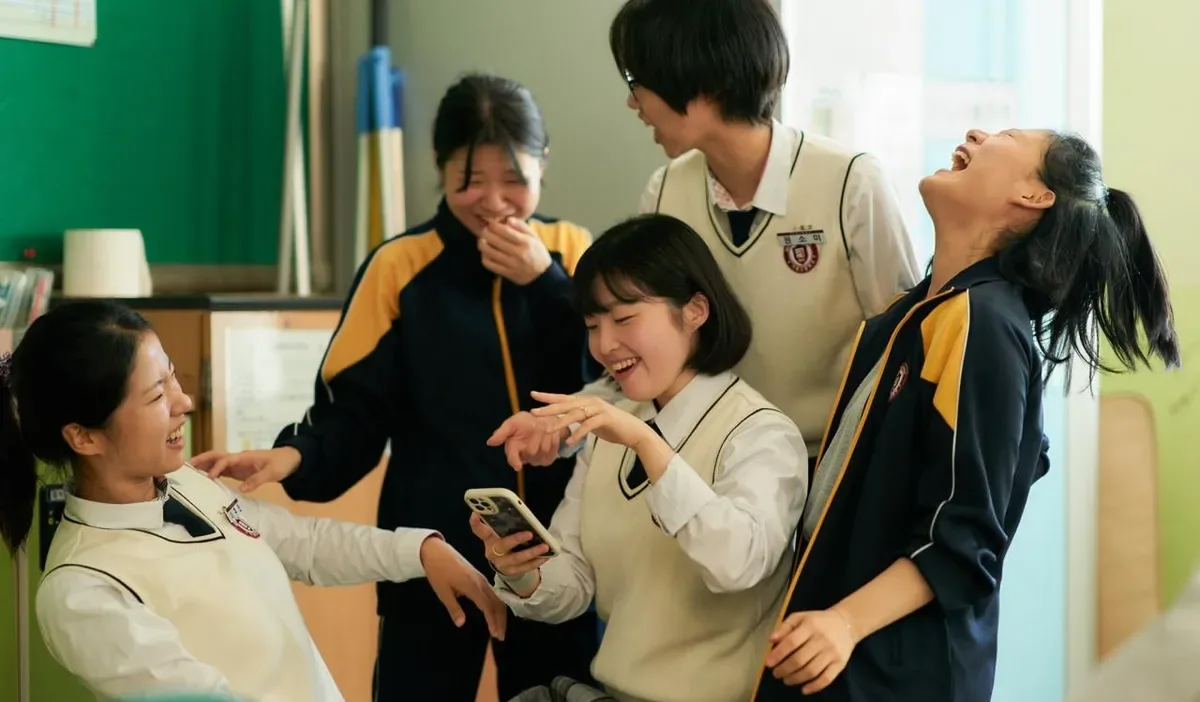

The kiss lands off-balance, quick and messy. Seventeen-year-old Lee Joo-in pulls back laughing, then, moments later, recounts the breakup to her amused mother with the same breathless speed. That volume and velocity shape Joo-in, played with lively bite by newcomer Seo Su-bin. The World of Love marks Yoon Ga-eun’s return to features, a shift from her studies of childhood toward the thornier field of adolescence.
Joo-in glides through high school with easy popularity, shuffling friends and brief romances while keeping the dial turned to maximum. She reads as the model of a confident teen. Beneath that surface sits a history of sexual assault, held back until its reveal, which steers the film toward an exacting character study. The story traces how a person builds a self after profound harm.
Scars, Labels, and Shifting Perspectives
The World of Love rejects the urge to sort those marked by trauma into narrow categories. It stares down a habit of calling survivors “pitiable” or “unfortunate” and treats those labels as failures of imagination. Through Joo-in, Yoon argues that candor drives healing; concealment freezes it in place. A wound becomes a scar that records an event without remaining open, a sign that acknowledges damage and survival at once.
The neighborhood erupts when news spreads that a convicted child sex offender will return to the area. Classmates rally around a petition. Joo-in refuses to sign. Her objection targets the petition’s language, and the dispute escalates until she blurts out that she is a survivor. The confession is followed by the first in a series of anonymous, needling notes, short messages that darken her usual brightness.
Yoon tells this story through fractured angles. Reactions arrive before causes. Consequences land, then explanations follow. The pattern encourages swift judgments that later dissolve as fresh information clicks into place. Motives that once appeared simple gain texture; assumptions about Joo-in and the people around her shift as the film rearranges its pieces. The approach pushes the viewer to recognize how easily confidence can mask complicated truths.
The Power of Emotional Honesty
Seo Su-bin carries the film with a debut that crackles in buoyant passages and deepens when the clouds gather. She remains a magnetic presence in scenes of carefree humor, then widens her range as the narrative moves into darker rooms.
Also Read






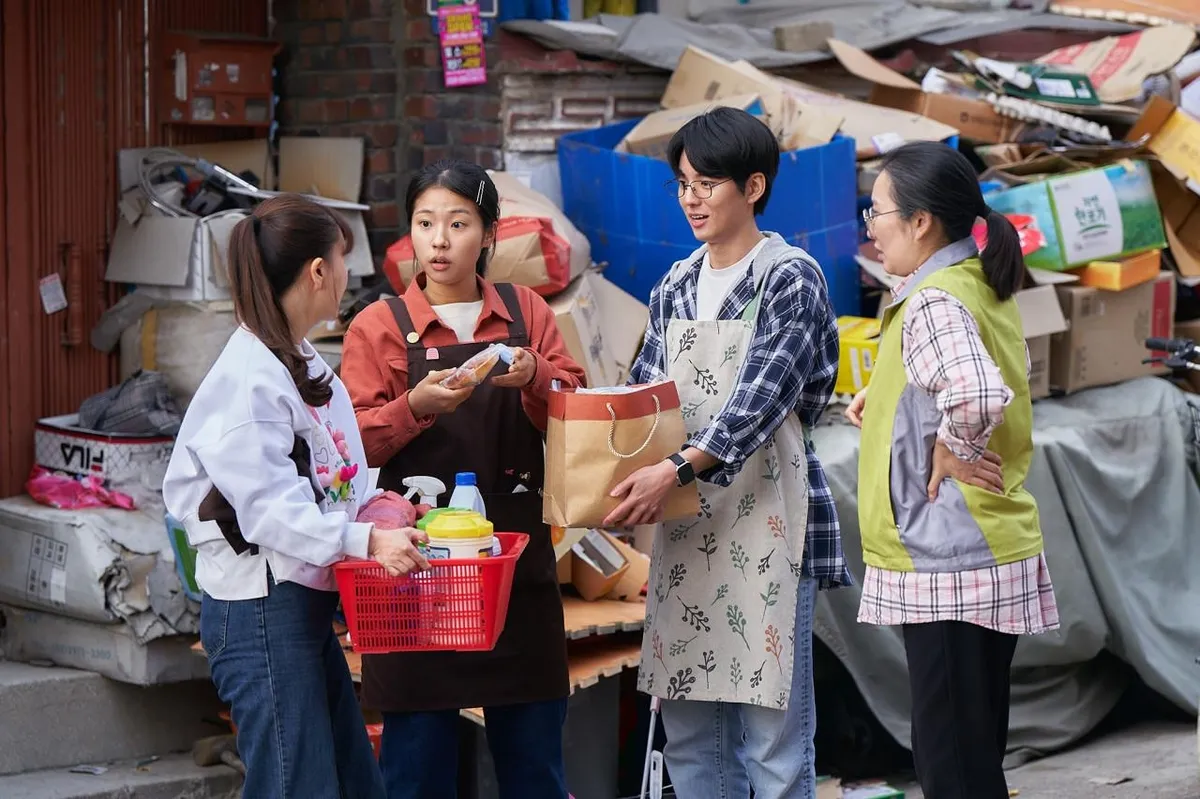
Joo-in arrives on the page loud, spirited, and sometimes brash, and the performance preserves that fullness. She refuses a script that demands a single acceptable posture for a survivor. Peers struggle to read her because her reactions refuse a fixed template. She holds the narrative of her life with blunt clarity.
Opposite her, Chang Hyae-jin plays Joo-in’s mother with measured gravity. The performance hums with control and watchfulness. The character tries to carry the weight of her daughter’s pain while carrying private guilt, and Chang lets that strain show through small calibrations.
The car-wash sequence forms the film’s emotional crest. Water stutters across glass; words catch; then Joo-in’s tightly held anguish surges into view in a raw exchange with her mother. The scene gives both actors a chamber to work at full intensity, and the film treats their collision with bracing intimacy.
Around them, a younger brother and a household that runs warm and chaotic supply lived-in texture. Care arrives through unconventional routines and quick improvisations that feel specific to this family. Smaller strands do not gather with the same strength. The absent father receives mention without a fully shaped arc, and the thread sits at the edges of the central crisis.
A Delicate and Observational Lens
Yoon Ga-eun directs with quiet sensitivity and an ear for ordinary rhythms. The style looks light, yet the construction is exact. Scenes click together with a soft pressure that keeps tension alive without showy signals. Everyday spaces do heavy lifting. Hallways, classrooms, and cramped rooms at home arrive with perceptive detail, which keeps the film’s hardest material grounded in familiar textures.
The aesthetic maintains cohesion through careful choices, though one repeated element strains against the mood. A twinkling piano version of Bach’s “Sheep May Safely Graze” recurs, and its glint sometimes clashes with the quick pulse of Seo Su-bin’s performance and the volatility of the drama. Another strand, the mention of Joo-in’s absent father, fades without full resolution. These issues register without breaking the architecture that holds the piece together.
The World of Love stands as a tender, finely assembled drama that treats tough subject matter with necessary care. Its gaze remains clear, its storytelling precise, and its warmth earned through attention to how people actually live, protect one another, and speak truth even when that truth alters everything.
The World of Love (Korean: Segyeui juin / Master of the World) is a 2025 South Korean drama film. It had its world premiere at the Toronto International Film Festival (TIFF) on September 7, 2025, and was scheduled for theatrical release in South Korea on October 22, 2025, distributed by Barunson E&A. The film is a complex and delicately observed portrait of a spirited 17-year-old high school student, Joo-in, who must confront a traumatic past after a shocking, impulsive revelation. Director Yoon Ga-eun, known for her sensitive films about children, turns her lens on adolescence, exploring themes of resilience, identity, and the societal pressures placed on trauma survivors.
Credits
Director: Yoon Ga-eun
Writers: Yoon Ga-eun
Producers and Executive Producers: Kim Se-hun, Jenna Ku
Cast: Seo Su-bin, Jang Hye-jin, Kim Jeong-sik, Kang Chae-yoon, Lee Jae-hee, Kim Ye-chang, Go Min-si, Kim Suk-hoon
Director of Photography (Cinematographer): Kim Ji-hyun
Editors: Park Se-young
Composer: Lee Min-hwi
The Review
The World Of Love
Verdict: Yoon Ga-eun delivers a powerful, authentic drama focused on adolescent resilience. The film skillfully explores identity and the resistance to victim labels, making it a cinematic statement on self-ownership. Seo Su-bin's sensational debut performance anchors the movie with vivid emotional honesty. While a few elements, such as the absent father subplot and a misplaced musical motif, feel slightly underdeveloped, the film remains a moving and necessary portrait of a difficult reality.
PROS
- A performance of raw, charismatic emotional range.
- Challenges societal labeling of trauma victims, promoting acknowledgment over concealment.
- Uses a masterful, gradual reveal that intelligently shifts the audience's initial perspective.
- The intensely emotional climax featuring outstanding work from Seo Su-bin and Chang Hyae-jin.
- Treats the difficult subject matter with meticulous care and authenticity.
CONS
- Minor threads, such as the absent father's story, feel incomplete.
- A recurring piano piece (Bach's "Sheep May Safely Graze") feels tonally inconsistent with the film's energy.