
























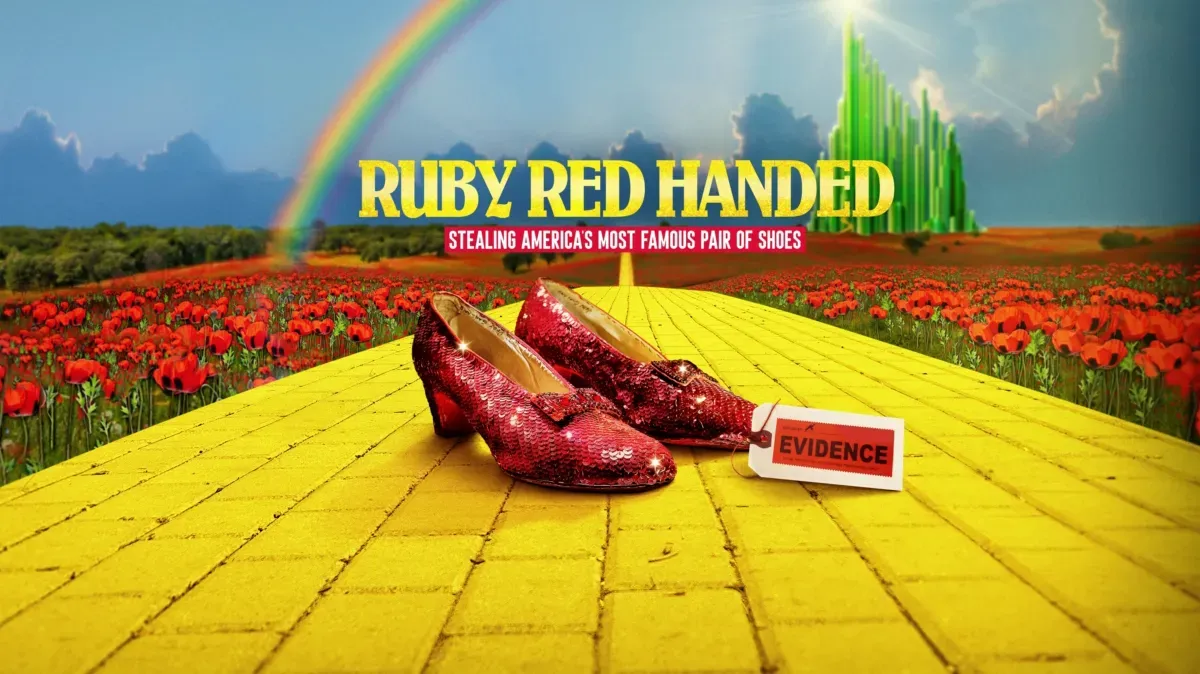

Ruby Red Handed: Stealing America’s Most Famous Pair of Shoes, directed by Andy Awes, zeroes in on a crime that slipped into cinema folklore. The ruby red slippers worn by Judy Garland in The Wizard of Oz carry the weight of American film history and the reverence that comes with it.
The documentary tracks the bewildering 2005 “smash and grab” at the Judy Garland Museum in Grand Rapids, Minnesota. The artifact had serious value; the small-town safeguards did not keep pace. The shoes vanished for 13 years, turning a local headache into a case that stumped police and eventually pulled in federal agencies.
Producer Maria Awes began pursuing the story in 2018, supplying interviews and footage that give the film its backbone. At the center stands Michael Shaw, the collector who owned the featured pair. The film assembles a decade-spanning mystery built on a quick hit, a long silence, and an eventual reappearance that drew national attention.
The Yellow Brick Road Goes Cold
A theft involving a $300,000 slice of movie history at a modest museum creates an irresistible setup. The slippers were on loan for the annual Garland festival, a detail that makes their vulnerability sting. The film follows the investigation across the long, static period between 2005 and 2018, a stretch where leads dried up and hope followed.
The Grand Rapids Police Department handled the first wave. Their inability to crack the case becomes a central, if quiet, line of inquiry. Michael Shaw’s anger provides the loudest commentary. Years later, he still voices frustration with the museum’s security and the GRPD’s early response. A question lingers: why did federal help arrive late? The FBI entered after a 2017 tip.
Recovery came in 2018 with federal agents and a shadowy go-between, which brought relief without full accountability. The investigation identified people tied to the crime, yet some never faced charges because they died before prosecutors could act. The narrative structure turns the timeline into suspense rather than a simple calendar flip, and the editing keeps that question of delay humming in the background. You can almost hear the clock tick.
Also Read





A Collector’s Torment and Auction Fever
Michael Shaw gives the documentary its pulse. He dominates the screen as the emotional stakes personified. The slippers were his “prized possession,” and the interviews capture distress that never cooled and anger that rarely drifts off camera.
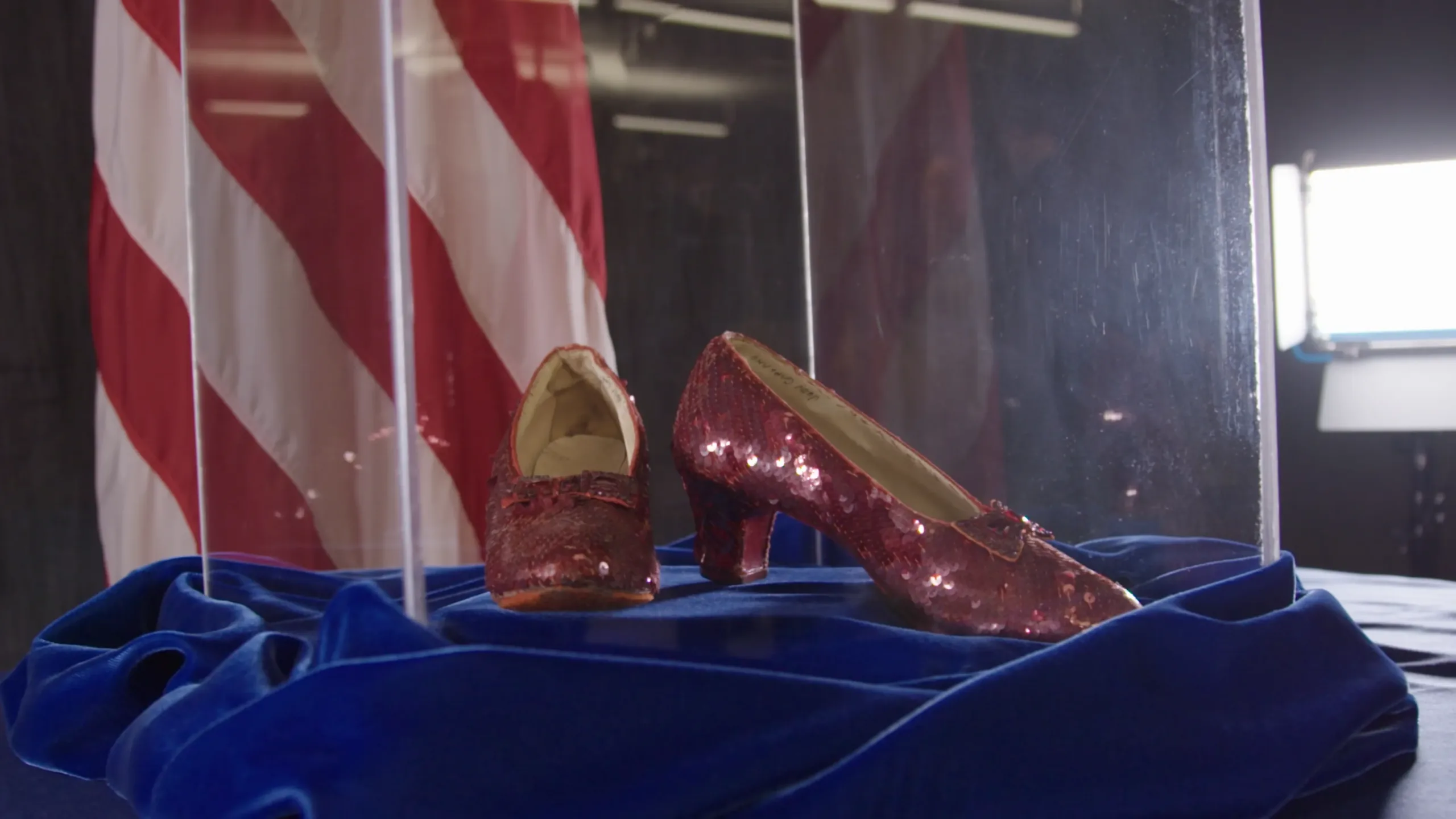
The personal thread opens a door to the cultural charge the slippers carry. A section on Judy Garland’s legacy situates the story in Grand Rapids, where Frances Gumm began, and frames why this museum, this town, and these shoes matter. Shaw’s vivid picture of a possible culprit sticks in the mind: an “obsessed collector down in a cellar on an altar.” That line reads like noir, and the film knows it.
The final beat lands with the return of the shoes to Shaw, a farewell tour for fans, and a 2025 auction that hit $28 million. The number signals a market that treats nostalgia like blue-chip stock. The Judy Garland Museum could not meet the price to keep the slippers in their hometown. The camera does not need to sermonize; the price tag says enough. If performance is story in nonfiction, Shaw delivers the standout turn, and the direction gives him space to hold the frame.
Padded Pacing and a Quirky Tone
Andy and Maria Awes set a light, slightly offbeat mood for a serious property crime, a choice that keeps the film lively. The tone gives interviews snap, and the rhythm plays like a caper until the facts pull the mood back to earth. At 88 minutes, the stretch shows. Sequences linger and dilute tension.
Extended time on Garland’s legacy and a granular aside about an unsealed search warrant slow the flow. The cut could be tighter, and the comedic timing would pop harder with sharper trims. The single-installment structure works; the story doesn’t call for a two-part cliffhanger. Direction leans on clean interviews and a steady investigative spine.
Editing makes the long cold period legible, even as it tests patience. The sound mix favors clarity, letting the voices carry the intrigue without fireworks. The film pairs true-crime mechanics with Hollywood lore, and the slippers do the heavy lifting. People steal them. People pay fortunes for them. The question hangs as the credits near: how far will devotion to screen history go the next time ruby sequins light up a display case?
The Review
Ruby Red Handed: Stealing America's Most Famous Pair of Shoes
The documentary is a highly watchable true-crime caper driven by a truly bizarre, high-stakes theft. It excels in capturing the emotional fury of the collector, Michael Shaw, and highlighting the extraordinary cultural weight of the slippers. While its quirky approach smooths over some deeper details of the law enforcement failures, and the pacing is occasionally slack, it is an engrossing look at obsession, small-town mystery, and the exploding world of Hollywood artifacts.
PROS
- Michael Shaw provides a passionate and highly engaging personal perspective on the loss.
- Successfully blends true crime with Hollywood history and nostalgia.
- The subject matter—a legendary, high-value artifact stolen from an unlikely location—is inherently fascinating.
- Effectively charts the massive increase in value of movie memorabilia over two decades.
CONS
- The pacing drags at times, suggesting the story could have been told more efficiently.
- The lighthearted tone prevents deeper scrutiny of the decade-long law enforcement failures.
- Certain segments feel like filler material that does not significantly advance the central mystery.