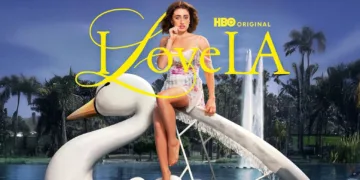





















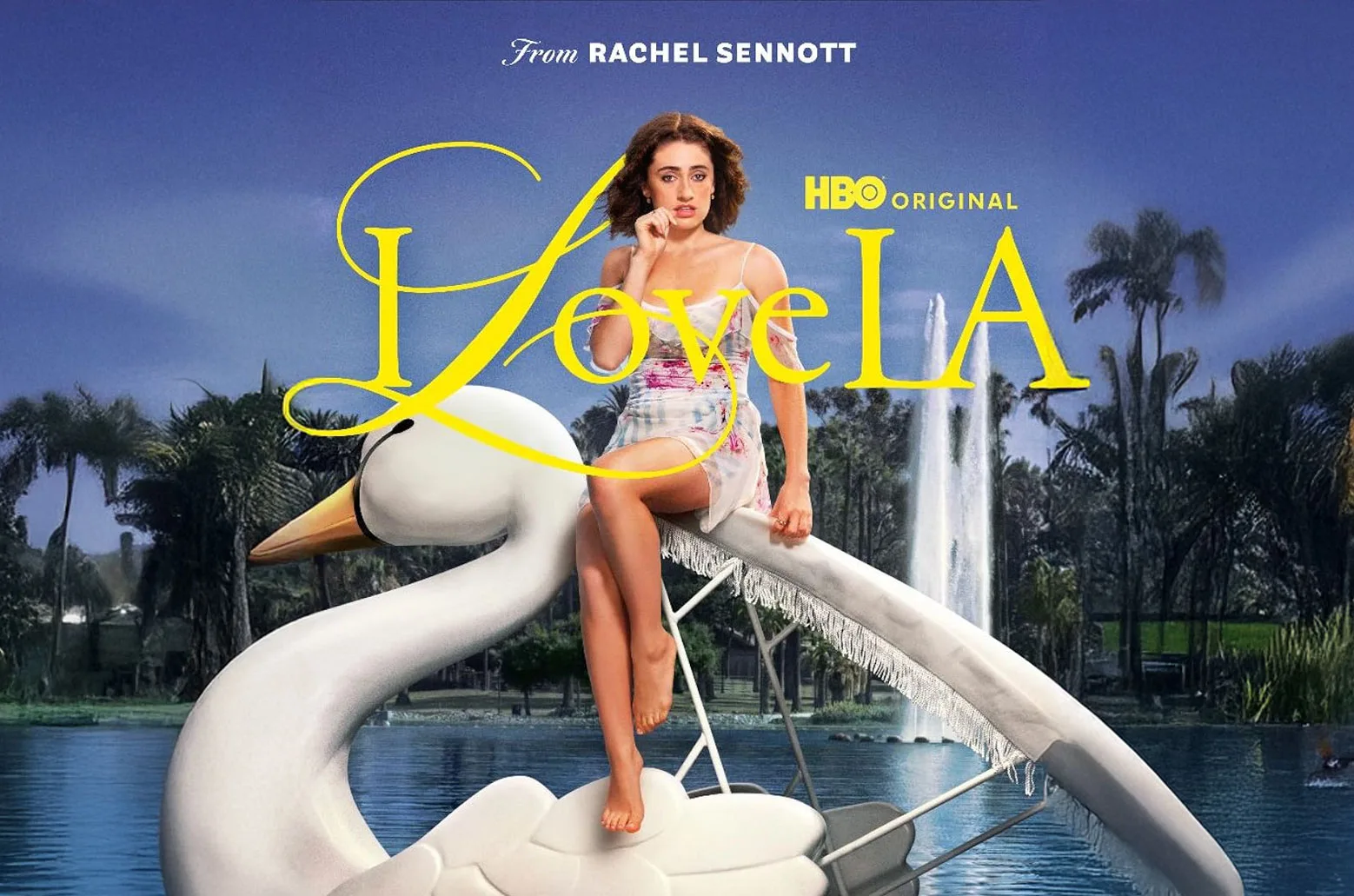

The modern comedy series often opens with a scene that interrupts ordinary motion. “I Love L.A.”, created by and starring Rachel Sennott, starts with an image that serves as a literal joke and a programmatic claim. Maia, Sennott’s aspiring talent manager, seeks pleasure during morning sex when an earthquake begins to rock her Los Feliz apartment. Her boyfriend Dylan, an amiable, grounded teacher, panics and consults a seismology app; Maia asks to continue, prioritizing the immediate moment over a physical emergency.
That instant encapsulates the series’ premise: a narrow, stylized Los Angeles bubble inhabited by late-twenties adults who pursue career and social accumulation while ignoring the structural shakiness under their feet. Maia arrives from New York with a blunt, aggressive drive. Her arc across the season hinges on her decision to manage Tallulah, an estranged friend and successful influencer whose career functions as a high-value, possibly ruinous commercial opportunity.
Their fraught relationship forms the narrative spine, combining personal history with cold professional calculation. Surrounding them is a supporting ensemble that clarifies the show’s social world: Dylan as the gentle counterweight to cultural frenzy; Charlie as a sharp, status-seeking stylist; and Alani as a privileged, vacuous scion of Hollywood privilege. From its opening episode, the series commits to interrogating the pressures and cheap payoffs of chasing online clout and career ascent within a performative fame culture.
Marketization, Morality, and the Digital Labor Class
The series operates as a rigorous critique of the attention economy, examining how individual identity becomes a commodified asset. It presents influencer culture as a mechanism that turns personality, irrespective of substantive content, into immediate capital. Professional achievement registers as the exchange of digital visibility for corporate sponsorship or a coveted luxury object. Brand deals function as the prevailing yardstick of success. This transactional logic infuses interpersonal life and business dealings alike.
Satire functions here by mapping the moral emptiness that results when public opinion becomes the dominant valuation method. Characters live inside a continual social calculus, where professional stakes are so elevated that beliefs and feelings are treated as negotiable. The professional environment changes rapidly; yesterday’s trends have little bearing on today’s metrics.
A meeting with a crisis PR professional dramatizes this reality. The consultant outlines standardized response timelines for various scandals, a cold hierarchy of offenses that privileges damage control over genuine responsibility. That sequence acts as a bleak mirror to cultural practices of accountability, revealing a calculated nihilism at the center of high-level social media management.
Also Read






The core conflict between Maia and Tallulah anchors itself in the contemporary condition of digital labor. Each recognizes the other as key to greater advancement. Tallulah embodies a seemingly effortless charisma that draws followers; Maia supplies managerial hunger and strategic skill to monetize that charisma. Their friction, often both dramatic and viciously comic, exposes how ambitious work frequently demands exploiting personal ties for business gain.
The series makes a deliberate structural choice by rarely showing Tallulah’s actual digital output. Audiences do not see the content that generated her fame. That absence directs attention to the infrastructure of fame—the deals, the apologies, the crises—rather than to any creative product. The program implies that in this context creation recedes and transaction dominates, a pattern that reveals an emptiness at the core of contemporary influence where prestige flows independently of content quality.
The Ensemble as a Map of Social Stratification
The show’s strength lies in its closely observed characters, who together sketch social tiers within an aspirational urban class. Rachel Sennott’s Maia anchors the series. Her performance balances acute self-awareness with a strategically maintained delusion about her own value. Early petulance may frustrate viewers, but that trait emerges as adaptive armor in a hostile entertainment environment. Maia’s storyline exposes a real choice for many young professionals: a stable personal life with Dylan or an intensified professional commitment centered on Tallulah and the promise of greater reward. The plot stages labor as a force that pressures identity into a zero-sum calculus.
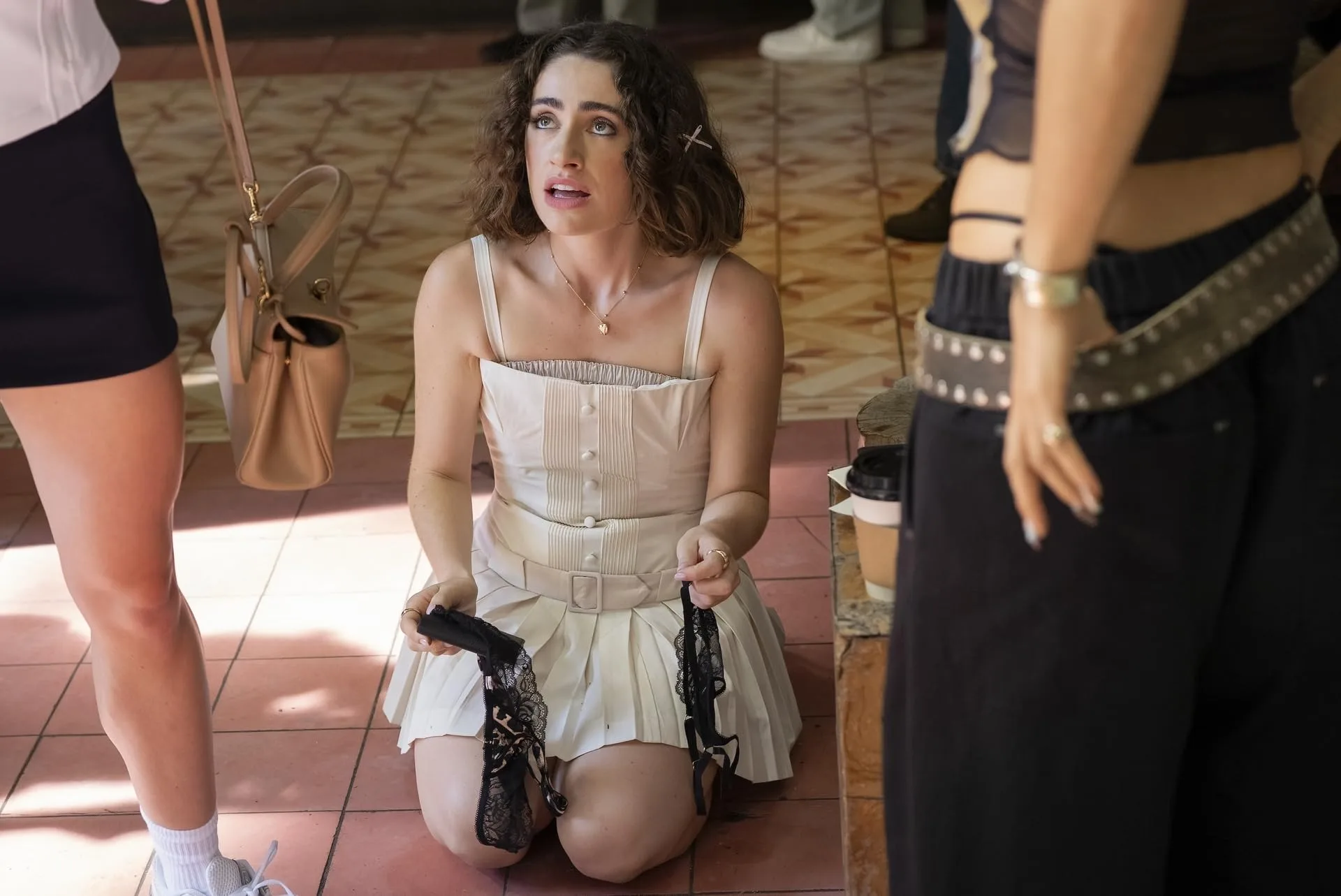
Casting choices operate as commentary on contemporary media power structures. True Whitaker, identified in the cast as the daughter of a famous actor, portrays Alani, who functions as an archetypal nepo baby. Alani’s privileged, blinkered airhead presence points to Hollywood’s persistent legacy systems that grant automatic entry and an informal safety net. Her endless credit and invented job underscore the unequal advantages some figures receive.
Jordan Firstman’s Charlie occupies a distinct position. Charlie is formulated as a sharply perceptive stylist whose cynical talent for social advancement and cutting remarks is driven by a need to prove his worth. His subplot involving a group of unexpectedly earnest Christian men stands out for its subtler tonal shifts. In that arc, Charlie’s reflexive insincerity softens and exposes a yearning for sincere connection that his usual social circle cannot supply.
Josh Hutcherson’s Dylan serves as the low-key, normative foil who stabilizes the series. He reminds Maia and the audience that life extends outside the self-imposed pressures of ambition. His presence offers a consistent point of comparison for Maia’s narrowing perspective. The chemistry between Sennott and Odessa A’zion supplies emotional propulsion; their believable personal history adds weight to a volatile professional relationship. This layered casting, which pulls from Hollywood legacy and digital fame, communicates which identities gain access to cultural platforms.
The Aesthetics of Aspiration and Geographic Superficiality
The show’s visual strategy plays a central role in its commentary. It adopts a glossy, prestige-style look common to major streaming productions aimed at younger viewers. High production values, including a curated soundtrack and Gen Z outfits credited to Christina Flannery, become part of the critique by showing how youth culture is carefully packaged for market appeal. The series presents an aspirational surface that mirrors the characters’ curated online personae.
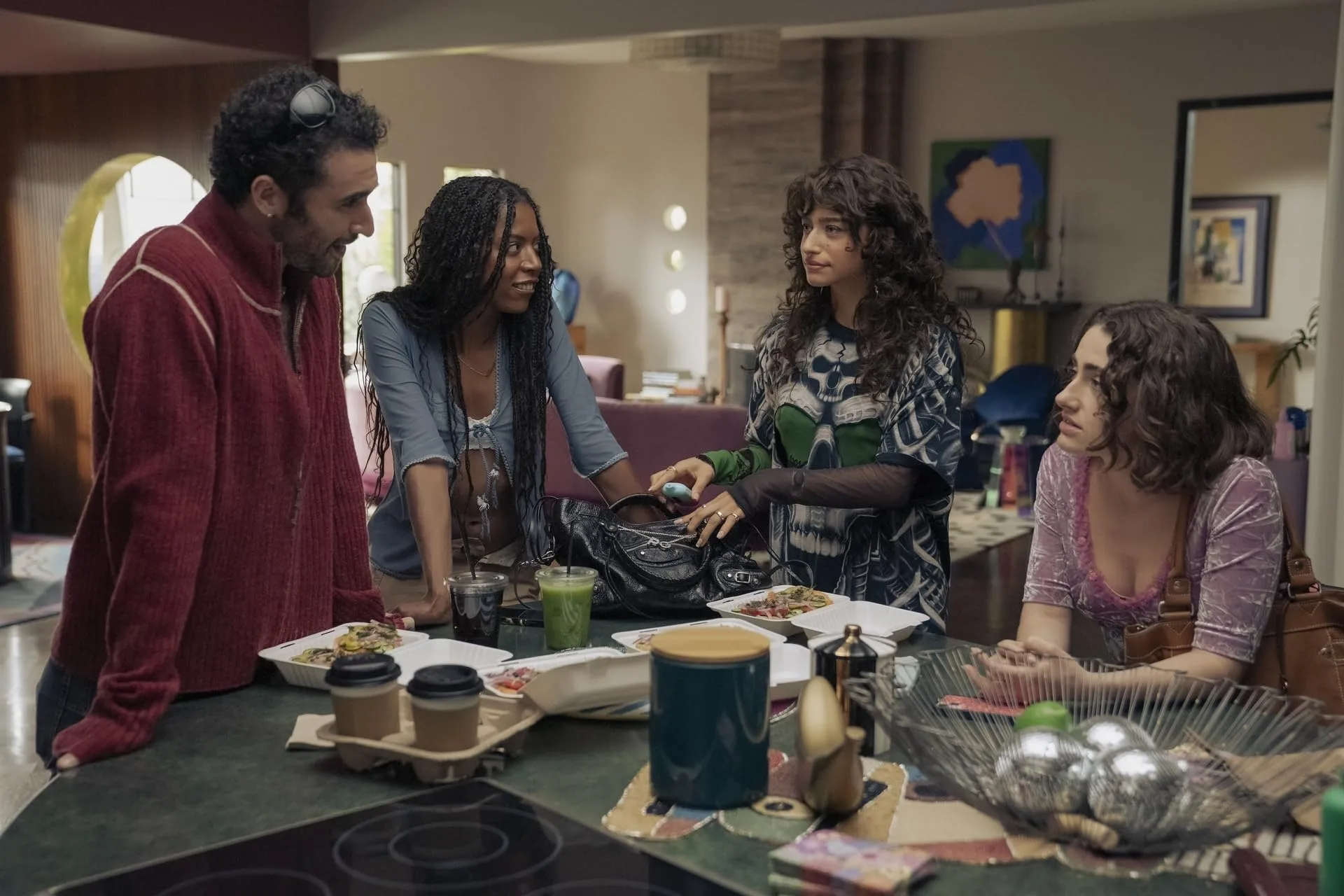
Direction in the opening episodes, credited to Lorene Scafaria, establishes a clear, lived-in aesthetic. The visual language registers as striking and often cool, matching the characters’ emotional distance. The camera frequently functions as a mildly judgmental observer that echoes social media’s surveillance. The series faces tonal instability early on, shifting between snarky satire and moments of unexpected earnestness. The latter half of the season consolidates those tones, with sarcastic surfaces covering a genuine anxiety common to people in their twenties.
On geography, the show privileges the fantasy of “L.A.” instead of the city’s full reality. The series relies on surface markers—Courage Bagels, Silver Lake, celebrity hangouts—as shorthand for a narrow, affluent, industry-adjacent milieu. The city appears as a catalogue of trendy signifiers rather than as a complex urban environment. That geographic flatness reads as an intentional artistic move: the setting operates as a blank space for characters who treat the place as a stepping stone. The program critiques a common transplant attitude that reduces the city to potential for fame and opportunity.
Positioning the Series in the Evolving Comedy Landscape
“I Love L.A.” arrives among many young-adult comedies and stakes a claim by concentrating on the specifics of influencer culture and the mechanics of digital hustle. The series’ defining formal move is a calibrated shift from savage social satire to emotional register. Early episodes present a ruthless critique of shallow youth culture; later episodes allow empathy for characters whose anxieties emerge through the surface-level behavior. This approach combines sharp cultural analysis with humanized depiction and signals a change in comedic storytelling.
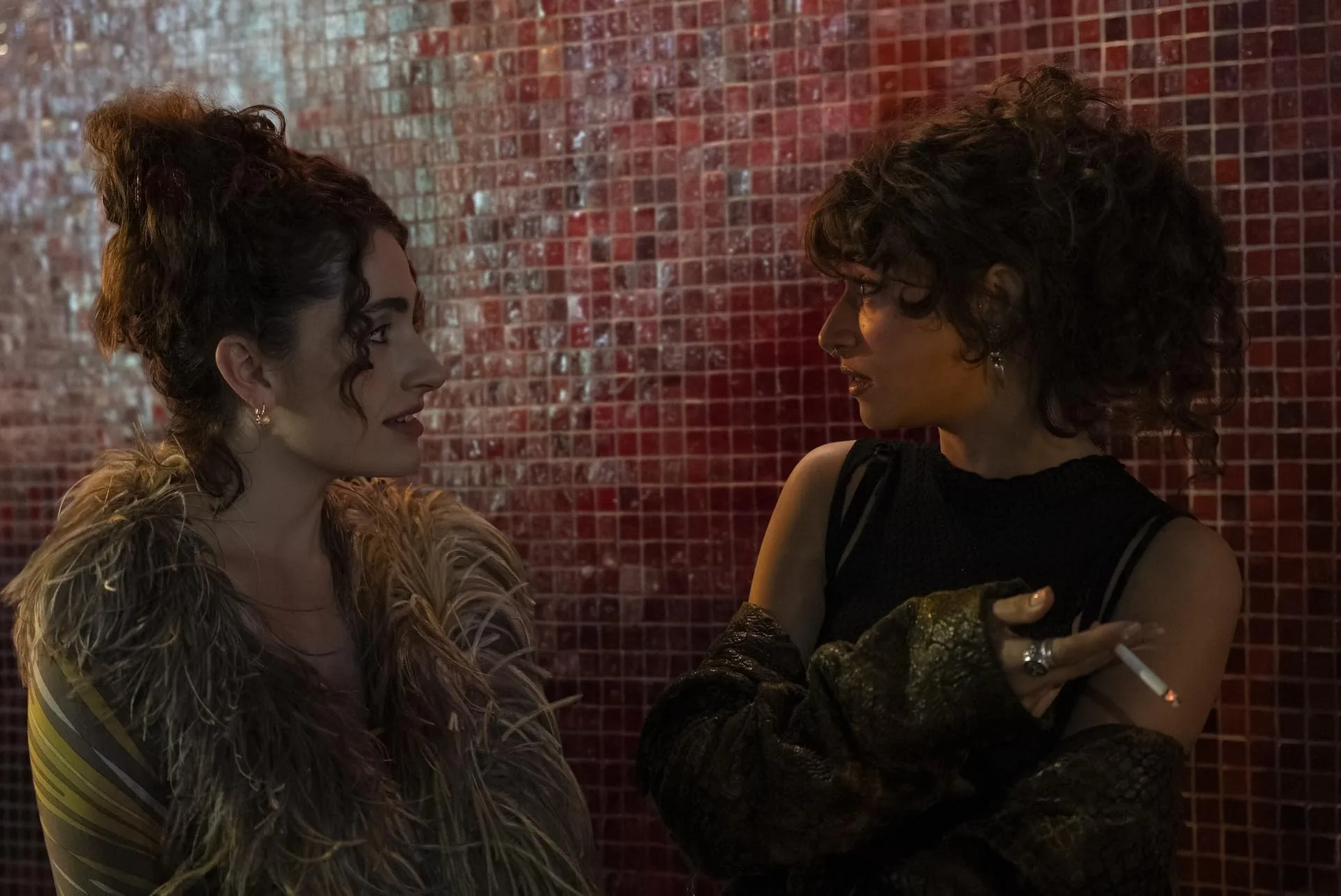
The show captures a particular anxiety among twenty-somethings on a career trajectory. That anxiety differs from older models of failure; it centers on the modern fear of disappearing from view, of losing algorithmic relevance.
The series frames celebrity’s chaotic possibilities and public humiliation as heightened versions of ordinary survival by forcing choices about which path to commit to while time feels limited. The depiction of performance-driven labor marks a directional shift for television content, moving attention from standard workplace or relationship narratives toward digital culture as an organizing theme for youth stories.
By pairing polished production values, recognizably new-media performers, and a critical lens, “I Love L.A.” illustrates a possible template for how streaming platforms will portray the struggles of a digitally organized generation. The series functions as a confident first effort that establishes Rachel Sennott as a distinct and necessary voice for ongoing industry conversations.
The upcoming comedy series I Love L.A. follows an ambitious friend group as they navigate the complexities of life and love in Los Angeles, focusing on the pursuit of career success in the digital age. The show was created by and stars Rachel Sennott as Maia, an aspiring talent manager, whose life is upended when she reunites with her successful influencer ex-friend, Tallulah. The first season consists of eight episodes and is set to premiere on Sunday, November 2, 2025, airing weekly on HBO and available to stream on HBO Max.
Full Credits
Title: I Love L.A.
Distributor: HBO, HBO Max
Release date: November 2, 2025
Rating: TV-MA
Running time: The first season contains eight episodes (episode length information is not widely available, but typical HBO comedies run about 30 minutes).
Director: Rachel Sennott, Lorene Scafaria, Bill Benz, Kevin Bray
Writers: Rachel Sennott, Emma Barrie, Max Silvestri, EJ Marcus, Jean Kyoung Frazier, Sidney Butler, Austin S. Harris
Producers and Executive Producers: Rachel Sennott, Emma Barrie, Aida Rodgers, Max Silvestri, Lorene Scafaria
Cast: Rachel Sennott, Odessa A’zion, Jordan Firstman, True Whitaker, Josh Hutcherson, Moses Ingram, Lauren Holt, Leighton Meester, Quenlin Blackwell, Elijah Wood, Josh Brener, Tim Baltz, Froy Gutierrez, Colin Woodell
Director of Photography (Cinematographer): Adam Silver, Andy Rydzewski
Editors: Kayla Emter
The Review
I Love L.A.
I Love L.A. is a culturally significant debut that effectively frames the chaos of the digital ambition economy. Though the early episodes struggle with an identity crisis, the series rewards patience, delivering sharp social critique layered with genuine empathy for its hyper-focused protagonists. Rachel Sennott confirms her place as a crucial voice documenting the transactional nature of modern striving, capturing the profound anxiety that drives the creator class.
PROS
- Effectively dissects the transactional nature of the influencer ecosystem.
- Her nuanced portrayal of a character defined by strategic delusion is compelling.
- Excellent chemistry and character friction, particularly between Maia and Tallulah.
- Finds genuine emotional insight in the second half of the season.
- Uses figures from the digital and legacy Hollywood worlds to make a statement about contemporary media.
CONS
- The first half struggles to balance ruthless satire with emotional grounding.
- Over-reliance on surface-level L.A. stereotypes rather than creating a deep sense of place.
- Characters' self-absorption can be initially alienating before their emotional core is revealed.