




























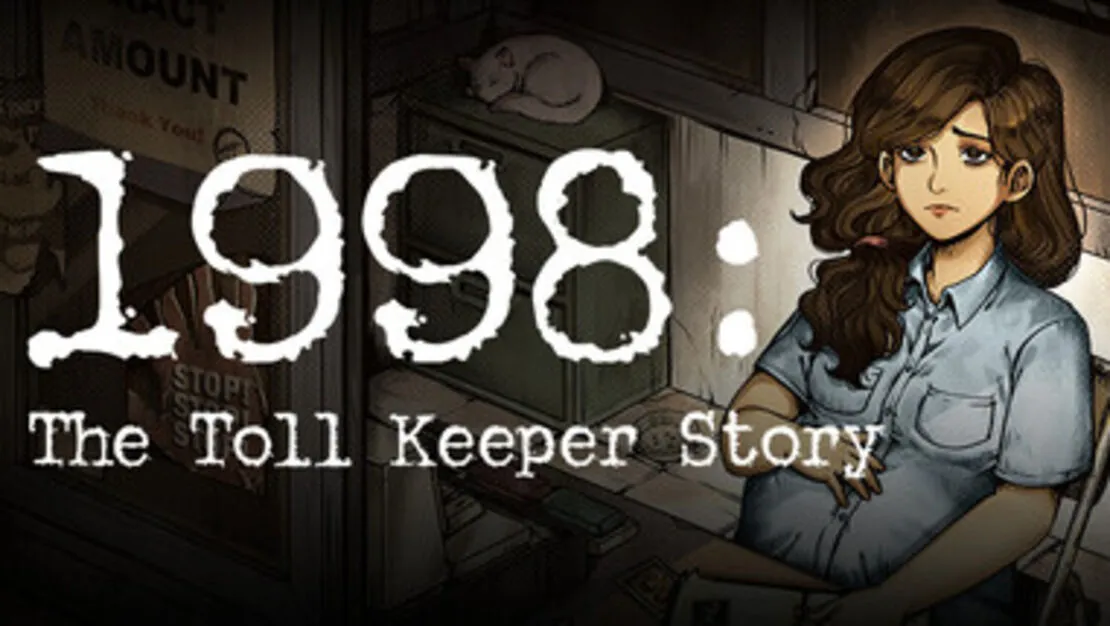

1998: The Toll Keeper Story presents a narrative-driven simulation from Indonesia’s GameChanger Studio. The setting is the fictional nation of Janapa, a clear analogue for Indonesia during the 1998 Asian financial crisis and the collapse of three decades of authoritarian rule. Inflation spikes, civil unrest grows, and protests turn city streets into a battleground, framing a country on the brink.
Players inhabit the life of Dewi, a heavily pregnant toll-booth clerk whose world narrows to the cramped limits of her station. Her assignment sounds simple: collect tolls and enforce rules. The chaos outside seeps into the booth and defines her conflict. She must hold to procedure while weighing personal conscience and the immediate needs of her family. The design captures the strain that macro-disaster places on ordinary lives.
Gameplay as Bureaucratic Suffocation
Mechanically, the game recalls inspection simulators and the political critique associated with Papers, Please. A day’s work means checking vehicles, classifying them for the correct fare, processing payments, and operating the gate.
Early shifts teach the basics, then government regulations stack up and complicate every step. New tasks arrive steadily: verify document validity, track license plate endings such as odd or even days, monitor vehicle weight, and search for contraband or counterfeit bills. Errors carry instant penalties that skim Dewi’s already thin paycheck.
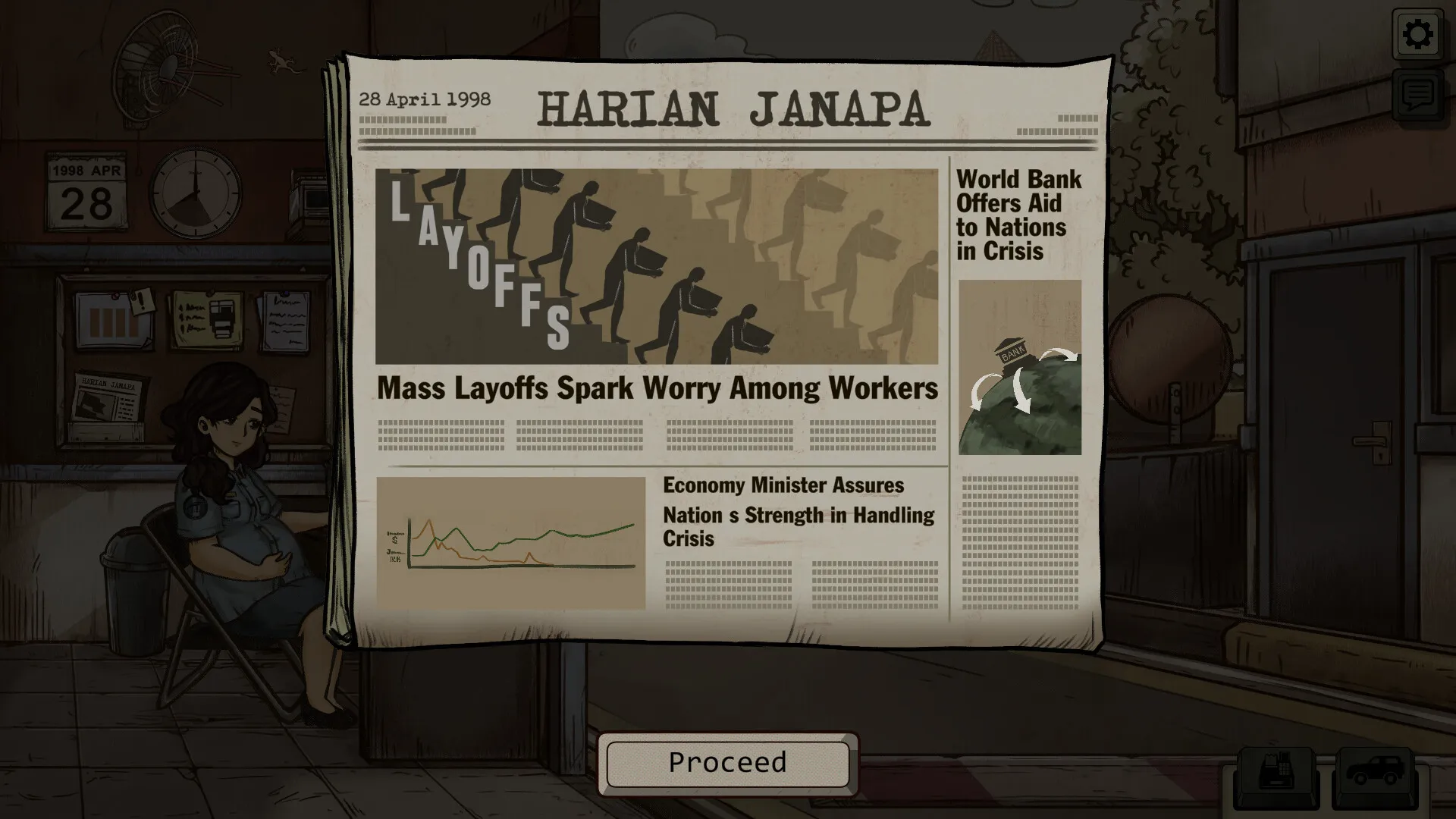
A moral decision system shapes the true challenge. Players weigh strict enforcement against personal ethics. A driver arrives without enough fare. A woman pleads for passage as a black car tails her. Helping a mother reach her child can save a life and jeopardize Dewi’s employment. Refusing passage can lead to fatal outcomes revealed in a next-morning newspaper report.
The slow, repetitive flow of cars becomes a deliberate metaphor for suffocation and stress, as small judgments accumulate into heavy consequences. Interface quirks and minor bugs appear, and the slight awkwardness strengthens the sense of uncomfortable labor under harsh conditions.
Humanizing History through Personal Narrative
The game makes a traumatic period intimate by focusing on the periphery rather than riot spectacle. The team draws on lived memories and oral histories that filter through ambient sound, dialogue, and the official documents that pass across Dewi’s desk. Each day plays out across two spaces: the systemic pressure of the booth and the quiet, tense scenes at home.
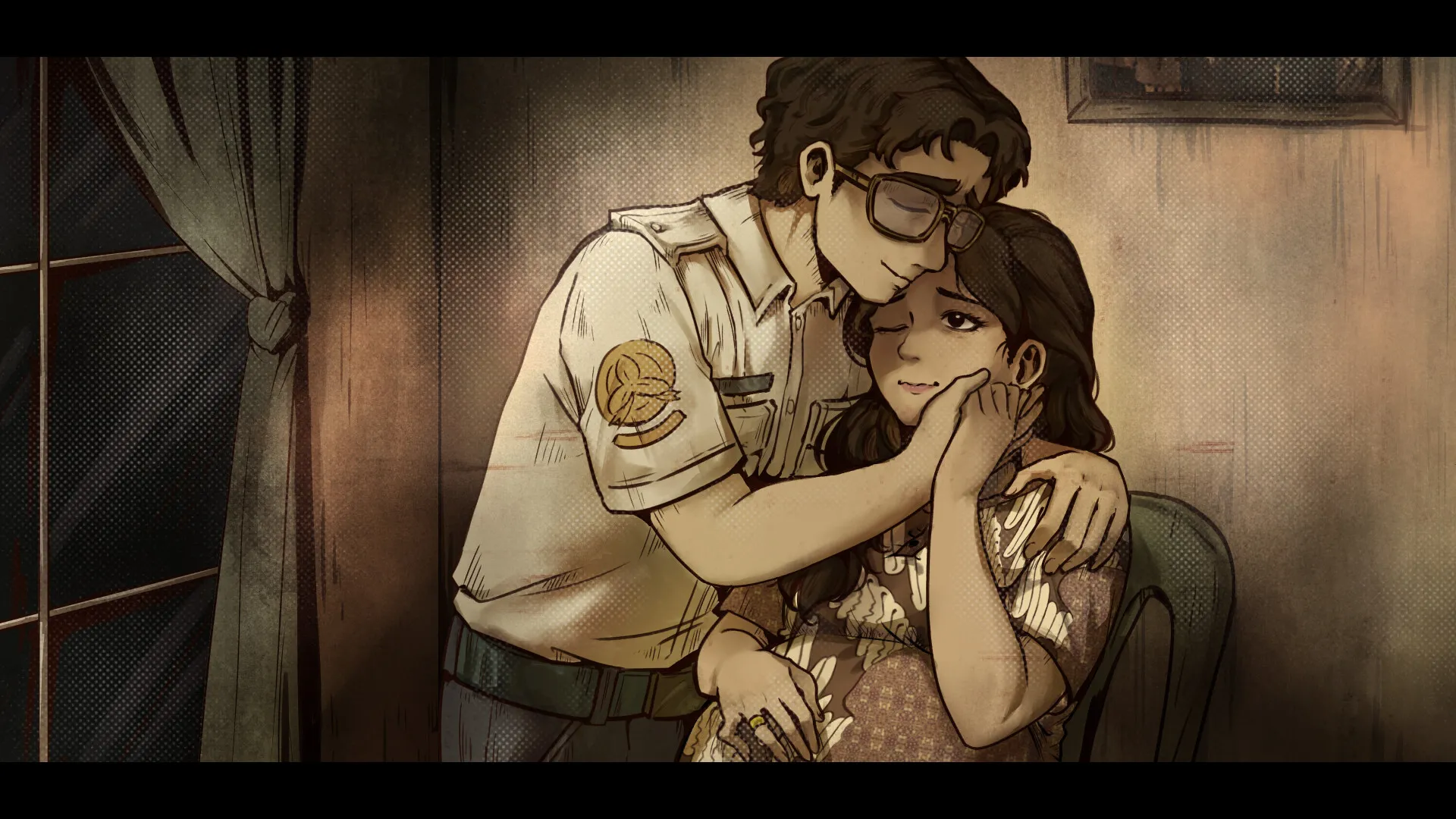
Dewi faces rising rent deadlines, climbing expenses, and worry over her husband, Heru, who participates in the protests. Her best friend, Sita, belongs to the upper class that becomes a protest target, which strains personal ties. A diary and journal system closes each day with Dewi’s reflections, capturing fatigue, fear, and resolve.
The booth functions as both income source and confinement, a symbol of protection and constraint. The story unfolds across a fixed run of about two weeks, with replayable paths that let players trace different chains of consequence from their moral choices.
Visuals and Sound: The Weight of Memory
Presentation carries much of the game’s force. The art favors muted tones, with faded browns and cold blues that evoke late-1990s Southeast Asia. CRT-like filters add texture and period authenticity without gimmickry, placing the player in a specific time and mood.
Sound reinforces unease through detail. Generators hum. Radios crackle with static. Distant protest chants ebb and swell. Toll coins clink with a sharp, steady rhythm. Music appears sparingly, like memory surfacing at the edge of attention. Voice performances stay restrained and grounded, giving human shape to the brief encounters at Dewi’s window.
The PC build runs stably. The structure stays modest, and the core design offers straightforward entry. Keyboard and mouse feel best for precision work, while touchscreen and touchpad inputs lack fine control at this stage. Vehicle models repeat at times, yet the consistent visual language and intentional audio choices sharpen the setting’s emotional weight.
The Review
1998: The Toll Keeper Story
1998: The Toll Keeper Story delivers an emotionally potent drama, successfully translating historical crisis into a deeply personal moral conflict. It uses repetitive toll-booth mechanics as a chilling metaphor for bureaucratic suffocation. While the interface can be rough and the domestic scenes lack interaction, the powerful atmosphere, evocative visuals, and compelling narrative commitment to humanizing the 1998 crisis make this a meaningful experience for players seeking thoughtful, narrative-focused simulation.
PROS
- Grounded, resonant historical narrative.
- Powerful sense of atmosphere and dread.
- Compelling moral choice system.
- Evocative '90s visual design.
CONS
- Toll-booth mechanics can feel repetitive.
- Interface and controls lack polish.
- Limited interaction in home life scenes.
- Occasional UI bugs.







