
























![Kingdom Hearts Collection [I-III] Review](https://gazettely.com/wp-content/uploads/2026/10/Kingdom-Hearts-Collection-I-III-1-360x180.webp "Kingdom Hearts Collection [I-III] Review: KHII Holds Steady as Newer Entries Fluctuate 37")



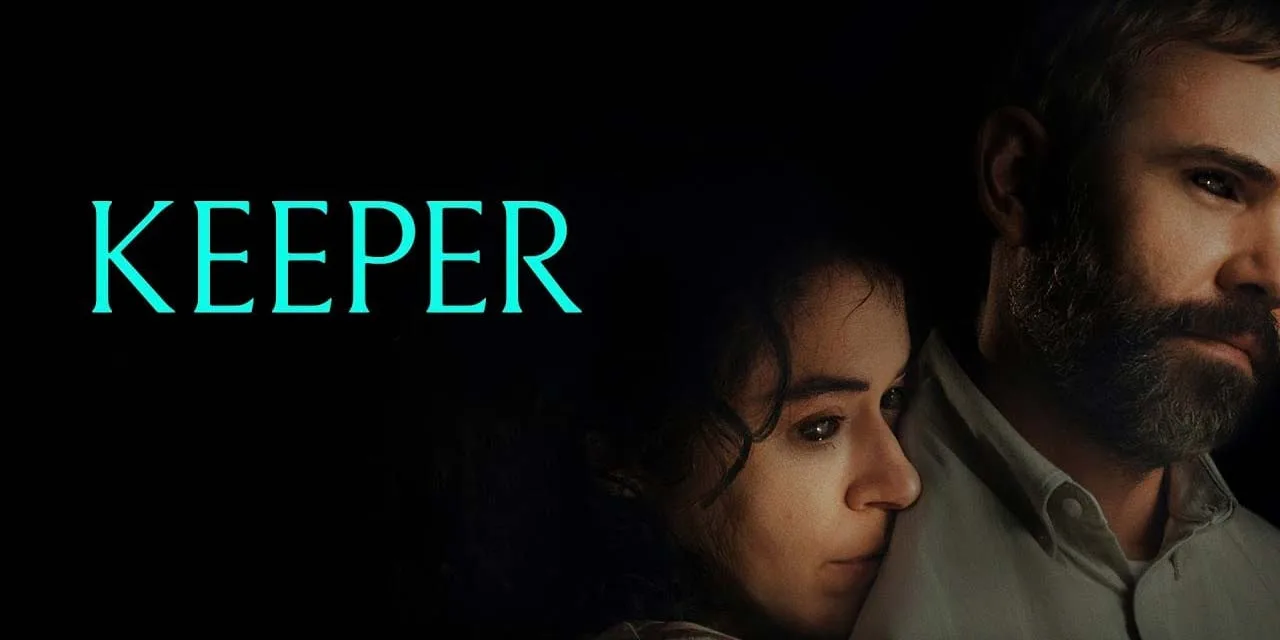

The current moment in cinema feels dominated by the steady stream of work from Osgood Perkins, a director attentive to the spectral and the secretive. Keeper arrives as a rigorous probe of the dangers embedded in contemporary intimacy. The film centers on Liz (Tatiana Maslany), an artist, who accepts an isolated retreat with her boyfriend, Malcolm (Rossif Sutherland), a doctor whose polished exterior carries an unnerving chill. Their trip to Malcolm’s remote family cabin is staged as a milestone in the relationship and then quickly sours into dread.
The tone flips from tentative warmth to sharp unease, sharpened by Liz’s sense that Malcolm keeps himself carefully contained. Minor intrusions—the brusque arrival of Malcolm’s cousin and the unsettling presentation of a particular chocolate cake—act as small breaks in the domestic surface, permitting the supernatural to press into the ordinary. Keeper frames itself as a psychological horror leaning on folk motifs to examine the fragility inside committed relationships. It reads as domestic fear enlarged to a cosmic register.
The Logic of Slow Decay
Keeper opens by arranging an imbalance of power that echoes larger social fault lines. Liz is pictured as creative and mutable; Malcolm is a respected physician, a public emblem of stability whose calmness hides a certain self-regard. The relationship that should advance instead sits on the suspicion that Malcolm conceals something essential. That tension produces the film’s initial energy. The cabin, at first stylish and remote, morphs into a psychological cage. Production designer Danny Vermette fashions interiors that suggest roomy surfaces while simultaneously collapsing orientation; spaces register as large and yet dislocating, so that neither Liz nor the audience can settle on a comfortable spatial map. This architectural disorientation intensifies the sense of enclosure.
Perkins lets the terror begin in small, domestic terms. Liz, who declares a dislike of chocolate, is compelled to eat a portion of the mysterious cake. The act functions as a metaphor for the tiny concessions that erode a self inside an intimate pairing. The ingestion triggers a trance and forces violent visions of other women—apparitions that feel like warnings or foreshadowings of what may befall her. These early images supply an uneasy foretaste; they work as the film’s gustatory call to nightmare.
Perkins resists tidy narrative explanation for a long middle stretch. The film sustains mood through repetition and sustained visual ambiguity, which will try the patience of viewers who prefer linear momentum. That delay has a clear design: it immerses spectators in Liz’s growing paranoia. Malcolm’s absence—explained away by work obligations—leaves Liz alone, and the cabin’s confinement becomes the engine of the paranoia thriller. Small sounds magnify; shadows accrue intent. Liz’s cognition frays through hallucination and a series of strange incidents: twin images in mirrors, noises that dissolve when she seeks their source. The film leans on a dream logic that complicates any effort to decide whether the threats are internal delusion or external menace.
The camera contributes to this ambiguity. Frequently placed in voyeuristic positions, it suggests Liz exists under an ancient gaze. Scattered artifacts—an old locket, obscure etchings—appear as fragments of a larger, half-glimpsed lore, offering the audience a puzzle that resists clean assembly. These clues function like the bones of a story that will not quite resolve until later.
The final section accelerates through tonal shifts and horror sub-genres. The film pivots from folk-inflected dread toward a hallucinatory passage and finally lands in a mode resembling creature horror. The escalation signals the moment psychological repression externalizes into tangible danger. The arc reaches a confrontation in which Malcolm delivers a long explanatory monologue.
That sudden expository release risks flattening the earlier subtlety; a revealed secret can thin the mystery that fed the suspense. Whether that choice satisfies depends on whether the revelation repays the patience demanded over the preceding hours. Visually, the disclosure has force. The design of the monstrous or uncanny elements is grotesque and inventive, and the climax’s imagery arrives as a violent confirmation of the ominous visions seeded earlier. The film accepts uneven narrative textures in exchange for a strong thematic payoff.
The Gaze of Dread
Perkins’ work consistently orients toward occult material, and he repeatedly contorts familiar genre shapes into disquieting forms. His films tend to provoke, rarely settling into the neutral middle ground. In Keeper he privileges mood and a slow-burn anxiety over jump-oriented shocks. The result is a sustained low-level dread that circulates through the frame.
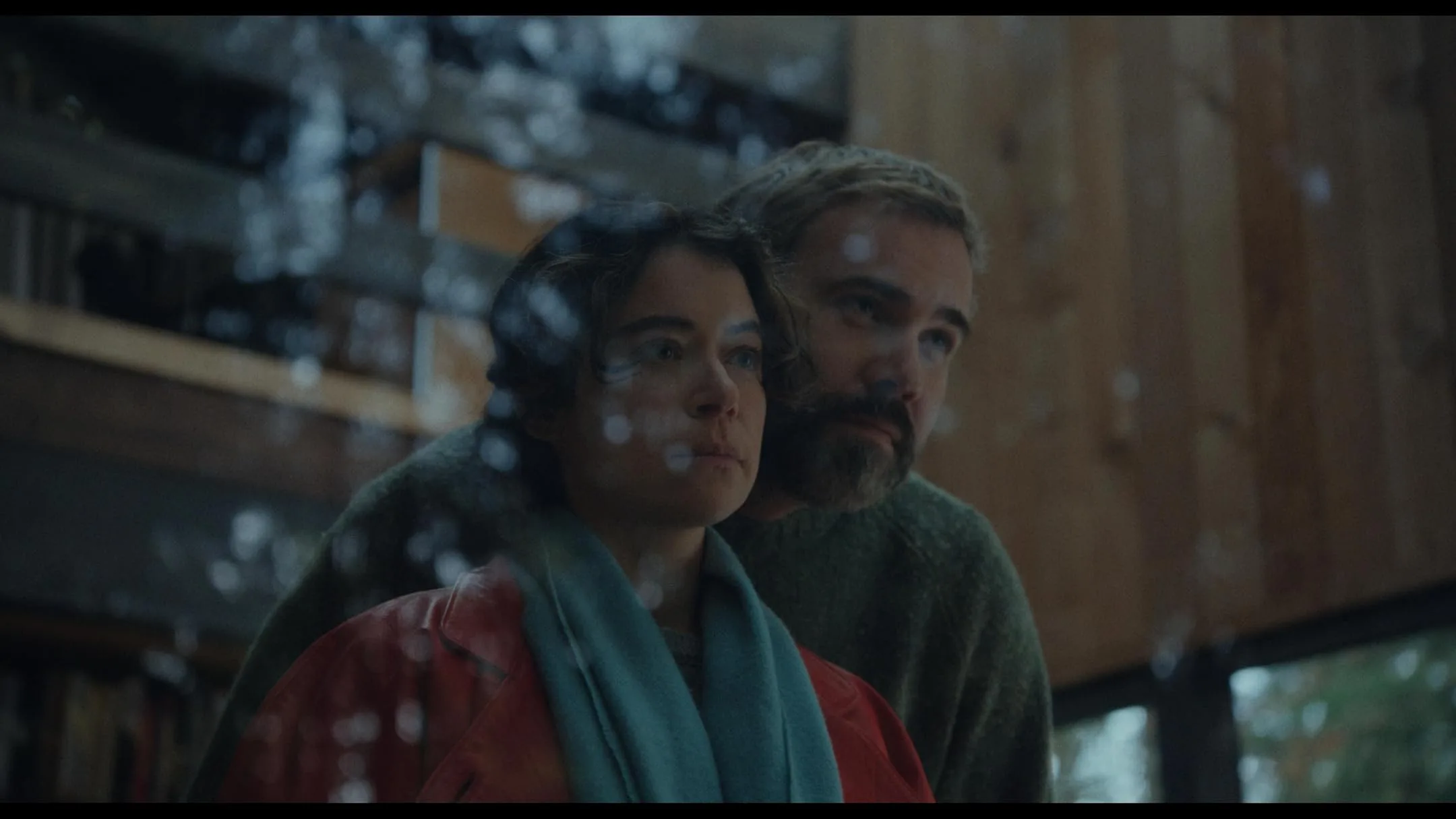
Technically the film is potent, the product of close collaboration among Perkins, cinematographer Jeremy Cox, and production designer Danny Vermette. Keeper reads as perhaps Perkins’ richest visual effort. Cox’s framing often chooses tight close-ups and uses the cabin’s geometry—its many windows and narrow passages—to magnify claustrophobia. The house loses coherent orientation and begins to function like an organism that confines and betrays its inhabitants. That visual trick constantly reminds viewers of Liz’s restricted world.
Certain aesthetic decisions raise the film above routine genre fare. The effects are disquieting and imaginative. An unnerving palette choice—an abrupt bloom of butter-yellow light from the woods—introduces a hint of the cosmic entering an otherwise natural scene. The cabin’s minute details, such as exposed vents and odd surface flaws, give the location a scarred, ominous personality.
The editors employ dissolves and match cuts with clear thematic intent. One striking sequence blends Liz’s hair and body with an establishing shot of surrounding trees through a fluid match cut, and the effect links personal trauma to landscape in a single gesture. That corporeal crosscut visually insists the horror involves both her body and the land itself. Sound design is spare but effective, implying the gradual approach of an old presence. These technical choices maintain tension even when plot beats stall, preserving a persistent unease.
The Face of Suffering
Tatiana Maslany anchors Keeper with a performance of concentrated intensity. She bears most of the film’s psychological load, rendering Liz’s arc from placid companion to unraveling woman with precision. Maslany stages a controlled collapse; small gestures accumulate into a convincing disintegration. The audience watches her sanity fray in real time, and that witnessing becomes the film’s emotional center.
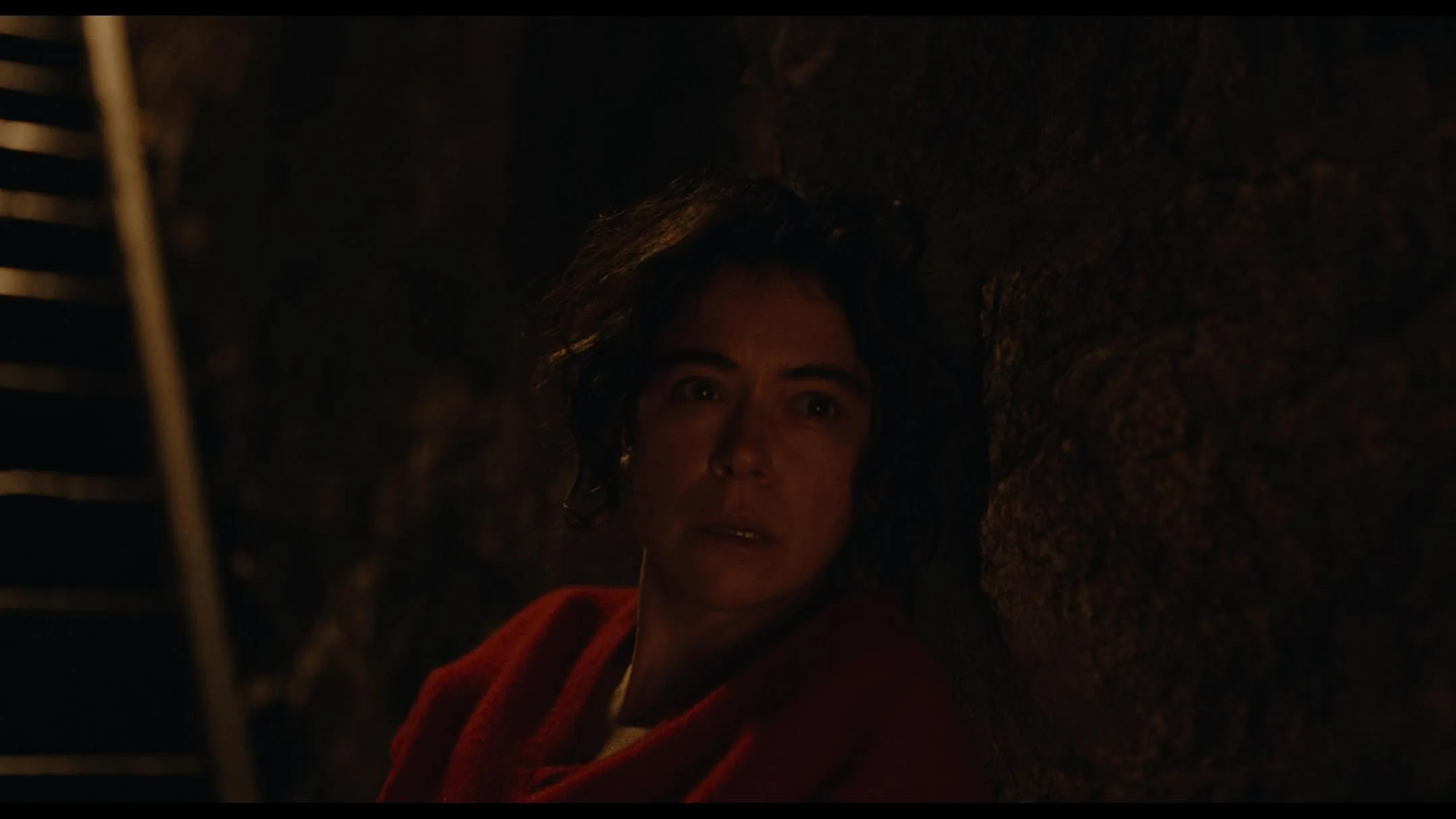
A scene that lingers: the late confrontation in which Liz pleads for survival. Dialogue here avoids theatricality and acquires a raw, immediate terror. Maslany’s urgency—more spectral logic than theatrical scream—grounds the supernatural material in a basic fear of being deprived of agency. Her performance is persuasive because it resists grand gestures and instead invests in desperate reasoning.
Rossif Sutherland plays Malcolm as the outwardly polished partner. His competence, maturity, and low-register delivery present a confident figure who also carries an undercurrent of entitlement and complacency. Sutherland’s measured voice and stillness supply the character’s chilling assurance. He functions as a socially acceptable avatar of the film’s central threat: polite entitlement given horrific form. That portrayal helps shift Keeper away from a straightforward monster story; Malcolm represents normalized social harms that enable more explicit violence.
The Cost of Being a ‘Catch’
Keeper’s most insistent critique targets the mechanics of romantic coupling. The film treats anxieties, unspoken transactions, and eroded boundaries inside relationships as fertile ground for horror. The title, Keeper, is central here. The term appears in everyday language that evaluates people as desirable property, and the film interrogates that evaluative frame. It stages a philosophical objection to reducing another person to an item for retention or conquest.
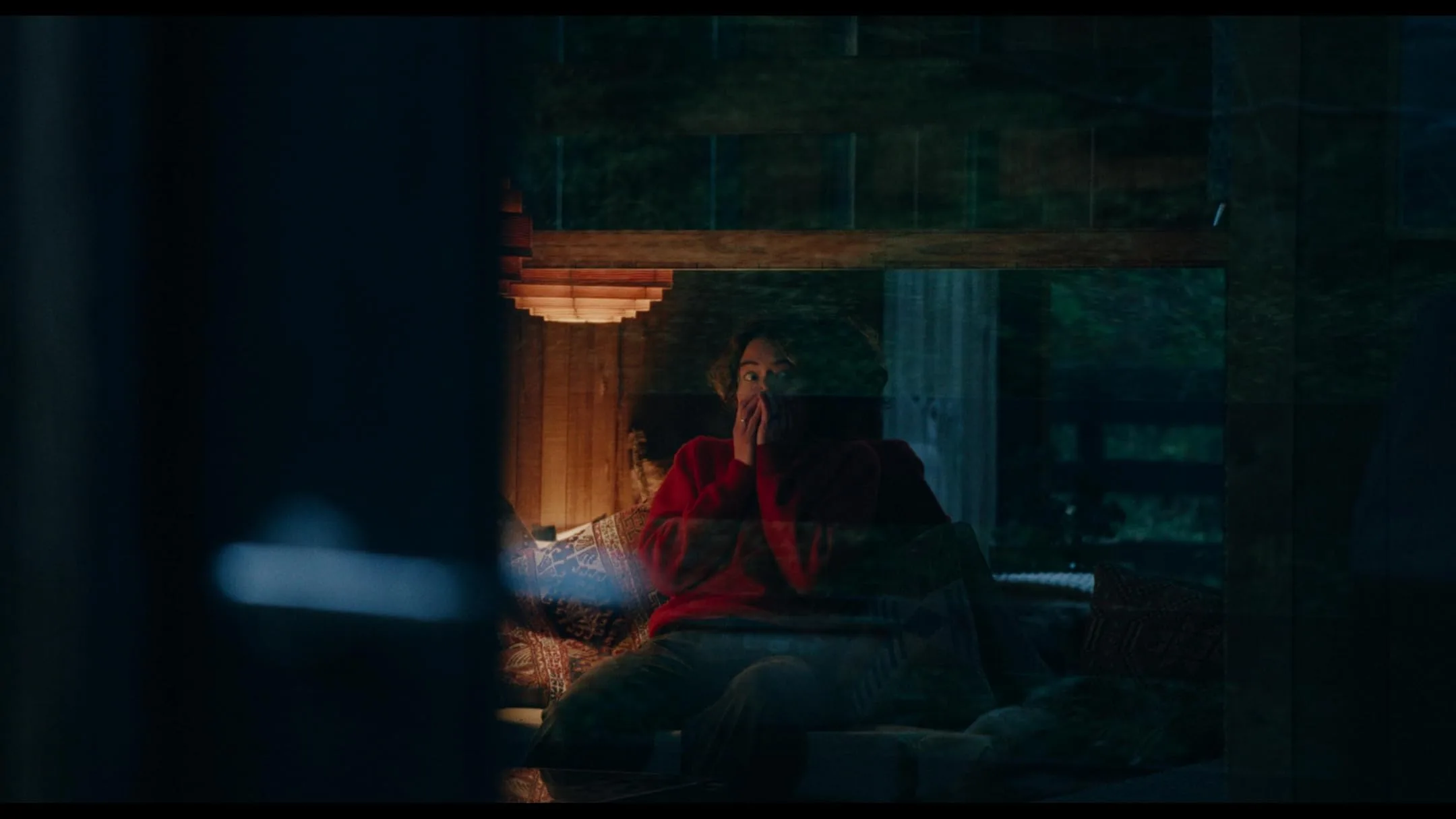
Dating anxieties—fear of abandonment, pressure to conform, the gradual surrender of personal limits—are literalized. Keeper forces questions about how one preserves identity under the pressure to merge. It traces the hazards that emerge when expected sacrifice in a relationship intensifies into actual harm. The film fixes on emotional violence under domestic calm, and it casts the home as an apparatus that can perpetuate suffering.
Perkins borrows motifs from folklore and fairy tale—the abandoned wife, the poisoned gift, the dark woods—and places them in a sleek contemporary frame. Those tropes shed historical charm and assume a sterner function in a modern aesthetic. The film updates the archetype of the deserted bride for a present-day context.
Through Liz, Keeper stages a critique of gendered expectations in love. It examines social constraints placed upon women and the quiet pressures to conform. The horrific events function as materialized symptoms of male entitlement and the endurance of female suffering. The domestic arrangement appears constructed to maintain cycles of pain, and genre conventions are put to work as instruments for exposing an uncomfortable social truth. Keeper stands as a demanding specimen of modern horror that asks the viewer to consider how ordinary relational rituals can contain violent implications.
Keeper is a horror film released theatrically by Neon in the United States on November 14, 2025. It is a psychological thriller about a couple’s secluded getaway that descends into madness and horror. The film is directed by Osgood Perkins, marking his third collaboration with the distributor Neon. It can be found in theaters during its initial release, and will subsequently be available on digital platforms and for streaming.
Full Credits
Title: Keeper
Distributor: Neon
Release date: November 14, 2025 (United States)
Running time: 99 minutes
Director: Osgood Perkins
Writers: Nick Lepard
Producers and Executive Producers: Chris Ferguson, Jesse Savath
Cast: Tatiana Maslany, Rossif Sutherland
Director of Photography (Cinematographer): Jeremy Cox
Editors: Graham Fortin, Greg Ng
Composer: Edo Van Breemen
The Review
Keeper
Keeper is a challenging, meticulously styled genre exercise. Perkins privileges sustained mood and intellectual critique over conventional narrative flow, resulting in a film that is visually hypnotic and thematically pointed. The deliberate, slow reliance on atmosphere and the final, sudden exposition will inevitably polarize audiences. Maslany’s performance, however, is crucial, anchoring the abstract dread. It is a potent commentary on ownership and sacrifice in relationships, richly rewarding patient viewers seeking cerebral horror.
PROS
- Exceptional cinematography and production design create a deeply claustrophobic and unsettling atmosphere.
- A visceral, anchoring display of psychological unraveling.
- A scathing critique of modern relationship dynamics, ownership, and gender entitlement.
- Distinct directorial vision that avoids conventional horror mediocrity.
- The creature design and visual effects, when they appear, are grotesque and inventive.
CONS
- The film’s middle section is slow, relying heavily on repetition and mood, which can be frustrating.
- The climax relies on an extended monologue to explain the mystery, potentially undercutting the earlier ambiguity.
- The extensive use of dream logic and surrealism makes the narrative challenging for viewers expecting a linear thriller.
- The intentional lack of spatial clarity may leave some viewers feeling disoriented and disconnected.







