
























![Kingdom Hearts Collection [I-III] Review](https://gazettely.com/wp-content/uploads/2026/10/Kingdom-Hearts-Collection-I-III-1-360x180.webp "Kingdom Hearts Collection [I-III] Review: KHII Holds Steady as Newer Entries Fluctuate 37")





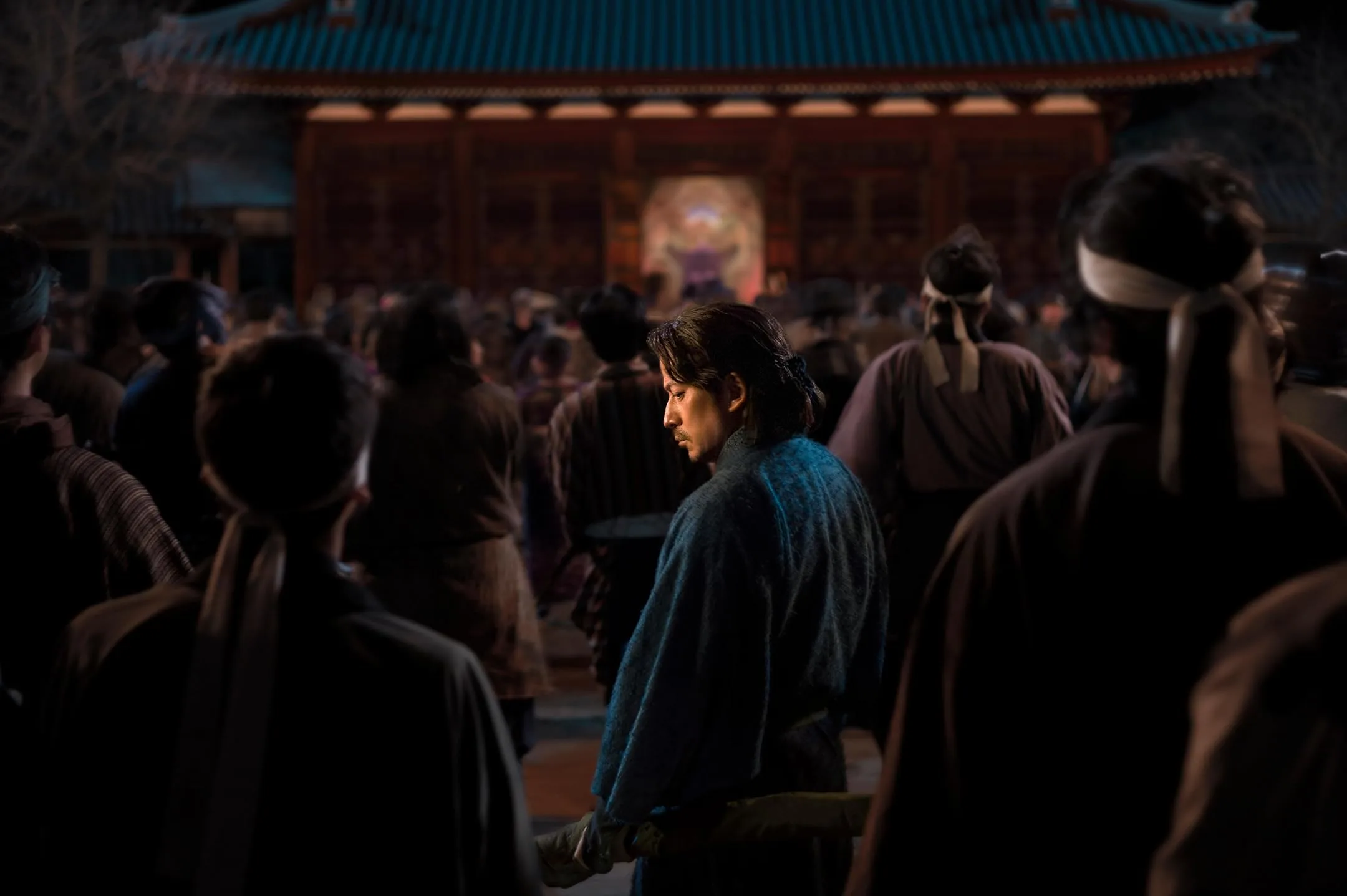
History books mark the final shots of the Boshin War as the end of 950 years of samurai tradition. Last Samurai Standing treats that end as a drawn-out, painfully staged decline. The series sets itself in Meiji Era Japan, the late 19th century surge of rapid modernization. Imperial forces stripped the samurai (shizoku) of rank and social purpose and left them to corrode like forgotten swords. Shujiro Saga (Junichi Okada) functions as a human emblem of that obsolescence.
He once carried a fearsome reputation as “Kokushu the Manslayer” and returns from war to crushing poverty and severe PTSD. A devastating cholera epidemic has crippled his family and left him desperate for medical funds. That combination of social ruin and private trauma fuels his choices and explains why he enters a contest that trades life for numbered tags.
That desperation becomes the commercial engine for the mysterious Kodoku tournament. Shujiro is one of nearly 300 warriors gathered to fight for a massive cash prize. The contest uses rules that cut away any pretense of nobility. Competitors must travel the Tōkaidō route from Kyoto to Tokyo and pass through checkpoints by taking numbered ID tags from rivals. Each tag represents a life taken. The series stages this contest as an orchestrated ritual of elimination that accelerates the erasure of a social order while an audience of men who profited from that order watches and wagers.
Action and the Anatomy of Violence
Last Samurai Standing stakes its claim as action television in the first furious, dynamic sequence that depicts the Boshin War’s final convulsions. That opening sets a chaotic tempo the Kodoku tournament follows. Violence defines the series. The show depicts graphic dismemberment, sudden beheadings, and a rapid-fire metal-on-metal clash that keeps momentum taut. The violence aims for the gut; messy, painful carnage occupies the frame and replaces clean exchanges.
Much of the show’s technical victory returns to Junichi Okada. His double duty as lead actor and action choreographer binds performance with movement. Fight sequences take on a personal logic because martial arts expertise informs posture, timing, and breath. Okada favors long, sweeping camera takes with minimal editing cuts. The camera travels through sequences and exposes the performers, which proves that actors and stunt teams execute complex, demanding moves without cinematic concealment. This choice heightens the sense of danger and makes each clash feel immediate.
Cinematography and editing support that strategy. Long takes create a sustained feeling of risk while judicious cutting accelerates moments of panic. The production applies subtle visual techniques, including sped-up or slowed film stock at key impact moments, to underline the force of strikes. Subtle CGI complements practical stunt work and keeps focus on embodied performances. Period trappings and carefully chosen locations along the Tōkaidō turn route into a sprawling, textured battleground. Gorgeous props and wardrobe anchor each scene in tactile history.
The show uses a varied arsenal of weapons as a visual metaphor for the era’s violent transition. Traditional katana confront modern firearms, polearms, and archery. Swordfighters facing distant gunfire must change tactics, which introduces strategic tension that extends beyond isolated duels. Those confrontations underline the uneven technological and social shifts of the period and sharpen the story’s central pressure point.
Sound design acts as a co-director. The clamor of clashing steel, the metallic impact of armor, and the sickening slice of flesh occur alongside the smug, uncaring voices of elites who treat human bodies as entertainment. That audio layering produces a dissonant counterpoint: visceral immersion on the battlefield set against a clinical, detached commentary off it. Visual and aural layers join into a rigorous aesthetic of detailed period craft and sustained kinetic energy. The show commits to that mix and supplies focused, specific thrills.
Faces in the Mayhem
Concentrated action needs human anchors and Last Samurai Standing supplies them. Shujiro Saga remains the series’ emotional fulcrum. Okada gives a controlled, compact performance that conveys a history of violence and present sorrow through economy of motion. Shujiro fights to raise funds for his family amid a cholera epidemic while his reputation as a “Manslayer” haunts every decision. That stoic register reads as convincing and can, at times, feel narrowly fixed; the character risks repeating the same inward posture across scenes.
Shujiro forms a protective bond with Futaba Katsuki (Yumia Fujisaki). Futaba fights to save her mother and supplies the show’s emotional center. Her inexperience in combat keeps her emotionally exposed and offers a humane counterpoint to the brutality on display. Futaba’s weakness in battle reads as a deliberate choice that foregrounds emotional truth over spectacle.
The core alliance grows richer with other members. Iroha Kinugasa (Kaya Kiyohara) functions as a fierce and skilled sister-in-law. Iroha is often underestimated and Kiyohara earns moments to showcase attitude and lethal facility with pointed weapons. Kyojin Tsuge (Masahiro Higashide) injects wit and charisma at grim moments. He plays a strategist who speaks of alliances while maintaining a guarded distance and implying a wider knowledge of the tournament’s operation. That ambiguity makes Kyojin one of the more compelling supporting figures and sets up possible future payoffs.
Hideaki Ito’s Bukotsu Kanjiya functions as a formidable antagonist. The “Savage Slasher” carries menace through sheer physical presence and brutal conduct, which makes Bukotsu a credible, chaotic threat to the main alliance. The Kodoku’s scale creates a structural challenge for a short-run season: many competitors appear only to be dispatched quickly. The writers concentrate on the central quartet, and the chemistry among Shujiro, Futaba, Iroha, and Kyojin gives viewers characters to care about amid overwhelming odds.
Allegory, Pacing, and the Road to Tokyo
Kodoku structures itself as a road narrative along the Tōkaidō, which enforces movement and resists stagnation. A six-episode season balances necessary skirmishes with slices of backstory so audiences grasp the personal stakes under the bloodshed. That balance holds for much of the run. Pacing frays when scenes pivot from battlefield immediacy to the organizers’ deliberations.

The series devotes time to a small circle of wealthy oligarchs, often labelled the Organizers or Zaibatsu, who observe and bet on the contest. Those sequences establish a critique of concentrated economic power and the human cost of rapid modernization. They can slow forward momentum when they outnumber battlefield sequences, yet they provide the thematic backbone: a spectacle of death produced for profit, a dramatization of class division and the lack of accessible medical care for the poor.
Last Samurai Standing operates as an action drama wrapped in history. Political scheming among the organizers deepens narrative texture while the series avoids the tone of a dry historical record. At moments the show slips into cartoonish extremes, as some aggressive competitors sport exaggerated abilities and visual stylings that recall fighting games. The series tethers that flair to consequence by returning to Shujiro and Futaba; their grounded relationship keeps human stakes in focus.
The season concludes without a tidy resolution. The Kodoku tournament’s final outcome remains unsettled, the central alliance’s fate is unresolved, and the organizers’ conspiracy remains open. A final, action-heavy beat confirms this run functions as the opening leg of a larger, darker arc. The story leaves clear questions about how Kyojin’s knowledge will unravel and how the rules will adapt as the cast shifts. When a ritual built to eliminate a class becomes a battlefield for survival, which customs or codes will the survivors carry forward?
The Japanese series Last Samurai Standing premiered on Netflix on November 13, 2025, with all six episodes of the first season released simultaneously. Based on the novel series Ikusagami by Shogo Imamura, the show is a historical action drama set in the late 19th-century Meiji era. It follows Shujiro Saga, a disgraced samurai, who enters a deadly, high-stakes martial arts tournament called the “Kodoku” to win a massive cash prize needed to save his family from a cholera epidemic. It is available to stream worldwide exclusively on Netflix.
Full Credits
Title: Last Samurai Standing
Distributor: Netflix
Release date: November 13, 2025
Rating: TV-MA
Running time: 47–58 minutes (per episode, 6 episodes total)
Director: Michihito Fujii, Kento Yamaguchi, Toru Yamamoto
Writers: Kento Yamaguchi, Michihito Fujii
Producers and Executive Producers: Kosuke Oshida, Junichi Okada, Shinichi Takahashi
Cast: Junichi Okada, Yumia Fujisaki, Kaya Kiyohara, Masahiro Higashide, Shota Sometani, Taichi Saotome, Yuya Endo, Taiiku Okazaki, Kairi Jo, Yasushi Fuchikami, Riho Yoshioka, Kazunari Ninomiya, Hideaki Ito, Hiroshi Tamaki, Gaku Hamada
Director of Photography (Cinematographer): Keisuke Imamura, Hiroki Yamada
Composer: Ko Omama
The Review
Last Samurai Standing
Last Samurai Standing is an exceptional action vehicle. It pairs world-class swordplay, choreographed by lead Junichi Okada, with a compelling historical premise—the dying samurai class fighting for relevance. The series is relentlessly kinetic where it counts. It offers a brutal, stylized look at desperation, anchored by a strong central alliance. Though the political segments occasionally slow the pace, this series delivers thrilling, high-stakes combat that is essential viewing for genre fans.
PROS
- World-class action choreography by Junichi Okada
- Visceral combat style with fluid, long camera takes
- Compelling historical backdrop (Meiji Era/class conflict)
- Strong core cast chemistry and emotional anchor (Futaba)
- High production design standards and period authenticity
CONS
- Pacing slows significantly when focusing on the wealthy oligarchs
- Character depth is limited for many of the large ensemble cast
- Incomplete narrative, requiring a second season for resolution
- Repetitive nature of Shujiro’s family flashbacks







