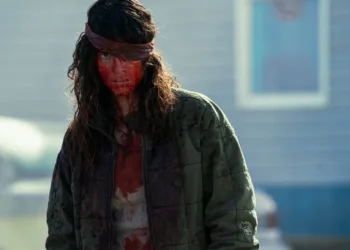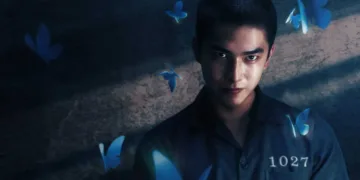





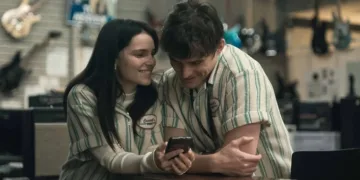



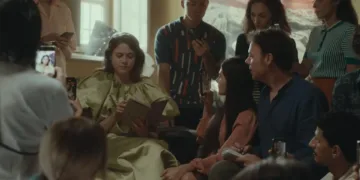




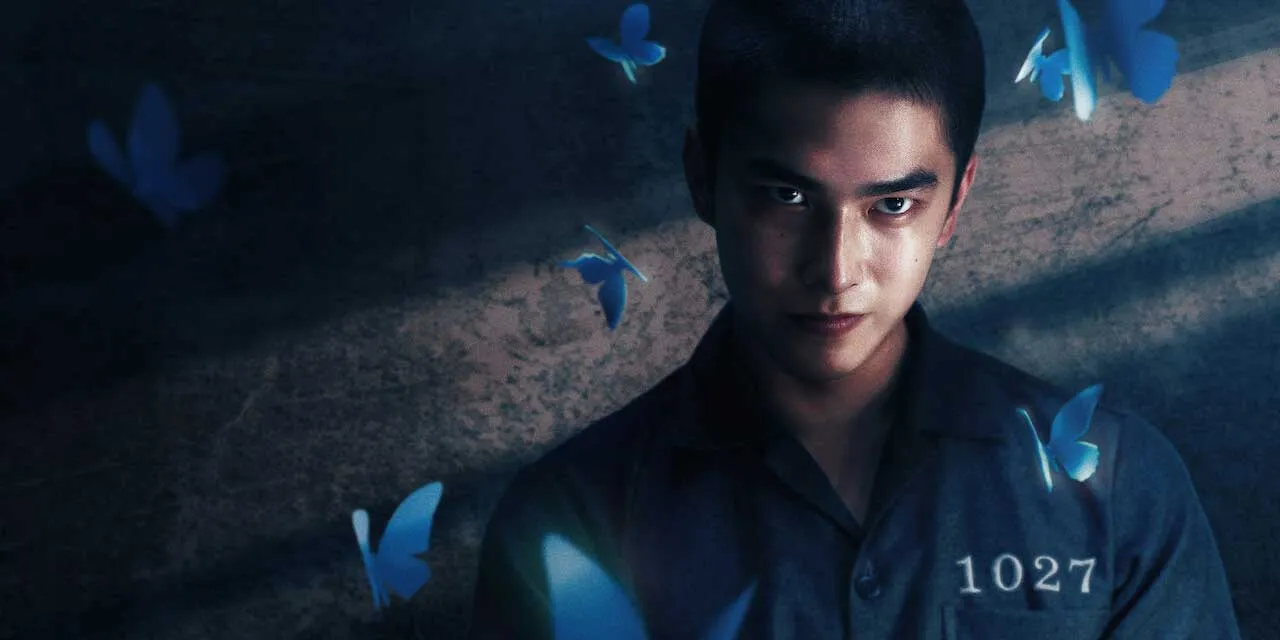

Had I Not Seen the Sun is a Taiwanese limited series on Netflix that quickly signals an ambition beyond routine procedural drama. The story orbits Li Jen-yao, the notorious “Rainstorm Killer,” seen years after he has confessed to murdering several of his high school classmates. The narrative unfolds in the present as Chou Pin-yu, a young filmmaker’s assistant, begins interviewing the imprisoned killer for a documentary. What starts as a professional project becomes a disturbing and intimate inquiry.
The series builds a clear split in perspective: the stark immediacy of the prison interviews and the troubled, emotionally charged memories of Jen-yao’s high school years. Pin-yu’s investigation carries an eerie dimension, since she begins to experience visions and dreams of Chiang Hsiao-tung, a mysterious schoolgirl directly linked to Jen-yao’s past. Through this mix of crime story and supernatural presence, the series engages with themes of guilt, memory, failure, and the human need for love.
The Slow Burn and Genre Convergence
The series relies on a carefully designed parallel structure. Pin-yu’s present-day conversations with Jen-yao unfold alongside extensive flashbacks that map his adolescence, his relationships, and the grim circumstances that lead to the murders. This structure produces a slow-burning progression built on mood and emotional density. The show withholds rapid plot twists, letting melancholy and unspoken feeling grow across episodes, a choice that echoes approaches seen in art-house work and parallel cinema traditions across different countries.
Genre mixing sits at the center of its style. The series brings together crime thriller elements, such as the prison setting and the murders, with a delicate, tragic strain of romance and the spectral presence of Hsiao-tung. Viewers who expect strict separation between genres may sense uneven rhythms, since the story moves from tense prison interrogation to tender high-school scenes, then into psychological thriller territory.
The refusal to settle into a single tonal register asks the audience to accept a world where reality and memory blur and constantly reflect each other. The narrative drive rests on uncovering the true reason behind the killings, and the recurring “moth and butterfly” image reinforces the notion of a romantic, fated pattern running through the killer’s youth.
Character as Cipher: Performance and Depth
The performances give the series a level of complexity that goes beyond standard serial-killer material. Tseng Jing-hua’s Li Jen-yao is both charming and threatening. He plays the killer as a cipher, a presence who remains hard to read yet carries clear vulnerability, allowing brief glimpses of an abused and wounded child behind horrifying acts. This layered portrayal creates a weight that many genre pieces lack.
Also Read




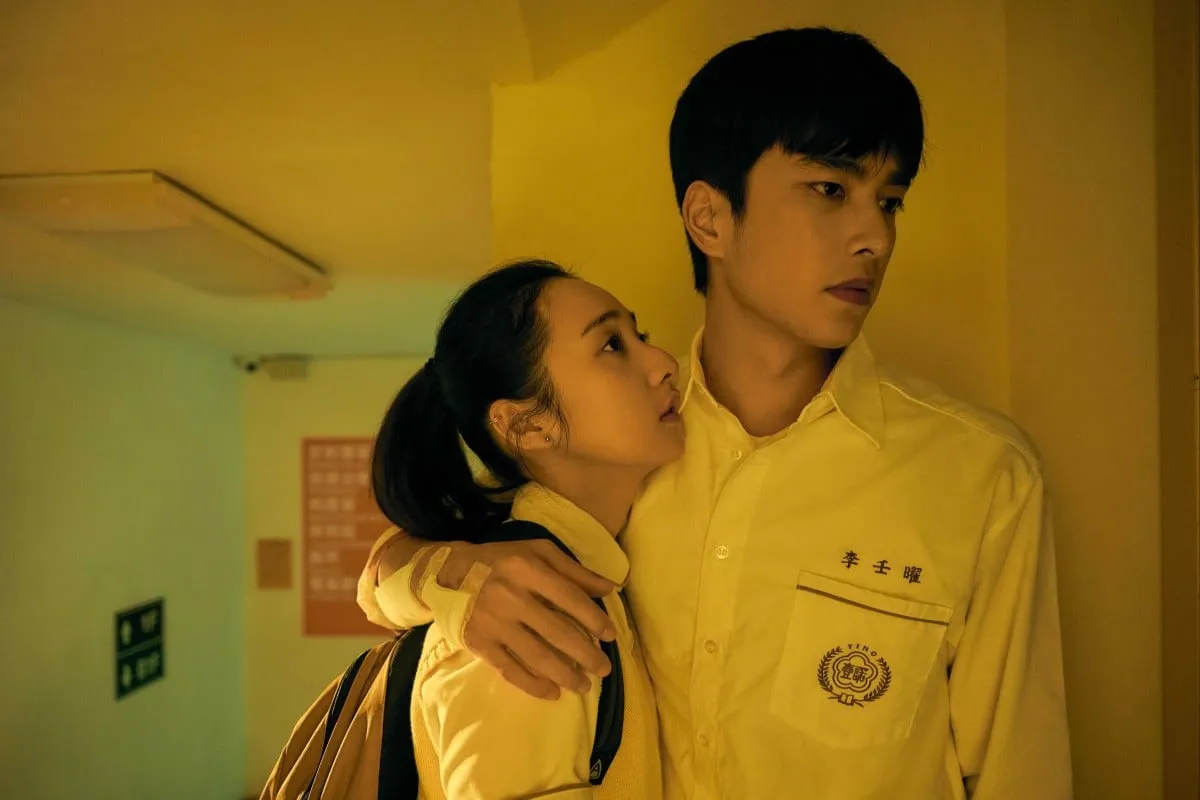
Chiang Chi brings an earnest, emotionally shaken presence to Chou Pin-yu. She appears sharp and persistent as an investigator, yet her work on the documentary quickly turns into a deeply personal, nightmarish experience. Her bond with Jen-yao’s story grows stronger with each encounter, until the documentary no longer feels like a detached project but a zone where her own sense of reality merges with his tragic past.
Moon Lee’s Chiang Hsiao-tung functions as an essential ghost figure within this structure. Her unsettling appearances distort the timeline, folding memory and the present into each other. The writing treats her with care, granting her interiority rather than using her as a simple device. She becomes a fragile source of light within Jen-yao’s dark history and serves as the emotional anchor of his memories. Across the ensemble, even smaller roles contribute to a portrait of deep isolation, giving the series a sense of emotional layering that extends beyond its main trio.
Aesthetic of Trauma and Ethereal Style
The visual language of the series plays a central role in its emotional impact. The tone leans toward eerie melancholy from the opening scenes. Cinematography relies on muted colors and low light, which evoke a continuous feeling of trauma and fractured nostalgia. The direction draws a clear distinction between spaces: the prison sequences feel stark, cold, and suffocating, while the high school flashbacks use a similarly muted palette that suggests a world permanently marked by looming disaster.
Directorial choices favor patience. Long silences, shadow-filled frames, and lingering shots build tension in a way that recalls slow, atmospheric psychological thrillers rather than shock-driven horror. The series avoids cheap jump scares and instead trusts viewers to read emotion from composition and rhythm. Framing choices display a careful sense of style, withholding exposition and letting the imagery carry meaning. The moth and butterfly motif recurs visually, keeping the symbolic thread present without heavy explanation.
The score, with its haunting and subdued quality, supports this mood and stays unobtrusive enough that character and story remain in focus. At times the visual style becomes overly stylised and tilts toward self-conscious effect, which can momentarily pull the viewer out of the experience. These moments remain relatively minor beside an aesthetic that stays precise, controlled, and emotionally charged.
The Taiwanese limited series Had I Not Seen the Sun premiered its first part on November 13, 2025, and is exclusively available for streaming on Netflix. The series, which comes from the creators behind the hit drama Someday or One Day, blends elements of a dark mystery romance with a psychological thriller. It tells the story of an aspiring documentarian who interviews a confessed serial killer, uncovering a complex, tragic past involving high-school trauma and an irreversible love story.
Credits
Title: Had I Not Seen the Sun
Distributor: Netflix
Release date: November 13, 2025 (Part 1)
Rating: TV-MA
Running time: Approximately 60 minutes per episode (10 episodes in Part 1)
Director: Chiang Chi-cheng, Chien Chi-feng
Writers: Chien Chi-feng, Lin Hsin-huei
Producers and Executive Producers: Yi-Ting Ma (Producer)
Cast: Tseng Jing-hua, Moon Lee, Chiang Chi, Lyan Chen, Umin Boya, Yao Chun-yao, Nic Chiang, Biubiu Chen, Sonia Yuan, Vega Tsai, Chu Te-kang
Director of Photography (Cinematographer): Yao Hua Ku, Wayne Lo
The Review
Had I Not Seen the Sun
Had I Not Seen the Sun is an ambitious and atmospheric Taiwanese drama that excels by blending psychological thriller elements with a profound exploration of memory, guilt, and doomed romance. Its slow, deliberate pace and willingness to shift genres may require patience, but the excellent lead performances and haunting visual style reward the commitment. It manages to create complexity around trauma without excusing heinous actions. The series offers a compelling, emotionally layered experience for viewers who appreciate complex storytelling over tidy genre conventions.
PROS
- Tseng Jing-hua provides a nuanced performance as the killer, avoiding the cliché of a simple monster.
- The cinematography uses dim light and muted colors to create a consistently haunting mood.
- Effectively utilizes parallel timelines and the supernatural element (Hsiao-tung) to deepen the mystery.
- Focuses on human longing, guilt, trauma, and memory rather than mere procedural details.
CONS
- The shifts between gritty crime, supernatural visions, and light romance can make the tone wobble.
- The narrative is slow-burning, which may frustrate viewers expecting a tightly wound, fast-paced thriller.
- The visual style occasionally feels overly stylised, interrupting immersion.
- Some side plots or characters are not given enough room to fully develop.