



























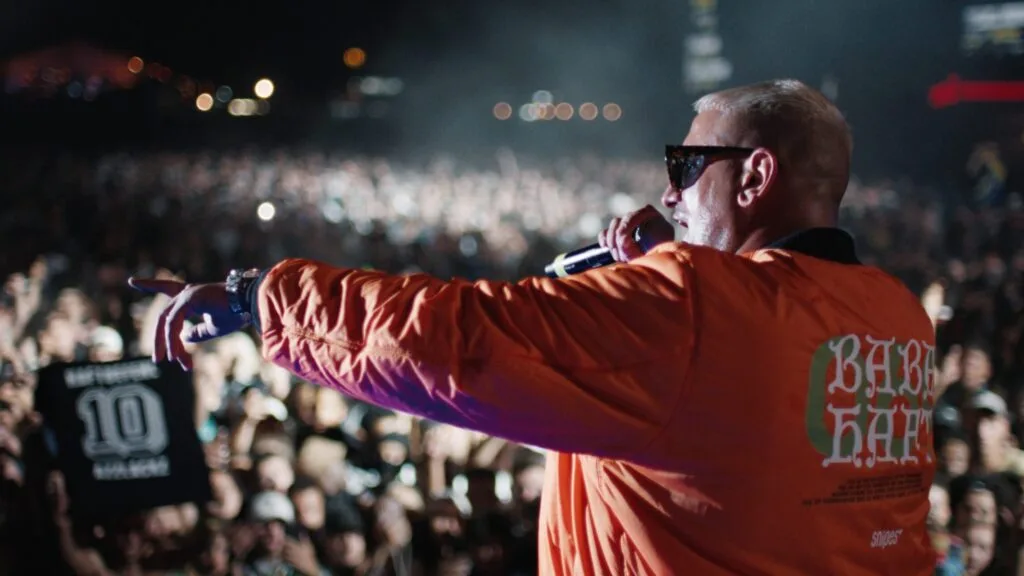

The story of contemporary German rap tends to circle back to one volatile figure, Aykut Anhan, treated as a kind of genius and known on stage as Haftbefehl. For over ten years he has stood at the top of the charts, his music presented as a loud, swaggering dispatch from the street. The documentary “Babo: The Haftbefehl Story” arrives as a kind of counter-document to that mythology, a cool, investigative look at a spectacular collapse.
Directed by experienced journalists Juan Moreno and Sinan Sevinç, the film quickly strips away the standard celebratory moves of the music biopic. It moves straight into crisis and concentrates on a decisive twelve-month stretch in Anhan’s life. During this period, immense public success sits beside an increasingly desperate private battle, a slow public self-immolation caught on camera. The structure follows a downward spiral and traces the collision of two irreconcilable versions of reality.
The Sickness Unto Stardom
The documentary fixes on one central theme, the stark, detailed portrayal of Aykut Anhan’s personal collapse. The camera keeps looking, recording a struggle shaped by drug addiction, severe mental health problems, and a heavy inheritance of intergenerational trauma, especially the shadow of his father’s suicide. Here the film gains its reputation. In the later interviews, his presence is difficult to watch.
He appears bloated, slow, searching for words, restless in his seat. The result is a consciously anti-heroic portrait that tears down the figure of the untouchable rap star and replaces it with a confession of self-destruction stretched across the runtime.
The film renders visible the agonizing gap between “Haftbefehl,” the confident public persona, and “Aykut Anhan,” the fragile person who is steadily falling apart. His wife Nina gives this split its clearest formulation when she says, “I love Aykut, not Haftbefehl.” The problem of trying to live an ordinary life while maintaining a volatile rock star identity becomes the film’s harsh driving force.
Key moments from his biography, such as the involuntary commitment arranged by his brother, appear less as explanatory detail and more as signposts of severe distress. The film then moves through what it calls the “mechanics of addiction”: a repeated sequence of intoxication, crash, short hospital stay, and predictable relapse.
Also Read





This careful, almost medical depiction of self-harm produces a strong and lingering sense of voyeurism for the audience, the feeling of standing beside a serious accident and being unable to look away from the wreckage. The viewer watches the rapid, well-documented collapse of a man. The creative labor of an artist stays outside the frame. The documentary poses the question of what remains when the mask of “authenticity” collapses into pure disorder.
The Netflixification of Trauma
The film’s claim to radical honesty sits uneasily beside its visual and sonic design. It follows a highly standardized “Netflix documentary format”: dark, high-contrast images, dramatic interview setups with two cameras, rapid cutting, and suspense-driven, sometimes melodramatic, piano music. Several critics have argued that this style feels highly polished, sensational, and loud, to the point where the film looks very similar to many true-crime productions.
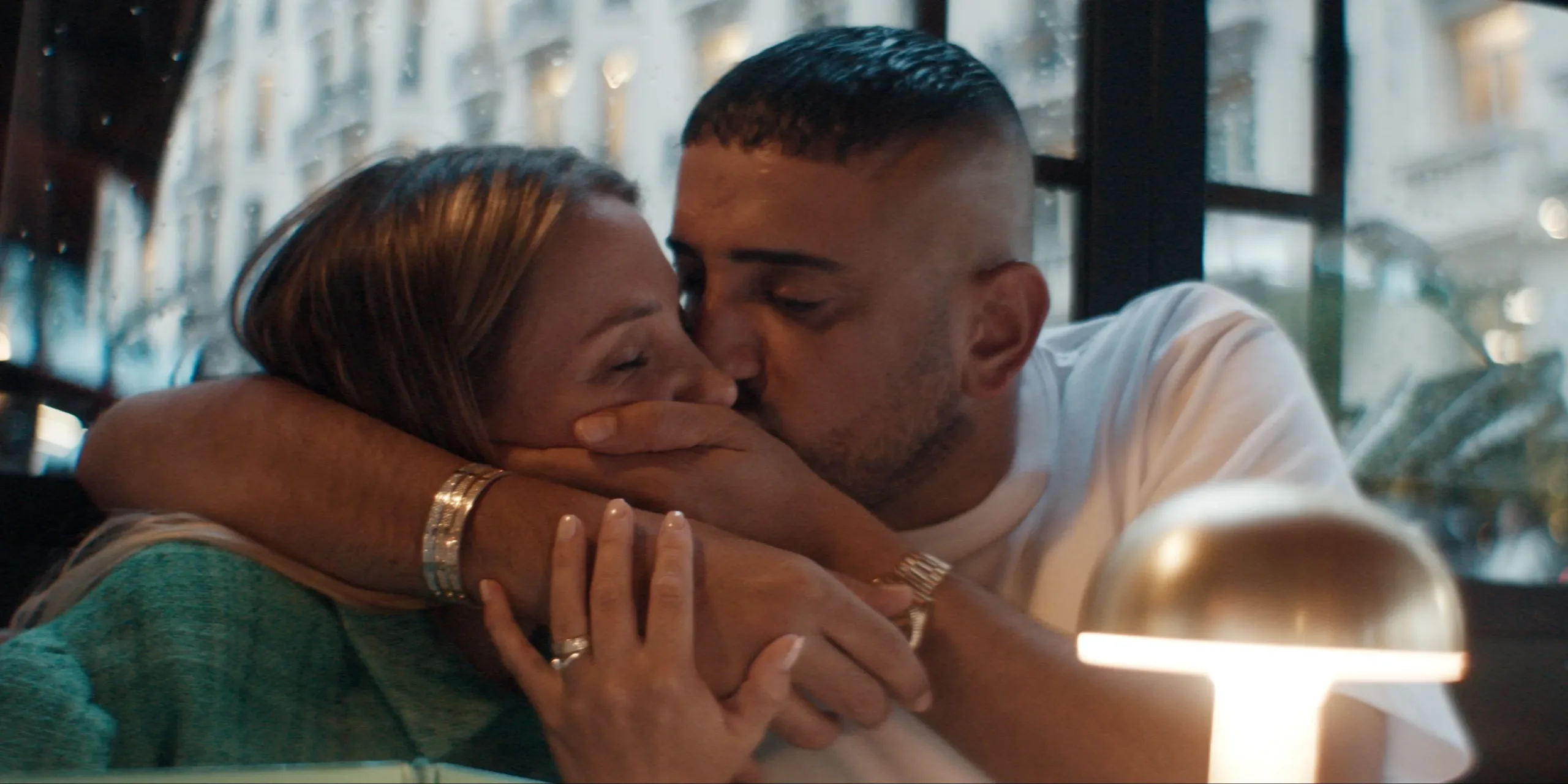
This globally familiar package promises “authenticity” and deep psychological access, yet the same slickness creates a paradox. The subject called for exposure of reality, while the simple act of framing a person with a camera reshapes the very reality that is under examination. In this sense, the film behaves less like a mirror and more like a small media factory, assembling a product, the ruined artist, that fits neatly into a preexisting, commercially viable biopic template. The messy sprawl of a life is compressed into a clear, dramatic storyline.
The rapidly cut opening sequence, in which peers such as KKS, Jan Delay, and Savas offer brief and mostly superficial praise, is brushed aside almost immediately. It operates as a rhetorical warm-up, a bright surface that prepares the plunge into later darkness. The heavily emotional music and emphatic stylistic choices hint that the directors do not fully trust viewers to feel the weight of the material without extra aesthetic pressure. The camera’s gaze turns suffering into a form of spectacle.
The Missing Cultural Critique
For all its closeness to its subject, the documentary carries major structural gaps. It avoids any serious examination of the artistic and cultural significance of Haftbefehl’s career. The film gives strong priority to the therapeutic and psychological aspects of his life and pays far less attention to the artistic and social dimensions. This approach reduces the figure on screen. It frames his musical talent as compensation for trauma and leaves aside the sharper question of what kind of cultural force this body of work represents.
The documentary offers only a brief sketch of his career at the top of the charts, then spends almost its whole duration on his mental condition and addiction. That decision narrows what the film can say. The lack of a developed political frame marks another major weakness. A portrait of an artist whose lyrics and background are so clearly linked to systemic problems and marginalized communities calls for a wider sociological view.
By positioning Anhan purely as a victim of inner chaos, the film moves away from necessary social critique. Most strikingly, the documentary refuses to address a specific dispute that surrounds him, the recurring accusations of antisemitism in his lyrics. This absence points to a serious shortage of critical distance and keeps the film from functioning as a full study of a complicated and flawed cultural figure.
The biographical documentary film, Babo: The Haftbefehl Story, chronicles the life of German rap icon Aykut Anhan, focusing on the volatile tension between his successful public persona and his raw, often difficult, private struggles with addiction and trauma. The film premiered worldwide on October 28, 2025, and is exclusively available for streaming on the Netflix platform.
Full Credits
Title: Babo: The Haftbefehl Story
Distributor: Netflix
Release date: October 28, 2025
Running time: 92 minutes (1 hr 32 mins)
Director: Sinan Sevinç
Producers and Executive Producers: Elyas M’Barek, Paco-Luca Nietsche
Cast: Aykut Anhan, Aytac Anhan, Nina Anhan, Capo, Jan Delay, Marteria, Soufian, Xatar
Director of Photography (Cinematographer): Wesley Salamone
Editors: David Gesslbauer, Marco Rottig, Philipp Schnabel
Composer: Stefan Benz, Alexander Wolf David
The Review
Babo: The Haftbefehl Story
The documentary offers an undeniably intimate, disturbing view of personal collapse, exposing Aykut Anhan's battles with addiction and trauma with unflinching, almost voyeuristic clarity. It succeeds as a raw spectacle of self-destruction. Yet, its hyper-stylized format and thematic omissions undermine its substance. By focusing solely on the psychological causes of his pain, the film fails to analyze Haftbefehl's significant artistic impact or address the broader cultural and systemic questions his career raises. It is a compelling human tragedy, but a shallow cultural critique.
PROS
- Unflinching and raw portrayal of addiction
- Successful documentation of personal crisis
- Creates a powerful sense of intimacy
- Compelling and often difficult viewing
- Exposes the destructive gap between person and persona
CONS
- Overly stylized "Netflix format"
- Excessive sensationalism and staging
- Insufficient attention to artistic significance
- Omission of political or systemic context
- Avoids addressing specific controversies