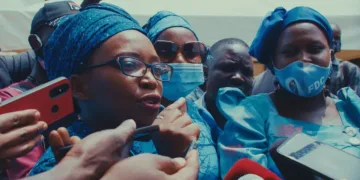





















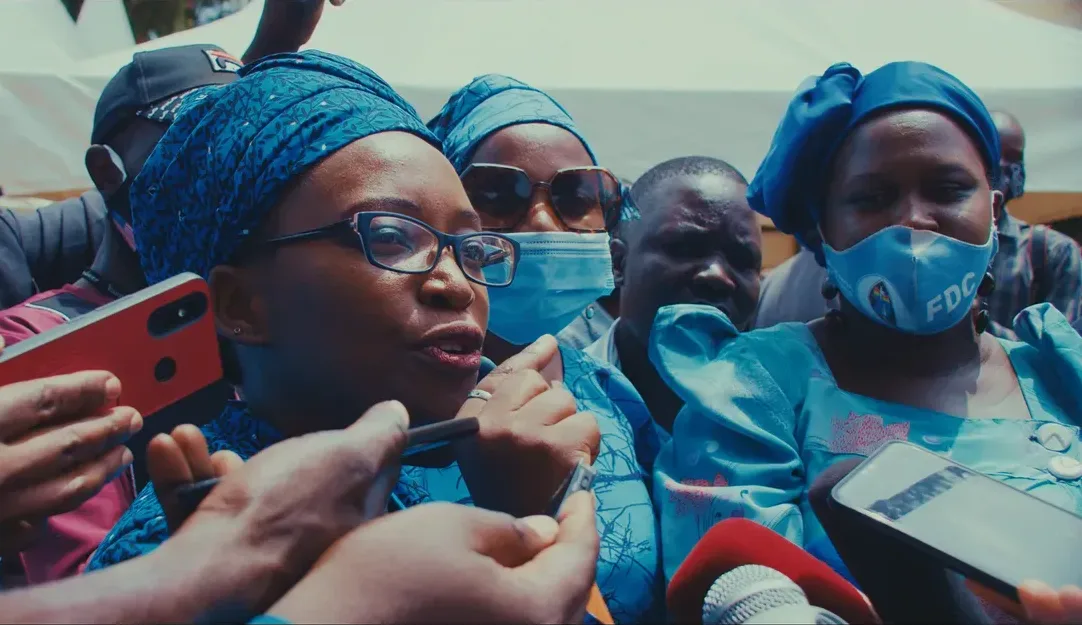

Patience Nitumwesiga’s documentary The Woman Who Poked The Leopard operates as an exacting, immersive study of Dr. Stella Nyanzi, a political incendiary framed through the lens of feminist scholarship. Nyanzi, a Ugandan poet, anthropologist and human rights activist, turns a tactic she labels “revolutionary rudeness” into a continuous assault on the status quo.
The title points directly to her high-profile defiance of long-serving Ugandan President Yoweri Museveni, whom she attacks in public with language that is blistering, often scatological. Nitumwesiga builds a dense portrait of a life organised around resistance. The film establishes its central idea immediately: Nyanzi’s sustained rage at systemic corruption, political injustice and the suffocating repression of her country operates as the existential engine of her self-definition. The documentary traces the way speech hardens into a weapon.
Non-Linear Conflict and Political Chiaroscuro
The documentary abandons straightforward chronology and arranges Nyanzi’s story in a jagged, non-linear pattern that feels purposefully scattershot. The structure echoes the velocity of her confrontations, pitching the viewer into clashes without introductory preparation.
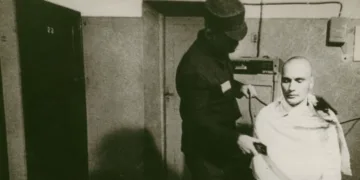
The film sketches a rising curve of conflict: the 2017 social media poem aimed at the “leopard” and the imprisonment that follows, then the court cases that end with her removal from her position at Makerere University. These episodes play like political neo-noir. The courtroom images supply the most striking instance of expressionistic framing, with compositions that press Nyanzi’s defiant gestures against the architecture of the law as she faces the judge and uses semi-nudity as a form of protest. The sequences register as raw, unforgiving cinema.
This line of defiance carries heavy consequences. The brutal treatment she endures in jail, culminating in a miscarriage, snaps the film’s mood from caustic dark comedy to stark tragedy. From there, the narrative tracks her 2020 campaign for office in Kampala, a bid to route her anger through the ballot box, shadowed by the doubtful integrity of the 2021 election. The story later shifts to her relocation to European exile in Bavaria with her children, presented as a necessary retreat from mounting state pressure. The film reads this relocation as tactical survival, a reminder of the cost attached to speaking truth to entrenched power.
The Aesthetics of Defiance: Shot Composition and Sound
Nitumwesiga’s visual strategy relies on hand-held camerawork and extended takes that track Nyanzi through volatile spaces, letting tension accumulate inside the frame. The cinematography often resembles found footage, a record seized in real time at personal risk, and this quality strengthens the sense that the viewer shares the instability of the political terrain. Archival material enters as a counterpoint. The director threads it together with Nyanzi’s acerbic poetry, placing historical fragments beside scenes of intimate pain so that activism acquires a clear analytical frame.
Sound design sharpens this structure. The score sets forceful traditional Kiganda music against the sonorities of classical pieces such as Mozart’s Requiem, chosen for key political recitations. The most corrosive gesture arrives with the Ugandan national anthem, heard with heavy irony while images of police brutality occupy the screen. That clash between patriotic lyric and violent image defines the philosophical gap between national ideals and lived reality and steers audience response, pulling the viewer between pride, anger and disbelief.
Rhythm remains slightly unruly, yet the looseness suits Nyanzi’s explosive existence. A precise instance of timing comes during the rapid campaign montage that halts on the emblematic shot of her car tire spinning in the mud. Later, her devastating account of the miscarriage takes place over a black screen, the absence of image granting the words and silence a concentrated power.
The Private Stage: Identity and Ethical Gray Zones
The final act marks a decisive shift, turning from public spectacle toward domestic interiors. The film begins to test the ethical gray zones of radical activism, especially the cost imposed on those who live closest to the protest. Nyanzi emerges as a figure of complexity, flawed and admirable in the same frame. The activist persona doubles as a mother whose notoriety weighs heavily on her children.
The camera pays particular attention to her daughter Baraka, who steps into a prematurely wise, quasi-therapeutic role and challenges her mother about emotional distance. These sequences unfold with disarming candor, operating like an intense family therapy session. The framing lingers on faces, on pauses, on the intervals between questions and answers, tracking the strain that public struggle inscribes on private bonds.
This vulnerability carries a clear narrative function. It underlines Nyanzi’s humanity and clarifies that her decision to accept European exile grows from concern for her children’s safety after the state’s harsh treatment of a fellow satirical writer. Her campaign for universal freedom folds into a more intimate project, the protection of her family’s will and safety. The film draws its force from this dual focus on ferocious public defiance and protective motherhood.
The documentary, The Woman Who Poked the Leopard, premiered at the 2025 DOK Leipzig Film Festival in October 2025, and subsequently screened at the International Documentary Film Festival Amsterdam (IDFA). The film, which runs for approximately 107 to 108 minutes, is an intense portrait of Ugandan feminist poet and activist Dr. Stella Nyanzi, chronicling her defiant stand against President Yoweri Museveni’s authoritarian regime and the personal cost of her activism, including imprisonment and eventual exile in Germany. As of today, November 30, 2025, the documentary is primarily navigating the international film festival circuit and is preparing for cinema releases in parts of Europe. Availability for streaming or wide distribution should be announced following its festival run.
Full Credits
Title: The Woman Who Poked the Leopard
Distributor: Shagika, Parabellum Film
Release date: October 2025 (World Premiere at DOK Leipzig)
Running time: 108 minutes
Director: Patience Nitumwesiga
Writers: Patience Nitumwesiga
Producers and Executive Producers: Rosie Motene, Phil Wilmot, Patience Nitumwesiga, Natalia Imaz (Co-Producer), Menzi Mhlongo (Co-Producer)
Cast: Stella Nyanzi, Baraka Mirembe, Kato Nyanzi, Wasswa Nyanzi, Yoweri Museveni
Director of Photography (Cinematographer): Racheal Mambo, Phil Wilmot
Editors: Kristen van Schie
Composer: Sylvia Babirye
The Review
The Woman Who Poked The Leopard
Nitumwesiga’s documentation of Stella Nyanzi delivers a profoundly resonant political thriller, achieving a necessary complexity rarely seen in protest cinema. The documentary masterfully uses technical craft—from its strategic sound design to its unflinching cinematography—to frame the subject’s radicalism as a fierce, human response to absolute power. It’s an untidy film about an untidy life. This work succeeds as both a document of authoritarian resistance and a study of a family navigating moral and physical peril.
PROS
- Dr. Stella Nyanzi’s charismatic, volatile energy commands the screen.
- The filmmaking utilizes potent visual choices (like the black screen sequence) and highly effective, ironic musical placement.
- Candid exploration of the personal, domestic toll of activism on Nyanzi and her children.
- Successfully blends political documentary with the tension of a psychological drama.
CONS
- The non-linear structure can occasionally feel bouncy or scattergun, hindering immediate absorption of context.
- Certain stylistic choices, such as randomly ordered text in intertitles, prioritize design over information clarity.