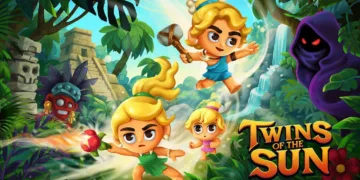














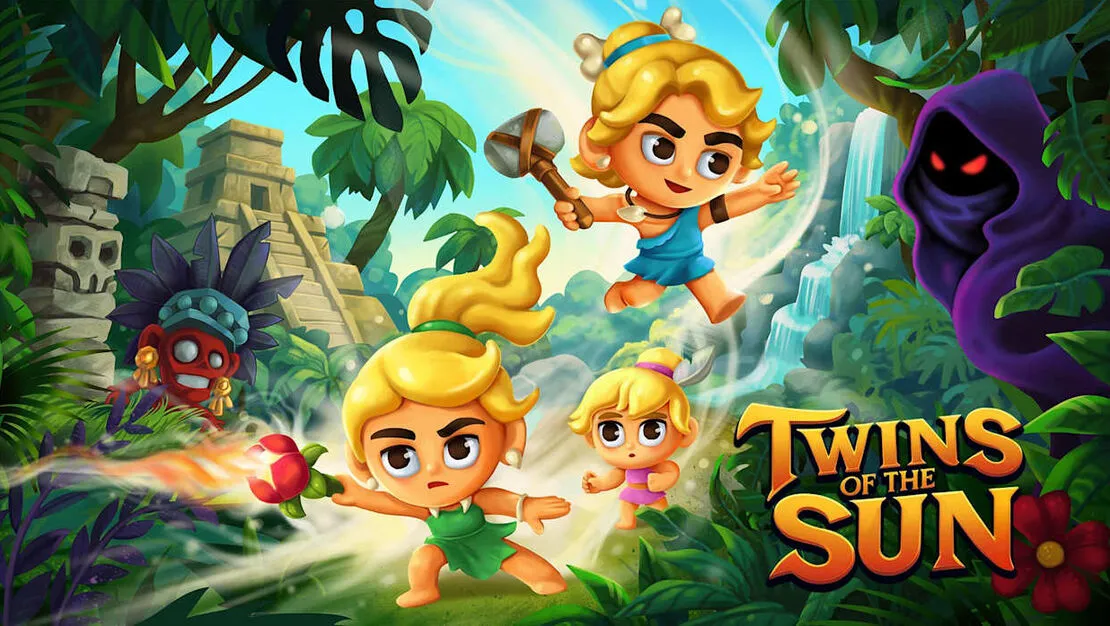

The strength of a story often comes from the immediacy of its emotional plea, with scale playing a smaller role. Twins of the Sun leans into that idea by setting aside sprawling lore and focusing on the raw, direct action of sibling loyalty. Developed by Commando Panda, this colorful action-adventure brawler has a simple mandate: a twin sister has been taken, and two other twins head into jungles and ancient temples to bring her home.
The plot arrives with brisk efficiency, offering just enough context to drive the rescue without heavy exposition. Presented from an isometric viewpoint, the art style favors bright, cartoonlike simplicity that gives the game a handcrafted feel. The experience is immediately approachable and moves at a steady clip, helped by the near absence of prolonged cutscenes. This direct setup invites players into an adventure defined by basic heroism and straightforward emotional stakes.
The Stuttering Rhythm of Melee Action
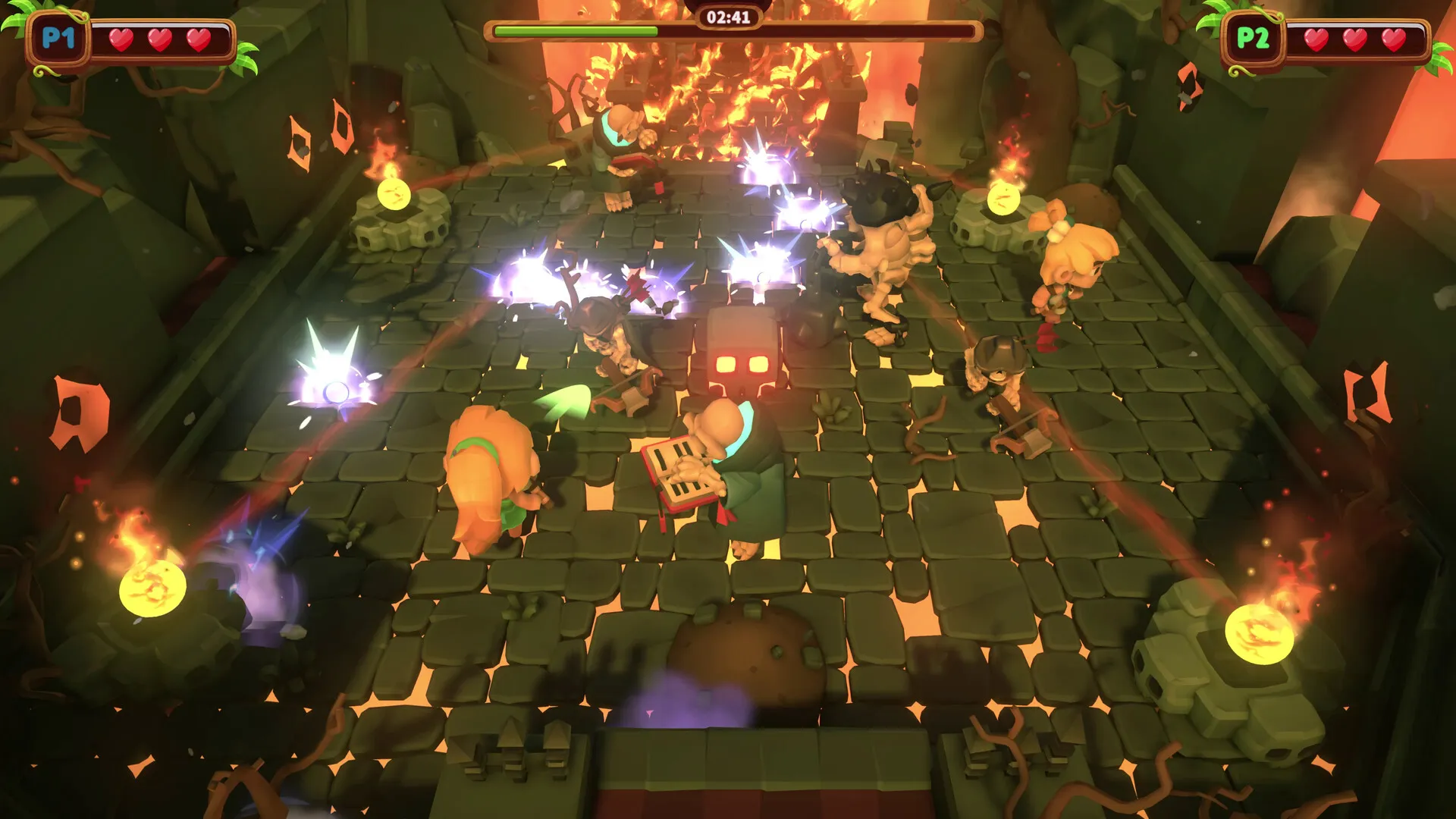
The core mechanics rely on a twin-stick brawler system. The left stick controls movement, while the right aims the direction of the Stone Hammer’s melee swings. The intent is tight, focused action, yet the hammer’s short reach undercuts that goal. Players are pushed into cramped spaces, which becomes a structural problem once enemies begin to arrive in dense waves. Combat shifts into a scramble for survival, and opponents flood in from every side, so any sense of precise control disappears. The limited reach makes repositioning awkward and often leaves encounters feeling clumsy.
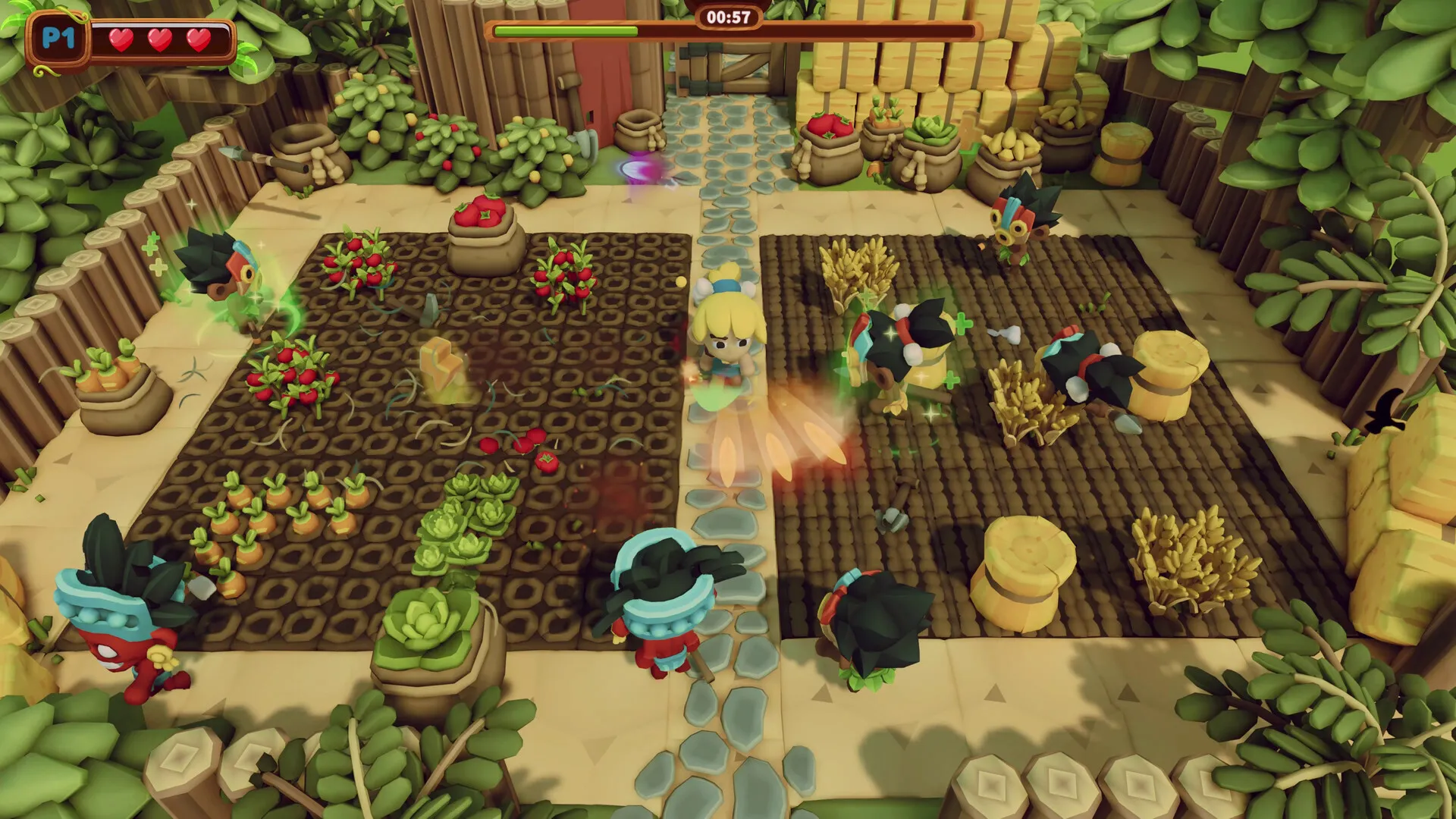
Another issue lies in how little impact the combat communicates. Strikes land with weak feedback, so the act of hitting enemies feels distant, so it feels like the player is merely shaving off health, without the satisfaction of solid blows. With no alternate weapons, attack strings, or upgrade systems, the fighting stays static. The same basic action repeats across all twenty-five stages.
That sameness shapes the game’s emotional tone; the fundamentals of combat sit at odds with the urgent rescue premise. Level design reinforces that flat feeling through a consistent wave-survival structure. Each stage turns into a predictable arena where players must clear a set number of enemy waves before moving on.
Also Read





This pattern places a strain on pacing. The game asks players to carry out the same limited action while the painted backdrops change around them. Temporary power-ups such as speed boosts, shield orbs, and the ranged Wand of the Gods appear as short-lived relief. Their brief duration and small variety cannot counter the constraints of the core loop.
The design gains far more energy when played in local co-op. Adding a second player shifts the dynamic of each encounter. Two players can dissect the chaos, manage different fronts, and cover one another. What feels like a frustrating solo grind turns into a shared fight for survival, and that cooperative momentum becomes the most satisfying expression of the game’s melee system.
Pacing Through Contrast: Bosses and Breathers
Twins of the Sun feels most alive in moments that interrupt the steady wave-based routine. Short puzzle sequences and light platforming challenges appear throughout the campaign. Tasks like matching directional patterns or threading a path across hazards provide welcome changes of pace.
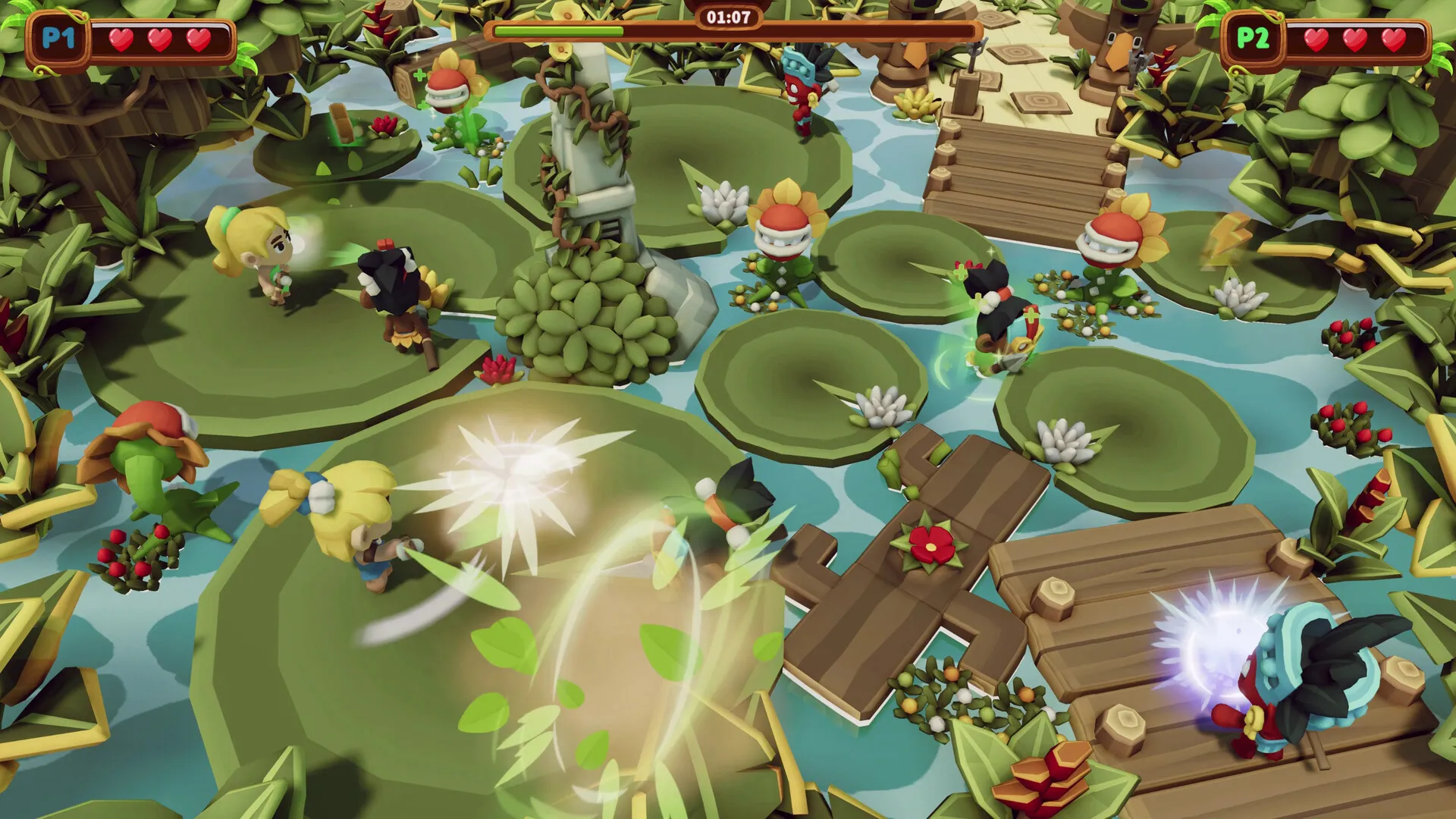
They break up the repetition of constant brawling and ask for observation or lateral thinking, which shifts the rhythm of play. The five distinct environments, including jungles, ruins, and temples, introduce fresh enemy types and specific environmental hazards. These hazards can be turned to the player’s advantage, inviting more strategic positioning and use of the arena and adding a thin layer of tactical nuance.
The boss battles show the clearest glimpse of what this structure can achieve. These encounters push aside the simple melee routine in favor of more dramatic set pieces. They call for reading attack patterns, steering clear of large area-of-effect zones, and waiting for clear moments of vulnerability. This format instantly adds complexity and higher stakes, and it rewards patient observation over simple button-mashing. The change in pacing here feels dramatic, transforming a standard fight into a brief, cinematic spike in intensity that asks for real focus. These sequences carry the strongest sense of payoff.
The difficulty curve itself stays fairly gentle, yet the game offsets that with a strict penalty for failure. A death near the end of a stage sends the player back to the very start. Health pick-ups are generous and often refill a full heart, allowing quick recovery and sometimes nudging players to simply endure until the next drop appears, which can discourage them from refining their play. A three-star rating system tracks performance goals such as effective dodging and swift completion times, giving players a target if they want to push the limited mechanics to their peak.
Sound and Vision: Clarity Versus Character
Twins of the Sun presents itself with a bright color palette and a handheld, cartoonlike look. The simple painted textures and isometric camera give the world an earnest, handcrafted character, even without the polish of a high-budget release. That appealing style falters once the action reaches its busiest moments. The presentation loses clarity when the screen fills with enemies and large explosions. It becomes difficult to pick out threats and keep track of the player character, which leads to hits that feel cheap.
The audio design works as a low-key frame for this visual approach. The orchestral score stays light and geographically themed, matching the mood of the temples and jungles the twins cross. The music sounds pleasant but stays fairly static, offering little variation to underline the emotional weight of the rescue. It tends to slide into the background and rarely accents key story beats.
Sound effects handle clarity more effectively than the visuals. The heavy thud of the Stone Hammer and the ambient noise soundscapes build a decent sense of place. Audio feedback such as warning chirps for low health supplies immediate, practical information during the wildest rushes of action and helps players keep a grip on the flow of a fight even when the screen grows hard to read.
The Review
Twins of the Sun
Twins of the Sun possesses a charming, handcrafted aesthetic and finds genuine excitement in its puzzle segments and dynamic boss battles. The simple narrative successfully grounds the action in emotional stakes. However, the core twin-stick brawling mechanics lack variety and depth, leading to repetitive pacing in the standard levels. It is a far better, more functional experience when played in co-op. The game is an accessible, if ultimately simplistic, adventure that feels slightly underdeveloped in its primary systems.
PROS
- Handcrafted visual aesthetic and charm.
- Co-op play dramatically improves flow.
- Boss fights are dynamic and engaging.
- Simple, effective emotional premise.
- Welcome integration of light puzzles.
CONS
- Repetitive wave-based combat loop.
- Core mechanics lack depth and variety.
- Visual clutter during intense action.
- Soundtrack is forgettable.
- Limited attack range makes combat clumsy.