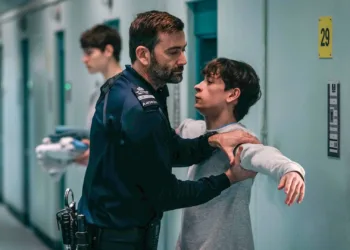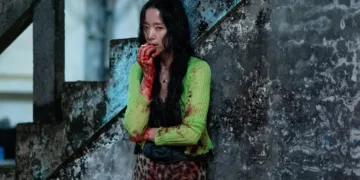





























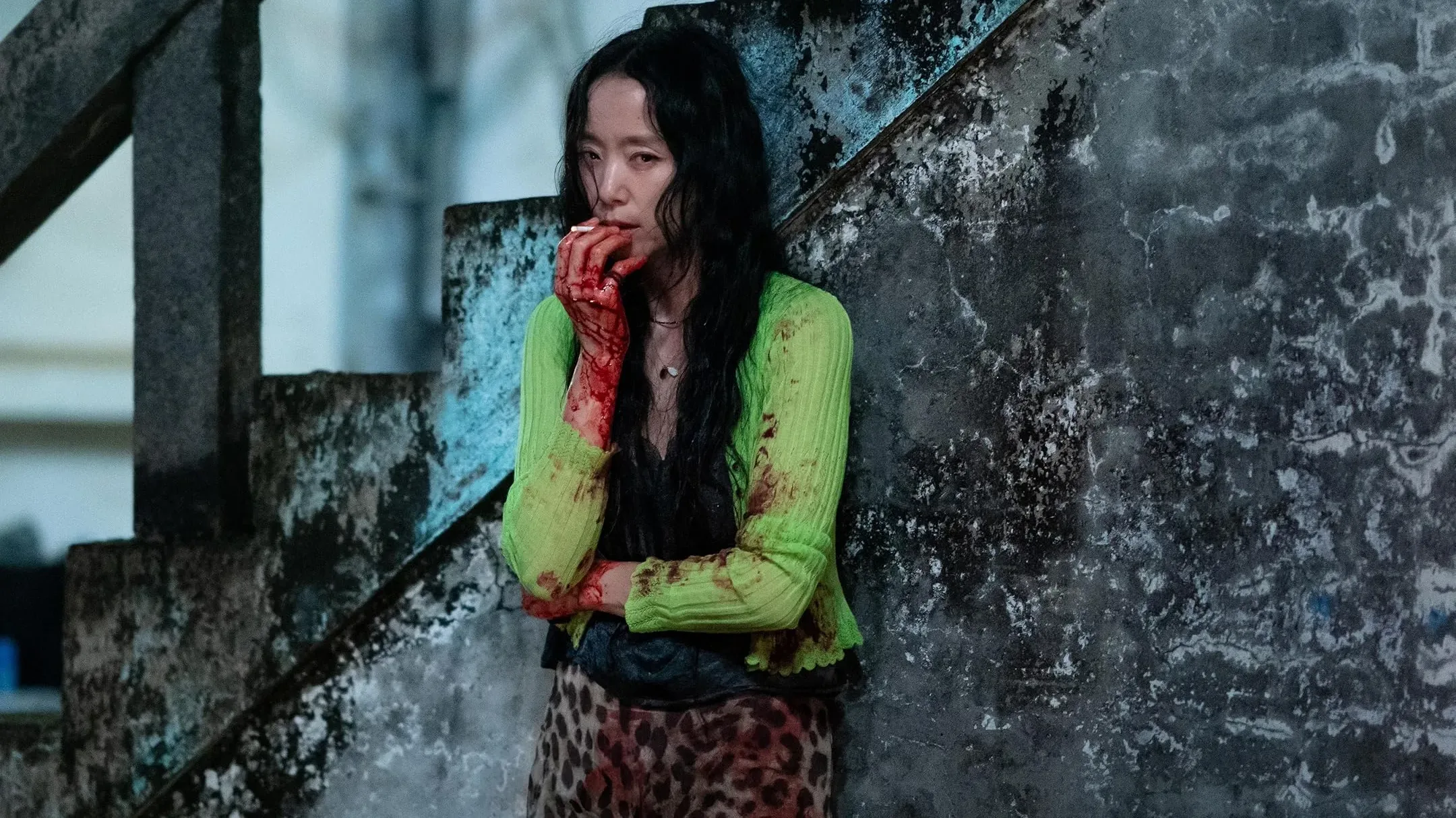

Price Of Confession enters the field of modern streaming thrillers as a South Korean series that treats crime as a lens on belief, stigma, and cost. Director Lee Jung-hyo and writer Kwon Jong-kwan open with a stark image: the fatal stabbing of an artist husband. Attention turns quickly to his wife, An Yun-su (Jeon Do-yeon), an art teacher whose life appears ordinary until investigators begin reading her through a narrow script.
During police questioning, her composure, quick smile, brightly colored clothes, and request for mild coffee become suspicious in the eyes of the police. They read her behavior as indifference instead of shock or dissociation, and her refusal to perform a conventional form of public grief clears the path for her to be labeled a suspect.
The story accelerates once Yun-su stands convicted and meets Mo Eun (Kim Go-eun) in prison. Mo Eun arrives as rumor and threat, a possible killer whose name already circulates among inmates. She makes Yun-su an extraordinary offer: she will confess to the husband’s murder so that Yun-su can walk free.
The cost of that offer is severe. After release, Yun-su must carry out a violent act for Mo Eun. The show builds this bargain on the intensity of Jeon Do-yeon and Kim Go-eun’s performances, framing their pact as both a criminal agreement and a confrontation with existential dread. Price Of Confession asks what innocence means inside a system that has already stamped a person as guilty.
Pacing and the Power of the Extended Format
The structure of Price Of Confession reflects a wider shift in international series production, where thrillers increasingly favor longer arcs and detailed psychological framing. Across twelve episodes, the show takes a character-driven path that gives the story room to grow and curdle. The first half unfolds as a slow, meticulous investigation. Police procedures are laid out step by step, from the handling of ambiguous evidence to the small assumptions that build the case against Yun-su.
This stretch concentrates on the mechanics of a possible wrongful conviction, with extended attention to the trial and courtroom exchanges. Prosecutor Baek Dong-hun (Park Hae-soo) represents hardline institutional power, his relentless drive for a conviction sometimes brushing past ethical limits. His certainty grows from his reading of Yun-su’s non-conformist behavior and exposes how fragile justice becomes once social expectations start to stand in for proof.
The series then changes direction after the confession bargain is struck. The mode shifts from legal procedural to psychological thriller. Energy increases, and the tension begins to come from Yun-su’s future actions rather than the original act of violence. Later episodes pulse with urgency, piling up turns and reversals.
The twelve-episode span may challenge viewers who prefer shorter, punchier seasons, yet the show depends on this longer frame. It gives the writers space to keep adding new information and angles that unsettle the audience’s previous assessments.
Over time, guilt and innocence grow cloudy for nearly every central figure. The extended format makes room for an examination of moral compromise on both sides of the legal divide, so ideas of who counts as “good” or “evil” keep shifting right up to the final reveals. This approach lines up with streaming trends that favor dense serialized storytelling and invite viewers to question their own snap judgments.
A Masterclass in Representing Tension
Price Of Confession leans heavily on the power of its two leads, and that choice signals a clear commitment to complex female characterization in the thriller space. Jeon Do-yeon’s work as An Yun-su serves as the series’ emotional anchor. Yun-su appears highly expressive and vulnerable, and her inner turmoil often seems close to the surface. The show ties that openness directly to its social critique.
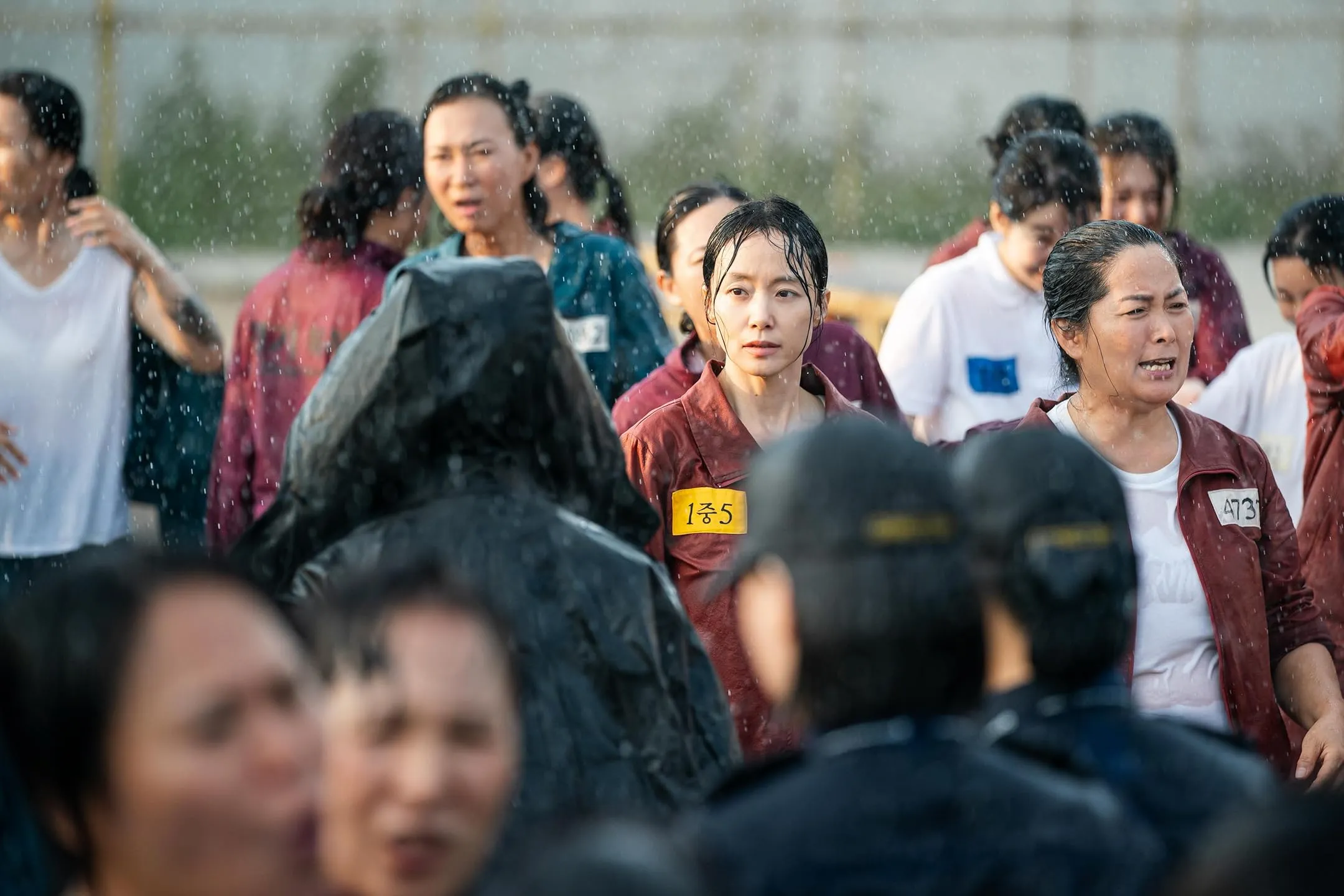
Authorities misread her calm after tragedy as coldness, and her honesty becomes another piece of evidence against her. Jeon charts this contradiction with care. She lets viewers feel Yun-su’s sense of persecution while the plot keeps questions open about what her truth might be, echoing real-world expectations about how women should display pain, guilt, or innocence in public.
Kim Go-eun plays Mo Eun as a precise counterpoint. The character holds a stoic, almost mythic intensity. Other inmates treat her like an urban legend, a presence that chills a room without raising her voice. Kim works with a limited range of movement and turns that restriction into strength.
Small gestures, controlled posture, and minute shifts in gaze carry the character’s emotional weight and keep Mo Eun frightening even in silence. As the series reveals more of Mo Eun’s past, her early image as a pure monster starts to crack and a darker, possibly tragic logic comes through.
The friction between Yun-su’s raw vulnerability and Mo Eun’s disciplined chill keeps the tension high, and it underlines the show’s interest in how different women adapt to violence, stigma, and institutional pressure. Strong supporting turns, especially Park Hae-soo’s firm portrayal of the prosecutor, reinforce a sense of polish and help root the genre thrills in credible human behavior.
The Social Critique of the Unconventional Suspect
Price Of Confession functions as a tightly wound thriller and a sharp piece of social commentary on institutional bias. The core tragedy of An Yun-su’s early conviction grows from her refusal or inability to match a narrow template of socially acceptable grief.
She becomes an easy target, then a convenient defendant, because her directness, her wardrobe, and her rejection of public hysteria do not fit the script preferred by police and the media. The show delivers an indictment of systems that value a tidy narrative over careful investigation. It underlines how quickly societies can condemn someone on the basis of behavior that looks strange to the majority, particularly when that behavior comes from a woman who refuses to collapse on cue.
The narrative tracks how institutional power bends rules to support a desired story. Prosecutor Baek Dong-hun’s readiness to set aside procedure in pursuit of his version of the truth highlights the justice system’s role in maintaining structural unfairness. The series shifts attention away from a single question of guilt toward the way entire institutions fail the people they claim to protect.
That emphasis, paired with sleek production values, polished cinematography, and sharp direction, shapes Price Of Confession into a striking international export. The show keeps the sleek surface associated with contemporary South Korean thrillers while tying that style to a sustained look at criminality and judicial overreach. Its long-form mystery, steady supply of character revelations, and unrelenting tension keep viewers locked into a story that challenges official narratives and exposes the costs of surviving within them.
The South Korean mystery thriller The Price of Confession (original title: Jabaekui Daega) premiered on December 5, 2025, and is distributed exclusively by Netflix. The series, which runs for one season consisting of 12 episodes, tells the complex story of art teacher An Yun-su, who is convicted of her husband’s murder and enters into a dangerous pact with a mysterious fellow inmate, Mo Eun, to exchange their confessions. Viewers can stream the entire series on Netflix.
Full Credits
Title: The Price of Confession (Jabaekui Daega)
Distributor: Netflix
Release date: December 5, 2025
Running time: 12 episodes, 46–60 minutes per episode
Director: Lee Jung-hyo
Writers: Kwon Jong-kwan
Producers and Executive Producers: Studio Dragon, Production H
Cast: Jeon Do-yeon, Kim Go-eun, Park Hae-soo, Jin Seon-kyu, Choi Young-joon, Kim Sun-young, Nam Da-reum, Kim Joong-don
Composer: Nam Hye-seung
The Review
Price Of Confession
Price Of Confession is a compelling series that uses the framework of a thriller to critique institutional bias and societal expectations of guilt. Led by commanding performances from Jeon Do-yeon and Kim Go-eun, its methodical structure justifies the 12-episode length by rewarding patience with complex moral questions and sharp, tense reversals. It is a must-watch for fans of elevated international crime drama.
PROS
- Jeon Do-yeon and Kim Go-eun deliver commanding, layered portrayals.
- Effectively critiques the criminal justice system and societal bias against women who fail to conform.
- The central bargain creates high stakes and continuous moral ambiguity.
- Sleek, polished direction and scriptwriting characteristic of top-tier South Korean thrillers.
CONS
- The initial half is slow and methodical, which may challenge viewers expecting rapid action.
- Twelve episodes can feel drawn out for a single-arc mystery.
- The story's constant shifting of ethical ground may be unsettling for some viewers seeking clear heroes and villains.