














Sam Green has spent ten years pursuing a ghost that keeps changing its face. In The Oldest Person in the World, he follows the moving target of a Guinness World Record built around disappearance. The title sits like a fragile crown. It transfers from one person to the next with a regularity that makes the whole idea feel both ceremonial and faintly absurd.
Shot across ten years and across many continents, the film arrived at the 2026 Sundance Film Festival as a work that resists finality. Green treats it as a living document, something he plans to keep extending for as long as he remains alive. The impulse behind that choice feels familiar.
Our species loves finish lines. We cling to longevity as if a number could unlock the reason we exist. Green captures that hunger for time while admitting a quieter truth: the people carrying the record often seem uninterested in the statistics attached to their bodies.
The Architecture of Waning Flesh
Green’s camera offers a cold, close map of endurance. Susannah Mushatt Jones appears at her birthday party in Brooklyn, a quiet presence drifting in and out of sleep while politicians speak and cake waits on the table. Her niece describes Susannah as returning to infancy, reaching for touch as the simplest form of comfort.

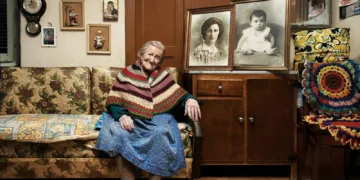
In Italy, Emma Morano credits raw eggs and a life without men, a choice delivered with the firmness of someone who has made peace with solitude. In Jamaica, Violet Brown recites Lord Byron from memory, her voice sounding like a plank laid across a century that has already sunk. In Japan, Kane Tanaka works through math problems while drinking soda, holding on to habits and mental rhythm in a way that ignores the tidy scripts people like to impose on aging.
Also Read





Maria Branyas carries the sharpest gaze in the film. She speaks with an ease that punctures the ceremonial mood, saying there is nothing special about her hundred years. She looks at Green, calls him young, and steers him toward good works, like someone giving directions to a traveler who still believes time is endless. Green’s lens stays with the body as much as the words: milky eyes, skin like ancient parchment, the visible proof that a century is not an abstraction. These details tether the record to decay, to the stubborn chemistry of flesh.
The talk of “secrets” to long life carries a grim joke. Each answer lands with the lightness of folklore and the weight of inevitability. Longevity, as the film presents it, feels like random grace, or a hardheaded refusal to leave. It rarely resembles a plan that makes sense on paper.
A Quiet Dialogue With the End
As Green films these elders, he turns the camera toward his own shortening sense of time. The birth of his son, Atlas, runs through the film as a living clock. We watch the child grow while the record holders vanish one by one. Then Green’s own life interrupts the pattern: a diagnosis of multiple myeloma.
That knowledge dissolves the comfortable distance between filmmaker and subject. He becomes a man counting his days in the same frame where others have spent decades outlasting their peers. Green also speaks of his brother’s suicide in 2009, a wound that shadows the film’s voice. He has only a few seconds of footage of his brother, a digital scrap that seems to feed his compulsion to record before anything disappears.
His narration often plays like a late night confession, carrying the tenderness of a newborn’s presence alongside the institutional gravity of a cancer ward. The film keeps returning to that uneasy pairing: beginnings unfolding in real time, endings arriving without ceremony, and a line of supercentenarians waiting in a kind of quiet patience for the last door to open. Many of them have already watched everyone they once knew pass through it.
Fragments of an Endless Reel
Green works in a form he calls live documentary, a style that emphasizes the maker’s present-tense relationship with the material. The camera becomes a preservative for lives that feel fleeting even at a hundred years old. He breaks the heaviness with brief montages that give the mind space to breathe. Without those interludes, the film could feel like a slow procession toward the grave, one measured step at a time.
The film’s intimacy becomes clearest when Green steps into the frame and shares a silent look with a stranger. No language, no explanation, just a moment of contact that carries its own meaning. He offers one observation that lands like a small philosophical trapdoor: every person on earth was the youngest person in the world for a single millisecond. Everyone begins with that title, then time gets to work, dividing us into ages, losses, and stories we tell ourselves about what any of it means.
Green refuses a grand thesis. He leaves the questions open, and the openness feels honest. The film points toward life in the small acts that look insignificant until the records dissolve: learning a violin, petting a turtle, the brief gestures that remain after names slip away and the fragile crown moves on.
The Oldest Person in the World premiered on January 23, 2026, as part of the Premieres section at the Sundance Film Festival. Directed by Sam Green, the documentary is a decade-long project that chronicles the lives of various Guinness World Record holders for longevity while reflecting on the director’s own life events, including the birth of his son and a personal health crisis. Currently, the film is being showcased through the festival circuit, with future distribution on streaming platforms or in limited theatrical release expected to follow its successful Sundance debut.
Full Credits
Title: The Oldest Person in the World
Distributor: Serenade, Aggregate Films
Release Date: January 23, 2026
Running Time: 87 minutes
Director: Sam Green
Writers: Sam Green
Producers and Executive Producers: Alison Byrne Fields, Josh Penn, Alex Turtletaub, Jennifer J. Pritzker, Maida Lynn, Julie Parker Benello, Jenifer Westphal, Marni Grossman, Roman Nesis, Nina Fialkow, David Fialkow
Cast: Susannah Mushatt Jones, Emma Morano, Violet Brown, Kane Tanaka, Maria Branyas, Sister André, Sam Green, Atlas Green
Director of Photography (Cinematographer): Yoni Brook
Editors: Sam Green, Aaron Wickenden
Composer: William Ryan Fritch, T. Griffin
The Review
The Oldest Person in the World
This film functions as a quiet, rhythmic meditation on the tragedy and beauty of existing in time. It avoids the trap of sentimentality by acknowledging the physical reality of decay and the randomness of survival. Green’s personal stakes transform a simple survey of elders into a piercing look at the fragility of the human thread. It is a work of cinematic preservation that finds meaning in the silence between heartbeats. The result is a haunting yet strangely comforting encounter with the inevitable.
PROS
- The intimate camera work captures the textured reality of extreme age with dignity.
- The parallel narrative of the director's health crisis adds a necessary layer of urgency.
- It avoids easy answers, favoring a more honest exploration of existential uncertainty.
- The "living document" concept gives the film a sense of continuity that mirrors life itself.
CONS
- The pacing occasionally slows during the experimental montages.
- Viewers seeking a scientific explanation for longevity may find the lack of data frustrating.