






















• Latest
  • Trending
Alain Gomis has spent years mapping the spaces people inhabit between nations, languages, and versions of themselves. Earlier films often traced the rough seam between France and Senegal; this new feature stretches the canvas into a three-hour contemplation of the Bissau-Guinean experience. The story runs on two major family gatherings: a memorial ritual held in a remote African village and a wedding staged at a French country estate. The title gestures toward a perpetual, circular motion that runs through everything, a current meant to bind the world together. That idea sets the film’s tempo. Scenes drift with an atmospheric patience that treats linear storytelling as optional, leaning into a more fluid state of feeling and observation. Scripted drama and documentary immediacy share the same frame, feeding off each other until the film starts to feel like a breathing thing. Gomis turns away from the familiar template of migrant suffering and opts for something messier and more human: the low, persistent hum of a people living across two worlds at once. It is an enormous undertaking, and it asks a simple favor from the audience. Listen for pulse, then let plot take the back seat. The Architecture of the Real-Fake Family Gomis begins with a formal gambit that puts the machinery on display. The film opens on the real casting sessions for the leads. Katy Correa and D’Johé Kouadio sit in a blank white rehearsal room and talk through hopes and fears for characters they have not fully inhabited yet. This framing peels away cinema’s polish and offers an immediate intimacy with the performers before they step into fictional environments. The effect is bracing, almost awkward in the way honesty can be awkward. Call it “rehearsal-realism”: a method where the line between an actor’s lived self and the script’s demands grows porous, and the film benefits from that leakage. The narrative energy follows a collective body rather than a single protagonist’s arc. People gather, speak, sing, argue, and drift; the group becomes the unit of meaning. Six editors shape this material into a restless, flickering rhythm. The camera jumps from Guinea-Bissau’s sun-baked, dusty tracks to France’s manicured lawns with a suddenness that echoes the mental whiplash of diaspora life. Between these spaces, elders speak in interview fragments, recalling the heavy weight of Portuguese colonialism. Their testimony gives the celebrations a historical undertow, tying present-day festivities to inherited struggle. Rituals of the Grave and the Gala The film rests on two distinct ways of assembling. In Guinea-Bissau, the community gathers for elaborate rites honoring the father of the central character, Gloria. The rituals land with tactile force: wooden idols are anointed, and an “investigation ceremony” unfolds where the dead are questioned about their earthly deeds. It plays as spiritual accounting, ancient in texture and heavy in implication, as if the living are balancing a ledger that stretches far past any single lifetime. In the French countryside, the wedding offers a picture of westernized elegance. Chanel gowns move through linen-draped tables and carefully arranged comfort, the kind of middle-class polish that signals control and composure. Yet the faces do not change. The same people occupy both worlds, carrying the same emotional residue across vastly different rooms. Music becomes connective tissue. Abdullah Ibrahim’s elegiac jazz piano lays a mournful, sophisticated veil over the African landscapes. At the wedding, a mass singalong to the Fugees’ version of “Killing Me Softly” turns into pointed self-awareness about cultural layering. The chain is visible: a song by Haitian-Americans, built from a folk-rock original, sung by French grandchildren of African immigrants. Identity circulates here as practice, passed hand to hand across oceans, revised each time it returns. Watchful Gazes in a Fragmented Home Katy Correa plays Gloria, known in some sequences as Béa, with remarkable restraint. She stands as a quiet, watchful anchor inside a storm of celebration. Detachment clings to her, suggesting someone trained by experience to remain slightly outside every room she enters, even when she is surrounded by family. As a grieving daughter and a wary mother, she carries herself with straight-backed dignity that reads as soft and steely in the same breath. Her daughter Nour shifts the film’s emotional temperature. As a second-generation immigrant, she approaches the ancestral village with curiosity and awe; nostalgia sits heavier with her mother, tinting each glance and pause. The film feeds on these small frictions: the unannounced arrival of a prodigal brother, the brittle tenderness of a conversation between Gloria and her ex-husband, Slimane. Each moment chips away at the fantasy of “home” as a stable point on a map. Home becomes a scattered archive: memories and broken hearts dispersed across borders, recalled in flashes, rearranged through ritual, music, and reunion. Belonging lives in motion here, in the continual act of carrying oneself between places that each feel partial, and still insisting that the pieces add up to a life.

Dao Review: The Circular Rhythm of Shared Heritage

Starfield: Terran Armada Review

Starfield: Terran Armada Review: Space Finally Feels Worth Crossing

Power To The People: John & Yoko Live in NYC Review

Power To The People: John & Yoko Live in NYC Review: Lennon Before the Punk Storm

Ada: My Mother the Architect Review

Ada: My Mother the Architect Review: Reading a Life Through Buildings

Tutu Review

Tutu Review: Hope Under Pressure

Grind Review

Grind Review: Six Million Videos Before Lunch

Sigma Star Saga DX Review

Sigma Star Saga DX Review: A Cult RPG-Shmup Gets a Better Second Chance

Nimrods Review

Nimrods Review: The Punk Fantasy Works Better Than the Drama

Mourinho Review

Mourinho Review: Football’s Great Showman Keeps His Guard Up

House of the Dragon Season 3 Finale Review 1

House of the Dragon Season 3 Finale Review: History Is a Terrible Alibi

Bagworm

Bagworm Review: A Rusty Nail Through Modern Masculinity

Absolutely Devoted to You (1)

Absolutely Devoted to You Review: Jesse Metcalfe Makes the Reluctant Heartthrob Work

Agent 64: Spies Never Die Review

Agent 64: Spies Never Die Review: Old-School Espionage With Modern Friction

  • Home
  • Privacy Policy
  • Terms and Conditions
  • Gazettely Review Guidelines
Wednesday, August 12, 2026
GAZETTELY
  • Home
  • Movie and TV News
    Damon Wayans

    Damon Wayans Joins “St. Denis Medical” for “In Living Color” Reunion

    Wagner Moura

    Wagner Moura on “The Last House” and Hollywood’s Shift for Latino Actors

    Jacob Elordi

    Ari Aster’s Next A24 Thriller Adds Jacob Elordi

    Spider-Man: Brand New Day Review

    No Movie Has Ever Made $1 Billion at the Domestic Box Office. Could Spider-Man?

    image 2

    Universal Adds ‘Obsession’ Character to Horror Nights at the Last Minute

    Jon Cypher

    Jon Cypher, ‘Hill Street Blues’ and ‘Major Dad’ Actor, Dies at 94

    Jeffrey Dean Morgan

    Jeffrey Dean Morgan: My Manager Fired Me for Being “Too Old”

    X-Men

    Chloe Bailey Still Wants to Play Storm as X-Men Casting Heats Up

    The X-Files

    Chris Carter Finally Releases His Original “X-Files” Movie Vision

  • Movie and TV Reviews
    Power To The People: John & Yoko Live in NYC Review

    Power To The People: John & Yoko Live in NYC Review: Lennon Before the Punk Storm

    Ada: My Mother the Architect Review

    Ada: My Mother the Architect Review: Reading a Life Through Buildings

    Tutu Review

    Tutu Review: Hope Under Pressure

    Grind Review

    Grind Review: Six Million Videos Before Lunch

    Nimrods Review

    Nimrods Review: The Punk Fantasy Works Better Than the Drama

    Mourinho Review

    Mourinho Review: Football’s Great Showman Keeps His Guard Up

    House of the Dragon Season 3 Finale Review 1

    House of the Dragon Season 3 Finale Review: History Is a Terrible Alibi

    Bagworm

    Bagworm Review: A Rusty Nail Through Modern Masculinity

    Absolutely Devoted to You (1)

    Absolutely Devoted to You Review: Jesse Metcalfe Makes the Reluctant Heartthrob Work

  • Game Reviews
    Starfield: Terran Armada Review

    Starfield: Terran Armada Review: Space Finally Feels Worth Crossing

    Sigma Star Saga DX Review

    Sigma Star Saga DX Review: A Cult RPG-Shmup Gets a Better Second Chance

    Agent 64: Spies Never Die Review

    Agent 64: Spies Never Die Review: Old-School Espionage With Modern Friction

    The House of Hikmah Review

    The House of Hikmah Review: Islamic History Finds a Playable Form

    Doloc Town

    Doloc Town Review: Farming Goes Vertical After the Apocalypse

    Montabi Review

    Montabi Review: Creature Collecting Finds a Tactical Spark

    Sovereign Tower Review

    Sovereign Tower Review: Your Worst Decisions Make the Best Stories

    ReStory: Chill Electronics Repairs Review

    ReStory: Chill Electronics Repairs Review: Yesterday’s Technology Gets a Second Life

    Leafy Corner Review

    Leafy Corner Review: Plant Care Makes for Pleasant Management

  • The Bests
No Result
View All Result
  • Home
  • Movie and TV News
    Damon Wayans

    Damon Wayans Joins “St. Denis Medical” for “In Living Color” Reunion

    Wagner Moura

    Wagner Moura on “The Last House” and Hollywood’s Shift for Latino Actors

    Jacob Elordi

    Ari Aster’s Next A24 Thriller Adds Jacob Elordi

    Spider-Man: Brand New Day Review

    No Movie Has Ever Made $1 Billion at the Domestic Box Office. Could Spider-Man?

    image 2

    Universal Adds ‘Obsession’ Character to Horror Nights at the Last Minute

    Jon Cypher

    Jon Cypher, ‘Hill Street Blues’ and ‘Major Dad’ Actor, Dies at 94

    Jeffrey Dean Morgan

    Jeffrey Dean Morgan: My Manager Fired Me for Being “Too Old”

    X-Men

    Chloe Bailey Still Wants to Play Storm as X-Men Casting Heats Up

    The X-Files

    Chris Carter Finally Releases His Original “X-Files” Movie Vision

  • Movie and TV Reviews
    Power To The People: John & Yoko Live in NYC Review

    Power To The People: John & Yoko Live in NYC Review: Lennon Before the Punk Storm

    Ada: My Mother the Architect Review

    Ada: My Mother the Architect Review: Reading a Life Through Buildings

    Tutu Review

    Tutu Review: Hope Under Pressure

    Grind Review

    Grind Review: Six Million Videos Before Lunch

    Nimrods Review

    Nimrods Review: The Punk Fantasy Works Better Than the Drama

    Mourinho Review

    Mourinho Review: Football’s Great Showman Keeps His Guard Up

    House of the Dragon Season 3 Finale Review 1

    House of the Dragon Season 3 Finale Review: History Is a Terrible Alibi

    Bagworm

    Bagworm Review: A Rusty Nail Through Modern Masculinity

    Absolutely Devoted to You (1)

    Absolutely Devoted to You Review: Jesse Metcalfe Makes the Reluctant Heartthrob Work

  • Game Reviews
    Starfield: Terran Armada Review

    Starfield: Terran Armada Review: Space Finally Feels Worth Crossing

    Sigma Star Saga DX Review

    Sigma Star Saga DX Review: A Cult RPG-Shmup Gets a Better Second Chance

    Agent 64: Spies Never Die Review

    Agent 64: Spies Never Die Review: Old-School Espionage With Modern Friction

    The House of Hikmah Review

    The House of Hikmah Review: Islamic History Finds a Playable Form

    Doloc Town

    Doloc Town Review: Farming Goes Vertical After the Apocalypse

    Montabi Review

    Montabi Review: Creature Collecting Finds a Tactical Spark

    Sovereign Tower Review

    Sovereign Tower Review: Your Worst Decisions Make the Best Stories

    ReStory: Chill Electronics Repairs Review

    ReStory: Chill Electronics Repairs Review: Yesterday’s Technology Gets a Second Life

    Leafy Corner Review

    Leafy Corner Review: Plant Care Makes for Pleasant Management

  • The Bests
No Result
View All Result
GAZETTELY
No Result
View All Result
Alain Gomis has spent years mapping the spaces people inhabit between nations, languages, and versions of themselves. Earlier films often traced the rough seam between France and Senegal; this new feature stretches the canvas into a three-hour contemplation of the Bissau-Guinean experience. The story runs on two major family gatherings: a memorial ritual held in a remote African village and a wedding staged at a French country estate. The title gestures toward a perpetual, circular motion that runs through everything, a current meant to bind the world together. That idea sets the film’s tempo. Scenes drift with an atmospheric patience that treats linear storytelling as optional, leaning into a more fluid state of feeling and observation. Scripted drama and documentary immediacy share the same frame, feeding off each other until the film starts to feel like a breathing thing. Gomis turns away from the familiar template of migrant suffering and opts for something messier and more human: the low, persistent hum of a people living across two worlds at once. It is an enormous undertaking, and it asks a simple favor from the audience. Listen for pulse, then let plot take the back seat. The Architecture of the Real-Fake Family Gomis begins with a formal gambit that puts the machinery on display. The film opens on the real casting sessions for the leads. Katy Correa and D’Johé Kouadio sit in a blank white rehearsal room and talk through hopes and fears for characters they have not fully inhabited yet. This framing peels away cinema’s polish and offers an immediate intimacy with the performers before they step into fictional environments. The effect is bracing, almost awkward in the way honesty can be awkward. Call it “rehearsal-realism”: a method where the line between an actor’s lived self and the script’s demands grows porous, and the film benefits from that leakage. The narrative energy follows a collective body rather than a single protagonist’s arc. People gather, speak, sing, argue, and drift; the group becomes the unit of meaning. Six editors shape this material into a restless, flickering rhythm. The camera jumps from Guinea-Bissau’s sun-baked, dusty tracks to France’s manicured lawns with a suddenness that echoes the mental whiplash of diaspora life. Between these spaces, elders speak in interview fragments, recalling the heavy weight of Portuguese colonialism. Their testimony gives the celebrations a historical undertow, tying present-day festivities to inherited struggle. Rituals of the Grave and the Gala The film rests on two distinct ways of assembling. In Guinea-Bissau, the community gathers for elaborate rites honoring the father of the central character, Gloria. The rituals land with tactile force: wooden idols are anointed, and an “investigation ceremony” unfolds where the dead are questioned about their earthly deeds. It plays as spiritual accounting, ancient in texture and heavy in implication, as if the living are balancing a ledger that stretches far past any single lifetime. In the French countryside, the wedding offers a picture of westernized elegance. Chanel gowns move through linen-draped tables and carefully arranged comfort, the kind of middle-class polish that signals control and composure. Yet the faces do not change. The same people occupy both worlds, carrying the same emotional residue across vastly different rooms. Music becomes connective tissue. Abdullah Ibrahim’s elegiac jazz piano lays a mournful, sophisticated veil over the African landscapes. At the wedding, a mass singalong to the Fugees’ version of “Killing Me Softly” turns into pointed self-awareness about cultural layering. The chain is visible: a song by Haitian-Americans, built from a folk-rock original, sung by French grandchildren of African immigrants. Identity circulates here as practice, passed hand to hand across oceans, revised each time it returns. Watchful Gazes in a Fragmented Home Katy Correa plays Gloria, known in some sequences as Béa, with remarkable restraint. She stands as a quiet, watchful anchor inside a storm of celebration. Detachment clings to her, suggesting someone trained by experience to remain slightly outside every room she enters, even when she is surrounded by family. As a grieving daughter and a wary mother, she carries herself with straight-backed dignity that reads as soft and steely in the same breath. Her daughter Nour shifts the film’s emotional temperature. As a second-generation immigrant, she approaches the ancestral village with curiosity and awe; nostalgia sits heavier with her mother, tinting each glance and pause. The film feeds on these small frictions: the unannounced arrival of a prodigal brother, the brittle tenderness of a conversation between Gloria and her ex-husband, Slimane. Each moment chips away at the fantasy of “home” as a stable point on a map. Home becomes a scattered archive: memories and broken hearts dispersed across borders, recalled in flashes, rearranged through ritual, music, and reunion. Belonging lives in motion here, in the continual act of carrying oneself between places that each feel partial, and still insisting that the pieces add up to a life.

High on Life 2 Review: Skaters, Satire, and Sentient Sidearms

The Art Of Sarah Review: Seoul’s Dark Sewers Meet Its Gilded Lofts

Home Entertainment Movies

Dao Review: The Circular Rhythm of Shared Heritage

Arash Nahandian by Arash Nahandian
6 months ago
in Entertainment, Movies, Reviews
Reading Time: 4 mins read
A A
0
Share on FacebookShare on TwitterShare on PinterestShare on WhatsAppShare on TelegramSummarize with ChatGPTSummarize with Perplexity

Alain Gomis has spent years mapping the spaces people inhabit between nations, languages, and versions of themselves. Earlier films often traced the rough seam between France and Senegal; this new feature stretches the canvas into a three-hour contemplation of the Bissau-Guinean experience. The story runs on two major family gatherings: a memorial ritual held in a remote African village and a wedding staged at a French country estate.

The title gestures toward a perpetual, circular motion that runs through everything, a current meant to bind the world together. That idea sets the film’s tempo. Scenes drift with an atmospheric patience that treats linear storytelling as optional, leaning into a more fluid state of feeling and observation.

Scripted drama and documentary immediacy share the same frame, feeding off each other until the film starts to feel like a breathing thing. Gomis turns away from the familiar template of migrant suffering and opts for something messier and more human: the low, persistent hum of a people living across two worlds at once. It is an enormous undertaking, and it asks a simple favor from the audience. Listen for pulse, then let plot take the back seat.

The Architecture of the Real-Fake Family

Gomis begins with a formal gambit that puts the machinery on display. The film opens on the real casting sessions for the leads. Katy Correa and D’Johé Kouadio sit in a blank white rehearsal room and talk through hopes and fears for characters they have not fully inhabited yet. This framing peels away cinema’s polish and offers an immediate intimacy with the performers before they step into fictional environments. The effect is bracing, almost awkward in the way honesty can be awkward.

Call it “rehearsal-realism”: a method where the line between an actor’s lived self and the script’s demands grows porous, and the film benefits from that leakage. The narrative energy follows a collective body rather than a single protagonist’s arc. People gather, speak, sing, argue, and drift; the group becomes the unit of meaning.

Six editors shape this material into a restless, flickering rhythm. The camera jumps from Guinea-Bissau’s sun-baked, dusty tracks to France’s manicured lawns with a suddenness that echoes the mental whiplash of diaspora life. Between these spaces, elders speak in interview fragments, recalling the heavy weight of Portuguese colonialism. Their testimony gives the celebrations a historical undertow, tying present-day festivities to inherited struggle.

Also Read

  • Best Christmas Movies
    30 Best Christmas Movies to Watch This Holiday Season
  • Best 2025 Movies
    Gazettely's 30 Best Movies of 2025
  • best fantasy movies
    30 Best Fantasy Movies Ever, Ranked: From…
  • 30 Best Drama Movies
    30 Best Drama Movies to Watch Before You Die
  • best sci fi movies
    30 Best Sci Fi Movies Ever: Gazettely's Ultimate…
  • best 2025 tv shows
    Gazettely's 30 Best TV Shows of 2025

Rituals of the Grave and the Gala

The film rests on two distinct ways of assembling. In Guinea-Bissau, the community gathers for elaborate rites honoring the father of the central character, Gloria. The rituals land with tactile force: wooden idols are anointed, and an “investigation ceremony” unfolds where the dead are questioned about their earthly deeds. It plays as spiritual accounting, ancient in texture and heavy in implication, as if the living are balancing a ledger that stretches far past any single lifetime.

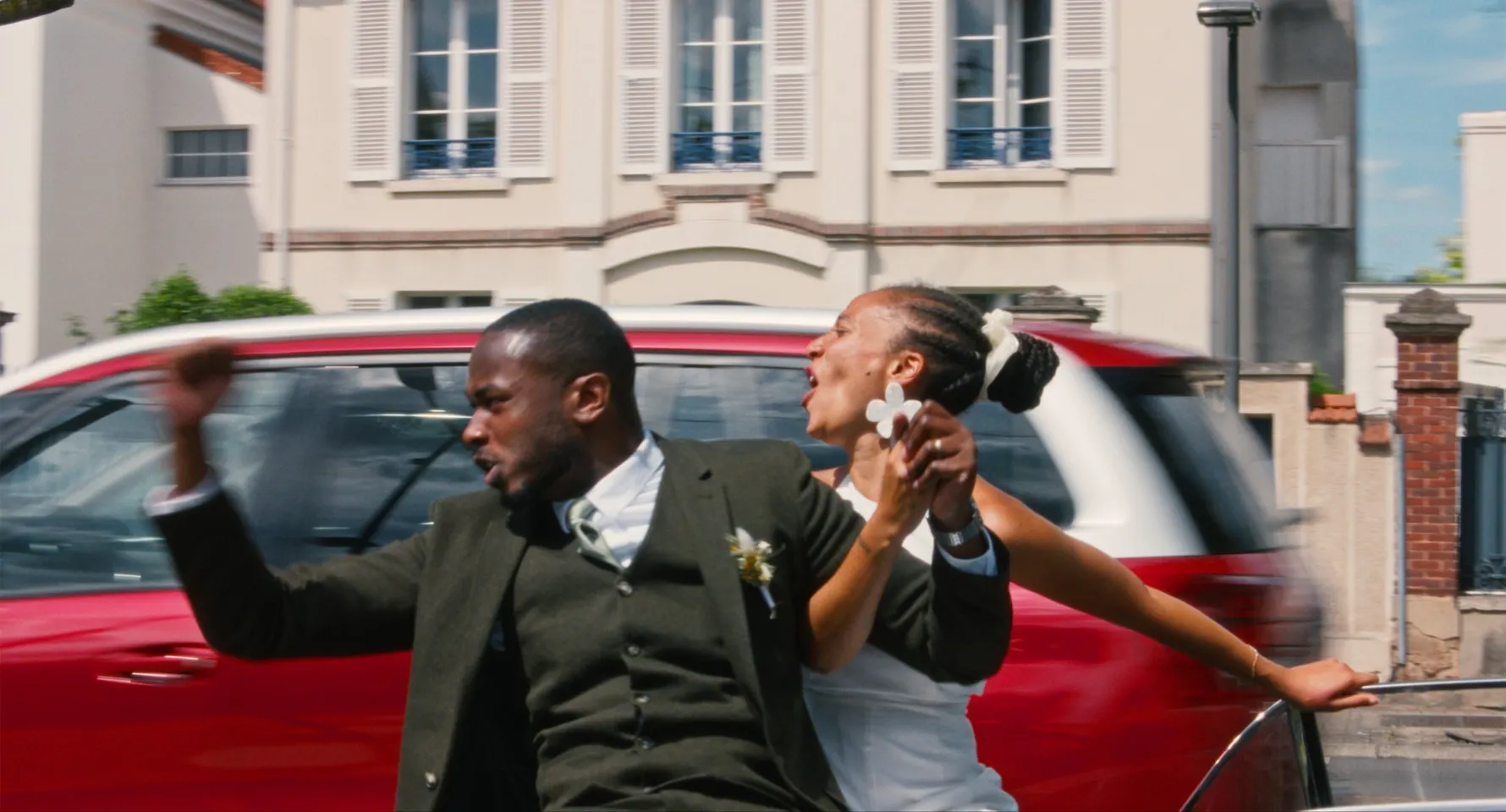
In the French countryside, the wedding offers a picture of westernized elegance. Chanel gowns move through linen-draped tables and carefully arranged comfort, the kind of middle-class polish that signals control and composure. Yet the faces do not change. The same people occupy both worlds, carrying the same emotional residue across vastly different rooms.

Music becomes connective tissue. Abdullah Ibrahim’s elegiac jazz piano lays a mournful, sophisticated veil over the African landscapes. At the wedding, a mass singalong to the Fugees’ version of “Killing Me Softly” turns into pointed self-awareness about cultural layering. The chain is visible: a song by Haitian-Americans, built from a folk-rock original, sung by French grandchildren of African immigrants. Identity circulates here as practice, passed hand to hand across oceans, revised each time it returns.

Watchful Gazes in a Fragmented Home

Katy Correa plays Gloria, known in some sequences as Béa, with remarkable restraint. She stands as a quiet, watchful anchor inside a storm of celebration. Detachment clings to her, suggesting someone trained by experience to remain slightly outside every room she enters, even when she is surrounded by family. As a grieving daughter and a wary mother, she carries herself with straight-backed dignity that reads as soft and steely in the same breath.

Her daughter Nour shifts the film’s emotional temperature. As a second-generation immigrant, she approaches the ancestral village with curiosity and awe; nostalgia sits heavier with her mother, tinting each glance and pause. The film feeds on these small frictions: the unannounced arrival of a prodigal brother, the brittle tenderness of a conversation between Gloria and her ex-husband, Slimane. Each moment chips away at the fantasy of “home” as a stable point on a map.

Home becomes a scattered archive: memories and broken hearts dispersed across borders, recalled in flashes, rearranged through ritual, music, and reunion. Belonging lives in motion here, in the continual act of carrying oneself between places that each feel partial, and still insisting that the pieces add up to a life.

Dao premiered on February 14, 2026, as part of the official competition at the 76th Berlin International Film Festival. Directed by the acclaimed Alain Gomis, the film is a sprawling, three-hour “docu-drama” that explores the intricate threads of African identity and heritage through two parallel family celebrations: a wedding in the French countryside and a traditional commemorative ceremony in Guinea-Bissau. The film is currently making its way through the international festival circuit and is scheduled for a wider theatrical release in France starting April 29, 2026. Viewers looking to catch this immersive experience should check local film festival listings or wait for its rollout by Jour2Fête and Canal+ later this year.

Where to Watch Dao

Unfortunately, we couldn't find any streaming offers.
Source: JustWatch

Full Credits

  • Title: Dao

  • Distributor: Jour2Fête, The Party Film Sales

  • Release date: February 14, 2026

  • Running time: 185 minutes

  • Director: Alain Gomis

  • Writers: Alain Gomis

  • Producers and Executive Producers: Sylvie Pialat, Benoît Quainon, Toufik Ayadi, Christophe Barral, Yoro Mbaye

  • Cast: Katy Correa, D’Johé Kouadio, Samir Guesmi, Mike Etienne, Nicolas Gomis, Fara Baco Gomis, Poundo Gomis, Béa Mendy, Thomas Ngijol

  • Director of Photography (Cinematographer): Céline Bozon, Amath Niane, Mabeye Deme

  • Editors: Alain Gomis, Fabrice Rouaud, Assetou Koné, Dimitri Ouedraogo, Elizabeth Ndiaye, Moustapha Mbalo Dieng

  • Composer: Gaspard Gomis, Space Dukes, Keïta Janota, Cie

The Review

Dao

8 Score

Dao is a monumental exercise in patience that rewards the viewer with a profound sense of human continuity. It functions as a visual poem rather than a traditional story. The three hour length feels like a physical commitment to the lives of these characters. Some might find the lack of a central plot frustrating. The emotional payoff is substantial for those who can sit with the silence. It is a rare work that manages to make the mundane feel sacred.

PROS

  • Intimate rehearsal style performances that bridge fiction and reality.
  • Superb jazz infused soundtrack featuring Abdullah Ibrahim.
  • Deep cultural layers and historical grounding.

CONS

  • Imposing three hour runtime.
  • Meandering non linear structure.
  • Occasional repetitive pacing in the village scenes.

Review Breakdown

  • Overall 0

Tags: 2026 Berlin International Film FestivalAlain GomisDaoDramaD’Johé KouadioFara Baco GomisFeaturedfictionKaty CorreaLes Films du WorsoMike EtienneNicolas GomisSamir GuesmiSrab Films
Previous Post

High on Life 2 Review: Skaters, Satire, and Sentient Sidearms

Next Post

The Art Of Sarah Review: Seoul’s Dark Sewers Meet Its Gilded Lofts

Try AI Movie Recommender

Gazettely AI Movie Recommender

This Week's Top Reads

  • It’s Always Sunny in Philadelphia Season 18 Review

    It’s Always Sunny in Philadelphia Season 18 Review: Paddy’s Pub Refuses Last Call

    1 shares
    Share 0 Tweet 0
  • Sterling Point Review: The Sisters Outshine the Love Triangle

    2 shares
    Share 0 Tweet 0
  • Possession Review: Hope Hill Keeps Its Receipts

    1 shares
    Share 0 Tweet 0
  • Anna Pigeon Review: Murder in the Mountains Needs Sharper Mysteries

    1 shares
    Share 0 Tweet 0
  • The Shards Review: 1981 Has Never Looked This Dangerous

    1 shares
    Share 0 Tweet 0
  • Is This Seat Taken? Review: A Satisfying Mental Workout

    1124 shares
    Share 0 Tweet 0
  • No Movie Has Ever Made $1 Billion at the Domestic Box Office. Could Spider-Man?

    0 shares
    Share 0 Tweet 0

Must Read Articles

House of the Dragon Season 3 Finale Review 1
TV Shows

House of the Dragon Season 3 Finale Review: History Is a Terrible Alibi

1 day ago
Absolutely Devoted to You (1)
Movies

Absolutely Devoted to You Review: Jesse Metcalfe Makes the Reluctant Heartthrob Work

1 day ago
It’s Always Sunny in Philadelphia Season 18 Review
TV Shows

It’s Always Sunny in Philadelphia Season 18 Review: Paddy’s Pub Refuses Last Call

1 day ago
Death Inc. Season 4
TV Shows

Death Inc. Season 4 Review: Everybody Wants the Boss’s Chair

2 days ago
PAW Patrol: The Dino Movie Review
Movies

PAW Patrol: The Dino Movie Review: Marshall Takes the Prehistoric Spotlight

4 days ago
Loading poll ...
Coming Soon
Which of Alfred Hitchcock's 1960s thrillers is your all-time favorite?

Gazettely is your go-to destination for all things gaming, movies, and TV. With fresh reviews, trending articles, and editor picks, we help you stay informed and entertained.

© 2021-2026 All Rights Reserved for Gazettely

What’s Inside

  • Movie & TV Reviews
  • Game Reviews
  • Featured Articles
  • Latest News
  • Editorial Picks

Quick Links

  • Home
  • About US
  • Contact Us
  • Advertise with Us
  • Review Guidelines

Follow Us

Facebook X-twitter Youtube Instagram
No Result
View All Result
  • Home
  • Movies
  • Entertainment News
  • Movie and TV Reviews
  • TV Shows
  • Game News
  • Game Reviews
  • Contact Us

© 2024 All Rights Reserved for Gazettely