



























The domestic sphere in Mees Peijnenburg’s Dutch drama A Family resembles fragile geometry: lines drawn in trust, corners held by routine, and load-bearing walls that can fail with a clinical speed that makes the years inside feel weightless.
The film watches that failure through Nina and Eli, two children moving through a stormy divorce where the damage registers in long pauses, swallowed words, and the heavy quiet that settles after adult voices rise. The story unfolds during a summer meant for growth and release, now repurposed as the season of a brutal custody battle. Maria and Jacob arrive with jagged, restless energy, shaping a ruin they no longer need to share under one roof.
The opening sequence sits inside the sterile chill of a legal court. A judge offers the siblings a choice that threatens to split their bond. The decision is framed with bureaucratic calm, as if a family can be reduced to paperwork and scheduling. From there, the film commits to the children’s vantage point, turning its attention to emotional labor and the premature adulthood forced onto Nina and Eli.
They carry the impact directly. Their lives become the cost of adult conflict, and the system around them treats that cost as manageable logistics. The film treats it as an existential emergency. Safety feels like a role the adults have dropped, and the children are left studying the aftermath like survivors searching for a map in ash.
The Solitude of Parallel Grief
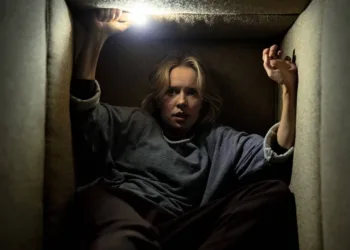
Peijnenburg uses a chapter-based structure to separate trauma into individual weather systems. The first movement belongs to sixteen-year-old Nina, a dancer and an artist whose body reaches for physical grace while her home life refuses harmony.
Also Read





The family’s disintegration shows up as quiet burnout, a fatigue that does not announce itself with speeches. It leaks out through small angers, tight silences, and the kind of irritation that makes even tenderness feel like another obligation. That strain bleeds into her early romance with a peer whose family remains intact. Nina reads stability in the other household and feels the weight of her own displacement settle deeper.
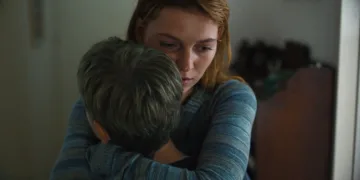
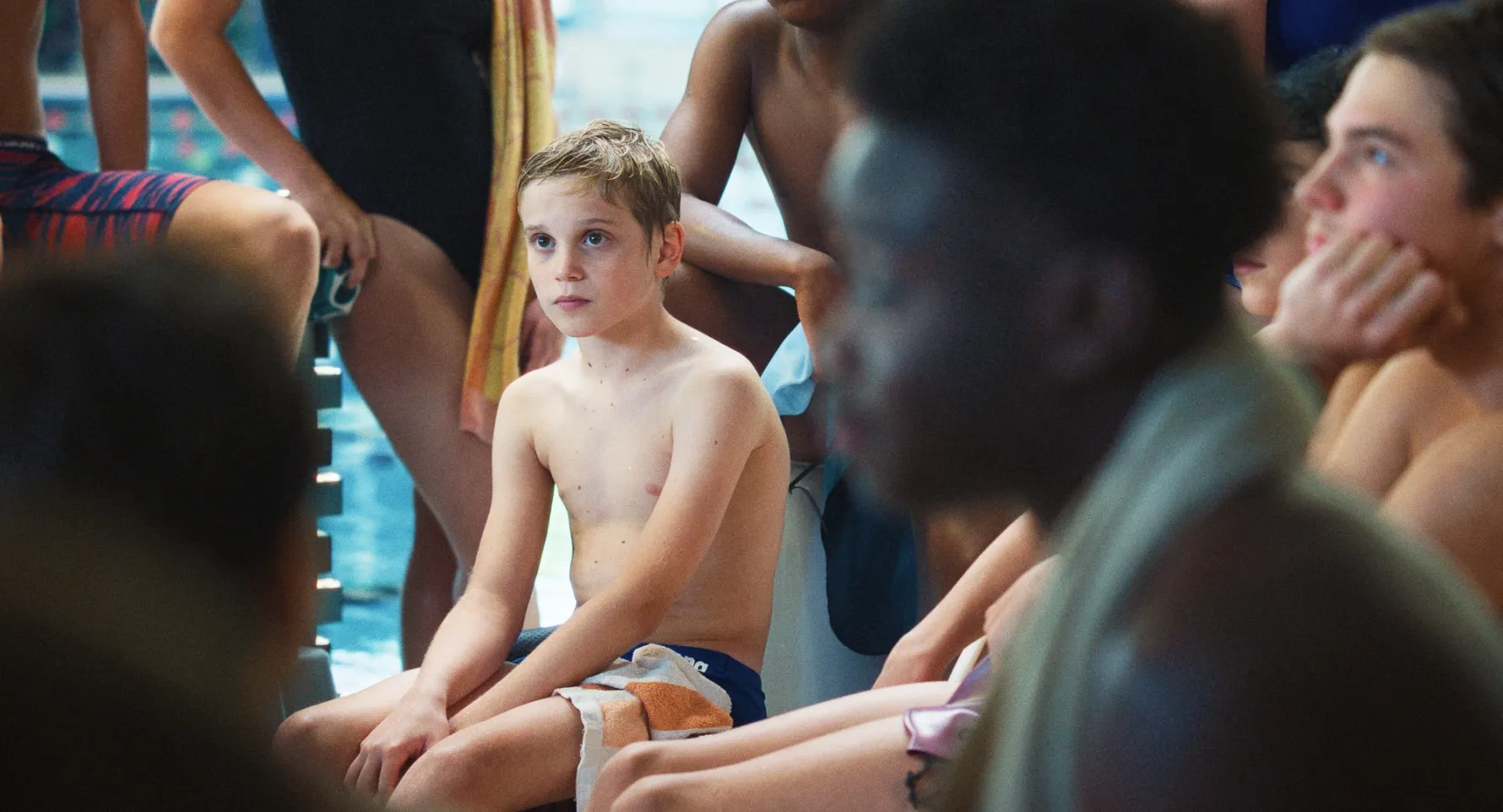
The second movement shifts to Eli, younger and harder to read at first glance. His response takes the form of watchful silence, the kind that listens for danger even in ordinary rooms. He finds refuge in the surrogate community of his swim club, where water can hide tears and repetition can imitate order. Eli tries to stand between his warring parents, and his quiet becomes a symptom of fear rather than calm.
The film lets the two timelines intersect, replaying key events through two separate lenses. The structure treats grief as personal and unshareable even inside the same house. A family breaks into shards of experience, each child trapped with the same storm in a different room. The overlaps do not fuse into mutual understanding. They underline the wall trauma raises, even between people who share blood and history.
Light as a Veil of Isolation
The film’s visual language turns isolation into atmosphere. Cinematographer Jasper Wolf fills the frame with milky summer light that feels ethereal and suffocating in the same breath, like warmth that cannot comfort. A shallow depth of field blurs the world around the siblings, holding attention on their interior strain. The camera stays close, studying darting eyes, tightened jaws, rigid posture, and the small physical cues that carry what dialogue cannot. Body language becomes the primary text.
Skittish camera movements and unhurried pacing allow residues of friction to remain on screen. Dust and heat take on a tactile presence, and the air seems to thicken with resentment as scenes linger past the point where a conventional drama might cut away. The direction favors sustained observation, letting the viewer feel pressure build rather than explaining it away. Annelotte Coster’s score arrives as something potent and quietly devastating. The music rarely swells into spectacle.
It hums with the steady sickness of a low-grade fever, supporting the emotional weight without drowning out the performances. Taken together, the craft creates a subjective portrait of a world losing its color. The beauty of the cinematography turns into a haunting companion to the family’s spiritual decay. The frame begins to feel like a cage. The light becomes a witness.
The Sacred Remnants of Blood
The emotional center rests on the performances of Celeste Holsheimer and Finn Vogels. Holsheimer plays Nina with tense, guarded physicality, as if her soul has been tightened into a vice and left there too long. Vogels meets her with a controlled restraint that suggests a boy forced to see too much too early. When his emotional breakdown arrives, it lands as raw catharsis shaped by hours of contained breath and practiced composure.
The parents, Maria and Jacob, are played by Carice van Houten and Pieter Embrechts with nuanced bitterness. They move through psychological warfare that seems to run on reflex, a cycle neither of them can interrupt. In this tragedy, they function as supporting forces, loud and consequential, while the children absorb the damage in quieter ways.
The film presents an ecosystem of separation where harm accumulates through neglect and failure, leaving the children disoriented inside their own lives. The screenplay holds back from direct judgment and keeps focus on the imbalance between parental desire and a child’s need for stability.
In the final movements, the film turns toward the strength of familial ties that exist beyond parental approval. Nina and Eli find a form of closure through shared perseverance. They recognize themselves as the ones left to build on the ruins. Their bond becomes a sanctuary in a world that has refused to protect them. They remain the survivors of a war they never chose.
A Family arrived at the Berlinale on February 12, 2026. This Dutch drama presents a perspective on parental separation. It is currently screening as part of the festival circuit. You can seek it out in European theaters during the spring season. Arthouse streaming services will likely provide access for global viewers later this year.
Full Credits
Title: A Family
Distributor: September Film, Menuetto, Topkapi Films
Release date: February 12, 2026
Rating: 12+
Running time: 85 minutes
Director: Mees Peijnenburg
Writers: Mees Peijnenburg, Bastiaan Kroeger
Producers and Executive Producers: Lukas Dhont, Dirk Impens, Hans Everaert, Maria Goos
Cast: Carice van Houten, Pieter Embrechts, Celeste Holsheimer, Finn Vogels, Safae Ed-dari, Sarah Janneh, Frieda Barnhard
Director of Photography (Cinematographer): Jasper Wolf
Editors: Imre Reutelingsperger
Composer: Annelotte Coster
The Review
A Family
The film operates as a haunting examination of the casualties found within domestic warfare. It succeeds by grounding its existential dread in the minute, physical realities of its young protagonists. While the parental characterizations occasionally lean toward the monochromatic, the visceral performances of the lead siblings bridge every narrative gap. It is a work of profound empathy that refuses to offer a sanitized resolution, instead finding a fragile beauty in the wreckage of a shared history. The result is an aching, necessary portrait of the resilience required to survive the people who are supposed to love us most.
PROS
- Exceptional, understated performances by the young leads.
- Evocative cinematography that captures internal isolation.
- A courageous shift in focus to the children's perspective.
- Quietly devastating score that enhances the atmosphere.
CONS
- Occasionally one-dimensional writing for the parents.
- Some overlapping scenes lack sharp interpretative differences.
- The final beats feel slightly rushed for the younger brother.
- A short runtime that limits deeper character exploration.