

























Maite Alberdi turns her attention to Mexico with A Child of My Own, taking apart a startling early-2000s news story through the intimate pressure points of private longing and public scrutiny. The story follows Alejandra, a hospital administrator whose days take shape around an absence she cannot name away.
Multiple miscarriages leave her raw, and the demands of her husband, Arturo, plus an extended family trained on judgment, tighten into a daily vise. Under that weight, Alejandra engineers a deception with the steady care of routine. She stages a pregnancy as an ongoing role, calibrating gestures, timing, and presentation with a devotion that edges toward obsession. A chance clinic encounter with Mayra, who wants to give up her unborn child, opens a perilous path.
The two women settle into an informal, hushed agreement for a private handover. Keeping it hidden requires Alejandra to lean on professional fluency: she falsifies medical paperwork and refashions her appearance to match the story she needs the world to accept. The new reality holds because she holds it, right up to the moment the fabrication fails under its own strain.
The Architecture of a Performance
Alberdi builds the film like a formal trial run, combining scripted reenactments with casting tapes and direct interviews. The structure starts by placing actors in front of the camera as they audition for Alejandra. That opening announces the film’s governing idea in plain sight: identity reads as something enacted, revised, and rehearsed.

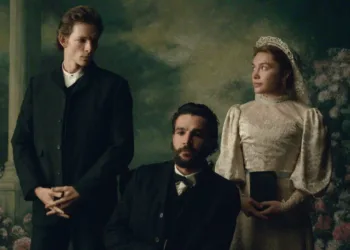
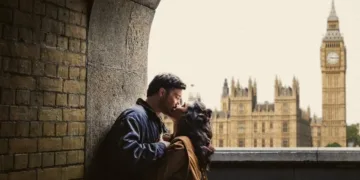
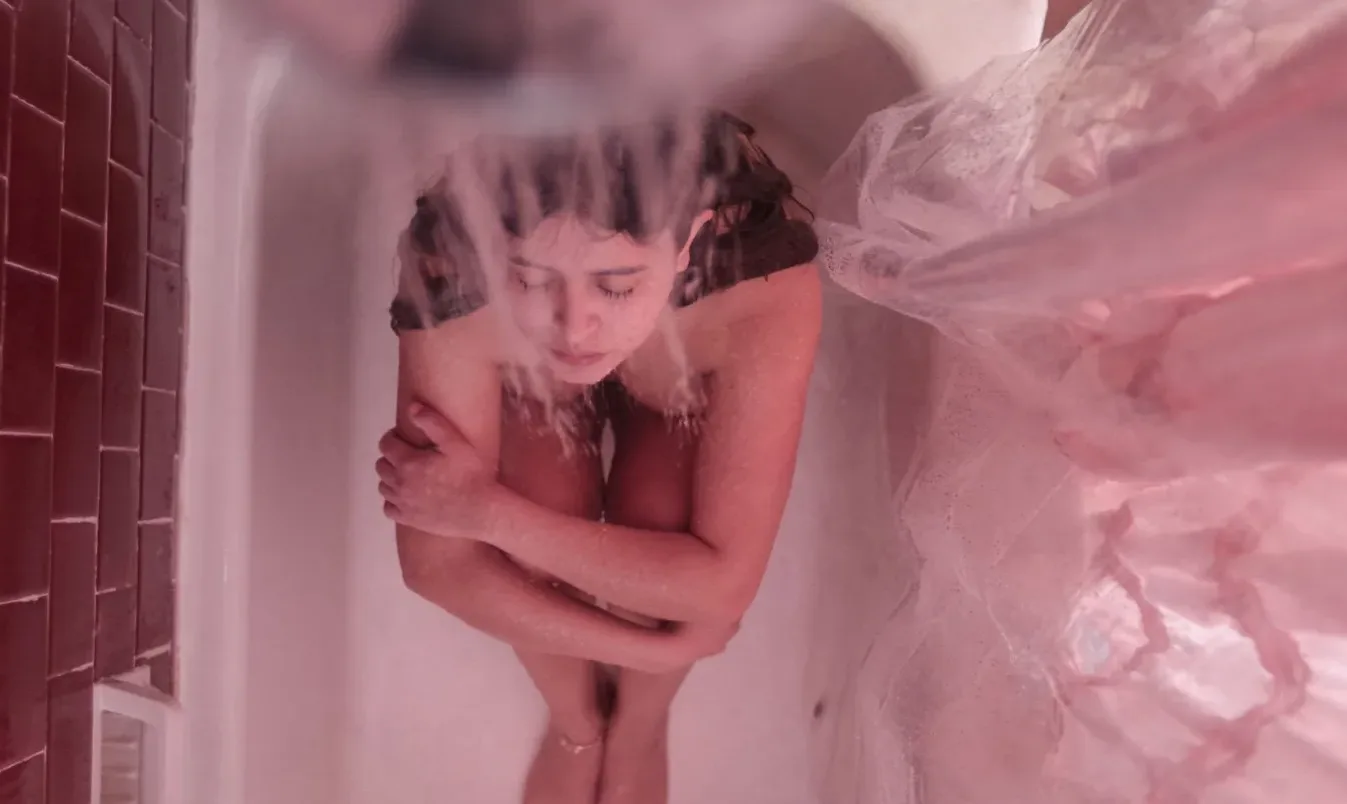
Sergio Armstrong’s cinematography coats the images in candy colors, a pastel glaze that makes the world feel sweetened beyond credibility. The palette tracks Alejandra’s interior logic, where a soft-focus fantasy smooths over a harsher reality. Visual grammar keeps tugging the viewer off balance. Angles tilt into mild disorientation; freeze frames arrive like sudden pins driven through a scene, fixing a moment of emotional abrasion so it can be examined.
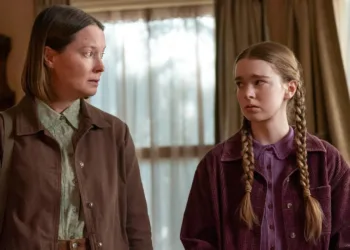
Even a scowling mother-in-law becomes a held emblem of social disapproval once the image turns static. The film’s sheen carries a kitsch artificiality, and that surface polish fits Alejandra’s growing detachment from what surrounds her. This is a mind reaching for a lacquered dream, one that can be maintained through presentation, paperwork, and posture.
The Mask and the Mirror
Ana Celeste Montalvo Peña plays Alejandra with a particular kind of girlish pluck, bright on the surface, strangely severed from the consequences accumulating underneath. The performance keeps cheerfulness in circulation while the story darkens, as if optimism has become another practiced gesture. Armando Espitia’s Arturo stands nearby as a steady signal of patriarchal gravity, the domestic authority that frames Alejandra’s choices and narrows her room to breathe.
Late in the film, the frame admits the real Alejandra and Arturo, inviting comparison between performers and the people they portray. The real Alejandra carries a placid, dreamy blankness that resists easy labeling. The film approaches that quality with curiosity, treating it as a fact to sit with rather than a verdict to deliver.
Alberdi steps into the scene herself, speaking with participants and laying bare the staging as it happens. The usual documentary distance dissolves; the filmmaking becomes a shared act, a collaboration that exposes how the story has been constructed and how the participants live alongside that construction.
The Weight of Expectation
The film reads as a sharp diagnosis of cultural machinery that treats motherhood as a primary measure of worth. Alejandra’s behavior grows out of psychological fracture under social demand, with the surrounding expectations shaping the path as much as any private impulse.
Alberdi shifts the register from airy drama to a somber account of legal fallout while holding to a refusal to moralize. The state and the larger culture take on the role of engines in the tragedy, forces that define what is acceptable and punish what falls outside the script. Certain details appear buffed to a shine: incarceration arrives with a comfort that feels curated, and regional accents are softened into a smoother neutrality.
Those choices strengthen the sense that the film is filtered through personal fantasy, a world edited until it can be lived in. The central question of the child’s transfer remains unsettled, held in a productive ambiguity that keeps the ethical ground unstable. By sustaining empathy for a woman once flattened by media into a monster, the film studies the ideal worlds people assemble when the world around them offers no sanctuary.
A Child of My Own (Un hijo propio) is a hybrid feature directed by the acclaimed filmmaker Maite Alberdi, known for her work on The Mole Agent. The film had its high-profile world premiere on February 15, 2026, at the Berlin International Film Festival as part of the Berlinale Special section. This Mexican production, backed by Netflix, explores the harrowing true story of a woman who fakes a pregnancy to satisfy societal expectations, leading to a complex web of deception and a resulting media scandal. Viewers can watch the film exclusively on Netflix starting in early 2026.
Full Credits
Title: A Child of My Own (Un hijo propio)
Distributor: Netflix
Release date: February 15, 2026
Running time: 96 minutes
Director: Maite Alberdi
Writers: Julián Loyola, Esteban Student
Producers and Executive Producers: Sandra Godinez Vázquez, Gato Grande Productions
Cast: Ana Celeste Montalvo Peña, Armando Espitia, Ángeles Cruz, Mayra Sérbulo Cortés, Luisa Guzmán, Casio Figueroa, Alejandro Porter
Director of Photography (Cinematographer): Sergio Armstrong
Editors: Carolina Siraqyan
The Review
A Child of My Own
A Child of My Own is a sophisticated exploration of the porous border between truth and the stories we tell to survive. Maite Alberdi transforms a sensationalist crime into a compassionate study of social pressure and psychological refuge. While the glossy aesthetic occasionally threatens to sanitize the gravity of the events, the film remains a sharp critique of the narrow roles available to women. It is a work of formal ambition that prioritizes empathy over easy moralizing, making for a haunting experience.
PROS
- Bold blend of documentary and scripted reenactments.
- Strong, nuanced lead performance by Ana Celeste Montalvo Peña.
- Insightful commentary on cultural pressures regarding motherhood.
- Visually striking use of color to represent internal states.
CONS
- The "Netflix" aesthetic feels overly polished for such a painful story.
- Minor "whitewashing" of regional accents and prison conditions.
- The meta-narrative structure may feel distancing for some viewers.