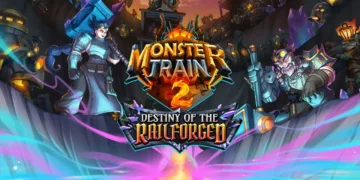






























Destiny of the Railforged rolls in as a sizable expansion for the deckbuilder, packing a lot of game into a ten dollar buy-in. It adds the industrial Railforged clan and brings back the fan-favorite Wurmkin clan, giving players a much wider tactical roster. The headline addition is a high-stakes campaign route through the Rift Station, a terminal that points straight at a showdown with the Lifemother. Story beats ride alongside the systems here: Herzal and Heph drive the new conflict, and that personal thread helps the mechanical escalation land with more force.
This route is built for veterans who have already worked through the standard Covenant difficulty ladder. It asks for careful unit placement, tight sequencing, and a real feel for card synergy. That focus on experienced play keeps the decision-making sharp, because every new tool comes attached to tradeoffs that matter. Rift Station functions as the door to a harder, more demanding version of the struggle for the train, with pacing that keeps the pressure on from the moment you commit to the path.
The Industrial Might of the Railforged
The Railforged arrive with a heavy industrial look that stands apart from the organic and ethereal tones seen in other factions. Their identity is anchored by the Forge mechanic, a per-round resource that you manage inside each fight. Forge points get spent to hand out immediate boosts to armor and attack when you play units or equipment. The result is a combat rhythm where timing drives the impact of your hand. You are not simply choosing what to play, you are choosing the moment that converts stored potential into protection and damage.

Smelting rounds out that identity by letting you consume cards from your hand to generate energy and extra forge points. That single rule changes how a run feels on an emotional level, because it turns “dead” draws into opportunity. Even blight cards can become raw material, which shifts the usual frustration of clogging effects into a tense question of resource conversion. The game’s pacing benefits from that pressure valve. A hand that looks ugly at first glance can still produce momentum if you are willing to burn it down for fuel.
Positioning and space matter just as much for this clan. Renovate expands floor capacity, opening room for broader formations and reducing the dependence on a lone high-health tank holding the line by itself. Bigger floors encourage setups that rely on multiple bodies, layered equipment, and planned sequencing.
The Railforged kit supports that approach with unconventional unit roles, including zero-attack factories that pump out mechanical spiders to flood the enemy. That kind of production-line playstyle creates a satisfying loop: you invest in infrastructure, the infrastructure creates bodies, and the bodies become the medium for upgrades and buffs.
Those steampunk designs also pair cleanly with equipment-focused partners like the Lazarus League or the Banished. The relationship between the spider output and item buffs keeps each turn feeling like a deliberate engineering decision. You measure your forge points, decide what gets reinforced, decide what gets armed, and then watch the board state transform. That sense of constructed power makes the Railforged feel distinct within the faction lineup, with a style of play that rewards planning while still delivering the punchy gratification of a machine coming online.
Trials of the Soulforge
Soul Savior mode reshapes the usual run structure at a foundational level. You face a gauntlet of four bosses, and you choose the order of those encounters before earning the right to challenge the Lifemother. That freedom carries a real price through the Curse system. Each defeated boss applies a permanent negative effect that stays with you for the rest of the campaign, forcing long-range thinking about what your deck can realistically carry.

That structure changes the emotional cadence of a run. A boss win comes with relief, then the game immediately hands you a lasting wound and asks how you plan to keep going. The mode turns progression into a sequence of calculated concessions. You are building toward power while accepting penalties that reshape what “safe” looks like two fights from now.
The Soul system adds another layer of tactical planning, offering three slots of powerful buffs split into Unit, Spell, and Global categories. Souls like Metamind add upgrade slots to spells each time you cast them, while Ghastbud loads a single unit with a huge spread of status effects. The big idea is flexibility: souls can move between units mid-run, which keeps experimentation alive inside a mode that already pressures you with permanent curses. You feel the design pushing you to adapt instead of locking into one line and hoping it holds.
That adaptability matters because Soul Savior introduces three new difficulty tiers: Bloom, Tangle, and Overgrowth. These tiers bring enemies that hit hard and often show up with the Burst status effect. Burst makes enemies gain strength each time they take damage, punishing strategies that lean on many small hits. The mode pushes you toward fewer, heavier strikes, with a pace that rewards patience and setup rather than rapid chip damage. Soulforge becomes a space where both sides scale and mutate through the run, and that shared escalation keeps encounters tense even after you start stacking tools in your favor.
Lore and the Long Haul
Long-term motivation in this expansion comes from meta progression tied to souls. Souls unlock and upgrade across three tiers, and the pace of those unlocks stays fairly brisk, giving you steady signs of growth across repeated runs. That progression sits alongside the narrative, which tracks the history between Herzal and Heph and assumes you have already beaten the Titans in the base game. Players who jump into the DLC early may notice small continuity gaps, since the characters speak with the familiarity of seasoned victors.
A few points of friction show up in the interface and map flow. Soul Savior’s map tends to hand out plenty of unit drafts, while basic spell upgrades can become hard to find in certain stretches. That uneven distribution can make the middle of a run feel stuck, especially if your plan depends on spell scaling and you keep getting offered bodies you do not need. The mode also lacks a dedicated logbook, which stands out because the base game supports historical tracking. Without run data to look back on, it becomes harder to measure personal improvement and spot trends in how your choices evolve.
The Wurmkin clan returning as a free update sweetens the package further. Their Charged Echo mechanic comes back with room-boosting effects that fit neatly beside the new paid content. With Railforged delivering a fresh resource economy and Soul Savior delivering a harsher, more structured gauntlet, Destiny of the Railforged deepens the series’ addictive core loop while keeping the focus on tactical decision-making, run-to-run tension, and that steady sense of a deck becoming something you built on purpose.
The Review
Monster Train 2: Destiny of the Railforged
Destiny of the Railforged is a high-quality expansion that revitalizes an already excellent deckbuilder. The introduction of the Railforged clan and the Soul Savior mode provides a significant spike in difficulty and strategic variety. While the story remains a secondary element and the lack of a dedicated logbook is a minor oversight, the core loops are more addictive than ever. This content is an essential addition for veterans seeking to test their mastery against the toughest challenges the train has to offer.
PROS
- The Soul system adds a deep layer of meta-progression and power.
- The Railforged clan offers a distinct industrial playstyle focused on resource management.
- New difficulty tiers provide a meaningful challenge for veteran players.
- The high level of synergy between new and existing clans encourages experimentation.
- Includes a free return of the Wurmkin clan for all players.
CONS
- The narrative feels disjointed for players who have not finished the base game.
- Absence of a dedicated Soul Savior logbook makes tracking progress difficult.
- High cognitive load can lead to analysis paralysis during complex runs.