



























• Latest
  • Trending
Tutu Review

Tutu Review: Fragments of a Kinetic Spirit

Dora Review

Dora Review: Psychological Distress Written on the Skin

Think Good Review

Think Good Review: The Exhaustion Behind Every Small Disagreement

Disney/Pixar Toy Story: Retro Roundup! Review

Disney/Pixar Toy Story: Retro Roundup! Review: An Archive Worth Exploring Between Attempts

Spring Review

Spring Review: Mourning Becomes an Act of Resistance

Dernsie: The Amazing Life of Bruce Dern Review

Dernsie: The Amazing Life of Bruce Dern Review: Admiration Works Best With Evidence

Crescendo Review

Crescendo Review: Mozart Keeps the Company Moving

Vertiginous Review

Vertiginous Review: Reality Can Wait Until After Breakfast

Warhammer 40,000: Boltgun 2 Review

Warhammer 40,000: Boltgun 2 Review: The Pleasure of Being Dangerously Overconfident

The Nightmare Upstairs: What Happened to Ty and Bryn? Review

The Nightmare Upstairs: What Happened to Ty and Bryn? Review: Cameras Capture What Interviews Cannot Resolve

Aquí Review

Aquí Review: Coetzee’s Questions Find Their Feet

Relentless Memory Review

Relentless Memory Review: Listening for Katrülaf

World Without Cows Review

World Without Cows Review: Warm Encounters, Uneasy Confidence

  • Home
  • Privacy Policy
  • Terms and Conditions
  • Gazettely Review Guidelines
Thursday, October 15, 2026
GAZETTELY
  • Home
  • Movie and TV News
    Midday Meal

    Majid Majidi’s “Midday Meal” Wins Best Film at Busan, Qualifies for Oscars

    Evac

    Renny Harlin to Direct Prison Rescue Thriller “Evac”

    LaRoyce Hawkins

    LaRoyce Hawkins Exits “Chicago P.D.” After 11 Seasons as Atwater

    The Lowdown

    “The Lowdown” Returns With Tommy Lee Jones as Ethan Hawke’s Estranged Father

    Christy Carlson

    Christy Carlson Romano Says She Earned Half of Shia LaBeouf’s Pay on “Even Stevens”

    Sylvester Stallone

    Sylvester Stallone Has “Millions of Regrets” About Doing His Own Stunts

    Kelsey Grammer

    Kelsey Grammer to Play Late-Life EMT in NBC Drama “Pops”

    You Can See Everything

    A24’s “You Can See Everything” Eyes Biggest Documentary Opening Since the Pandemic

    Peter Safran

    Peter Safran Confirms “Swamp Thing” Is Alive as DC Studios Moves Into Skydance Era

  • Movie and TV Reviews
    Dora Review

    Dora Review: Psychological Distress Written on the Skin

    Think Good Review

    Think Good Review: The Exhaustion Behind Every Small Disagreement

    Spring Review

    Spring Review: Mourning Becomes an Act of Resistance

    Dernsie: The Amazing Life of Bruce Dern Review

    Dernsie: The Amazing Life of Bruce Dern Review: Admiration Works Best With Evidence

    Crescendo Review

    Crescendo Review: Mozart Keeps the Company Moving

    Vertiginous Review

    Vertiginous Review: Reality Can Wait Until After Breakfast

    The Nightmare Upstairs: What Happened to Ty and Bryn? Review

    The Nightmare Upstairs: What Happened to Ty and Bryn? Review: Cameras Capture What Interviews Cannot Resolve

    Aquí Review

    Aquí Review: Coetzee’s Questions Find Their Feet

    Relentless Memory Review

    Relentless Memory Review: Listening for Katrülaf

  • Game Reviews
    Disney/Pixar Toy Story: Retro Roundup! Review

    Disney/Pixar Toy Story: Retro Roundup! Review: An Archive Worth Exploring Between Attempts

    Warhammer 40,000: Boltgun 2 Review

    Warhammer 40,000: Boltgun 2 Review: The Pleasure of Being Dangerously Overconfident

    over the hill Review

    over the hill Review: Funselektor Finds Its Feet in Low Gear

    Tales of Eternia Remastered (1)

    Tales of Eternia Remastered Review: Good Plans, Unreliable Execution

    Allogloom Review

    Allogloom Review: Finding Affection Among the Flesh-Eating Moths

    Deep Dish Dungeon Review

    Deep Dish Dungeon Review: Making a Home in Hostile Ruins

    Time To Wake Up Review

    Time To Wake Up Review: Blinking Through an Uneven Nightmare

    Bluey’s Happy Snaps Review

    Bluey’s Happy Snaps Review: Familiar Places, Fresh Reasons to Look

    Planet Zoo 2 1

    Planet Zoo 2 Review: Breeding Beyond the Fence

  • The Bests
No Result
View All Result
  • Home
  • Movie and TV News
    Midday Meal

    Majid Majidi’s “Midday Meal” Wins Best Film at Busan, Qualifies for Oscars

    Evac

    Renny Harlin to Direct Prison Rescue Thriller “Evac”

    LaRoyce Hawkins

    LaRoyce Hawkins Exits “Chicago P.D.” After 11 Seasons as Atwater

    The Lowdown

    “The Lowdown” Returns With Tommy Lee Jones as Ethan Hawke’s Estranged Father

    Christy Carlson

    Christy Carlson Romano Says She Earned Half of Shia LaBeouf’s Pay on “Even Stevens”

    Sylvester Stallone

    Sylvester Stallone Has “Millions of Regrets” About Doing His Own Stunts

    Kelsey Grammer

    Kelsey Grammer to Play Late-Life EMT in NBC Drama “Pops”

    You Can See Everything

    A24’s “You Can See Everything” Eyes Biggest Documentary Opening Since the Pandemic

    Peter Safran

    Peter Safran Confirms “Swamp Thing” Is Alive as DC Studios Moves Into Skydance Era

  • Movie and TV Reviews
    Dora Review

    Dora Review: Psychological Distress Written on the Skin

    Think Good Review

    Think Good Review: The Exhaustion Behind Every Small Disagreement

    Spring Review

    Spring Review: Mourning Becomes an Act of Resistance

    Dernsie: The Amazing Life of Bruce Dern Review

    Dernsie: The Amazing Life of Bruce Dern Review: Admiration Works Best With Evidence

    Crescendo Review

    Crescendo Review: Mozart Keeps the Company Moving

    Vertiginous Review

    Vertiginous Review: Reality Can Wait Until After Breakfast

    The Nightmare Upstairs: What Happened to Ty and Bryn? Review

    The Nightmare Upstairs: What Happened to Ty and Bryn? Review: Cameras Capture What Interviews Cannot Resolve

    Aquí Review

    Aquí Review: Coetzee’s Questions Find Their Feet

    Relentless Memory Review

    Relentless Memory Review: Listening for Katrülaf

  • Game Reviews
    Disney/Pixar Toy Story: Retro Roundup! Review

    Disney/Pixar Toy Story: Retro Roundup! Review: An Archive Worth Exploring Between Attempts

    Warhammer 40,000: Boltgun 2 Review

    Warhammer 40,000: Boltgun 2 Review: The Pleasure of Being Dangerously Overconfident

    over the hill Review

    over the hill Review: Funselektor Finds Its Feet in Low Gear

    Tales of Eternia Remastered (1)

    Tales of Eternia Remastered Review: Good Plans, Unreliable Execution

    Allogloom Review

    Allogloom Review: Finding Affection Among the Flesh-Eating Moths

    Deep Dish Dungeon Review

    Deep Dish Dungeon Review: Making a Home in Hostile Ruins

    Time To Wake Up Review

    Time To Wake Up Review: Blinking Through an Uneven Nightmare

    Bluey’s Happy Snaps Review

    Bluey’s Happy Snaps Review: Familiar Places, Fresh Reasons to Look

    Planet Zoo 2 1

    Planet Zoo 2 Review: Breeding Beyond the Fence

  • The Bests
No Result
View All Result
GAZETTELY
No Result
View All Result
Tutu Review

The Prisoning: Fletcher's Quest Review: Meta-Humor Meets 16-Bit Precision

Truly Naked Review: Breaking the Lens of Detachment

Home Entertainment Movies

Tutu Review: Fragments of a Kinetic Spirit

Naser Nahandian by Naser Nahandian
8 months ago
in Entertainment, Movies, Reviews
Reading Time: 4 mins read
A A
0
Share on FacebookShare on TwitterShare on PinterestShare on WhatsAppShare on TelegramSummarize with ChatGPTSummarize with Perplexity

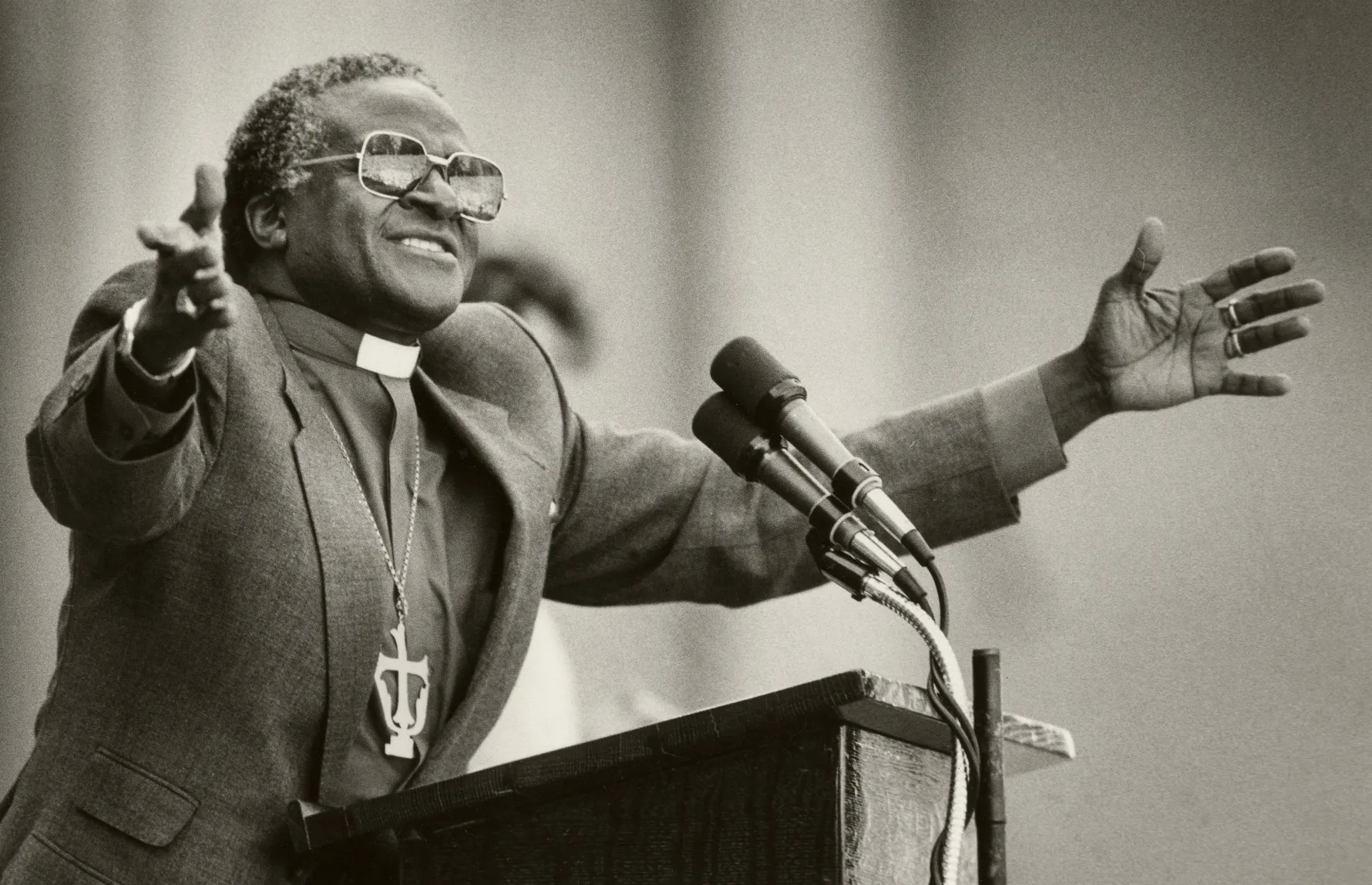
Sam Pollard turns his camera from the torn ground of the American Civil Rights movement toward the burned horizons of South Africa in the documentary Tutu. The film reads as a sustained meditation on spiritual authority living inside a world where secular justice feels absent. Pollard frames the Anglican Archbishop as a living force, a mind and presence whose political philosophy settled into the consciousness of multiple generations.

Apartheid becomes the setting for that inquiry, a brutal stage where moral language carried real consequences. In that climate, Tutu uses the pulpit to sharpen non-violent resistance into a tactical tool aimed at a state built on cruelty. He inhabits a narrow, dangerous corridor.

The white ruling class meets him with resentment. Black revolutionaries meet him with impatience, reading his commitment to peace as a brake on liberation. Pollard treats that position with weight and seriousness. He shows a man trying to keep a moral center intact while the world strains to drag him toward violence. The documentary studies the way private conviction can press against an entire structure of systemic hatred, even while the cost of that pressure never stops rising.

Fragments of a Kinetic Spirit

Pollard avoids the comfort of a straight biography. He sets aside the familiar checkpoints of birth and early education and follows something harder to pin down, something immediate. The film builds itself from a textured collage of late twentieth-century archival material alongside intimate footage recorded by Roger Friedman and Benny Gool.

In that later material, the Archbishop appears in his final decades, frequently quiet, sometimes resting, often held in reflection. The film places images of state-sanctioned violence beside the softness of domestic life, and the juxtaposition lands like a moral shock. Peace looks almost absurd in a country governed by terror, as if calm itself becomes a kind of provocation.

The documentary moves in three chapters, and that structure can feel imposed. The divisions struggle to hold the fluid, non-chronological current Pollard establishes in other passages. Still, the refusal of standard biographical signposts carries its own logic. The film echoes the Archbishop’s restless spirit. It favors the felt sense of his presence over the résumé-style accounting of accomplishments. The viewer moves through a tide of memories, guided by a figure who seems perpetually in motion, even in stillness, even in silence.

The Violence of Forgiveness

The Archbishop lives in a psychological trench where forgiveness becomes the primary weapon. Pollard treats this philosophy as action and confrontation, a form of defiance with heat in it. Peace, in this film, carries demands. Tutu calls for it with a force that unsettles those who benefit from cruelty.

His political reach extends beyond South Africa as he condemns world leaders such as Ronald Reagan and Margaret Thatcher for refusing to impose economic sanctions. In these moments, the documentary presents morality as something that exacts a bodily price. A conviction can remain abstract for only so long. The film insists that ethical speech, under pressure, asks for flesh and risk.

One of the documentary’s most harrowing sequences shows Tutu intervening during the 1986 State of Emergency to save a man from a lynch mob. The act becomes a physical expression of his creed. He places his own body between a victim and the collective rage of the oppressed, as if the only honest proof of belief is exposure to danger. Later, his leadership of the Truth and Reconciliation Commission advances a radical demand for absolution through confession, a demand that can feel impossible even as the film takes it seriously.

Critics argue that such an approach lets monsters slip past justice. Pollard holds that dispute inside the film’s larger question: what shape does freedom take when hatred has already colonized the mind? For Tutu, equality requires a struggle inside the oppressed as much as a struggle against oppressors. He pins victory to refusal. He refuses transformation into the very thing he fights.

Laughter as an Existential Shield

Away from public protest and international stages, the film finds a quieter story in the sanctuary Tutu builds with his wife, Leah. Pollard gives her meaningful space through candid interviews, and her perspective deepens the portrait. Their relationship reads as a form of defense against the era’s darkness.

In domestic scenes, joy rises with startling ease. Tutu’s laughter carries the sound of survival, a practiced way of staying human while living under persistent death threats. The lightness does not erase horror. It stands beside horror and denies it the final word.

The documentary also tracks his later commitments to global issues, including the HIV/AIDS crisis and the Israel-Palestine conflict. The scope of that work suggests a duty that refuses to shrink to one geography or one historical flashpoint. Pollard avoids embalming his subject into a museum-ready symbol. He presents a man who feels warm, flawed, and fully alive.

The film connects past struggle to future hope and listens for the human pulse under the global legend. Hope, here, appears as a rational stance toward an irrational world, a choice made with open eyes, and a question that remains open even after the credits: how does a person keep faith with humanity when history keeps testing the limit of what humanity can bear?

Tutu premiered on February 16, 2026, as a Special Screening at the Berlin International Film Festival. The documentary is a co-production between Universal Pictures Content Group and the UK based HiddenLight Productions. While it has recently begun its festival circuit, it is expected to be available for streaming or limited theatrical release through Universal’s distribution channels later this year.

Full Credits

  • Title: Tutu

  • Distributor: Universal Pictures Content Group, Cinetic Media

  • Release date: February 16, 2026

  • Running time: 101 minutes

  • Director: Sam Pollard

  • Writers: Paul Trewartha

  • Producers and Executive Producers: Johnny Webb, Ellie Phillips, Sam Pollard

  • Cast: Desmond Tutu, Leah Tutu, Roger Friedman, Benny Gool, Joyce Seroke, Dan Vaughan, Peter Storey, Mamphela Ramphele

  • Director of Photography (Cinematographer): Geoffrey Sentamu

  • Editors: Paul Trewartha

  • Composer: Philip Miller

The Review

Tutu

8 Score

Pollard offers a kinetic, fractured study of a soul that refused to be extinguished by the weight of a dying empire. The film succeeds by resisting the pull of easy hagiography, choosing instead to illuminate the jagged edges of a man who held the light in a world of absolute shadow. It serves as a reminder that peace is a grueling, psychological labor rather than a passive state. While the structural divisions feel arbitrary, the raw emotional honesty remains. It is a vital exploration of hope as a radical, desperate act of survival.

PROS

  • Intimate, rare domestic footage.
  • Rejection of standard biographical clichés.
  • Powerful juxtaposition of archival violence and personal joy.
  • Strong focus on the psychological toll of resistance.

CONS

  • Arbitrary three-chapter structure.
  • Occasional lack of chronological grounding for general audiences.
  • Underdeveloped biographical context regarding the subject's early years.

Review Breakdown

  • Overall 0
Tags: 2026 Berlin International Film FestivalBenny GoolDan VaughanDesmond TutuDocumentaryFeaturedJoyce SerokeLeah TutuRoger FriedmanSam PollardTutuUniversal Pictures Content Group
Previous Post

The Prisoning: Fletcher’s Quest Review: Meta-Humor Meets 16-Bit Precision

Next Post

Truly Naked Review: Breaking the Lens of Detachment

This Week's Top Reads

  • Is This Seat Taken? Review

    Is This Seat Taken? Review: A Satisfying Mental Workout

    1324 shares
    Share 0 Tweet 0
  • Treasure Island Review: David Oyelowo Commands an Uneven Adventure

    0 shares
    Share 0 Tweet 0
  • Trust Review: Squandered Potential and an Incoherent Plot

    6 shares
    Share 0 Tweet 0
  • Dustfall Review: Crime Television That Stays With the Survivor

    0 shares
    Share 0 Tweet 0
  • Adult Supervision Review: Children Need Help Their Fathers Cannot Quite Give

    0 shares
    Share 0 Tweet 0
  • Murder In A Small Town Season 2 Review: Politics and Police Work

    5 shares
    Share 0 Tweet 0
  • Blue Lights Season 4 Review: Who Gets Exposed, Who Stays Protected

    1 shares
    Share 0 Tweet 0

Must Read Articles

The Diplomat Season 4 Review
TV Shows

The Diplomat Season 4 Review: Every Marriage Has a Foreign Policy

9 hours ago
Whalefall Review
Movies

Whalefall Review: Breathing Lessons from a Damaging Father

11 hours ago
Ludwig Season 2 Review
TV Shows

Ludwig Season 2 Review: Lucy Gets the Credentials and the Story Gets Better

2 days ago
Crystal Lake Review
TV Shows

Crystal Lake Review: Cardellini Carries the Carnage

2 days ago
Time Season 3 Review
TV Shows

Time Season 3 Review: Rehabilitation Left Off the Rota

2 days ago
Loading poll ...
Coming Soon
Which of Alfred Hitchcock's 1960s thrillers is your all-time favorite?

Gazettely is your go-to destination for all things gaming, movies, and TV. With fresh reviews, trending articles, and editor picks, we help you stay informed and entertained.

© 2021-2026 All Rights Reserved for Gazettely

What’s Inside

  • Movie & TV Reviews
  • Game Reviews
  • Featured Articles
  • Latest News
  • Editorial Picks

Quick Links

  • Home
  • About US
  • Contact Us
  • Advertise with Us
  • Review Guidelines

Follow Us

Facebook X-twitter Youtube Instagram
No Result
View All Result
  • Gazettely | Movie, TV & Game Reviews, News, and Rankings
  • Movies
  • Entertainment News
  • Movie and TV Reviews
  • TV Shows
  • Game News
  • Game Reviews
  • Contact Us

© 2024 All Rights Reserved for Gazettely




