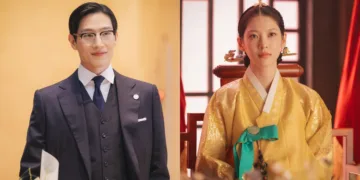
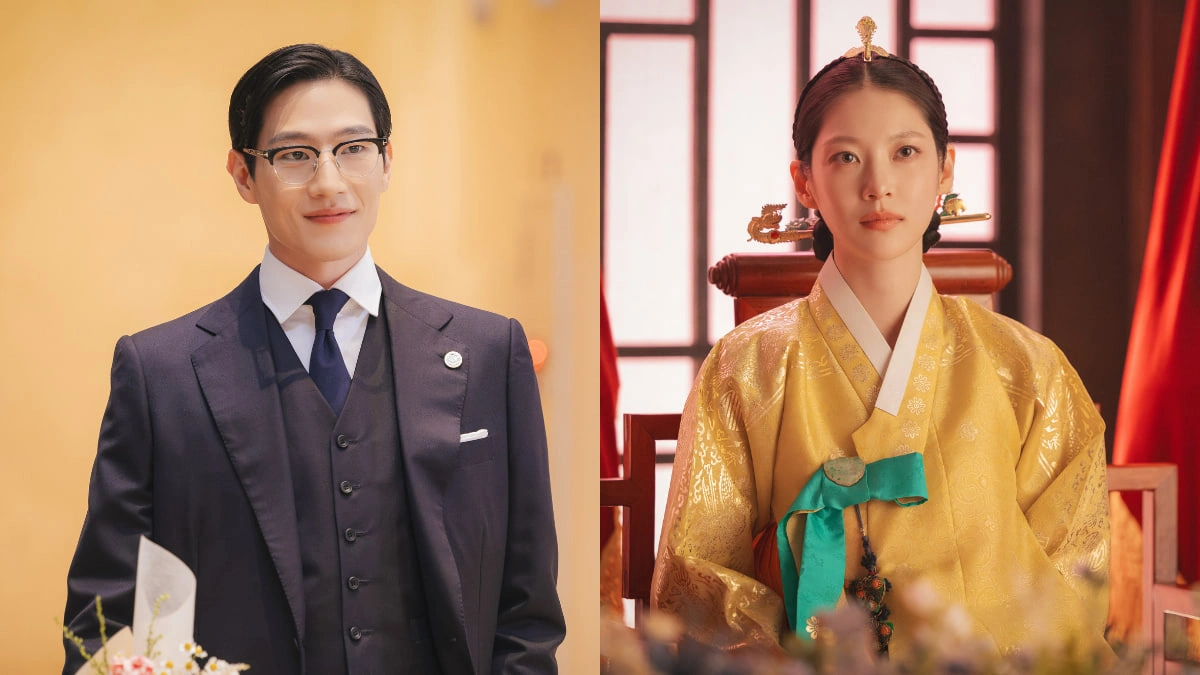
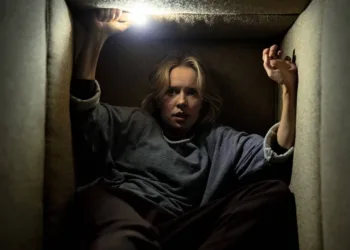
Perfect Crown presents a South Korea in the 21st century where the monarchy still holds a ceremonial role in the state. The story revolves around Sung Hui-ju, the illegitimate daughter of a powerful family and CEO of Castle Beauty, whose ambitions are clouded by social stigma and family pressure to marry.
She sets her sights on Grand Prince I-an, a royal regent burdened by his strict responsibilities. Their paths cross during a grand birthday celebration for the child king, leading to a calculated proposal that merges the traditional royal world with modern corporate interests.
Set against a backdrop of palace intrigue and corporate power struggles, their shared past as former schoolmates serves as the foundation for a complex relationship. As they enter into a contract marriage, they must navigate both national scrutiny and the internal conflicts of the royal court.
Defining the Leads through Performance and Purpose
The strength of Perfect Crown lies in how it grounds its larger-than-life premise through the rich depth of its characters. Sung Hui-ju is a sharp and unapologetic executive who leads Castle Beauty with unwavering authority. Her drive for success acts as a defense against the societal stigma tied to her birth.
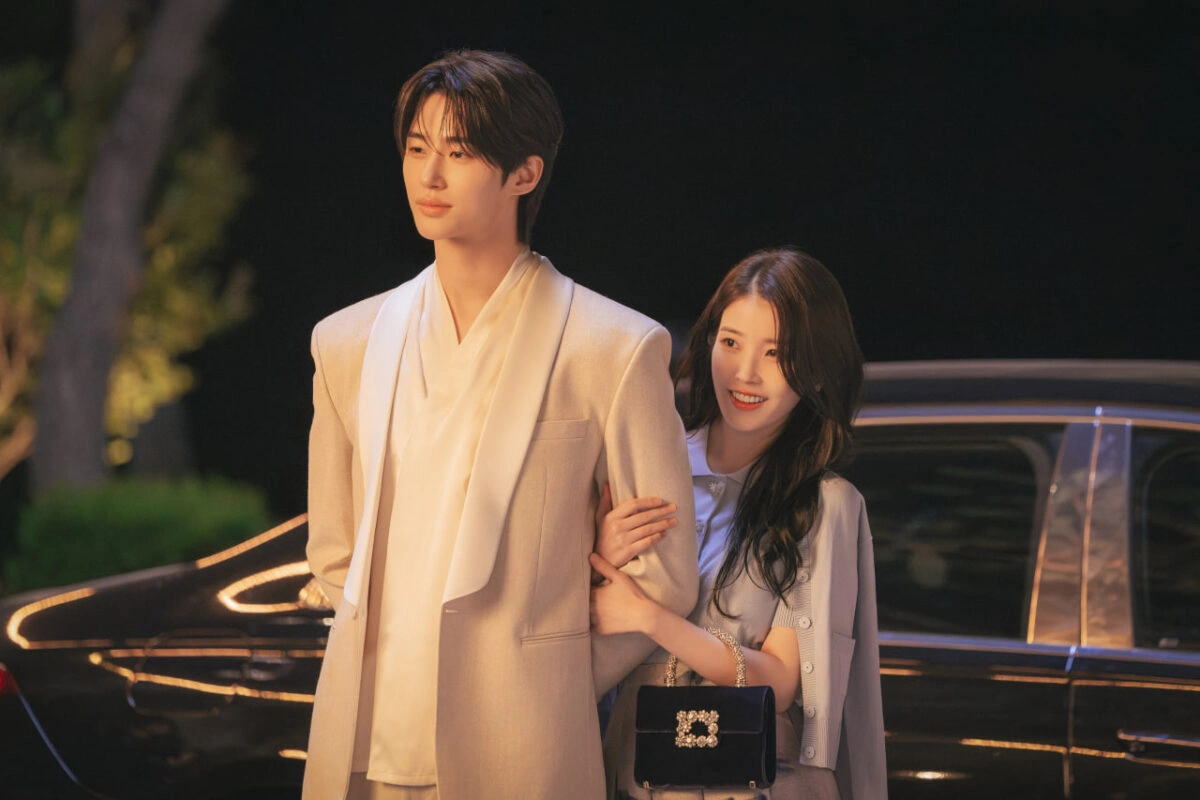
IU portrays Hui-ju with a balance of professional detachment and moments of dry humor. The role allows her to expand on the assertive, affluent archetype she’s previously embodied, imbuing Hui-ju with a hardness earned from years of corporate struggle.
Grand Prince I-an, in contrast, offers a quieter presence, a royal who finds solace in solitude, particularly while hunting. His internal conflict about his position as regent to his young nephew lends emotional weight to his character arc. Byeon Woo-seok delivers a stoic portrayal, subtly revealing I-an’s inner turmoil through slight changes in his expressions. The trauma of the fire that claimed the previous king lingers unspoken in his interactions.
The dynamic between these two characters generates intrigue, rooted in their opposing methods. Hui-ju’s direct, often aggressive approach contrasts with I-an’s calm, controlled demeanor, shaped by years of palace discipline. Their interactions play out like a tense negotiation between wary professionals rather than a conventional romance. This friction maintains the viewer’s engagement, eager to see how their shared goals may evolve into a deeper connection.
The Intersection of Heritage and Contemporary Style
The series’ visual storytelling eloquently conveys the clash between history and modernity. Fashion plays a pivotal role in the narrative. Hui-ju’s appearance at a royal function in a bold red suit marks her defiance against traditional expectations.
This choice reinforces her resistance to a system that has long rejected her. I-an’s wardrobe, particularly his cheolik—a hunting outfit—at a formal banquet, similarly reflects his quiet rebellion against the Queen Dowager’s demands. These sartorial choices underscore the collision of modern corporate identities with the old-world royal obligations.
The production design highlights this divide in space. The sleek, glass-and-steel Castle Group offices sharply contrast with the palace’s ornate, historic architecture. The corporate environments exude sterility, bathed in clinical light, while the palace settings use warmer tones and shadows to evoke the weight of centuries-old traditions.
This aesthetic reminds me of walking through Seoul’s modern districts, where ancient gates sit alongside towering digital billboards. Perfect Crown captures this unique blend of old and new. The cinematography emphasizes the grandeur of royal ceremonies, often positioning the characters in wide shots that emphasize their relative smallness against their immense responsibilities.
The score complements these visual transitions, shifting between orchestral and electronic beats. During palace scenes, the score leans into traditional instrumentation, grounding the narrative in its historical context. As the focus shifts to Hui-ju’s corporate strategies, the sound design picks up pace, incorporating rhythmic, modern electronic elements. This auditory layering reinforces the show’s sense of a world where two distinct time periods coexist.
Power Dynamics and the Quest for Legitimacy
At its core, Perfect Crown examines the societal weight of birthright and class in a supposedly modern world. Hui-ju constantly strives to prove her worth, facing the stigma of her illegitimacy. Her professional success becomes a means to gain the respect that her birth has denied her. The “commoner” label follows her into the palace, deepening the divide between her and the traditional nobility. This struggle mirrors a broader societal anxiety about the persistence of class hierarchies in a capitalist society.
The monarchy in this series functions as a cultural anchor that has lost its political power but maintains significant influence. I-an faces tremendous pressure to uphold a public image that satisfies both the Queen Dowager and the people, despite holding no real authority. This dichotomy mirrors Hui-ju’s sense of isolation, as both characters are constrained by the expectations tied to their names, which, paradoxically, pull them in opposite directions.
Their contract marriage serves as a pragmatic solution for both. Hui-ju sees it as the ultimate step toward social elevation, believing that marrying into royalty will silence her critics and secure her place at the top of Castle Beauty. For I-an, the union represents a potential escape from the suffocating control of his sister-in-law. Their partnership is framed as a business arrangement first, forcing them to work together before they can understand each other’s true motivations.
Political Friction and the Shadow of the Past
External forces continually threaten the stability of the central relationship. Queen Dowager Yoon Yi-rang serves as the primary antagonist within the palace, fiercely guarding her son’s throne and viewing I-an’s growing popularity as a threat to the child king’s future. Gong Seung-yeon’s portrayal of the Queen Dowager is chilling, as she uses manipulation and the threat of public scandal to control I-an. Her resentment toward him creates a constant sense of danger as they try to adjust to their new roles.
Prime Minister Min Jeong-woo occupies a complex space between politics and personal loyalty. He struggles with the tension between his political duties and his personal relationship with both Hui-ju and I-an. His past with Hui-ju adds an unspoken history to their interactions, as he finds himself caught between palace schemes and corporate ambitions. His character offers insight into the ways government machinery intersects with the personal desires of the ruling class.
Hui-ju’s corporate world brings its own conflicts. Her half-brother, Tae-joo, constantly undermines her success with underhanded marketing tactics. This family rivalry highlights the cutthroat nature of the corporate world, where blood ties are no defense against professional betrayal. The battle for control over Castle Beauty mirrors the power struggles unfolding in the palace.
The mystery surrounding the palace fire heightens the stakes of the story. The event during the birthday celebration triggers I-an’s trauma and raises questions about the death of the previous king. This plot point suggests that the threats to the royal family extend beyond political schemes, adding a sense of urgency to the narrative. The unresolved mystery ties the past to the present, compelling I-an to confront the events he has tried to bury. This lingering enigma sustains tension throughout the leads’ evolving relationship.
Perfect Crown is a South Korean romantic comedy series that premiered on April 10, 2026. Set in an alternative reality where South Korea remains a constitutional monarchy, the story follows the ambitious CEO of Castle Beauty, Sung Hui-ju, as she navigates the complexities of a contract marriage with the rebellious Grand Prince I-an. The series is currently airing new episodes every Friday and Saturday on MBC TV and is available for global streaming on Disney+. As of today, April 19, 2026, the series has completed its first four episodes, garnering significant attention for its high-gloss production and the chemistry between its leads, IU and Byeon Woo-seok.
Producers and Executive Producers: Jang Se-jung, Kim Jae-bok, Kim Min-ji, Lee Dae-yong, Park Ji-hye
Cast: IU, Byeon Woo-seok, Noh Sang-hyun, Gong Seung-yeon, Yoo Su-bin, Lee Yeon, Chae Seo-an, Lee Jae-won
Director of Photography (Cinematographer): Bae Hyun-jin, Kim Yong-min, Kim Hwa-young, Son Hwa-young
Editors: Yoon Soo-min
Composer: Kim Tae-seung, Choi Jung-in
The Review
Perfect Crown
8Score
Perfect Crown succeeds by grounding its royal fantasy in the harsh realities of corporate ladder climbing and personal trauma. The chemistry between IU and Byeon Woo-seok provides a sturdy anchor for the political and emotional maneuvers. While the pacing occasionally lingers too long on established tropes, the sharp visual identity and strong lead performances make this a high-quality watch. It offers a thoughtful look at how tradition survives in a modern world.
PROS
Natural chemistry between the lead actors creates a grounded emotional center.
The visual design provides a fresh look at modern Korean heritage through fashion.
Realistic portrayal of the friction between corporate interests and royal duty.
Strong supporting performances add depth to the secondary political plots.
CONS
The extended episode lengths can make the narrative feel slow at times.
Early plot developments rely heavily on familiar romantic cliches.
The lead female character feels very similar to the actress's previous iconic roles.
When you login first time using a Social Login button, we collect your account public profile information shared by Social Login provider, based on your privacy settings. We also get your email address to automatically create an account for you in our website. Once your account is created, you'll be logged-in to this account.
DisagreeAgree
Connect with
I allow to create an account
When you login first time using a Social Login button, we collect your account public profile information shared by Social Login provider, based on your privacy settings. We also get your email address to automatically create an account for you in our website. Once your account is created, you'll be logged-in to this account.