









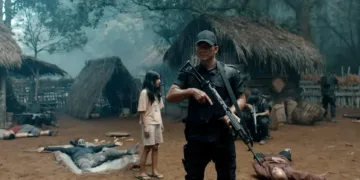
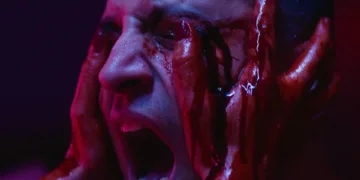

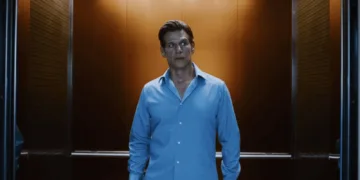




Honestly thought it’d be mid but got served with a twist. Though the Hwaseong case files is a story we all know, this drama refreshes it with a gripping narrative, solid screenwriting, and a killer cast. It’s been a hot minute since a mystery-thriller hit and this one absolutely delivers. With sharp creative direction and a fresh spin on a case we knew, a familiar ground burns with new fire.
Seoul in 1988 was polishing its shoes for the world stage. The Summer Olympics promised a cleaner, brighter future for South Korea, yet the fictional city of Kangseng stayed sunk in the mud of old habits. The Scarecrow draws its pulse from that friction.
It begins in 2019, with a DNA match dragging a retired Kang Tae-joo back toward a cold case that never lost its heat. Then the story snaps back to 1988, where Tae-joo, dismissed as a “city snob,” has been demoted to his rural hometown. He expects boredom. He finds a predator. Bad career move, excellent television.
The series uses the 2019 timeline to frame a thirty-year hunt for a killer who turns farmland’s quiet anonymity into a weapon. This is the story of an investigation that consumes a man’s life. It studies a system obsessed with polished surfaces and allergic to messy justice. The scarecrow of the title is a chilling figure: silent in the fields, hiding in open air, waiting with terrible patience. Tae-joo comes home and discovers that the town he left behind has become a hunting ground.
Tracking Ghosts Through Time
The production’s structure depends on the tension between the clinical present and the chaotic past. In 2019, the incarcerated Lee Yong-woo sits across from Tae-joo and denies everything, fresh DNA evidence sitting between them like a loaded weapon. That future perspective gives the series a tragic charge. The killer was caught at some point, yet the suspense survives through questions of identity, cost, and delay. The show understands that knowing where a wound ends can make watching it open feel worse.
The 1988 setting feels lived in, cramped, and dangerously casual about horror. Forensics are treated like an afterthought. Detectives lean on beatings and intuition. Tae-joo arrives at a precinct where crime scenes attract the energy of a street performance. The series turns the familiar procedural format into something dirtier and sadder, a rural crime story built from bad methods, worse instincts, and a town far too comfortable with spectacle.
Also Read





The pacing of the 1988 timeline follows the slow recognition of a serial threat. The body of Kim Bok-hee is found, with stockings serving as the primary weapon. The local police arrest Seong-jin because he has a record. They beat a confession out of him.
Tae-joo reads the files and sees a pattern everyone else missed. He notices the killings follow a sequence the local unit ignored. The 2019 frame keeps tapping on the glass, reminding us that these errors did damage for three decades.
Flashbacks to Tae-joo’s school days cut through the procedural rhythm. They show a boy nearly drowned by bullies, turning personal memory into psychological evidence. These scenes sharpen our sense of Tae-joo’s fear without slowing the investigation.
The show reveals victims such as Yu Jeong-rin through their lives, giving grief a face before the case file swallows it. We watch a teenager walk home through the rain, already aware she will become the next name in a cabinet. The script handles these jumps with discipline. 1988 and 2019 sit far apart on the calendar, yet trauma keeps the distance painfully short.
The Bully and the Broken Badge
Kang Tae-joo is a protagonist who feels crushed by the world in ways that are visible on his body. He is a detective who shakes when the past walks into the room. He was bullied to the point of passing out as a teenager. He carries that fear into adulthood. He is a cop who chooses vulnerability, which gives his resistance to the system real force. He has to fight his own biology before he can fight anyone else. That is character writing with a pulse.
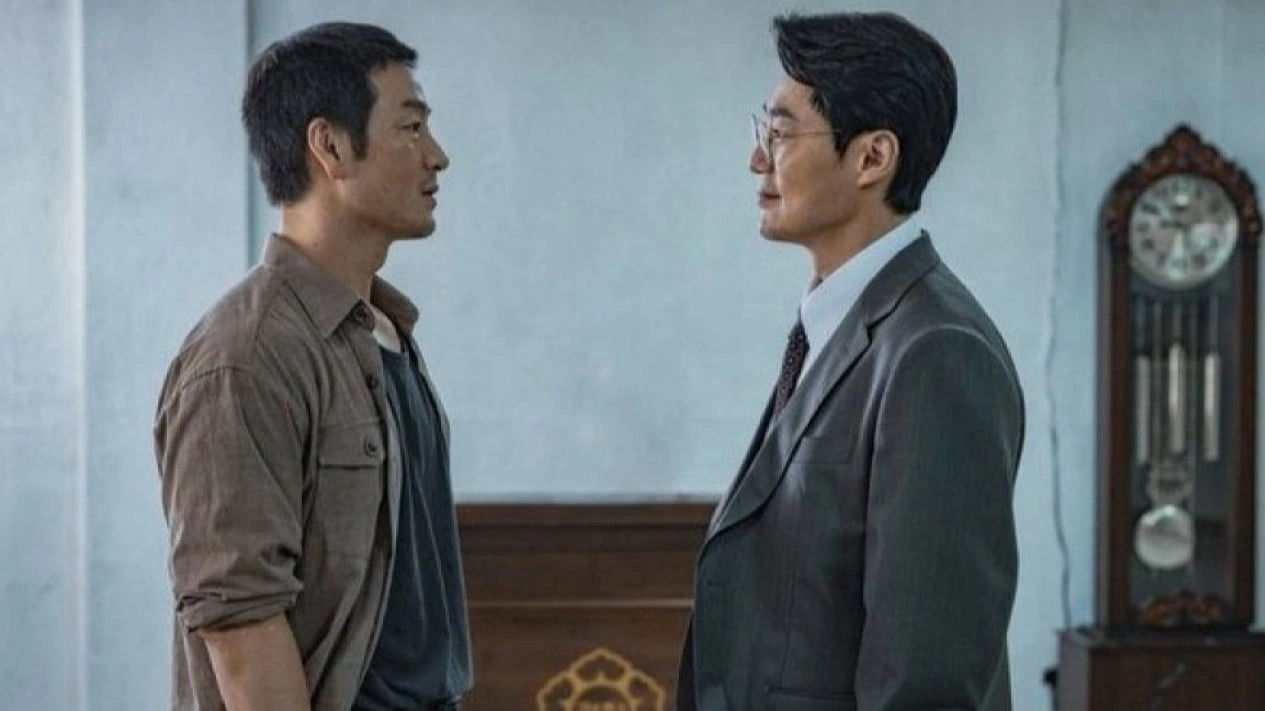
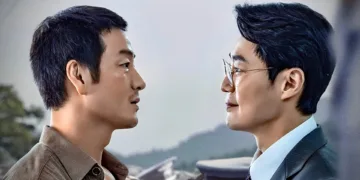
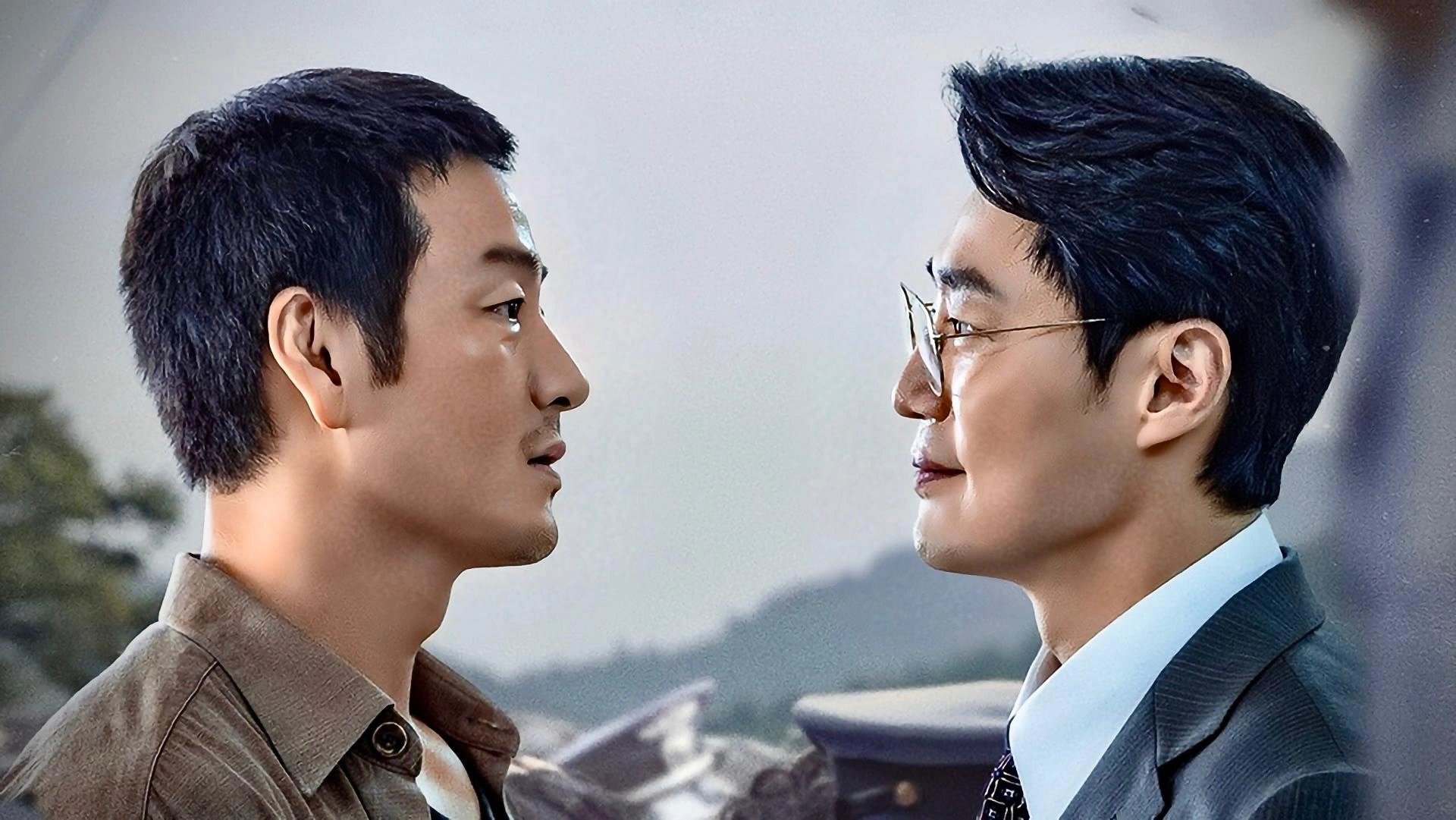
Cha Si-young gives the conflict its electric charge. He is a prosecutor from a wealthy family, the boy who poured urine on Tae-joo’s face in high school, and the man now controlling the prosecution. He treats the serial murders as a career ladder. He uses illegal methods to secure confessions. He threatens Tae-joo with a smile. Their rivalry is personal, vicious, and cleanly staged: justice facing power in a room where power has the better suit.
Their scenes crackle because the old violence has merely changed costume. Tae-joo once points a gun at Si-young and calls it a joke, echoing the language Si-young used in their school days. It is a brutal callback, and the show knows exactly where to place it. The moment works through performance and timing, landing like a punch with a straight face.
The supporting network deepens Kangseng’s sense of danger. Seo Ji-won, a journalist and Tae-joo’s childhood friend, gives the story a vital public lens. She becomes a bridge between the investigation and the town, risking her life as bait for the killer. Kang Sun-young, Tae-joo’s sister, is an elementary school teacher and an emotional anchor. She is also a target. Her assault by Kyung-ho, a colleague, becomes a turning point that exposes how the system shields the well-connected.
Lee Ki-beom, a local heartthrob, becomes a suspect who hides his dainty hands. Kangseng is full of people like this, figures with familiar faces and unsettling details. Everyone is a neighbor. Anyone could be a monster. The suspicion thickens the air until the town itself feels guilty.
Fields of Dread and Blurry Frames
The series’ visual language treats rural horror with impressive control. The scarecrow motif is the image that sticks. The killer disguises himself as one of these straw figures and waits in the fields for women to pass. A witness describes seeing a scarecrow that later disappeared. That detail has the nasty simplicity of a nightmare. The show turns a familiar rural sight into an object of panic, then lets it stand there.
The cinematography captures the isolation of the fields at night. Sparse lighting creates the feeling of eyes in the dark. The camera work in the field scenes grows erratic, mirroring the victims’ panic and pulling the viewer into that same disorientation. Kangseng can look beautiful in sunlight. After sunset, it becomes a graveyard with better scenery.
The 1988 production design is meticulous. The library feels like a quiet refuge by day and a trap after dark. The police station is cramped and smoke-filled, a room where procedure seems to be losing an argument with cigarette ash. The era’s technical limits become dramatic pressure points.
A cassette tape recording exposes the corruption of the governor’s nephew. A blurry photograph taken by Ji-won becomes the best evidence available. Truth keeps getting trapped in film grain and tape hiss. Analog technology has rarely felt so cruel.
Sound design gives the natural world a predatory edge. Stray dogs howl alongside muffled screams. Rain on a library roof becomes a countdown to murder. The director uses these elements to build a specific mood, one where ordinary sounds seem to know too much. The visual tone stays consistent: shadows, hidden things, and open spaces that feel strangely airless.
The Cost of a Clean Record
The series is a sharp study of institutional failure. It examines how the desire for clean statistics produces a thirty-year tragedy. Bureaucratic obstruction becomes the real villain, almost as frightening as the killer in the fields. Police and prosecution fight over jurisdiction as bodies keep appearing.
Si-young uses national security laws to arrest a rival’s son. He uses student protests to pull police attention away from the murder investigation. He cares about the Olympics. He cares about the image of a safe country. He ignores the women of Kangseng.
The evolution of justice becomes one of the show’s strongest themes. The story places the beatings of 1988 beside the DNA matches of 2019 and asks what accountability means after a life has already been lived. A confession after thirty years carries weight, yet it cannot return what was taken. That is where the drama finds its bite.
The social cost of silence lands heavily through victims such as Choi In-sook. Stigma becomes another barrier. Her mother dies believing her daughter ran away. Tae-joo returns her belongings too late. The scene hurts because the series treats forgetting as an act of violence, one performed slowly by institutions, families, and frightened communities.
The narrative studies how old actions shape the present. A high school bully becomes a corrupt prosecutor. A mother’s past as a bar hostess becomes a weapon against her children. Social hierarchy presses down on every part of the investigation. The case gives the series its procedural engine, and that engine powers a critique of a society that prizes the appearance of order over actual safety.
The search for the fifth victim, In-sook, becomes Tae-joo’s mission. It is his attempt to reclaim a fragment of justice from a system that abandoned her. The modern-day scenes return to Tae-joo sitting across from the killer, asking if he was the one who ruined his life. The question hangs there, grim and unresolved. After thirty years in the shadow of a scarecrow, what part of a life can still be called one’s own?
The South Korean mystery thriller series The Scarecrow (허수아비) premiered on April 20, 2026, marking a significant return to the gritty, period-procedural genre for director Park Joon-woo and writer Lee Ji-hyun. Loosely inspired by the real-life Hwaseong serial murders, the narrative explores a thirty-year investigation spanning from 1988 to 2019, focusing on the uneasy alliance between a disgraced detective and an ambitious prosecutor. Currently, the series is airing in South Korea on the cable network ENA every Monday and Tuesday at 10:00 PM KST. Domestic viewers can also stream the show on Genie TV and TVING, while international audiences can access the series with multi-language subtitles on Viu and Rakuten Viki.
Where to Watch The Scarecrow Online


Full Credits
Title: The Scarecrow
Distributor: ENA, Genie TV, TVING, Viu, Rakuten Viki
Release date: April 20, 2026
Rating: TV-MA (15+)
Running time: 60 minutes
Director: Park Joon-woo
Writers: Lee Ji-hyun
Producers and Executive Producers: Jeong Geun-wook, Kyeong-ju Choi, Jun-woo Park, Jeong-hoon Yoo, Uram
Cast: Park Hae-soo, Lee Hee-joon, Kwak Sun-young, Song Geon-hee, Seo Ji-hye, Jung Moon-sung, Baek Hyun-jin, Ryu Hae-joon, Yoo Seung-mok, Kim Hwan-hee
Director of Photography (Cinematographer): Hong Il-seop, Han Sang-wook, Lee Jeung-bok
Editors: Na Hee-soo
Composer: Sungyul Kim
The Review
The Scarecrow
The Scarecrow offers a chilling exploration of systemic failure and personal trauma. It succeeds by grounding its mystery in the palpable tension of 1988 South Korea. The dual timeline provides a haunting look at how past scars dictate future lives. While some character choices feel slightly dated, the central rivalry between Tae-joo and Si-young carries the narrative through its darker moments. It remains a gripping entry in the genre. It provides a fresh perspective on a familiar historical tragedy.
PROS
- Atmospheric production design that captures the grime and grit of 1988 rural Korea.
- A vulnerable, grounded lead performance from Park Hae-soo.
- Effective use of the scarecrow as a visual source of dread.
- Sharp commentary on how bureaucratic pride obstructs actual justice.
CONS
- Some supporting characters make illogical decisions for the sake of the plot.
- Directing choices occasionally lean into heavy melodrama during family segments.