













The Argentinian wilderness seems to breathe through a grave, humid stillness. In that isolation, a riverside cottage stands like a small human gesture against the surrounding green. Juan and his girlfriend arrive in search of peace, yet the landscape answers with something stranger.
From the tangled brush and damp air, a nameless man emerges. His body is human. His instincts belong to a dog. Speech is absent from him. Clothing is absent from him. He exists as a creature shaped by the wild, a mute presence under the gathering shadow of the forest.
Juan feels an abrupt, inexplicable attraction to this being. He brings him into the domestic sphere and gives him the name Max. The change unfolds through intimate rituals of care. Juan bathes him, feeds him, and creates a routine that echoes the treatment of a household pet.
His girlfriend watches the bond form with growing estrangement. Her warning is sharp. She tells Juan to resist a deep emotional attachment. The film moves with slow, meditative gravity, settling into a domestic atmosphere where silence becomes the primary language. Marco Berger invites us to observe a world where the human soul meets a quiet shadow asking for presence.
The Silent Order of a Divided Humanity
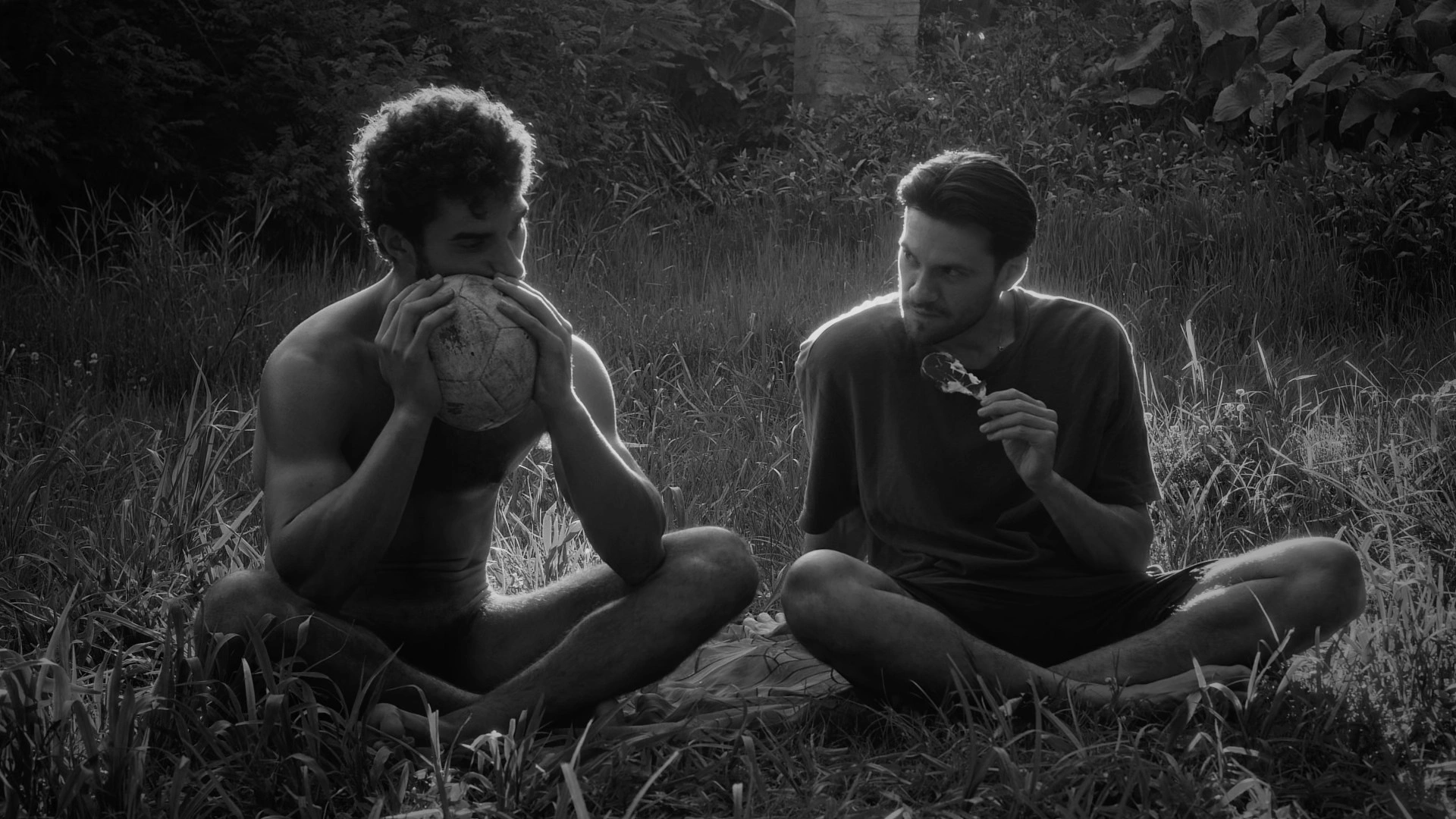
The film creates a reality governed by a strange, parallel logic. Humanity exists along two distinct lines. One group keeps the structures of modern life intact. They rent cottages and manage social expectations. The other group has drifted into animalistic archetypes. We hear of cat-women who scratch and flee. We see an older dog-man seeking the simple pleasure of a thrown ball.
Max belongs to this accepted social order. The film presents the situation with startling restraint. No historical frame explains how these two kinds of humans came to exist together. The script withholds backstory and scientific rationale.
That lack of lore forces the viewer to receive the present moment as its own enclosed truth. The characters treat dog-men with dry, everyday acceptance. Their existence is ordinary to them. This calm response creates a deep sense of the absurd.
The horror drains from the premise, leaving the functional relation between owner and owned exposed. A hierarchy forms around species-adjacent roles. The civilized humans hold absolute authority. They give shelter and food. The dog-men return wordless, docile companionship.
This structure imagines a world where affection and power are painfully entangled. The “normal” humans design the terms of life. The animalistic humans become subjects of tender care or cold neglect. This parallel world reflects the darker chambers of our own social arrangements.
It shows how easily life can be sorted by usefulness and obedience. Berger uses the absurd premise to press against the edges of empathy. The film studies the ease with which people dominate those who lack speech. The gendered split, with men as dogs and women as cats, adds a hushed commentary on the roles assigned to the objects of affection.
The Texture of Light and the Weight of Silence
The black-and-white cinematography works as a sensory filter. It dries the world down to form, surface, and shadow. Color’s warmth disappears, leaving the stern truth of texture. Every leaf on the verdant island appears with crystalline clarity. The monochrome lens turns the wilderness into a terrain of hard contrasts. Light and shadow carry the act of narration.

This visual approach keeps the film from becoming a simple exercise in beauty. It stresses the physical reality of the bodies on screen. The camera studies the male body with a clinical, appreciative eye. It holds on the curve of a shoulder and the grain of skin. Max’s nudity reads as a natural condition, free from shame or theatrical display.
The soundscape is equally deliberate. Across most of the runtime, the film depends on the ambient life of the environment. Trees rustle. Rain falls heavily during a storm that feels earthbound and immediate. The river laps against the shore with rhythmic patience.
This devotion to natural sound creates an immersive, almost soporific atmosphere. It gives the absurd premise soil, moisture, and weight. The absence of a traditional score allows the viewer to feel the silence between characters as a physical pressure.
A sudden shift arrives in the final minutes. The music by Pedro Irusta lands with heavy force. Its haunting melodies move the film from the physical into the metaphysical. The score introduces loneliness and existential gravity. It marks the passage from a vacation story into a meditation on lasting loss. The sound design makes the finale strike deep, somewhere close to bone. Nature functions as witness. It watches a bond as fragile as light fading across the river.
The Physical Language of the Wordless Soul
Juan Ramos gives Max immense physical discipline. Language is denied to him. He must communicate an entire living soul through the tilt of his head and the brightness of his eyes. His movements shed the self-consciousness that usually marks human behavior.
He sits and begs with organic grace, avoiding parody through sheer bodily conviction. He makes the audience believe in his animal state through total commitment to the elements. He gives himself to cold water and the dirt of the forest floor. He remains fully present in every frame.
Germán Flood offers the ideal emotional counterweight as Juan. His face carries quiet longing. He suggests a deep, perhaps desperate, need for connection free from the complications of speech. The chemistry between the two actors exists in small gestures. A hand scratching a head or a shared moment of rest on a bed carries the force of a full page of dialogue. They create a private language of touch. Their intimacy grows from trust and vulnerability.
The supporting cast speaks for the outside world. The female characters and visiting friends represent logic and social propriety. They bring friction into the delicate peace of the cottage. Their presence reminds the viewer that Juan and Max’s bond appears aberrant through society’s eyes.
They act as a mirror, reflecting the audience’s own possible discomfort. The central performances draw the film back toward sincere empathy. These actors keep the story human, even as the premise nears the ridiculous. Ramos is especially haunting. He captures a creature suspended between two forms of being.
The Architecture of Possession and the Ghost of the City
The relationship between Juan and Max forces an encounter with the ethics of possession. Their bond is a form of love built on a total imbalance of power. Max lives through complete dependency. He gives docile affection untouched by the complications of human ego. Juan offers sanctuary, and he creates a territory of control. The film asks if love can survive when one person has no agency and no voice. It blurs the line between selfless care and the desire for a loyal shadow.
The dog-man metaphor opens a strange path into male intimacy. It creates a space where men can be tender and physical under an absurd social arrangement. The rigid expectations of masculinity loosen inside this roleplay. Yet the unequal exchange remains unsettling. Juan’s affection becomes a form of domestication. He shapes Max around his own emotional need. The beauty of their connection is haunted by the structure that makes it possible.
The city looms over the final act like a ghost already waiting. The riverside cottage is a temporary Eden, a place where the logic of the wild can briefly prevail. The return to Buenos Aires signals the death of the bond. An apartment becomes a cage for a creature like Max. Urban social life leaves no space for a man who acts like a dog. This conflict reveals the tragedy of modern existence. We have built a world inhospitable to raw, wordless connection. The final images become a study in profound loneliness.
They suggest that certain bonds, too pure or too strange, wither under civilization’s gaze. The ending leaves a lingering melancholy. Love appears as a wild animal we try to tame, and its essence begins to vanish under the hand that claims to protect it. The final weight lies in the realization that companionship often arrives as fleeting grace in a world built for isolation.
Originally premiering at international film festivals in late 2025, Perro Perro moved to a wider digital distribution earlier this year on March 22, 2026. This provocative Argentine drama, directed by Marco Berger, explores an unsettlingly quiet parallel world where human strays are integrated into domestic life as pets. The film is currently available for viewers to stream, rent, or purchase on major platforms including Prime Video and Google Play.
Where to Watch Perro Perro (2025) Online




Full Credits
Title: Perro Perro
Distributor: Here TV, Prime Video, Google Play
Release date: October 2025 (World Premiere), March 22, 2026 (General Digital Release)
Rating: TV-MA
Running time: 101 minutes
Director: Marco Berger
Writers: Marco Berger
Producers and Executive Producers: Marco Berger, Zoe David
Cast: Juan Ramos, Germán Flood, Bianca Brandimarte, Matías Quiroga, Aldana Dante, Carlos Naso, Antonia De Michelis, Marcela Avani
Director of Photography (Cinematographer): Martín Farina
Editors: Marco Berger
Composer: Pedro Irusta
The Review
Perro Perro
Perro Perro is a haunting meditation on the hunger for companionship and the quiet violence of possession. Marco Berger crafts a world where the line between human and animal dissolves into a monochromatic dream of longing. While the premise borders on the absurd, the film achieves a sincere, unsettling tenderness. It confronts the viewer with the raw reality of male intimacy stripped of language. This is a difficult, beautiful provocation that lingers long after the final frame. It demands we look at the cages we build for those we love.
PROS
- Black and white cinematography that reveals the texture of the wild.
- A brave physical performance from Juan Ramos.
- Immersive sound design utilizing natural elements like rain and wind.
- Subtle exploration of intimacy and the dynamics of control.
CONS
- Languid pacing that requires significant patience from the audience.
- A bleak ending that provides a sense of profound sadness.
- The central metaphor is at times quite literal and obvious.