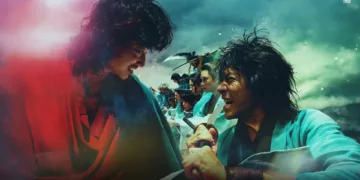


























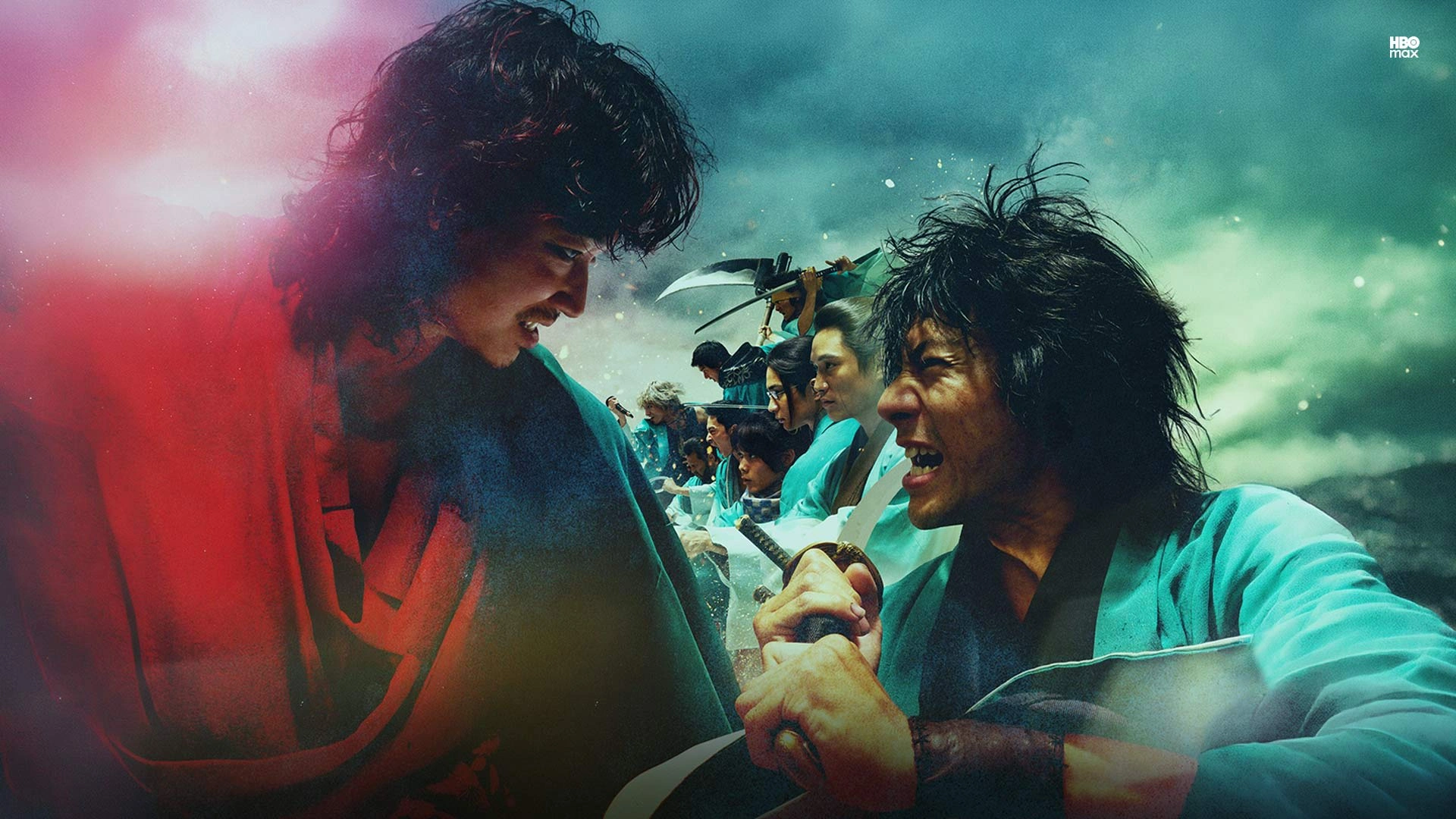

The arrival of Song of the Samurai on HBO marks a significant departure from the typical treatment of historical Japanese narratives in the West. This production resurrects the jidaigeki genre for a global audience by stripping away the garish, stylized veneers often found in live-action manga translations.
By focusing on the formative years of the Shinsengumi, the series builds a bridge between the rigid traditions of the Edo period and the kinetic expectations of modern television. The narrative follows Hijikata Toshizo, played by Yuki Yamada, as he transforms from a reckless street fighter into a pillar of a legendary military force.
This evolution unfolds within a visual framework that prioritizes historical authority over fan service, using a framing device set in 1912 to cast a long, reflective shadow over the violent events of the 1860s. It is a work that seeks to find the human pulse beneath the myth of the bushidō code.
The Architecture of Memory and Political Rupture
The narrative framework of Song of the Samurai functions as a vital anchor, using the 1912 timeline to provide a sense of historical consequence that many period dramas lack. By introducing an elderly Nagakura Shinpachi, the show frames the explosive violence of the Bakumatsu era as a distant, somber memory, laden with emotional weight.
This choice allows the audience to contemplate the cost of revolution while watching it unfold. The pacing relies on a chapter-like progression spanning several years, a structural decision that mirrors the rapid, often disorienting changes occurring in Japanese society at the time.
These time skips serve a dual purpose: they move the plot forward with urgency and highlight the psychological hardening of the protagonists. We see the Shieikan dojo members evolve from provincial dreamers into the Roshigumi, and eventually, the feared Shinsengumi. This transition reflects a broader societal shift where localized interests were forcibly merged into a desperate national defense.
The Bakumatsu setting itself acts as a pressure cooker of conflicting ideologies. The looming presence of the American Black Ships serves as a constant reminder of the encroaching modern world, creating a palpable sense of dread among the traditionalist classes. The series meticulously explores the friction between the pro-shogunate establishment and the Sonno Joi faction, who sought to restore imperial power. The show presents both sides as groups driven by a terrifying uncertainty about the future.
Their conflict reads as a collision of desperate ideologies, with moral clarity far less available to the combatants than they might wish. The dojo’s quest for financial stability and social elevation becomes a microcosm of a nation trying to find its footing. These men fight to escape the poverty and irrelevance threatening the lower samurai classes, with stated loyalty to a lord serving as the formal frame for those deeper drives.
Thematic depth is found in the concept of the found family, a recurring motif that gains extra weight here given the volatile historical context. The Shieikan dojo provides a sanctuary for misfits and outcasts who find no place in the rigid hierarchies of Edo. Their loyalty to one another often supersedes their fealty to the shogunate, creating a complex web of personal and political obligations.
The internal struggle to define honor becomes the central tension of the series. As the world around them grows more chaotic and morally compromised, the characters must decide which parts of the bushidō code are worth keeping and which are merely relics of a dying age. This interrogation of tradition gives the show its contemporary relevance, as it mirrors modern debates about identity and duty during periods of systemic collapse.
Deconstructing the Warrior Archetype
Yuki Yamada brings a raw, unpolished energy to Hijikata Toshizo that perfectly captures the character’s volatile nature. In the early chapters, Toshizo reads as less a hero and more a nuisance, a man whose pride far outstrips his technical ability. His transition into a disciplined warrior is portrayed as a grueling process of ego-stripping.
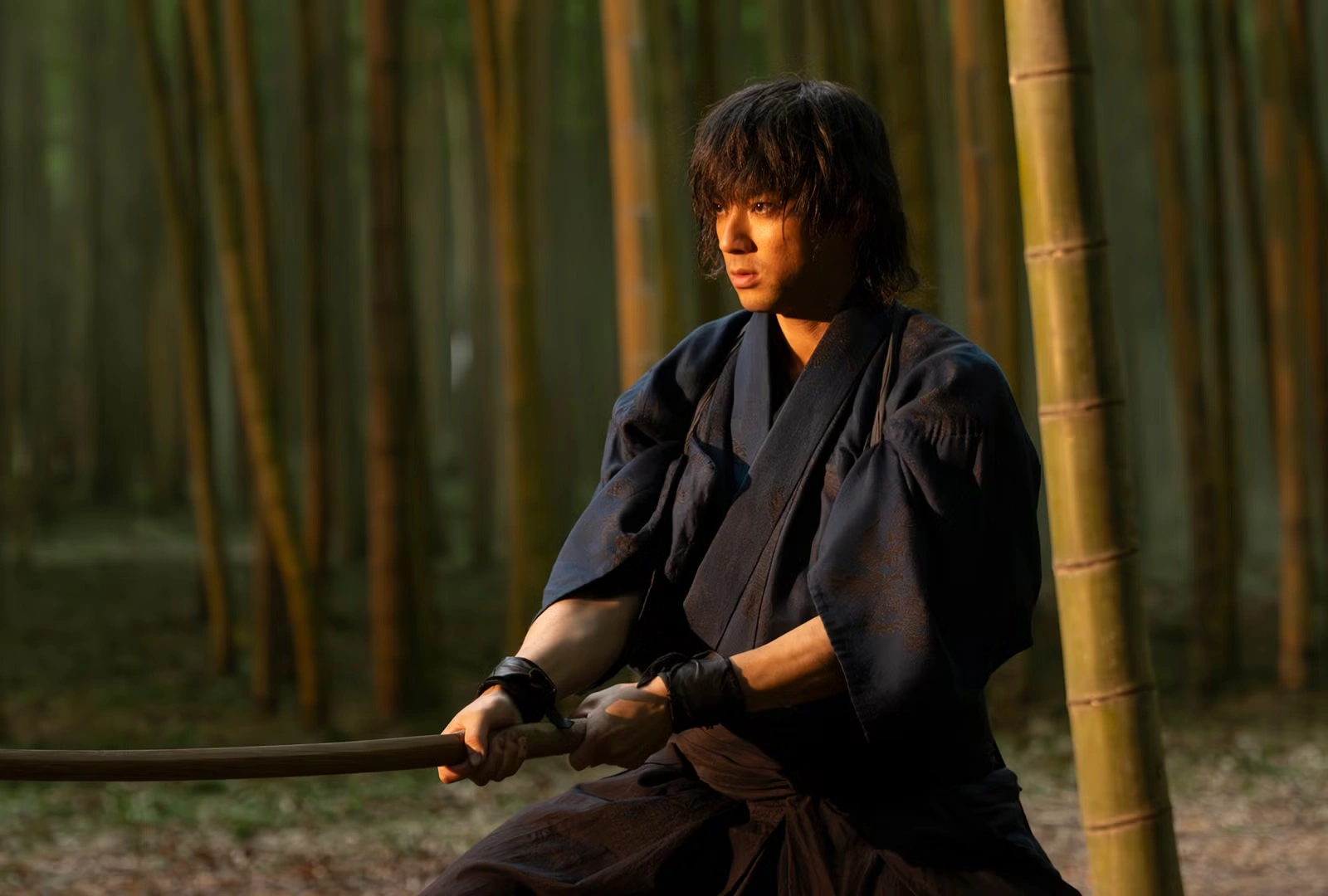
The show emphasizes his heart-over-skill mentality, a trait that makes him an accessible entry point for the audience. He represents the restless energy of youth during the 1860s, a generation weighed down by historical forces and without clear paths forward. His growth manifests through his increasing capacity for restraint, a key component of the martial philosophy the show explores.
Kondo Isami serves as the necessary counterbalance to Toshizo’s fire. As the master of the Shieikan dojo, Kondo possesses a mountain-like composure that provides the emotional foundation for the entire ensemble. He is a surrogate father figure whose kindness is often at odds with the violent world he inhabits. The inner circle of the dojo is populated by distinct personalities that represent different facets of the samurai ideal.
Okita Soji is the kind-hearted prodigy whose lethal skill is hidden behind a gentle exterior, while Yamanami Keisuke offers a stern, analytical perspective that often clashes with the more impulsive members. Saito Hajime provides essential humor and a cynical edge, acting as a pressure valve for the show’s more intense sequences. The performances lean into the expressive, sometimes heightened style of Japanese drama, which adds a layer of cultural authenticity to the interactions.
The antagonists are crafted with a similar level of complexity. Okado Izo, the Crossroads Slasher, is presented as a tragic mirror to Toshizo. Both men are defined by their blades. Izo, lacking the stabilizing influence of a found family, follows a path of solitary, aimless violence. His duels with Toshizo are some of the most philosophically charged moments in the series, as they force the protagonist to confront what he might have become without the dojo.
Serizawa Kamo represents the moral decay that emerges when the warrior spirit is untethered from ethics. His chaotic, dirty fighting style and blatant disregard for social norms make him a terrifying presence. He challenges the very core of Kondo’s teachings, suggesting that in a revolution, the only true virtue is survival.
Visual Authenticity and Cinematic Restraint
The visual direction of Song of the Samurai is a masterclass in cinematic restraint. Manga adaptations frequently favor loud, cosplay-inspired aesthetics; this production adopts a grounded realism that honors its historical setting, a choice that signals a shift in how streaming platforms are approaching international intellectual property, moving toward a more sophisticated and respectful visual language.
The costume and makeup designs are particularly noteworthy for their attention to detail. Fabrics look lived-in and weathered, and the hair styles, while reminiscent of the original character designs, are executed with a naturalism that fits the 19th-century backdrop. This choice allows the viewer to become fully immersed in the world of Edo without being distracted by artificiality.
The cinematography uses expansive wide shots to showcase the meticulously reconstructed markets, bridges, and dojos of the era. These shots provide a sense of place essential for a period drama, grounded in the physical reality of the environment. The use of natural light and shadow creates a textured, atmospheric look that heightens the emotional weight of the narrative.
Visual motifs like falling snow and cherry blossoms are used with specific intentionality, linking the internal states of the characters to the shifting seasons. These elements nod to traditional Japanese aesthetics, where the beauty of the natural world is often used to emphasize the transience of human life.
The camera work reflects the duality of the samurai lifestyle. During scenes of dialogue or domestic life within the dojo, the camera often remains static, using master shots that allow the actors to inhabit the space. This stillness creates a sense of peace that makes the subsequent violence even more jarring. When the swords are drawn, the camera becomes kinetic, swinging and dipping in tandem with the performers’ movements.
This approach ensures that the action feels fluid and immediate, carrying the visceral energy of live performance. The attention to 19th-century detail, from the architecture to the daily rituals of the characters, provides the series with a level of historical authority that is rarely seen in action-oriented television.
The Evolution of the Duel
Action in Song of the Samurai serves as the primary method of storytelling, carrying narrative weight far exceeding simple entertainment. The choreography represents a sophisticated evolution of the chambara tradition, blending the theatricality of classic films with a modern, high-speed intensity. The fights are brutal and visceral, emphasizing the physical toll of combat.
Sweat, blood, and labored breathing are central to the experience, stripping away the romanticism often associated with samurai cinema. The use of specific martial arts techniques, such as the Hiraseigan stance, adds a layer of technical depth that will satisfy enthusiasts while remaining narratively significant for the casual viewer.
Every duel serves as a character study. Each encounter stages a philosophical contest, testing whose ideas can withstand the pressure of combat. The battle between Soji and Kamo is a classic study in contrasts: precision and grace versus raw, unprincipled power.
These moments are where the show’s themes are most clearly articulated. The violence is never mindless; it is always a consequence of the characters’ choices and the world’s demands. By focusing on one-on-one battles, the series creates a sense of intimacy and high stakes that larger-scale skirmishes often lack.
The focus on high-octane spectacle ensures that the series maintains a breathless pace, even as it explores complex political themes. This prioritization of kinetic storytelling allows the show to compete in a global market where audience attention is a scarce commodity.
Song of the Samurai maintains its thematic depth alongside its kinetic energy, grounding every sword fight in the emotional weight behind the blade. By marrying technical excellence with deep character work, the series redefines what a modern period drama can be, suggesting that the most effective way to explore history is through the intense, personal conflicts of those who lived it.
Song of the Samurai is a high-profile live-action adaptation of the acclaimed manga Chiruran: Shinsengumi Requiem. The series premiered internationally on HBO Max on May 9, 2026, following its initial domestic broadcast in Japan in late March. It centers on the legendary Shinsengumi during the Bakumatsu era, focusing on the transformation of Toshizo Hijikata from a reckless street brawler into a disciplined leader of the shogunate’s elite police force. Viewers can currently stream the eight-episode first season exclusively on HBO Max in most territories, or on U-NEXT in Japan.
Where to Watch Song of the Samurai Online


Full Credits
Title: Song of the Samurai
Distributor: HBO Max, TBS (Tokyo Broadcasting System), U-NEXT
Release date: March 26, 2026 (Japan), May 9, 2026 (Worldwide)
Rating: TV-MA, NC16
Running time: 60 minutes
Director: Kazutaka Watanabe
Writers: Masaaki Sakai, Shinya Umemura, Eiji Hashimoto
Producers and Executive Producers: Akira Morii, Mamoru Inoue, Kazuya Shimomura, Tenshin Tsutsumi, Katsuaki Setoguchi
Cast: Yuki Yamada, Nobuyuki Suzuki, Kento Nakajima, Go Ayano, Shuhei Uesugi, Aoi Nakamura, Kanata Hosoda, Kisetsu Fujiwara, Yosuke Sugino, Shuntaro Yanagi, Shuto Miyazaki
Director of Photography (Cinematographer): Yasutaka Furukawa
Editors: Mitsuo Niwa
Composer: Yoshiaki Dewa
The Review
Song of the Samurai
Song of the Samurai is a masterful expansion of the jidaigeki genre, successfully shedding the artifice of typical manga adaptations for a grounded, visceral historical epic. By prioritizing character depth and philosophical conflict over mere spectacle, it breathes new life into the legend of the Shinsengumi. While its episodic pacing occasionally meanders, the technical precision and emotional resonance make it a landmark for international streaming. It is a rare work that honors its roots while aggressively forging a new path for period action dramas.
PROS
- Grounded production design that favors historical realism over "cosplay" aesthetics.
- A sophisticated hybrid of traditional chambara and modern, high-speed martial arts.
- Meaningful evolution of Hijikata Toshizo from a brawler to a disciplined warrior.
- Thoughtful exploration of "found family" and the death of tradition in a modernizing world.
CONS
- The chapter-like structure leads to occasional lulls and a meandering middle section.
- The large supporting ensemble can feel like "cardboard characters" in early episodes.
- The expressive J-drama acting style may feel jarring to viewers unaccustomed to the cultural tone.