

























![Kingdom Hearts Collection [I-III] Review](https://gazettely.com/wp-content/uploads/2026/10/Kingdom-Hearts-Collection-I-III-1-360x180.webp "Kingdom Hearts Collection [I-III] Review: KHII Holds Steady as Newer Entries Fluctuate 37")




In 1993, a gold coin passed from one hand to another and became plastic and glass. Inside the besieged geography of Srebrenica, Bekir Hasanović traded a family treasure for a video camera, surrendering material safety to the severe vocation of witness. The exchange turned a civilian into the chronicler of his possible erasure.
Ado Hasanović, his son and the director, approaches him with the strained patience of an archaeologist trying to trace a buried city beneath miles of cold ash. Bekir survived the genocidal waves of the Bosnian War, then came home with a tongue made heavy by lead.
The film rises from hidden VHS tapes and written diaries, objects from a period when Glogova stood near ruin. It becomes a domestic study with the temperature of historical record. We watch an amateur documentarian form himself amid the debris of a collapsing world. The camera becomes survival instrument, witness box, and shield against the unspeakable.
The Architecture of the Fragmented Image
The image arrives as a haunted object, trembling with the unstable pulse of magnetic tape. Hasanović builds a formal trinity of time. The archival layer reveals the “John, Ben & Boys” collective, men who filmed life under siege with raw kinetic force. The grain of 90s VHS becomes a visual grammar of trauma.
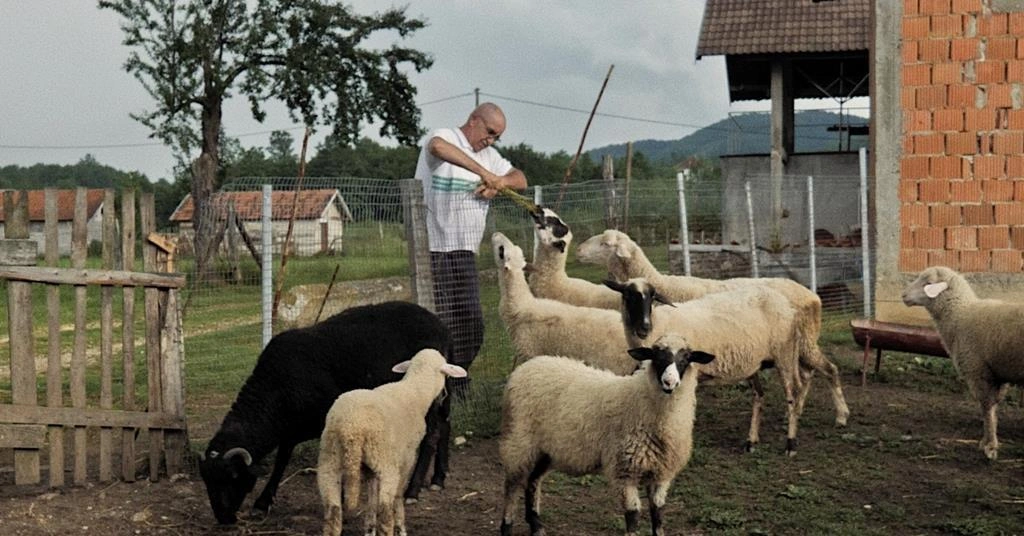
Glitches and color bleeds open like wounds in the psyche, matching the instability of a mind trying to survive the knowledge of massacre. Beside this damaged archive stands the clinical clarity of high-definition digital footage. Bekir and Fatima move across their farm, surrounded by a pastoral calm that feels strangely treacherous. The third layer holds Ado reading his father’s diary entries aloud. His voice becomes a vessel where parent and child briefly share one wounded identity.
The editing makes these eras confront one another. It suggests that the physical land has healed while the inner architecture remains broken. Static from the past seeps into the present’s quiet. Time refuses the clean arrow. It circles its wounds.
I am unsure which image carries the deeper truth: the polished present or the ruined past. The truth lives in the glitch. The mechanical decay of the tape becomes the bodily sign of a self wearing away. Each dropped frame feels like memory falling into the abyss. The director asks us to look through the static until the static takes command of the gaze.
The Fortress of Paternal Withdrawal
Paternal figures in this landscape often resemble stone monuments. The young Bekir on tape appears assertive, a man performing his own presence for the lens. His diaries reveal a deep inward collapse. He writes of the hallucinogenic terror of gas grenades and the agonizing exhaustion of the Death March.
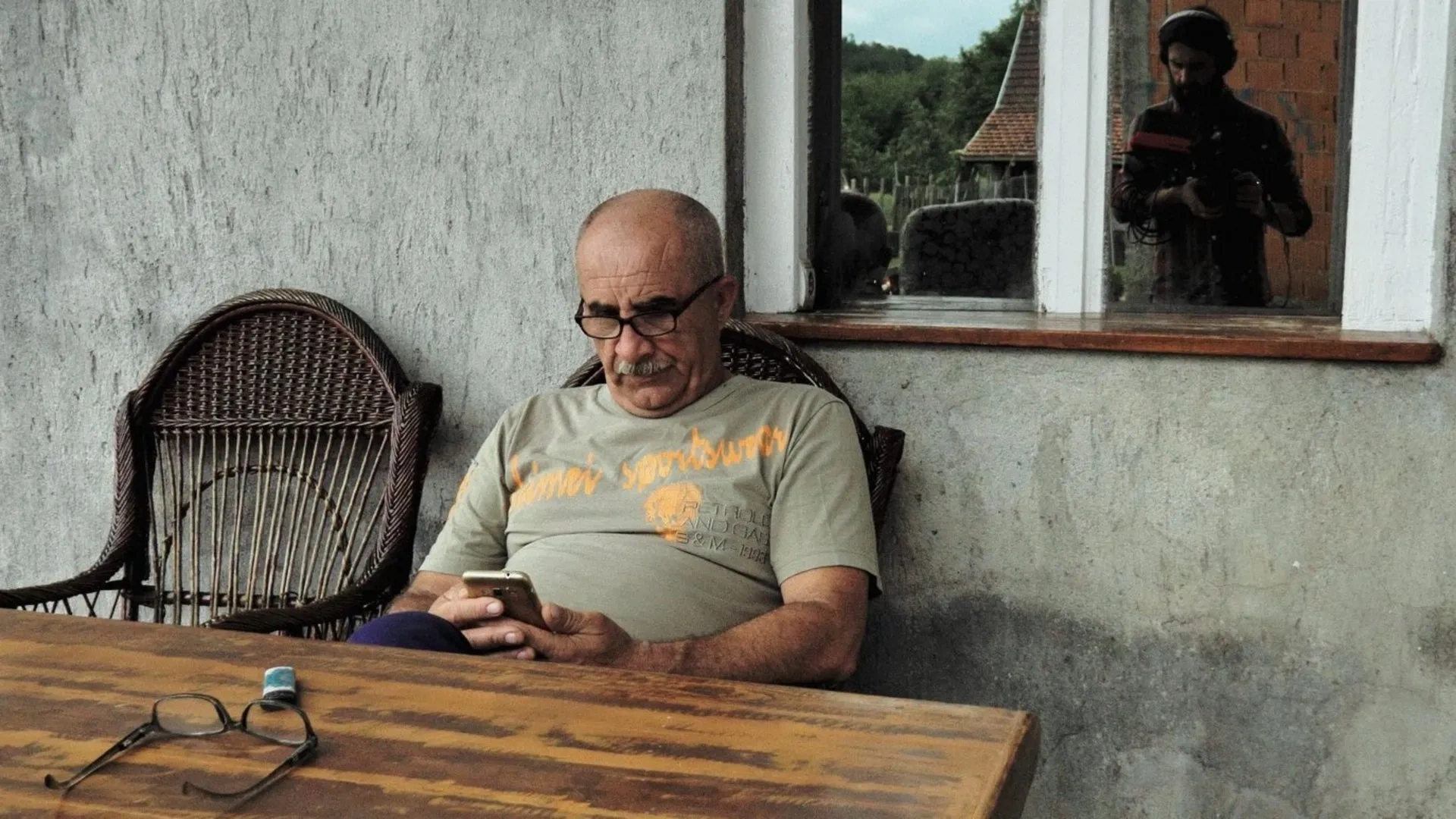
That private exposure sits beside the gruff, unyielding patriarch of the present. Bekir has withdrawn into a fortress of silence. He is a casualty of traditional masculinity faced with absolute horror. Fatima, his wife, becomes the vital bridge. She coaxes him toward cooperation. She serves as the emotional anchor that lets the film exist at all.
The work refuses the comfort of neat resolution. Easy catharsis stays out of reach. Survival appears as a heavy, permanent condition. The wounds remain acknowledged, carried, and touched with caution. Full reconciliation becomes impossible when the past is a graveyard where one person still lives and another longs to enter.
Some stories carry a mass beyond speech. Even before one’s own flesh and blood, truth remains a jagged shard. Bekir’s resistance to memory is a desperate form of preservation. He locks the ghosts inside to protect those who still live in daylight.
The Sonic Landscape of the Secular Requiem
Sound gathers as physical pressure inside the frame. Iosonouncane’s score uses synthesizers to create a sonic terrain that feels ancient and mechanical at once. By manipulating fragments of Mozart’s “Requiem,” the composer shapes a secular lament. This auditory atmosphere thickens the sensory force of the images. We hear the peaceful hum of the modern farm placed against the jagged explosions recorded decades earlier.
The director sharpens this tension through footage filmed by Serbian paramilitaries. These soldiers record their own atrocities with chilling, mundane detachment. Their callous voices sit against Bekir’s emotive testimony. The choice restores human presence to people treated as targets.
The visual decay of the tapes remains a strong metaphor. The literal fog of aging VHS ribbons merges with the metaphorical fog of war. It creates a space where history can never become fully visible. It is felt through static. Sound and image move together so the victims appear as complex individuals.
Tolling bells and manipulated melodies form a passage between the living and the dead. The film suggests that silence is the loudest sound in a house built atop a massacre. The manipulated soundscape becomes a funeral shroud for a world that ceased to exist in 1995. We remain with the vibration of trauma, still refusing to dissolve into air.
This documentary presents an excavation of history through a personal lens. Originally premiering at Visions du Réel in April 2024, it arrives for wider digital audiences this month. The film serves as a portrait of memory and loss, weaving together archival VHS tapes with modern domestic life. It presents a look at the generational trauma resulting from the Srebrenica genocide, focusing on the silences between a survivor and his child. Viewers can watch the documentary on the True Story platform, where it makes its digital debut on May 15, 2026.
Full Credits
Title: My Father’s Diaries
Distributor: Mediawan Rights, Fandango, True Story
Release date: April 15, 2024 (Premiere), May 15, 2026 (Digital Release)
Running time: 93 minutes
Director: Ado Hasanović
Writers: Armando Maria Trotta, Anna Zagaglia, Ado Hasanović
Producers and Executive Producers: Carlo Degli Esposti, Nicola Serra, Antonio Badalamenti
Cast: Bekir Hasanović, Fatima Hasanović, Ado Hasanović, Izet Beganović, Nedžad Ahmetović
Director of Photography (Cinematographer): Ado Hasanović, Ercole Cosmi
Editors: Esmeralda Calabria, Elisabetta Abrami, Desideria Rayner
Composer: Iosonouncane
The Review
My Father’s Diaries
The film functions as a quiet meditation on the impossibility of truly knowing the ghost of another man’s past. It honors the glitch and the silence, refusing the false grace of a clean ending. This work remains a heavy, necessary encounter with the shadows of Srebrenica.
PROS
- The structural intelligence of the temporal layers.
- The visceral use of visual degradation to mirror mental fragmentation.
- A haunting score that avoids emotional manipulation.
- The refusal to provide a sanitized or comfortable resolution.
CONS
- Occasional disorientation caused by shifts in the timeline.
- A narrow focus that leaves specific geopolitical shifts in the background.
- The emotional distance of the subject may alienate those seeking sentimentality.







