









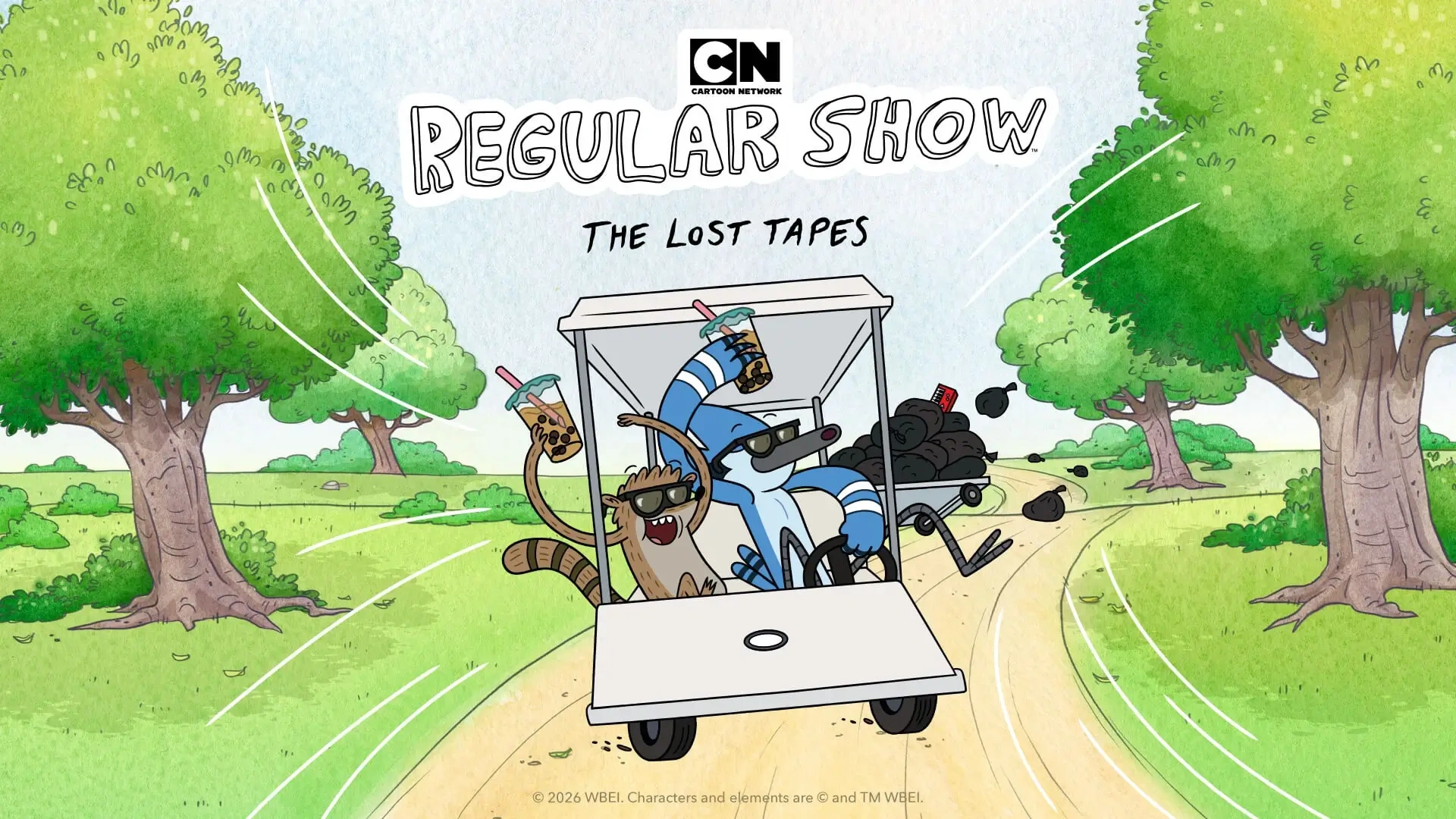

Regular Show: The Lost Tapes brings the park crew back into view, with J.G. Quintel reviving the slacker comedy style that helped define a full stretch of animation. This installment works as a set of stories designed to fill spaces inside the original timeline. It looks back at adventures from the park gang’s earlier years and keeps the identity of the original run alive, reaching into areas the series had left untouched.
Fans return to the park with Mordecai and Rigby, then find the angle shifting toward other familiar faces. Each episode plays like a self-contained blast of the surreal, built around the old Regular Show trick: begin with something boring, then let the supernatural crash through the door.
The original series had a clear ending, and this revival treats that ending with care by suggesting that smaller tales were still sitting in the margins. It carries the spirit of the park forward and gives the expanded cast room to drive the action. The result bridges old nostalgia and a new phase for the franchise.
Finding the Missing Pieces of the Park
The “Lost Tapes” idea gives the creators a clean way around the heavy pressure of a series finale. The show avoids a sequel that might weaken the emotional force of the original ending by presenting itself as a found archive. I remember spending my college years watching these characters dodge work with the confidence of Olympic athletes, and this format feels like finding a box of those same memories on an old VHS.
The episodes place themselves in the Season 3 or Season 4 era, which lets us see the characters in their prime before later cosmic stakes took control. The show also gestures toward post-finale material by showing Pops in a peaceful afterlife. That playful movement across time frees the series from a straight line of growth.
The return to disconnected, episodic storytelling feels honest to the show’s personality. Long-form arcs dominate modern TV, so the comeback of 15-minute chaos has real snap. The shorter runtime creates a frantic rhythm where plot beats need to land fast. The “Fix That Tape” framing device gives these segments a neat entry point. It sets a nostalgic mood and opens corners of this universe that the earlier run left aside.
The world moves beyond Mordecai and Rigby’s viewpoint. A tape can follow a full spy operation with Thomas the Intern or spend time with Death himself. Anthology flexibility lets the setting travel beyond the park grounds wherever the tapes lead. This structure recalls the restless energy of independent short films, where a strange idea can carry the whole piece. It also signals a return to the creative freedom associated with the early 2010s.
New Perspectives on Familiar Friends
The supporting cast gives the revival its freshest lens. “Coffee Shop Wars” stands out because Margaret and Eileen guide the action. I spent a few years working in a small cafe, and the stress of competing with a flashier shop felt wonderfully grounded before the supernatural elements arrived.
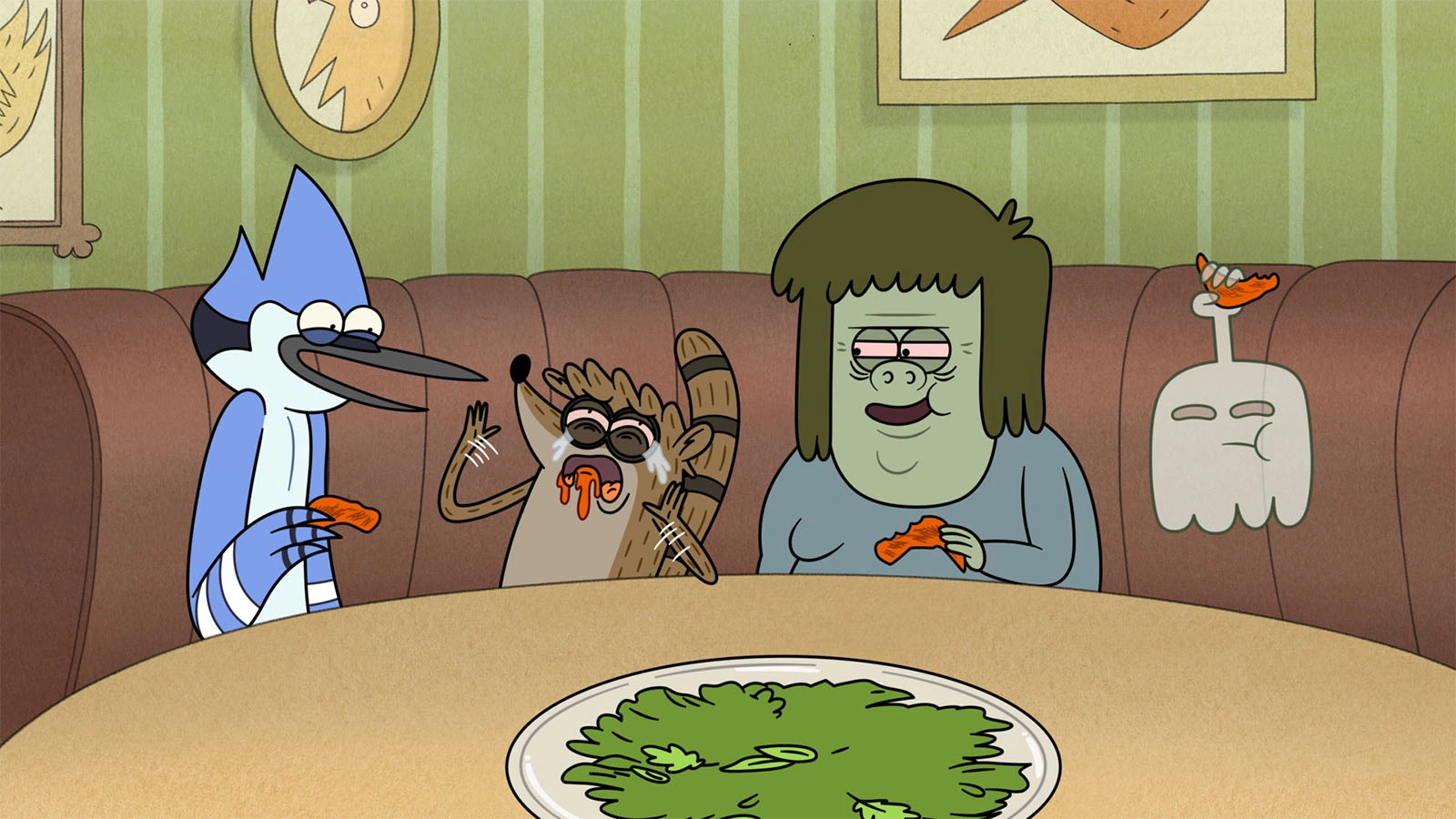
Margaret shows a level of independence that earlier seasons rarely gave her. She handles high-stakes threats without needing Mordecai to save the day. Eileen remains a bright spot through her quirky personality. These tapes explore her early relationship with Rigby and show how they grew closer with their separate traits intact.
Mordecai and Rigby slide into the background in these stories, serving as side characters as their friends lead the plot. The returning voice cast makes that transition feel smooth. Hearing J.G. Quintel, William Salyers, and Janie Haddad-Thompkins back in their roles brings instant comfort.
Their chemistry still feels sharp. Sam Marin brings his familiar energy to Muscle Man, and the news of Mark Hamill returning as Skips adds another spark of excitement. These actors inhabit the characters so fully that the recording booth feels like it stayed warm for them.
The “Lost Tapes” flesh out off-screen moments that fans have wondered about for years. We see the girls’ daily routines and their interactions with the park staff outside the main duo’s drama. That new dynamic gives the show’s social world extra texture.
The park always had a wide life beyond two slackers and their latest disaster. Giving these characters the spotlight helps the revival avoid repeating the same jokes with the same leads. It treats the supporting cast as people with their own adventures, their own comic timing, and their own strange collisions with park weirdness.
The Art of the Escalation
The comedy still runs on a precise pattern of escalation. A normal day begins with a simple task and ends in a battle against a deity. “Coffee Shop Wars” uses that formula to mock fusion food culture and trendy pop-up shops. The episode tackles gentrification and the way false sincerity in business can disrupt a local community.
Surrealism becomes a clean tool for making a point about modern consumer habits. I laughed at the literal fusion food gods because the joke lands close to our current world. “Corpse Flower” takes a different route through a poetry class. It pokes at the pressure of creative performance and throws in a death-scented plant for extra bite.
Fast dialogue keeps the humor sharp. Margaret and Eileen’s exchanges bring a different comic rhythm from the boys’ antics. The slapstick remains steady. Characters die in strange, cartoonish ways. High-speed chases and random encounters with odd obstacles keep the episodes connected to the original run.
The show balances millennial-coded slacker humor with broad, wacky adventure. It reflects the anxieties of young adulthood through total absurdity, which is a big reason the series became a cultural artifact. The writing feels clever without turning preachy. It uses the supernatural to amplify everyday worries such as workplace competition or dating nerves. That approach keeps the humor lively and durable.
The Transition to a Digital Park
The technical side of the revival makes the production changes easy to see. The show has moved from the original paper-drawn methods to a fully digital pipeline. Saerom Animation continues its work on the series, and the shift in technology is visible.
The characters carry a rigged look that differs from the hand-drawn fluidity of the earlier run. It shows in the movement of limbs and the rotation of shoulders. Some scenes feel a little stiff or floaty. I miss the slight imperfections of the pencil work, the tiny human marks that gave the original its particular charm.
Animation quality changes from episode to episode. Some segments look polished; others feel rushed in cleanup. Rough Draft Korea might be involved in other episodes to help maintain visual variety. The show keeps its signature aesthetic through these technical shortcuts. The color palette and background designs look exactly as they did a decade ago. The software has changed, and the visual atmosphere of the park stays intact.
That consistency helps connect the new digital look with the classic style. The backgrounds still carry the watercolor texture that makes the world feel lived-in. Watching the revival adapt to modern animation standards gives the technical shift real interest. The production evolution mirrors the narrative design: both are searching for a workable balance between familiar past and digital present.
Regular Show: The Lost Tapes premiered today on Cartoon Network. This revival functions as a collection of previously untold stories from the early years of the park staff. Fans can watch the series on Cartoon Network, with streaming availability expected on platforms like Max and Hulu later this year. The premiere features two segments titled Fix That Tape and Skips’s Luau, which return the focus to the familiar surrealism of the original franchise.
Where to Watch Regular Show: The Lost Tapes Online








Full Credits
Title: Regular Show: The Lost Tapes
Distributor: Cartoon Network, Warner Bros. Discovery, Max, Hulu
Release date: May 11, 2026
Rating: TV-PG
Running time: 15 minutes
Director: Toby Jones
Writers: J.G. Quintel, Matt Price, Sean Szeles
Producers and Executive Producers: J.G. Quintel, Sean Szeles, Sam Register, Ryan Slater
Cast: J.G. Quintel, William Salyers, Sam Marin, Mark Hamill, Minty Lewis, Janie Haddad Tompkins
Editors: Bobby Gibis
Composer: Mark Mothersbaugh
The Review
Regular Show: The Lost Tapes
Regular Show: The Lost Tapes succeeds as a nostalgic trip that stays fresh. By shifting the focus to side characters, the series avoids the repetitive nature of many revivals. The shift to digital animation creates some visual inconsistency, yet the core spirit of the park remains alive. It is a thoughtful exploration of stories that once felt lost to time. It offers a bridge for fans who miss the surreal charm of the original run.
PROS
- Margaret and Eileen receive well earned character development in lead roles.
- The original chemistry of the returning voice cast remains perfectly intact.
- The anthology format allows for creative narrative freedom without breaking continuity.
- The humor retains its signature escalation from the mundane to the absurd.
CONS
- The digital animation pipeline leads to occasional visual stiffness in character movement.
- Short episode runtimes can make the pacing feel rushed during complex scenes.
- Inconsistencies in the cleanup process affect the quality of the character models.