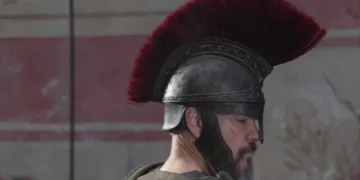


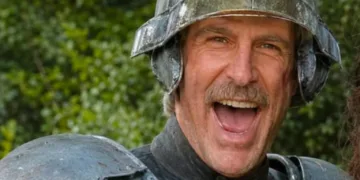









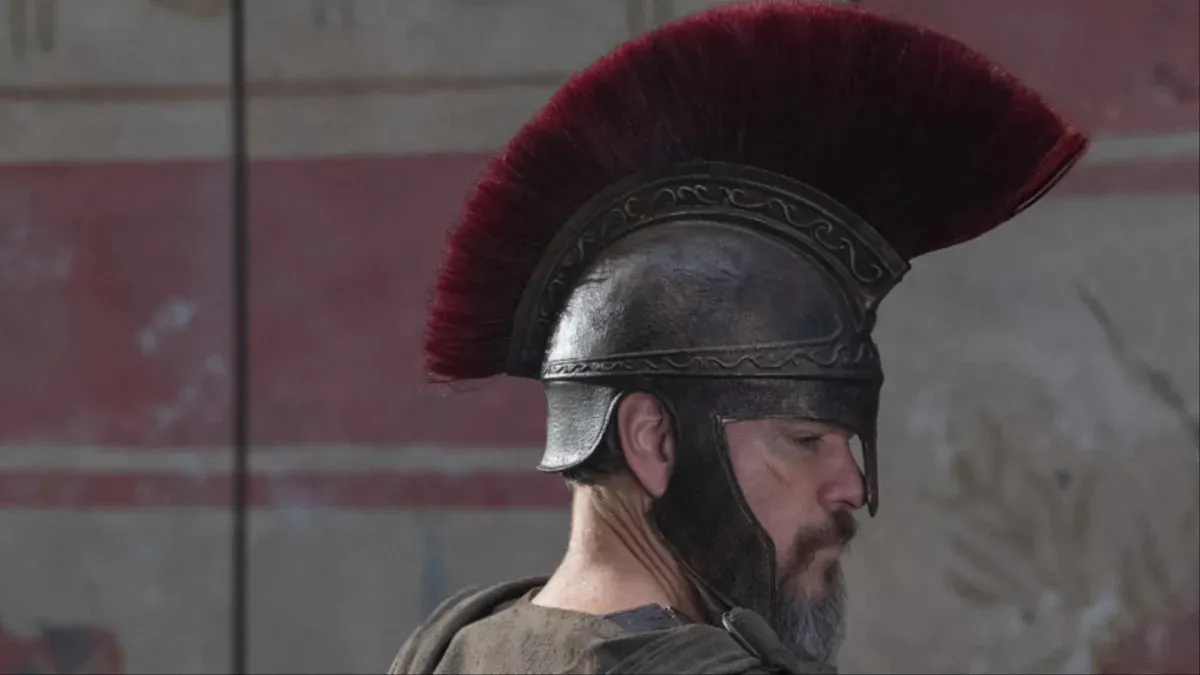

Christopher Nolan is answering early complaints about the look of The Odyssey, saying the black armor worn by Benny Safdie’s Agamemnon reflects research and character design rather than a casual break from ancient history. The debate erupted after trailers and promotional images showed a darker, glossier suit that some viewers compared to modern screen armor, turning a summer epic into a test case for how closely mythology-based blockbusters should follow the material record.
Nolan told Time that the costume team built the design around the theory that Mycenaean artisans could have blackened bronze, pointing to surviving daggers and the use of precious materials to mark Agamemnon’s rank. Costume designer Ellen Mirojnick, he said, aimed to signal a ruler whose wealth and status set him apart from other warriors. Nolan added that the film draws from both the Bronze Age and Homer’s later era, arguing that early audiences pictured Homeric figures through their own visual culture.
The response fits Nolan’s larger pitch for the film. Universal says The Odyssey is the first feature shot entirely with IMAX cameras and will open worldwide in IMAX theaters on July 17. The latest trailer, released May 7, highlights the Trojan Horse, large practical scenes and exchanges between Matt Damon’s Odysseus and Charlize Theron’s Calypso, with Tom Holland, Anne Hathaway, Zendaya, Robert Pattinson and Lupita Nyong’o also in the ensemble.
The director also addressed another point of online debate: Travis Scott’s casting as a bard. Nolan said he wanted to connect Homer’s oral tradition to rap, describing the choice as a deliberate bridge between ancient performance and modern storytelling. Scott had appeared in television spots before the role drew wider notice, prompting fan speculation about how the film would use him.
The scrutiny underscores the challenge facing Nolan as he adapts one of the most studied works in Western literature for a mass audience. Historians and classicists can question individual choices, and fans will keep parsing each trailer frame. Nolan’s defense rests on a clear claim: the film may take artistic license, yet it does so with research behind the image.