




























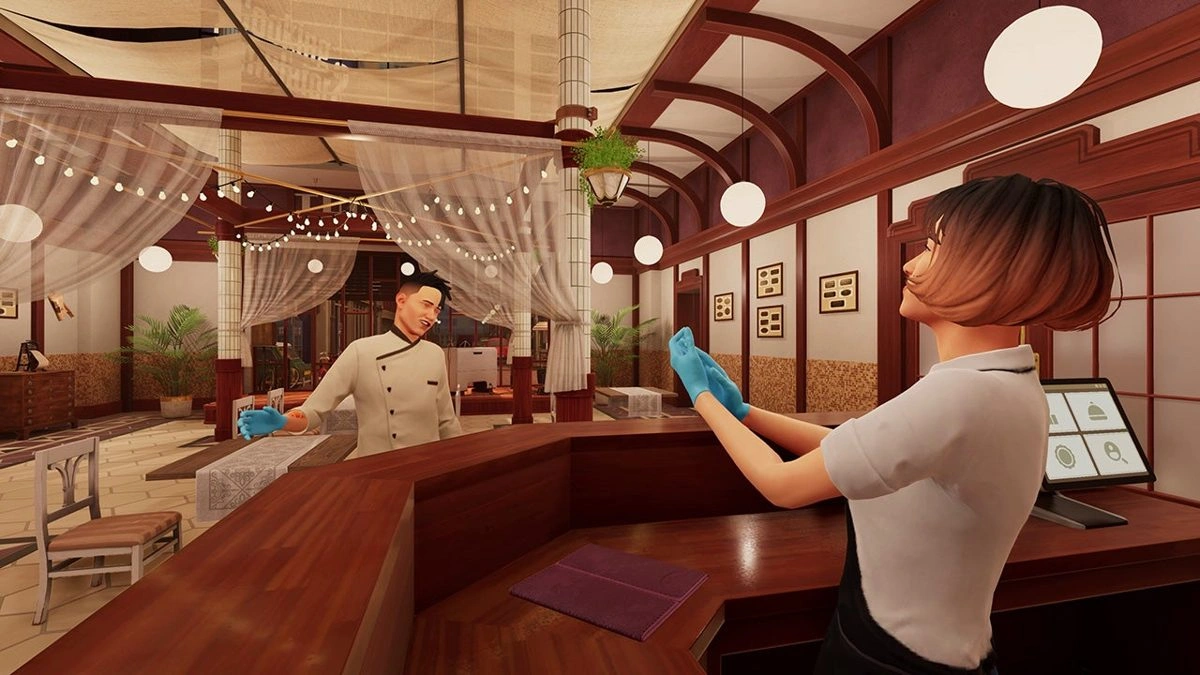

Big Cheese Studio returns with Cooking Simulator 2: Better Together, a sequel shaped by a clear change in design philosophy. The earlier game leaned into physics-driven unpredictability; this version commits to professional restaurant simulation. Its world feels grounded in the precise realities of culinary labor, discipline, and workplace ethics. Players handle stock management, menu curation, and the constant pressure of service.
Career and Sandbox modes offer two distinct relationships with the kitchen space. The defining addition is cooperative play, which turns the experience into a shared test of timing, communication, and mutual trust. The game asks players to watch temperature, timing, and preparation with near-ritual attention.
Slapstick humor recedes, and a systematic growth model takes command. That shift reflects a global movement in the simulator genre, where mechanical depth has become a richer source of tension than pure chaos. Each dish carries weight.
Precision Systems and the Architecture of Flavor
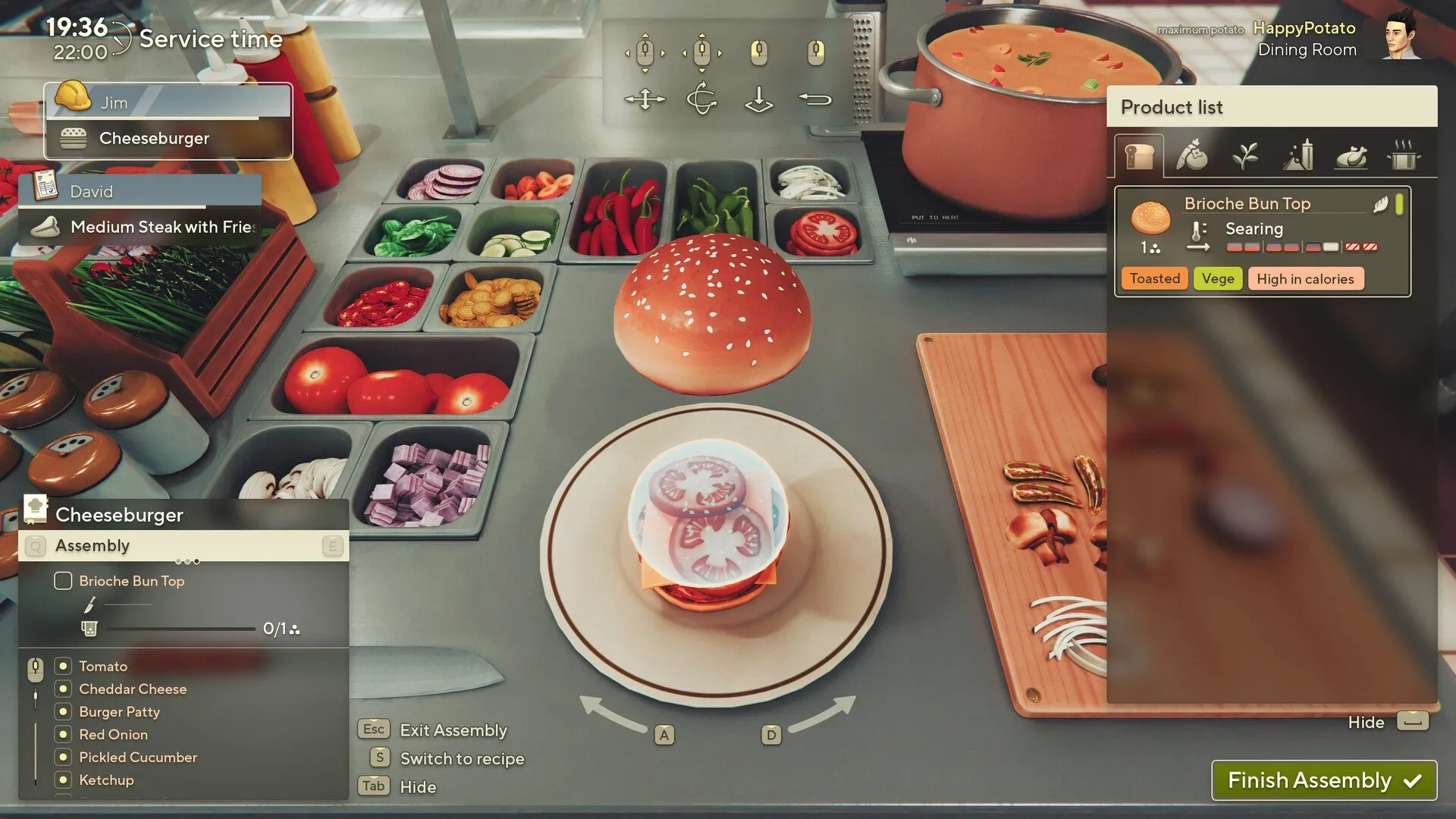
The mechanical core of this sequel operates with surgical precision. Free-hand interaction has yielded to a menu-driven selection system. Chopping ingredients now runs through a structured interface, asking players to choose specific cuts and follow timed instructions. Manual dexterity gives way to procedural accuracy. That rigidity gives the cooking process a technical clarity, almost like a training module filtered through the language of play.
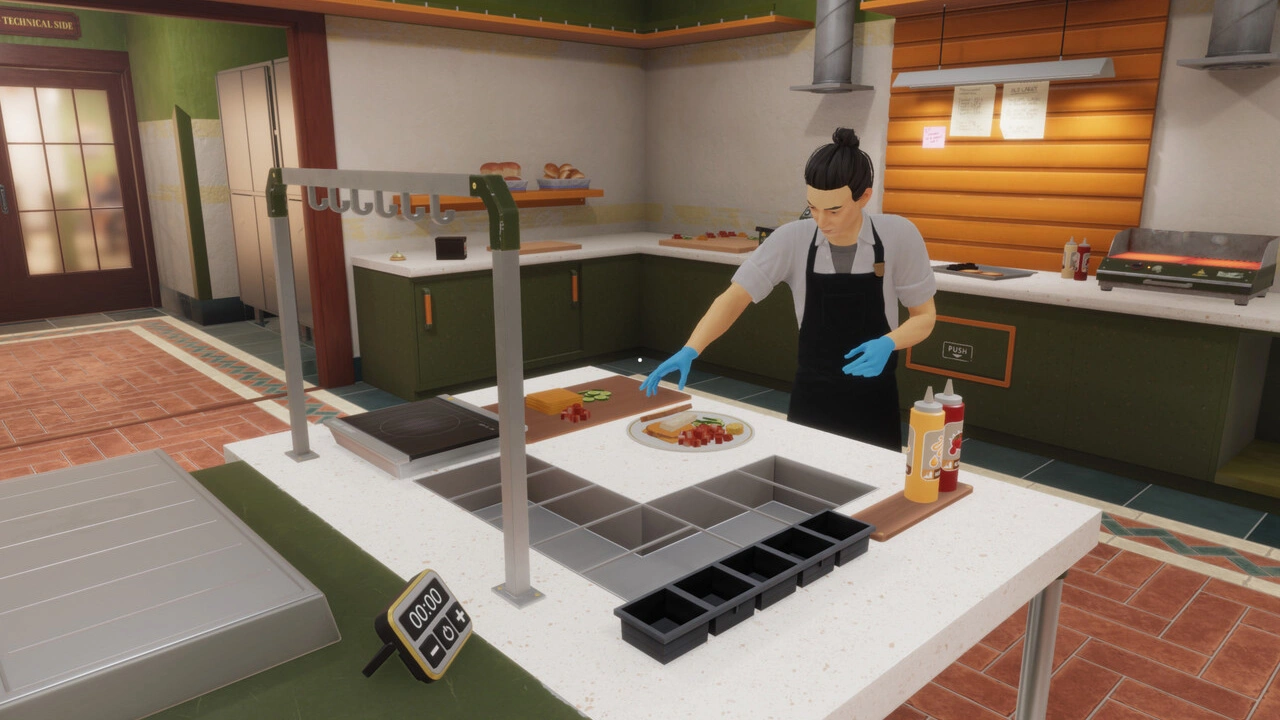
Success depends on careful control of heat and seasoning. A mistake in either area produces an inedible result. The daily workflow adds a logistical loop that captures the administrative burden of professional cooking. Players order groceries and sort them into designated storage zones. Cold goods and dry staples require separate handling, turning the kitchen into a map of labor, memory, and discipline.
The Blueprint feature gives the player creative agency inside that ordered structure. Existing recipes can be modified. A standard garlic shrimp dish can gain breading or extra spices, shifting its culinary identity through small interventions. Preparation becomes the foundation of survival. Cutting and storing ingredients before service begins prevents a breakdown during the rush.
The game tracks quality through seven categories, including Umami, Fatty, and Bitter. Preparing fries or a rack of ribs makes this depth clear. Every action alters the final flavor profile. Narrative goals and mechanical execution work in close conversation here: mastery is expressed through routine, repetition, and controlled improvisation. The systems demand the kind of focus usually associated with technical manuals. The kitchen becomes a space of rigid order.
Renown and the Social Geometry of Service
Advancement in the kitchen relies on the Renown system. Reputation functions as the main currency of growth. This metric governs business expansion and access to new opportunities. The development path includes a skill tree with 14 abilities and 19 perks, each tied to practical benefits. Some skills let a chef carry multiple plates. Others improve utensil efficiency. Perks often shape the financial side of the operation, including reduced delivery costs or greater tolerance during liquid pouring.
These systems give progression a clear social and professional meaning. The player grows through reputation, efficiency, and credibility. Multiplayer changes the basic rhythm of the simulation. A team can divide labor with pleasing clarity.
One player might handle prep, another might manage the stove. Communication failures bring moments of accidental comedy, the kind that international workplace stories understand well: every kitchen has its own language, and every language breaks under pressure.
Career mode and Sandbox offer two forms of engagement. Career mode stresses gradual mastery. Sandbox grants an unlimited budget for experimentation. The preparation timer remains active in that free environment, keeping pressure alive. The simulation also recognizes varied customer preferences. Construction workers might seek salty and fatty meals. That detail asks the player to think about clientele as a social group with habits, needs, and appetites. Cooking becomes a mechanical task tied to a wider social environment.
Technical Fidelity and the Friction of Interface
The sequel adopts a clean visual style and moves toward stylized realism. Ingredient textures carry notable detail. Bubbling oil and oven glow give heat a sensory presence. The sound design strengthens that impression through environmental texture. Exhaust fans hum. Timers tick with steady insistence. Utensils strike benches with satisfying weight. These details help the kitchen feel active, physical, and culturally legible as a workplace.
The interface creates several points of friction. Information boxes often block the screen, making it harder to monitor several tasks at once. Spice levels in mixed dishes such as soups become especially difficult to track. The game currently carries several technical flaws.
Component items such as burgers and lettuce sometimes float during plating. Customers can remain at tables indefinitely, blocking new diners from entering the establishment. Certain seasoning actions may freeze the game entirely, forcing a reload from previous saves.
The title currently feels close to a preliminary release. Its simulation depth is clear, and its systems show real sophistication. Technical polish lags behind that ambition. The result is a persistent clash between carefully designed restaurant logic and unstable software behavior. That tension shapes the experience as much as any timer, recipe, or rush-hour order.
The Review
Cooking Simulator 2: Better Together
Cooking Simulator 2: Better Together delivers a rigorous and disciplined simulation of culinary management. It trades chaotic physics for mechanical depth and systematic business growth. The inclusion of cooperative play adds a social layer that mirrors the intensity of a real kitchen. Technical instability and a clunky interface often disrupt the flow of service. While the recipe customization and progression systems are rewarding, the current state of the software feels unpolished. It is a demanding experience that rewards precision while requiring patience for its technical flaws.
PROS
- Deep recipe customization via the Blueprint system.
- Engaging and coordinated cooperative multiplayer.
- Structured progression with meaningful perks and skills.
- Authentic focus on professional kitchen logistics.
CONS
- Persistent bugs including floating items and soft locks.
- Unintuitive interface that obscures vital information.
- Performance issues like stuttering and freezing.
- Shift in tone might alienate fans of the original chaos.