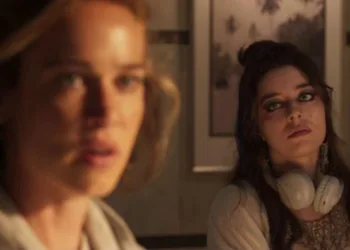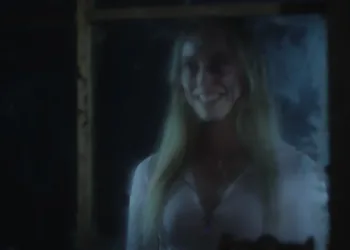











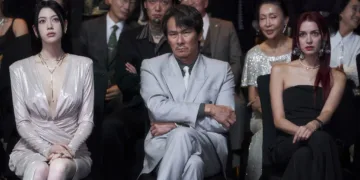













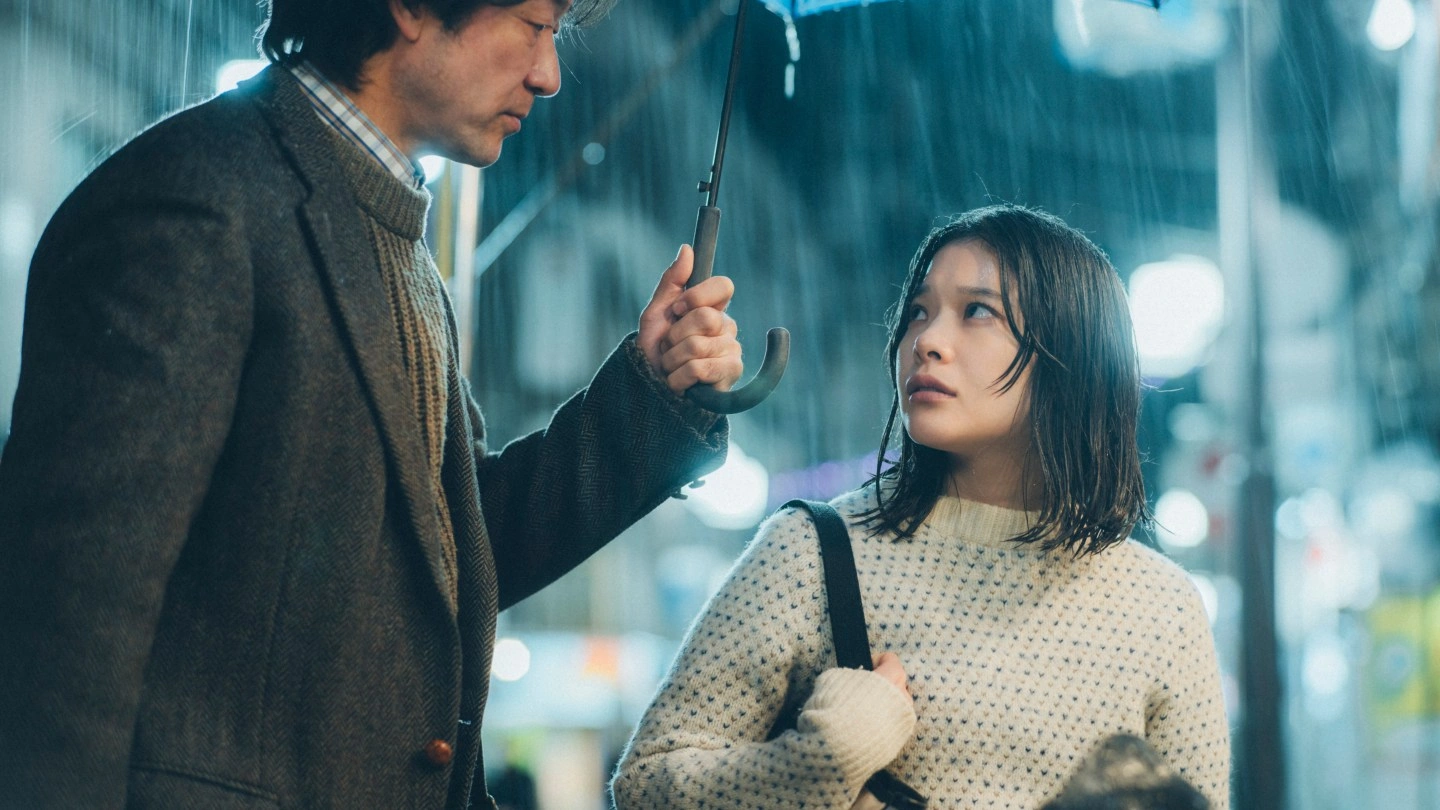

Yukiko Sode’s All The Lovers In The Night, adapted from the prose of Mieko Kawakami, carves a quiet existential chamber inside the concrete spread of Tokyo. Thirty-four-year-old Fuyuko Irie, played by Yukino Kishii with a brittle, birdlike stillness, lives near the edge of social visibility.
She works from home as a freelance proofreader, a profession built around distance, precision, and the steady erasure of personal noise. Her life has become a chosen exile. Days dissolve into muted routine, while the city reaches her most clearly during long walks under midnight cover. Then a small rupture occurs at a Shinjuku cultural center.
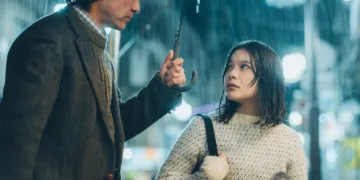
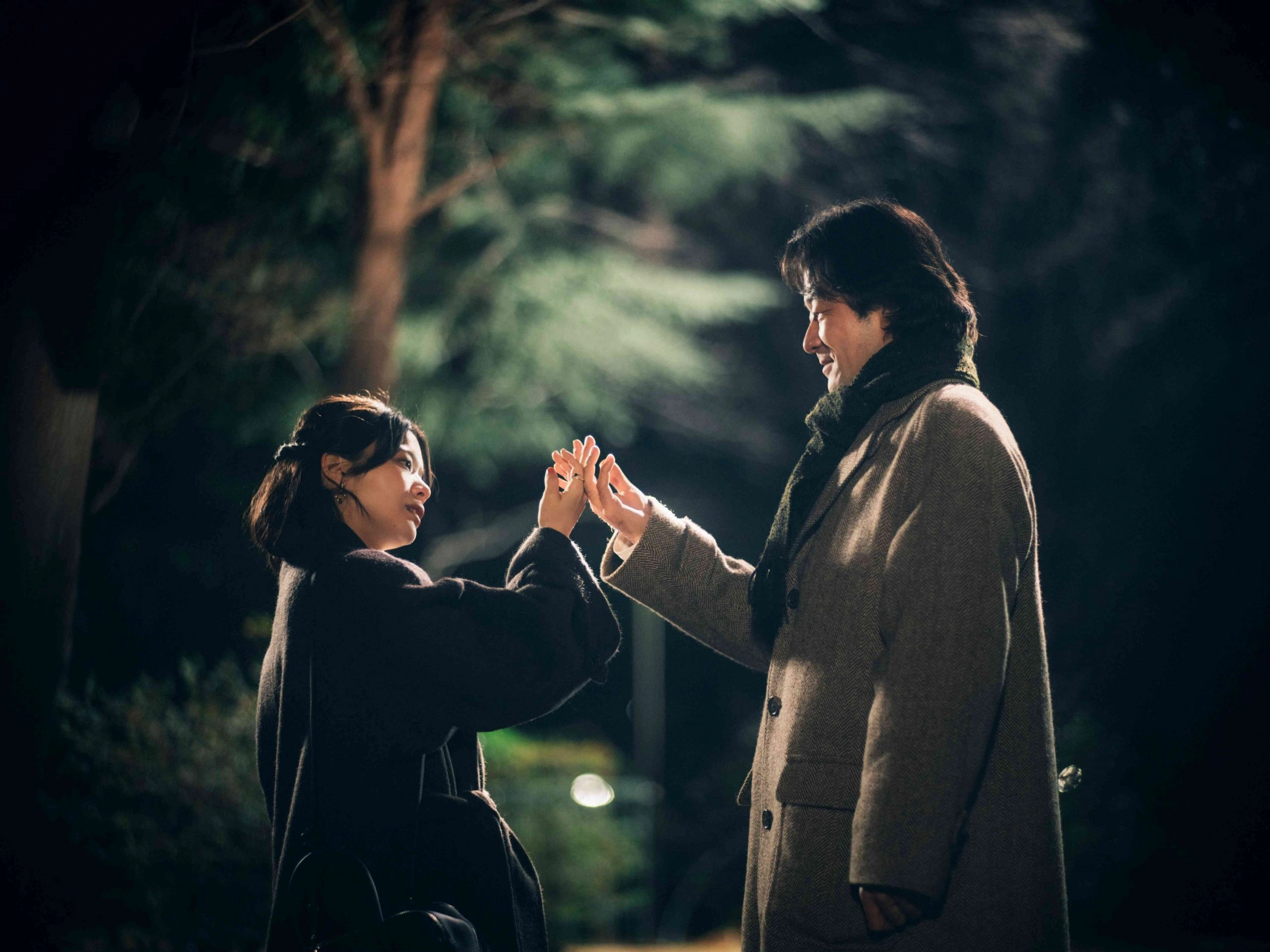
Exhausted and suddenly ill, Fuyuko receives help from Mitsutsuka, played by Tadanobu Asano, a high school physics teacher in his late fifties. The encounter becomes a ritual. Each Thursday, they meet at a local cafe, forming a delicate passage between two isolated beings through sparse conversation and shared attention. Sode gives herself fully to this modest premise, shaping a hushed study of souls moving through the city like faint signals in deep space.
The Architecture of Mistakes and Isolation
Fuyuko’s inner life carries a paralysis so deep it feels almost metaphysical. Her work as a copy editor mirrors this suspended state. She reads with a clinical gaze, searching for mistakes while keeping emotional movement at a distance. That habit becomes a philosophy of living.
Life appears to her as a page filled with errors awaiting correction, and this view leaves her stranded outside direct experience. Alcohol becomes her private method of softening existence. She slips sake into her daily water bottle, dulling the sharp edge of consciousness one hidden sip at a time.
Sode places this spectral survival beside the women in Fuyuko’s orbit. Hijiri, her supervisor, played by Misato Morita, carries an open, expressive confidence. Noriko, her former classmate, presents the familiar route of marriage and motherhood. Through these encounters, the film studies the pressures placed on modern Japanese women, caught between domestic expectation and a newer, lonelier form of independence.
Fuyuko’s alienation gains its full gravity through scattered flashbacks, which break into the present with the force of buried matter. Past trauma explains the frozen quality of her identity, her emotional life locked in a cold room of memory. She passes through Tokyo like a phantom, seen by lights and buildings, remembered by none.
The Texture of Disorientation and Silence
The film’s form deepens this feeling of estrangement. Cinematographer Yasuyuki Sasaki shoots Tokyo on tactile 16mm film, using a dim evening palette of muted amber and dark red. The city takes on the density of a moving painting, thick with shadow and half-perceived feeling.
Sasaki often uses subjective, off-center point-of-view shots, placing Fuyuko so she seems to look toward the viewer while never meeting the lens. The effect is quietly unnerving. We share her displacement, her sense that perception itself has tilted a few degrees away from stability.
Shinya Takata’s sound design works with the same psychic pressure. Long passages of ambient silence sit heavily in the frame, then sudden mechanical noises break through, including the violent crash of a vehicle. These ruptures pull the viewer into Fuyuko’s anxious, alcohol-blurred consciousness, where the outside world arrives as shock. The film’s most severe formal gesture may be its use of a male voice-over, performed by Tōri Matsuzaka, for Fuyuko’s inner thoughts.
The choice makes her selfhood feel split, as if even private language has been displaced from her body. By giving her inner monologue to another voice, Sode stresses Fuyuko’s estrangement from her womanhood and from her own self-image. Her mind becomes foreign ground. Every unspoken word hangs in the amber air, waiting for a listener who may never arrive.
The Physics of Reflected Light
Science becomes the unexpected grammar of connection during Fuyuko’s Thursday meetings with Mitsutsuka. Their conversations often turn to physics, especially the way sunlight travels through empty space, invisible until it strikes atmospheric particles. The concept becomes the film’s central image for Fuyuko’s emotional state. In the absence of another presence to reflect her, she believes she remains unseen, suspended in a vacuum she has slowly built around herself.
Sode treats this bond with restraint. Romantic closeness never becomes a cure for depression or trauma. Mitsutsuka offers a space where speech feels possible, where attention can exist free from demand. That space helps Fuyuko begin a slow movement toward self-acceptance, yet her loneliness remains part of her condition. The film’s wisdom lies in that refusal to simplify pain. Fuyuko begins to sense that her worth does not depend on flawlessness or the correction of every perceived mistake.
Her midnight birthday walks give this realization its visual and spiritual shape. Moving through the half-light of the city, she comes to understand that her inner light remains present during total darkness. Perhaps peace, for her, means learning to exist without full illumination. Perhaps a solitary life can still hold warmth. Sode leaves that question suspended, tender and unresolved, like reflected light crossing the night.
All The Lovers In The Night premiered yesterday, May 17, 2026, at the 79th Cannes Film Festival within the Un Certain Regard section. Because this is a fresh festival screening, a wide theatrical or streaming release has not yet been finalized. Audiences can currently view the film at its scheduled festival screenings, while international distribution dates remain forthcoming.
Full Credits
Title: All The Lovers In The Night
Distributor: Bitters End
Release date: May 17, 2026
Running time: 139 minutes
Director: Yukiko Sode
Writers: Yukiko Sode, Mieko Kawakami
Producers and Executive Producers: Toshikazu Nishigaya, Kana Matsuda
Cast: Yukino Kishii, Tadanobu Asano, Misato Morita, Mai Fukagawa, Yuko Nakamura, Tōri Matsuzaka
Director of Photography (Cinematographer): Yasuyuki Sasaki
Editors: Azusa Yamazaki
Composer: Masato Suzuki
The Review
All The Lovers In The Night
Yukiko Sode delivers a fragile, stark anatomy of urban alienation that refuses cheap sentimentality. Through its tactile 16mm grain and heavy stretches of silence, the film strips away the illusion of easy human connection, replacing it with a quiet study of individual survival. It stands as a melancholic observation of a soul learning to exist in shadow, finding purpose without requiring the validation of a traditional romantic rescue. This is an uncompromising, beautifully muted piece of existential cinema.
PROS
- Tactile 16mm cinematography by Yasuyuki Sasaki creates an evocative, shadow-drenched visual palette.
- Yukino Kishii provides a remarkably subtle, restrained performance that anchors the emotional weight.
- The script avoids conventional romantic tropes, focusing instead on internal self-acceptance.
CONS
- The fragmented narrative timeline occasionally creates structural confusion regarding the sequence of events.
- Deliberate, slow-burning pacing may alienate viewers seeking traditional dramatic momentum.
- The experimental male voice-over choice is a polarizing device that risks emotional detachment.