






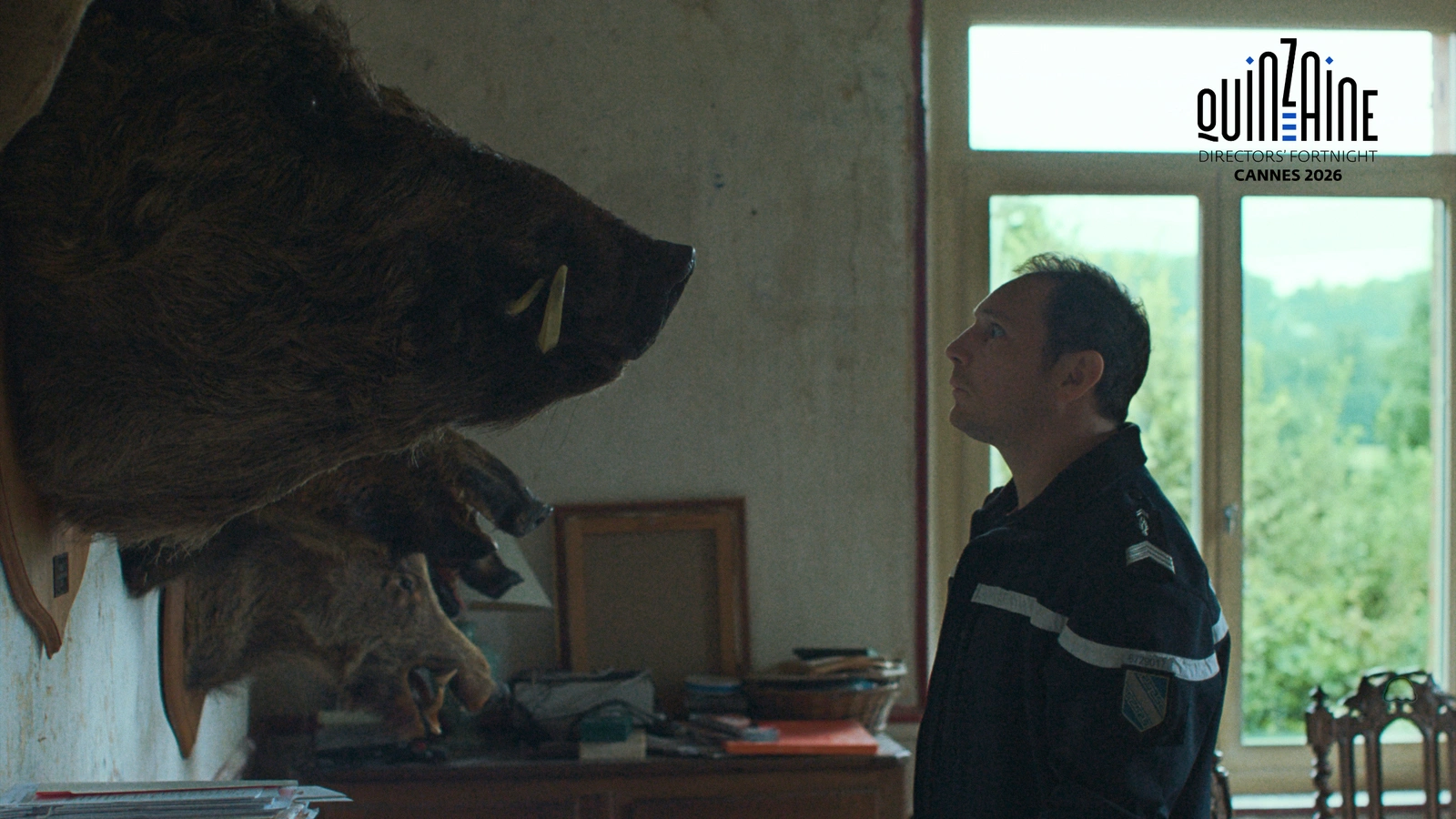

Sarah Arnold opens Too Many Beasts (L’espèce explosive) on hard, unsettled ground, placing its story in the Argonne region of rural northern France. The village of Serieux has become a pressure point for a furious local feud. Farmers watch wild boars tear through their fields, while traditional hunters fatten the animals and brush aside those agricultural complaints. Arnold sets that conflict loose in a violent, blood-soaked prologue, where a shotgun blast closes one dispute and leaves the militant farmer Raoul Brun suddenly missing.
The film then makes its first sharp structural move, jumping ahead one full year and sidestepping the rhythm of a standard procedural. Fulda Orsini, a Corsican gendarme, arrives at the remote post after severe disciplinary trouble, a demotion, and a broken marriage. He drinks heavily to numb his isolation. His transfer overlaps with a stranger crisis: someone starts killing the local boars illegally and dropping the massive carcasses on the doorsteps of prominent town officials. The village feels ready to split open.
Unconventional Partnerships and Bureaucratic Ineptitude
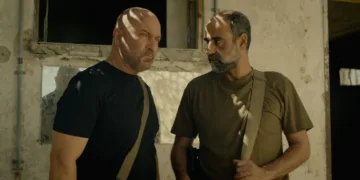
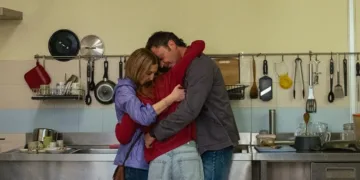
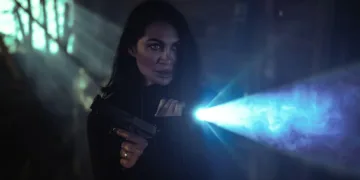
The emotional charge comes from Fulda’s connection with Stéphane Danger, the newly assigned police psychologist. Alexis Manenti plays Fulda with jagged, unpredictable force. The demoted gendarme moves through the case in his own private orbit, mixing sudden intuitive leaps with explosive outbursts. Ella Rumpf gives Stéphane a terrific counterforce.
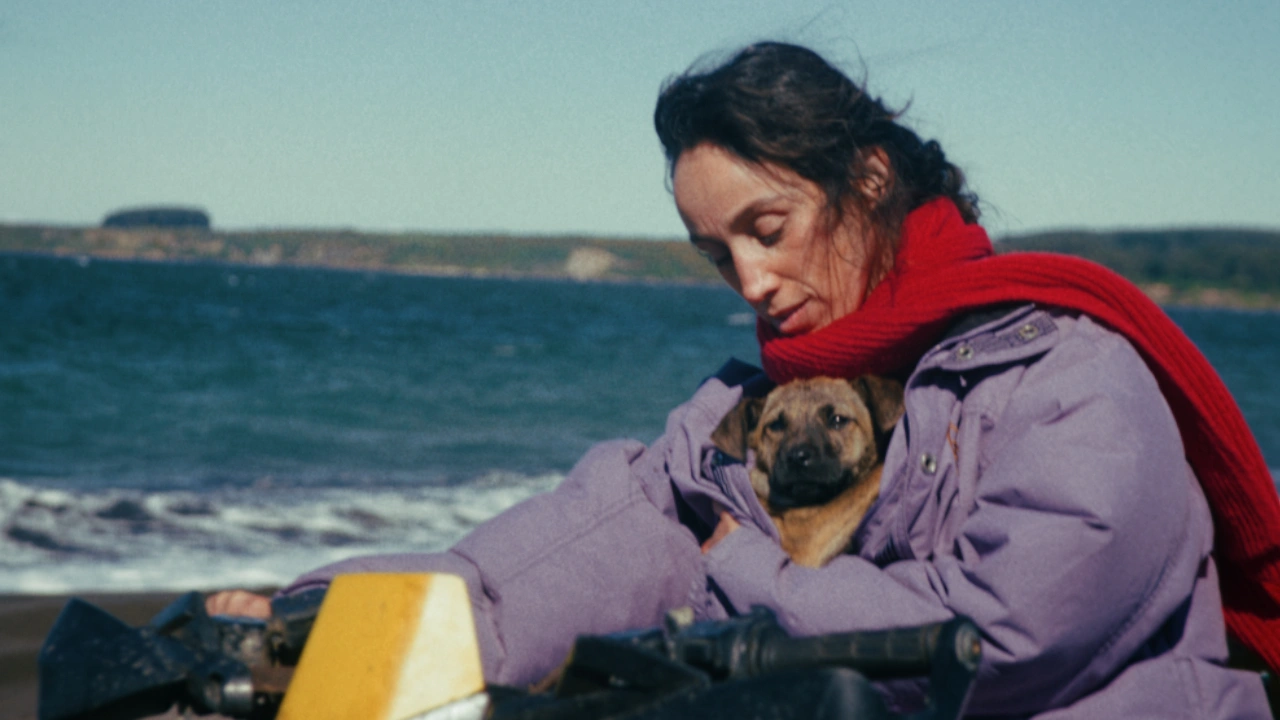
Inspector Marchal sticks her in a literal broom cupboard from the start, a perfect image of the station’s casual administrative contempt. Stéphane answers that macho atmosphere with profane impatience, while carrying her own dark past tied to a violent road rage arrest in Paris.
Their working relationship begins in open irritation. Bit by bit, they discover a shared, off-angle way of reading people. Their bond makes sense because both are outsiders in a place that has little use for them. Arnold surrounds them with figures such as Fulda’s partner, Victor Chaton, using the station staff to expose a law enforcement unit in comic collapse.
The squad has the texture of an absurd workplace comedy crew, with badges. Manenti and Rumpf keep the characters rooted in recognizable emotional behavior. Years of watching independent European festival films have made me especially fond of performances that hold psychological truth while the script grows increasingly ridiculous, and these two handle that balance with real skill.
From Rural Noir to Absurdist Farce
Too Many Beasts works as independent genre mutation with a sharp ear for current class resentment. The film starts with the visual and dramatic markers of serious rural noir, then bends into deadpan comedy with surprising confidence.
Arnold and her co-writers resist the clean machinery of mainstream crime storytelling. They turn the local gendarmerie into a stage for rising absurdity, using that comic disorder to reflect frustration with institutions that have lost their grip.
The investigation gradually becomes a way to reveal the eccentric pressure points of the rural community. One major escalation arrives in a long sequence where Fulda and Stéphane hunt for the killer while completely intoxicated by liquid meth. The scene tips the film into surreal delirium.
The script still follows its own internal logic, which matters a great deal. Arnold keeps her characters’ motives credible inside the madness. The final act loses some momentum, yet the film stays loyal to its strange artistic course. It favors a jagged, unresolved view of rural isolation, far from the polished closure common to mainstream crime cinema.
Taxidermy and Auditory Stress: The Formal Elements
The formal craft gives Too Many Beasts a strong visual personality. Cinematographer Noé Bach uses sweeping overhead tracking shots that place the unstable characters against the wide, calm green landscapes of northern France. The images make the village feel isolated, exposed, and oddly small.
Gaelle Usandivaras’s physical spaces match that visual approach beautifully. The hunters’ interiors are packed with aggressive taxidermy displays, with walls crowded by trophies that reveal the community’s fixation on controlling nature.
Sound has always fascinated me because it can change a film’s emotional temperature almost instantly. Florencia Di Concilio’s tense, racing score shapes the movie’s anxious atmosphere. A frantic panting sound runs through the music, intensifying the characters’ psychological strain. That nervous orchestration pairs with high-energy electronic needle drops from the British duo Evil Nine, giving the film a hard rhythmic push.
Arnold keeps tight visual command over these clashing aesthetic elements. She holds the film together while letting it feel risky, strange, and alive. Her choices make Too Many Beasts a strong reminder that independent cinema remains a vital space for formal experimentation.
The film premiered in May 2026 at the Cannes Film Festival within the Directors’ Fortnight section. Pan Distribution handles the theatrical release in France. Viewers can seek out this film at upcoming international festivals and selective art house theaters following its initial festival run.
Full Credits
Title: Too Many Beasts
Distributor: Pan Distribution
Release date: May 2026
Running time: 95 minutes
Director: Sarah Arnold
Writers: Sarah Arnold, Jérémie Dubois, Olivier Seror, Romain Winkler, Mehdi Ben Attia
Producers and Executive Producers: Martin Bertier, Helen Olive
Cast: Alexis Manenti, Ella Rumpf, Vincent Dedienne, Jean-Louis Coulloc’h, Pascal Rénéric, Bertrand Belin, Thierry Godard, Mathieu Perotto, Jade Fiess, Bernard Blancan
Director of Photography (Cinematographer): Noé Bach
Editors: Isabelle Manquillet
Composer: Florencia Di Concilio
The Review
Too Many Beasts
Sarah Arnold delivers a striking debut that revitalizes the rural crime genre. The film manages a tricky shift from intense countryside conflict to a dark, satirical comedy. Alexis Manenti and Ella Rumpf provide grounded performances that hold the eccentric story together. While the third act loses some pacing momentum, the striking cinematography and anxious musical score ensure an engaging experience. It is a bold piece of independent cinema.
PROS
- Sharp performances from Alexis Manenti and Ella Rumpf
- Visual depth from the countryside tracking shots
- Effective audio choices creating tension
CONS
- Third act pacing slowdown
- Narrative shift might alienate fans of traditional crime stories