






















Devin Santi’s 3D platformer Mr. Sleepy Man, published by Monster Theater, reads as a strange artifact of interactive nostalgia. Its opening skips the usual cinematic prelude and places the player in a first-person room with a static television and a “Lonely 64” console. Booting the digital cartridge triggers the game’s first rupture: a purple monster hand reaches out from the screen and pulls you into a subconscious world.
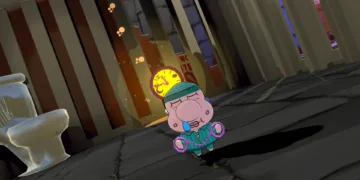
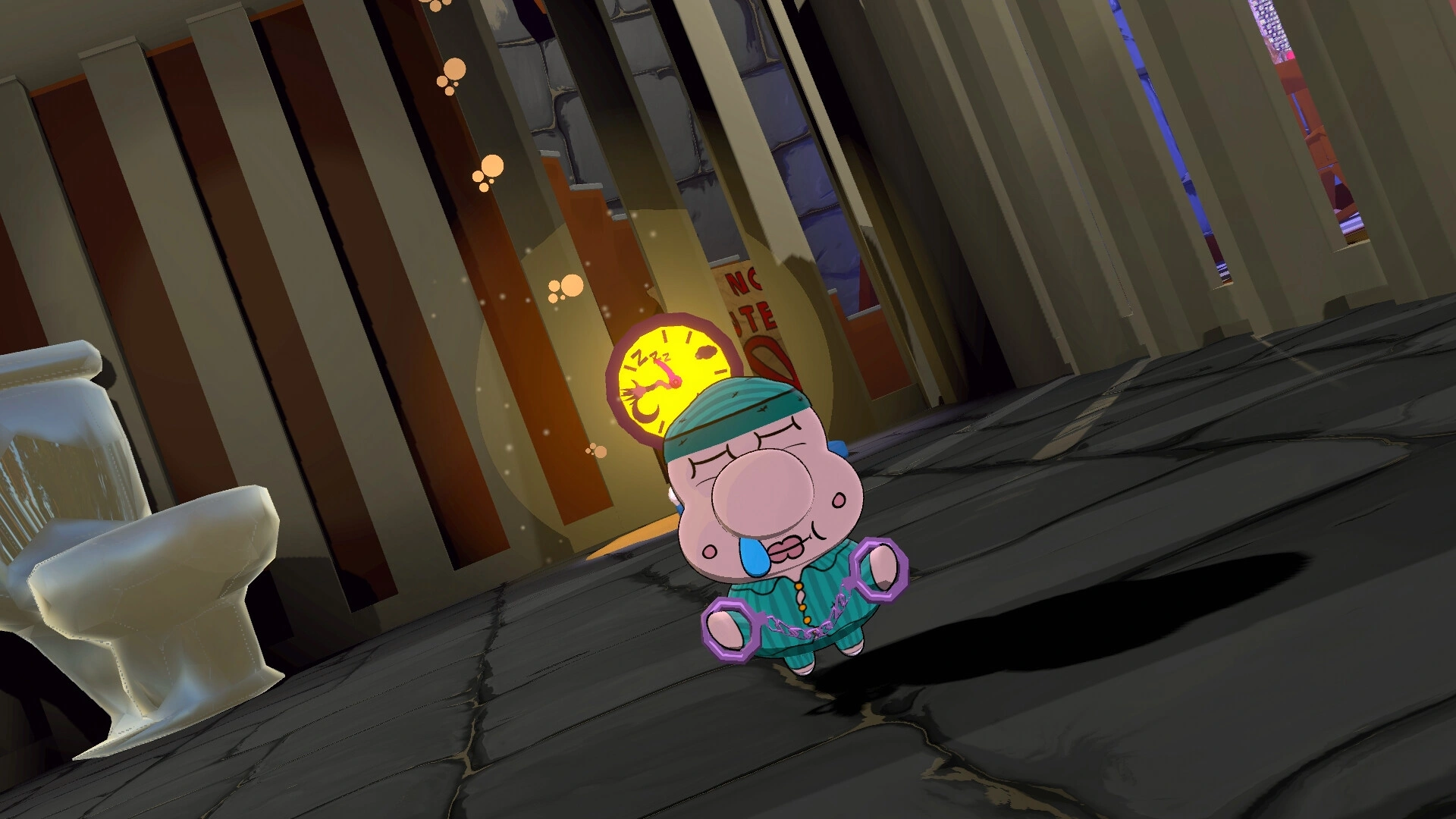
You wake as Sleepy, a pajama-clad protagonist in a nightcap, clearly unsuited to heroic destiny. Before any epic adventure can form, Teefy, a bizarre figure marked by a single gold tooth, explains the immediate task. Sleepy wants the plain comfort of a nap, and that means finding his missing security blanket and pillow. Escape from the opening room demands a smashed bedroom window, sending him into Bedtime Town. The sequence bends the classic Western hero pattern into a comic anti-quest driven by exhaustion and the wish to return to bed.
Kinesthetic Poetry and Formal Disruption
The movement mechanics echo the fluid kinetic language of early millennium platformers such as Super Mario Sunshine and modern independent descendants such as A Hat in Time. Mr. Sleepy Man treats momentum as expressive play grammar, giving the player tight, physics-driven platforming built around precision. Sleepy uses household objects to cross architectural hazards.
His security blanket becomes a glider for wide chasms, and his pillow works as a sliding tool and melee weapon. Skilled movement gives the system real depth, asking the player to chain side flips with timed aerial dives to reach high perches. Gravity has a live presence on slopes, letting Sleepy build speed while running downhill.
That mechanical base supports abrupt genre mutations. Santi cuts into the platforming rhythm with divergent interactive forms. The player meets demanding speedruns, then slow stealth segments built around careful positioning. A memorable sequence turns the controller into an instrument, asking the player to learn guitar melodies through specific button inputs that recall the acoustic puzzles of The Legend of Zelda: Ocarina of Time.
The game leans into avant-garde set pieces, including a confrontation with a hammer-wielding mouse fixated on a pizza franchise. It also includes a playable interactive music video shaped as a melancholy passage through a secondary character’s psychological trauma. These disruptions test global expectations for platforming by using mechanical variety to mimic the unstable logic of dreams.
Also Read





The Non-Linear Dream Cycle
Progression rejects rigid structural linearity and runs through a web of simultaneous task lists. Registries such as Sleepy’s To Do, Teefy’s To Do, and Bedtime Town To Do update constantly, giving the player room to select a path through the environment.
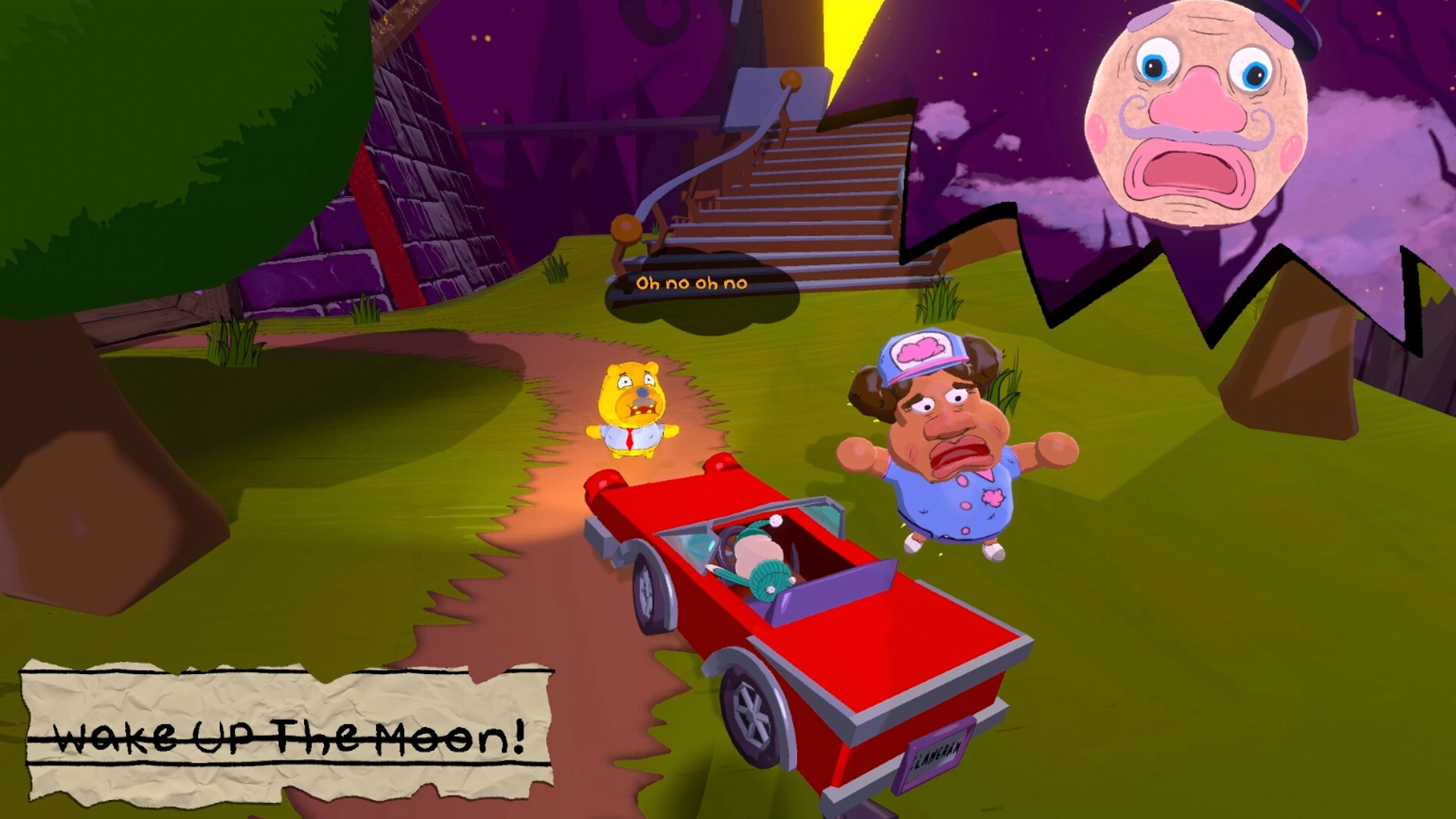
The sandbox design favors chaotic freedom, including the option to steal the keys to Grandma’s car and commit grand theft auto. That misbehavior produces a local authority response, earning Sleepy a wanted level from eccentric patrol officers.
Getting caught shifts the narrative and mechanical dynamic into a strange purgatorial loop. Jail cell confinement forces Sleepy to sleep, which resets the calendar night and clears his legal transgressions. The loop recalls the temporal anxieties of The Legend of Zelda: Majora’s Mask. Sleepy keeps all collected items and learned techniques after the reset, including the Deep Sleep ability used to refill his vital health clouds.
Time still moves forward on a fixed schedule, so specific narrative opportunities disappear if the player lingers too long. The player can manually trigger a temporal reset to retry missed encounters. With overt hand-holding stripped away, the design creates genuine discovery, allowing major plot resolutions to appear through accident.
Low-Poly Surrealism and Technical Friction
Visually, Mr. Sleepy Man uses a retro low-poly aesthetic that channels the crude geometry of late nineties hardware. The muted color palette supports an uneasy design philosophy, presenting citizens who appear intentionally distorted. The characters carry a grotesque quality tied to Western underground animation traditions, visible in figures such as Papa Bear, a sleep-deprived parent mourning his missing son Chunky.
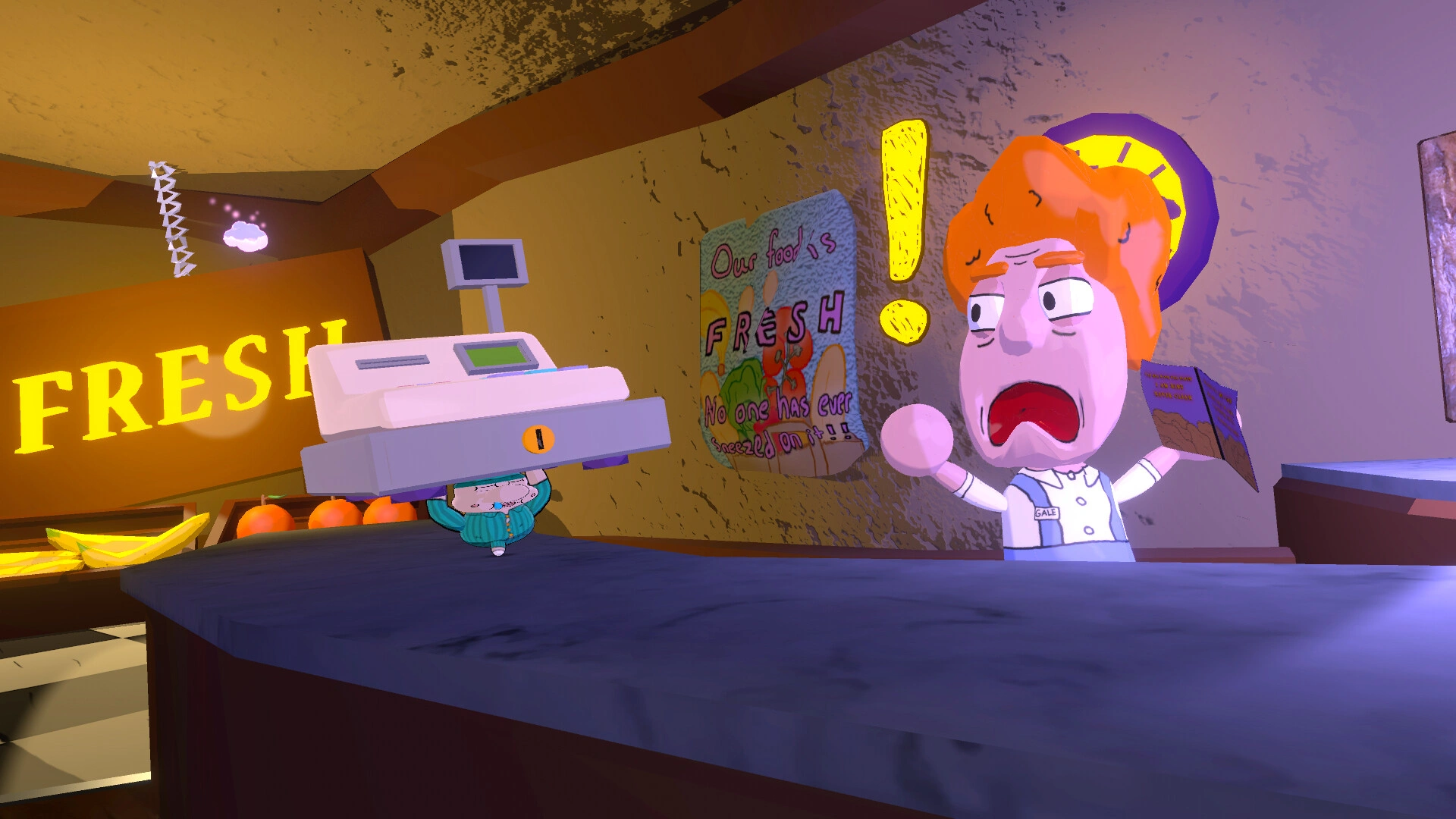
This abrasive character design reaches the sewer-dwelling mice who speak in thick New York accents, and the enormous feline known as Big Blue Kitty. Scattered television screens broadcast crude animations drawn in a loose style that intensifies the surreal atmosphere.
The audio field strengthens the same sensory register. The main theme melody loops relentlessly on the pause menu, paired with a dreamlike background soundtrack that marks the town as drowsy and unstable. The current software version, however, has technical friction.
Stability issues produce occasional hard freezes that require a full application restart. A tracking flaw also causes completed collectibles to reappear when the player re-enters areas, confusing progress mapping. These technical impediments remain significant flaws inside a brilliant study of interactive memory.
The Review
Mr. Sleepy Man
Mr. Sleepy Man is a brilliant, unsettling foray into low-poly surrealism that masterfully merges tight, momentum-driven platforming with a chaotic, non-linear sandbox. Devin Santi captures the distinct essence of late nineties gaming, utilizing a temporal loop system to give structural purpose to dreamlike absurdity. While technical freezes and irritating tracking bugs disrupt the pacing, the title thrives on its sheer mechanical variety and deeply personal artistic identity. It stands as a memorable piece of interactive memory that rewards curious players willing to embrace its eccentric logic.
PROS
- Fluid, highly responsive platforming controls and movement physics.
- Exceptional gameplay variety, spanning stealth, speedruns, and musical mini-games.
- Evocative, dreamlike retro aesthetic and incredibly catchy sound design.
- Clever, non-punishing time-loop mechanic inspired by classic design.
CONS
- Frustrating technical issues, including occasional hard freezes.
- Annoying collectible tracking bug causing items to respawn.
- Lack of rigid direction may alienate players seeking linear progression.