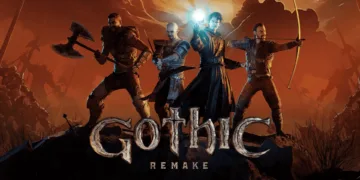




















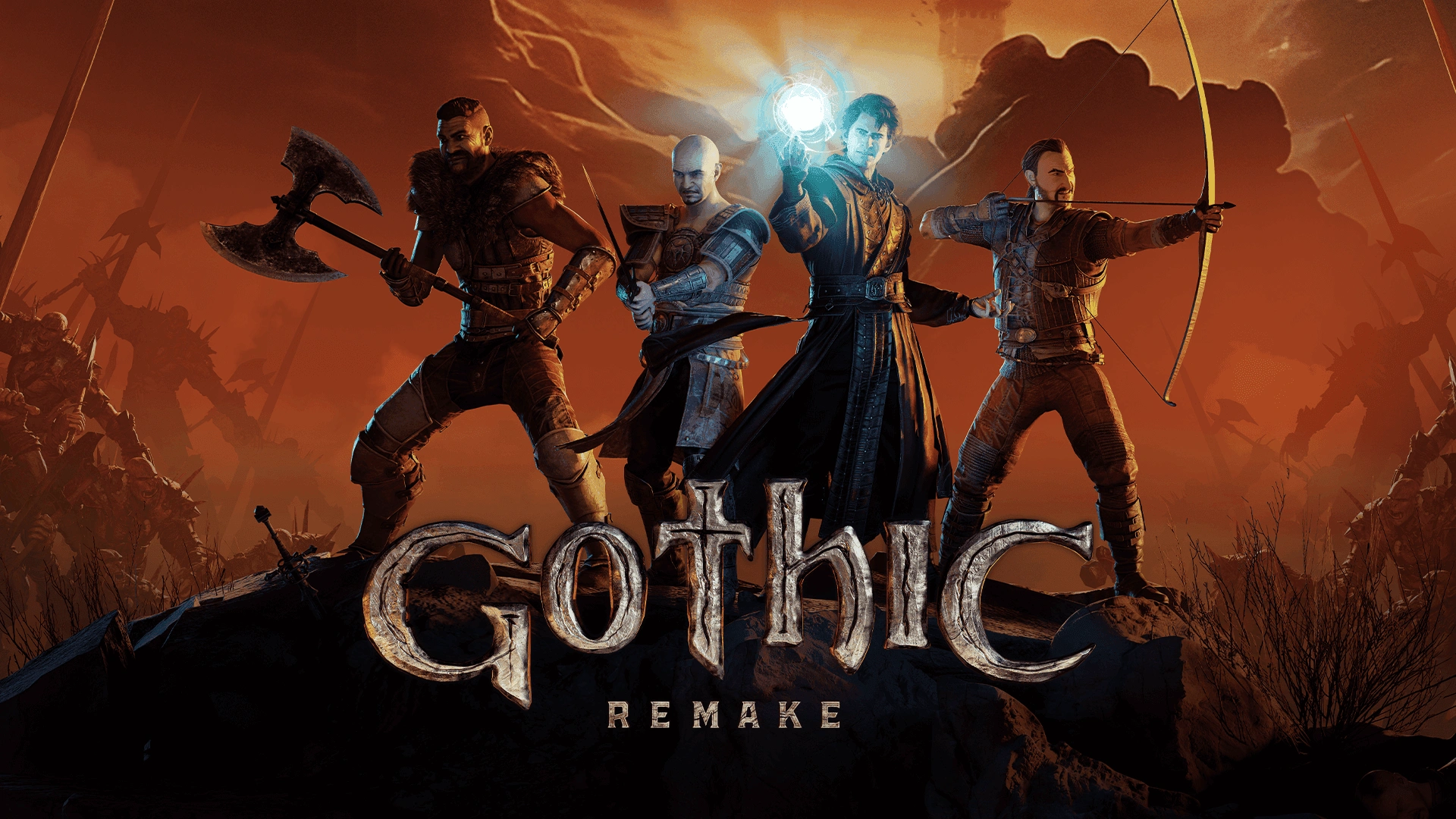

Gothic 1 Remake understands the appeal of being powerless. Alkimia Interactive’s ground-up revival of the 2001 cult RPG, released under THQ Nordic, returns to the Mining Valley with a clear commitment to the original’s harsh identity. This is a prison-colony fantasy game where comfort is treated with suspicion, convenience is rationed, and every scrap of progress has to be dragged out of the mud.
The premise remains strong because it is simple, brutal, and easy to grasp. King Rhobar II needs magical ore for the war against the orcs, so mages create a barrier around the mines to contain the convict workforce. The spell grows beyond their control, trapping prisoners, guards, and mages inside the valley. The inmates seize power, the king is forced into a grim trade arrangement, and the colony turns into its own rotten state.
You enter as a nameless convict with no reputation, no protection, and no past that matters. After being robbed and dumped into this hostile society, you meet Diego, whose guidance toward the Old Camp works as the game’s first real lesson. In this place, weakness has a price. Survival begins with obedience, caution, and a willingness to run.
A Prison Society With Teeth
The Mining Valley remains the remake’s central achievement. It is compact compared with modern open worlds, yet it feels dense because every road, swamp path, mine entrance, ruined hut, and camp boundary carries practical meaning. This is closer to Morrowind or Kingdom Come: Deliverance than a checklist-driven fantasy map. You learn the world because the game gives you little choice. There is no minimap to lean on, no glowing trail to follow, and no marker politely hovering over the next answer.
That design can feel severe at first. A character tells you to find a cave near a pond, and the game expects you to understand the geography yourself. You buy maps from NPCs, read journal notes, remember names, and slowly build a mental model of the valley. The reward is a rare kind of ownership. By the time you can travel from the Old Camp to the New Camp or the Swamp Camp without hesitation, the world feels known through experience rather than UI instruction.
The three main factions give that world its political shape. The Old Camp controls the castle and the ore trade through Gomez, his guards, shadows, and the fire mages. The New Camp, led through figures like Lares and Lee, serves the water mages’ plan to gather enough ore to break the barrier. The Swamp Camp follows the Sleeper, mixing religious devotion, swampweed rituals, and militant discipline into the strangest society in the valley.
Joining one of these groups is framed less as heroic allegiance and closer to choosing the least dangerous form of dependence. You start by doing small, often dirty work: errands, thefts, investigations, protection payments, favors, and awkward tests of loyalty. That gradual climb matters because the colony never treats you like a chosen savior. It treats you like fresh meat until you prove otherwise.
The remake strengthens this social texture through expanded roles for female characters and added orc material, including culture, language, and questlines. That helps the world feel less like a hostile playground and closer to a society with histories pressing against one another. NPC routines support that illusion. People work, sleep, threaten, joke, exploit, and wander off exactly when you need them, which is funny until your quest progress depends on finding one missing man.
Power Earned One Bruise at a Time
The combat works because it makes weakness visible. Early in Gothic 1 Remake, a molerat can be a genuine threat, scavengers feel dangerous, bloodflies punish sloppy spacing, and wolves can turn confidence into a reload screen within seconds. Minecrawlers, swamp creatures, and orcs keep that pressure alive as the world opens. The nameless hero starts as someone who barely knows how to hold a weapon, and the animation system sells that idea with surprising clarity.
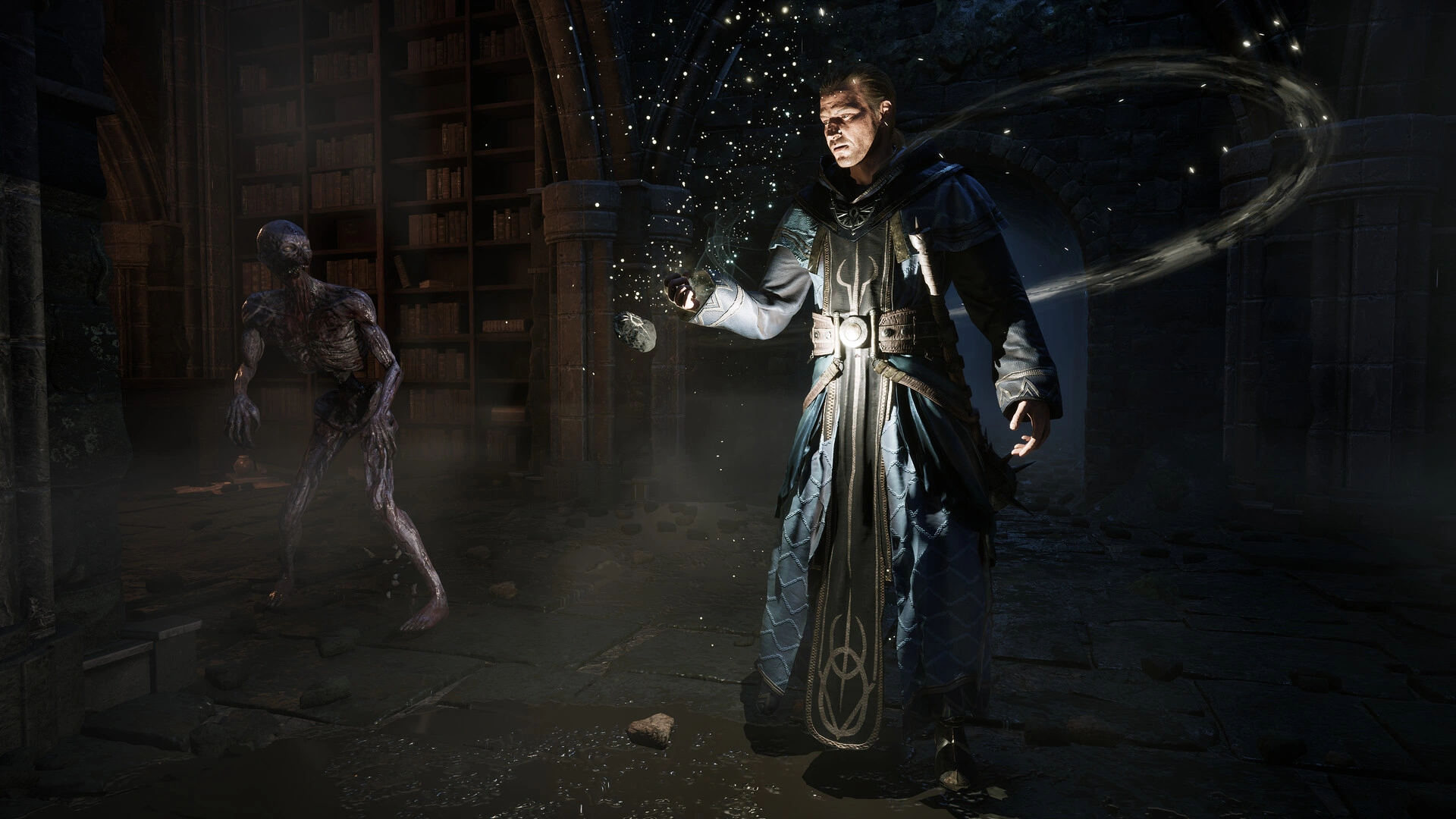
Alkimia has modernized the fighting without stripping away its hostility. Lock-on, dodging, stronger hit feedback, mouse aiming for ranged attacks, and a cleaner control scheme make the remake easier to parse than the original. Parrying and timing matter, and enemies have wider attack patterns, such as wolves lunging from distance or molerats using burrowing attacks. The result sits somewhere between classic Euro RPG awkwardness and a lighter action-RPG framework.
The smartest touch is how training changes the feel of movement. Investing learning points into weapon skills does not simply raise numbers on a character sheet. It changes how attacks flow. A beginner swings with stiff, ugly effort. A trained fighter chains strikes with speed and confidence. That physical improvement gives progression a satisfying texture, similar in spirit to Kingdom Come: Deliverance, where mastery is expressed through the body rather than a menu alone.
The surrounding RPG systems keep that growth slow and demanding. Leveling grants learning points, trainers teach combat, magic, theft, attributes, and other skills, and ore functions as both currency and survival resource. Armor becomes a huge milestone because it often depends on faction advancement. The first time you can absorb blows that once flattened you, the game’s punishing opening hours gain a clear purpose.
Exploration creates the same split reaction as combat. The lack of quest arrows can make discovery feel personal, especially when a vague clue leads to a cave, an overlooked path, or a camp contact you remembered from an earlier conversation. It can also become tedious when a quest asks you to kill every creature in an area and one bloodfly is hidden somewhere in the swamp, or when an NPC’s daily routine sends you jogging through the camp at the wrong hour.
That friction is part of the game’s identity, for better and worse. Players raised on The Witcher 3 may appreciate the social complexity and faction drama, then chafe at how little the game cares about saving time. Players who miss RPGs that force attention, patience, and manual saving may find the remake refreshingly stubborn.
A Beautiful, Buggy Cage
The visual transformation is immediately striking. Unreal Engine 5 gives the Mining Valley a rough, tactile quality: gnarled trees, wet paths, broken huts, muddy slopes, cliffs, mines, rain, torchlight, and campfires cutting through thick darkness. The New Camp and Swamp Camp benefit greatly from the new lighting and environmental density, especially at night, where the remake’s atmosphere becomes heavy enough to feel physical.
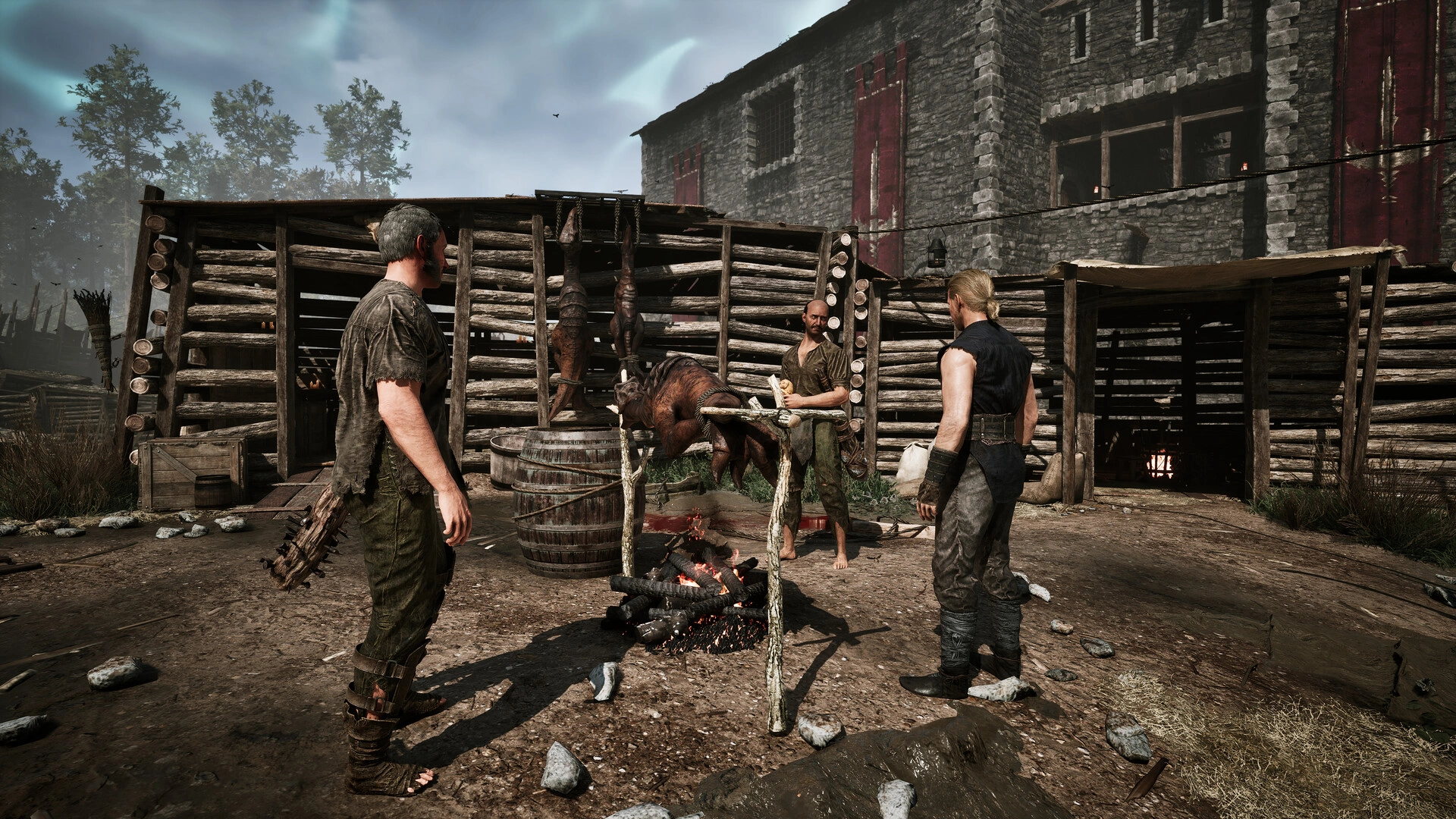
That atmosphere is one of the game’s best arguments for this remake. Darkness matters. Torches matter. Distant creature noises matter. The soundtrack settles into the valley like a warning rather than decoration. Enemy designs have sharper presence too, from twitching bloodflies to minecrawlers and orcs that feel heavier and less disposable than standard RPG fodder.
The added detail has a cost. The original’s crude visuals could make objects easier to read, while the remake’s dense environments can hide interactable herbs and items among convincing clutter. Some realism choices also test patience. Moving through darkness with a torch may heighten immersion, then become annoying the moment you need your hands free for something else. Slow travel gives the valley weight, yet repeated backtracking can grind down goodwill.
The technical state is the roughest part of the package. PC players may need to lower settings to secure smoother performance, while console versions have been reported at 30fps with slowdowns. The bigger issue is jank: NPCs clipping into objects, characters appearing or vanishing, broken interactions, audio dropouts, menu problems, crashes, and moments where reloading becomes the only fix. Auto-saves help, yet they are not frequent enough for a game this eager to punish mistakes. Manual saving is less a recommendation than a survival skill.
Gothic 1 Remake is faithful in the messy, demanding way that matters. Its strongest qualities and its most aggravating habits come from the same design philosophy. It wants players to earn comfort, power, direction, and belonging inside a world that would rather see them fail.
The Review
Gothic 1 Remake
Gothic 1 Remake is a harsh, atmospheric revival that preserves the original’s demanding spirit while improving combat, presentation, and world texture. Its faction politics, slow character growth, and hostile Mining Valley give it a rare sense of place, though bugs, uneven performance, and stubborn old-school friction will test many players. For RPG fans who value immersion, consequence, and earned progress, this is a rewarding return to a brutal classic.
PROS
- Dense, memorable prison-colony setting
- Strong faction identity and social hierarchy
- Satisfying character progression
- Improved combat and controls
- Excellent atmosphere and lighting
CONS
- Frequent technical issues
- No quest markers can frustrate
- Early hours feel punishing
- Object visibility can be unclear
- Manual saving is essential